A roof does far more than cover the top of a house. It acts as a protective barrier between the interior living space and the outside environment, helping shield a property from rain, wind, snow, sunlight, and changing temperatures.
Beyond protection, this overhead structure also plays a role in energy performance, moisture control, and the overall appearance of a home. The design chosen for a residence can influence everything from curb appeal to long-term maintenance requirements.
Modern homes rely on a complete roofing system made up of multiple layers and structural elements that work together. From the supporting framework underneath to the outer covering exposed to the weather, each component contributes to durability and performance.
Homeowners who understand these elements are often better prepared to evaluate repairs, renovations, and replacement projects.
What Is a Roof?
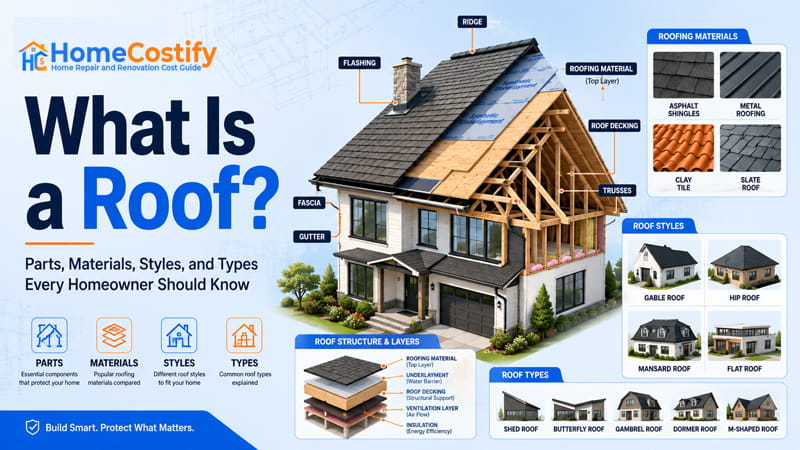
A roof is the uppermost covering of a building designed to protect the structure and its occupants from environmental exposure. Positioned above walls and supporting roof framing, it forms a critical barrier against precipitation, sunlight, temperature fluctuations, and debris.
While many people think of shingles, tiles, or metal panels when they hear the term, the visible surface represents only one portion of a much larger assembly.
In residential construction, this structure is considered a major part of the building envelope—the collection of elements that separate conditioned indoor spaces from outdoor conditions.
Walls, windows, doors, insulation, and the top covering all contribute to maintaining a safe and comfortable indoor environment. When any of these elements fail, energy efficiency, moisture control, and structural integrity may be affected.
According to FEMA, a roof is one of the most critical parts of a building’s envelope because it serves as the first line of defense against wind, rain, and moisture intrusion. A properly designed roofing system helps preserve the structural integrity of a building while protecting interior spaces from weather-related damage.
Its primary responsibilities include directing water away from the structure, resisting wind loads, reducing heat transfer, and protecting interior finishes. In many regions of the United States, it must also withstand snow accumulation, severe storms, and prolonged UV exposure throughout the year.
Roof vs Roofing System
The terms roof and roofing system are often used interchangeably, but they are not exactly the same. The former generally refers to the upper covering of a building, while the latter describes the complete assembly of interconnected layers and structural elements that provide protection and performance.
A roofing system may include decking, underlayment, flashing, ventilation components, insulation, framing members, drainage elements, and exterior coverings.
Each layer serves a specific purpose, and the overall effectiveness depends on how these parts function together. Because the visible covering receives the most attention, many homeowners mistakenly use both terms as if they describe the same thing.
What Does a Roof Do?
The primary purpose of a roof is protection, but its responsibilities extend well beyond keeping occupants dry during a storm. A properly designed assembly contributes to durability, comfort, efficiency, and architectural character.
Weather Protection
One of its most important jobs is shielding a home from rain, snow, hail, wind, and ultraviolet radiation. The outer covering prevents water penetration while helping the structure resist weather-related deterioration.
Moisture Management
Water control is essential to long-term building performance. Drainage pathways, flashing details, and protective layers work together to move moisture away from vulnerable areas and reduce the risk of leaks, mold growth, and structural damage.
Energy Efficiency
Insulation and ventilation systems influence indoor comfort throughout the year. Proper airflow can help regulate attic temperatures, reduce excess heat buildup, and support more efficient heating and cooling performance.
Architectural Value
A home’s appearance is heavily influenced by its upper structure. Shape, pitch, materials, and detailing contribute to curb appeal and architectural identity, often becoming defining visual features of the property.
| Roof Function | Primary Benefit |
|---|---|
| Weather Protection | Protects against rain, snow, and wind |
| Moisture Control | Reduces leaks and water damage |
| Energy Efficiency | Improves indoor comfort |
| Structural Protection | Shields framing and interior systems |
| Aesthetic Appeal | Enhances home appearance |
Common Roof Materials Used in the United States
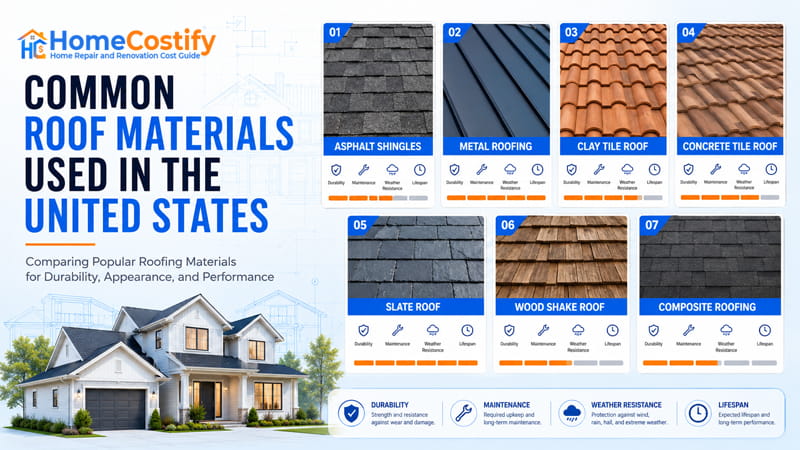
The performance, appearance, and lifespan of a home often depend on the roof material covering the top of the structure. Across the United States, homeowners can choose from several options, each offering a different balance of durability, maintenance requirements, weather resistance, and curb appeal.
Climate, budget, architectural preferences, and local building practices all influence material selection. While no single solution is ideal for every property, understanding the strengths and limitations of common products makes it easier to evaluate long-term value.
Asphalt Shingles
Asphalt shingles remain the most widely used roof covering in the United States. Their popularity comes largely from affordability, widespread availability, and compatibility with a broad range of architectural shingles designs. They are commonly installed on suburban homes, new residential developments, and replacement projects throughout the country.
Modern asphalt products are available in various colors, textures, and profiles, allowing homeowners to match different exterior styles without significantly increasing project costs. Installation is generally straightforward, which helps keep labor expenses manageable.
Although they typically do not last as long as slate or metal systems, many products can provide decades of reliable service when properly maintained.
Metal Roofing
Metal roofing has gained popularity among homeowners seeking durability and long-term performance. Available in steel, aluminum, copper, and other alloys, these systems are known for their ability to withstand severe weather conditions while requiring relatively little maintenance.
One of the biggest advantages of metal roofing is longevity. Depending on material quality and environmental conditions, some installations can remain functional for several decades. Their reflective properties may also help reduce heat absorption during warmer months, potentially improving energy efficiency.
Modern manufacturing techniques have expanded design options, making it possible to replicate the appearance of traditional wood shingles, wood shakes, or tiles while retaining the benefits of metal construction.
Clay Tile Roof
A clay tile roof is often associated with Mediterranean, Spanish Colonial, and Southwestern architecture. Distinctive curved profiles and rich earth-tone colors create a timeless appearance that complements many homes in warm-weather regions.
Clay products perform particularly well in hot climates because they resist heat and tolerate prolonged sun exposure. They are also highly resistant to rot and insect damage. However, their substantial weight may require additional structural support, making professional assessment important before installation.
While initial costs tend to be higher than asphalt alternatives, the long service life often appeals to homeowners looking for a premium solution.
Concrete Tile Roof
A concrete tile roof offers many of the visual advantages of clay while providing exceptional strength. Manufactured from cement, sand, and water, these tiles are engineered to withstand harsh weather conditions and prolonged exposure to the elements.
Durability is one of the primary selling points. Concrete products resist fire, wind, and impact damage better than many conventional coverings. Their weight contributes to stability but can also increase structural demands.
Available in numerous colors and profiles, they can imitate slate, clay, or wood textures while maintaining consistent performance. For homeowners seeking a balance between appearance and resilience, concrete remains a popular option.
Slate Roof
A slate roof is widely regarded as one of the most durable and prestigious materials available. Made from natural stone, slate provides exceptional longevity and a distinctive appearance that many homeowners consider unmatched.
The material resists fire roof, moisture, insects, and temperature fluctuations, making it suitable for a variety of climates. Individual stone tiles create a refined architectural character that enhances the value and visual appeal of premium properties.
Because slate is heavy and requires specialized installation expertise, costs are significantly higher than most alternatives. Nevertheless, its remarkable lifespan often justifies the investment for homeowners seeking a long-term solution.
Wood Shake Roof
A wood shake roof delivers a natural, rustic appearance that complements cottages, cabins, historic homes, and traditional architectural designs. Unlike machine-cut shingles, wood shakes are typically split rather than sawn, creating a textured and handcrafted look.
Many homeowners choose wood for its warmth and visual character. Over time, the material develops a weathered appearance that can add charm and authenticity to older properties. However, wood generally requires more maintenance than synthetic or metal alternatives. Proper care is essential to minimize moisture-related deterioration and preserve performance over the years.
Composite Roofing
Composite roofing represents a newer generation of synthetic materials engineered to mimic traditional products while improving durability and maintenance characteristics. Manufacturers often combine polymers, recycled materials, fiberglass, or other engineered components to create lightweight alternatives to slate, wood, and tile.
These products offer versatility, impact resistance shingle, and design flexibility. Many homeowners appreciate the ability to achieve the appearance of premium materials without the associated weight or maintenance requirements. Composite systems continue to gain popularity in modern residential construction due to their balance of aesthetics, performance, and convenience.
| Roofing Material | Durability | Maintenance | Common Use |
|---|---|---|---|
| Asphalt Shingles | Moderate | Low | Residential |
| Metal Roofing | High | Low | Residential & Commercial |
| Clay Tile | High | Moderate | Warm Climates |
| Concrete Tile | High | Moderate | Residential |
| Slate | Very High | Low | Premium Homes |
| Wood Shake | Moderate | High | Traditional Homes |
| Composite Roofing | High | Low | Modern Homes |
Roof Styles and Roof Types Used in the USA
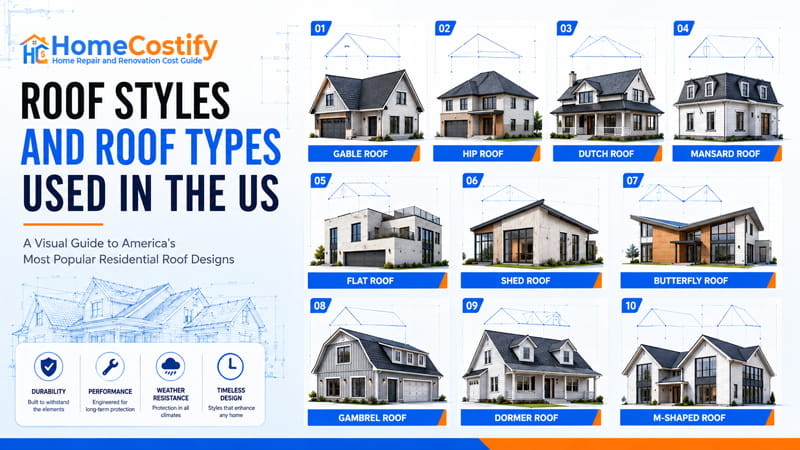
The shape of a roof influences far more than appearance. Design affects drainage, weather resistance, interior space, ventilation opportunities, and construction complexity.
Different regions of the United States favor different configurations based on climate conditions, local architectural traditions, and homeowner preferences.
Gable Roof
The gable roof is the most recognizable and widely used residential design in the United States. It features two sloping sides that meet at a central ridge, creating a triangular profile at each end of the structure.
Its straightforward geometry promotes efficient water runoff and simplifies construction. Because of its practicality and affordability, this style appears in countless suburban neighborhoods and traditional home designs.
Hip Roof
A hip roof slopes downward on all four sides, creating a balanced and symmetrical appearance. Unlike a gable configuration, there are no vertical end walls.
This design is valued for its excellent wind resistance roof. The inward slope on every side helps distribute wind loads more evenly, making it a popular choice in coastal regions and areas susceptible to strong storms.
Dutch Roof
The Dutch roof, often called a Dutch gable, combines elements of both hip and gable designs. A smaller gable section is added to the top of a hipped structure, creating a distinctive appearance.
This hybrid approach provides additional attic space while retaining many of the structural benefits associated with a hip configuration. It is frequently chosen for architectural character and visual interest.
Mansard Roof
A mansard roof features dual slopes on each side, with the lower section considerably steeper than the upper portion. Originating in French architecture, this design maximizes usable space beneath the structure.
The steep lower slopes can accommodate additional living areas, making it possible to expand interior square footage without significantly increasing the building footprint.
Flat Roof
Despite the name, a flat roof typically includes a slight pitch to facilitate drainage. This design is commonly associated with modern and contemporary architecture.
Its clean lines create a minimalist appearance while providing opportunities for rooftop equipment, outdoor living spaces, or solar panel installations. Proper waterproofing and roof drainage remain essential for long-term performance.
Shed Roof
A shed roof consists of a single sloping plane that extends from one side of the structure to the other. The simplicity of this design makes it popular in contemporary residential construction.
Large windows, open floor plans, and modern architectural concepts often pair well with a shed configuration. Its uncomplicated shape also promotes effective water runoff.
Butterfly Roof
A butterfly roof features two downward-sloping sections that meet in the center, creating an inverted V shape. The profile resembles the wings of a butterfly when viewed from the front.
This innovative design is often associated with sustainable architecture because the central valley can help collect rainwater for reuse systems. It also creates dramatic visual appeal and opportunities for expansive glazing.
Gambrel Roof
The gambrel roof is commonly associated with barns and traditional farm structures. It incorporates two slopes on each side, with the lower section steeper than the upper portion.
This arrangement creates substantial interior volume, making it useful for storage areas, lofts, and expanded living space. The design remains popular in Colonial and farmhouse-inspired homes.
Dormer Roof
A dormer roof is not typically a standalone style but rather a projection extending from a larger structure. Dormers add windows and vertical wall sections that extend through the main covering.
These features increase headroom, improve natural light, and enhance ventilation within upper-story rooms. They also contribute architectural detail and visual dimension.
M-Shaped Roof
The M-shaped roof consists of two connected gable forms that create a profile resembling the letter “M.” This configuration produces multiple slopes and valleys.
Because of its complexity, it is most often found in custom homes or architecturally distinctive projects. Proper drainage design is especially important due to the additional valleys created by the layout.
| Roof Type | Key Characteristic |
|---|---|
| Gable Roof | Simple slope |
| Hip Roof | Four-sided design |
| Dutch Roof | Gable plus hip |
| Mansard Roof | Dual slopes |
| Flat Roof | Minimal pitch |
| Shed Roof | Single slope |
| Butterfly Roof | Inverted design |
| Gambrel Roof | Barn style |
| Dormer Roof | Vertical projection |
| M-Shaped Roof | Double gable profile |
Factors to Consider When Choosing a Roof
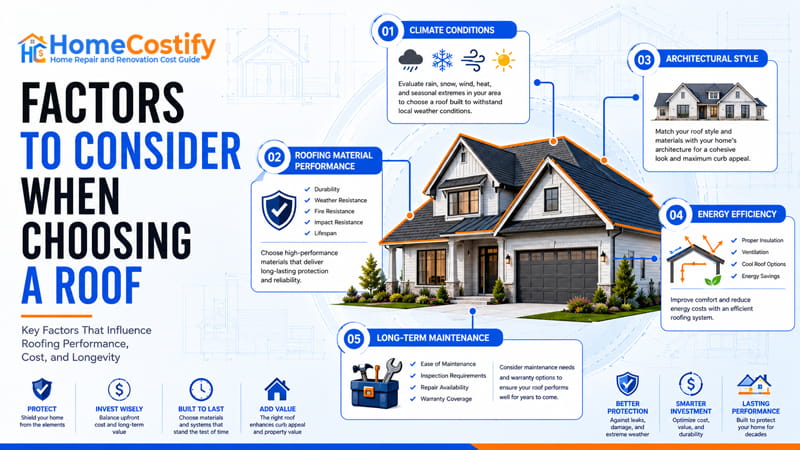
Selecting the right roof involves more than choosing a material that looks attractive from the street. Climate conditions, expected lifespan, maintenance needs, energy performance, and architectural compatibility all influence long-term satisfaction and ownership costs. Evaluating these factors before construction or replacement can help homeowners avoid expensive problems later.
Climate Conditions
Weather should be one of the first considerations. Homes in rainy regions require effective drainage and moisture protection, while areas with frequent snowfall must accommodate additional structural loads.
In coastal locations or storm-prone states, strong winds can place significant stress on exterior building systems. The ideal solution should be able to withstand local environmental conditions throughout the year without excessive wear or damage.
Roofing Material Performance
Different roof materials offer different levels of durability and service life. Asphalt shingles remain popular because of affordability, while metal, slate, and tile products often provide greater longevity.
Homeowners should compare expected lifespan, resistance to weather exposure, and maintenance requirements when evaluating alternatives. A lower upfront cost may not always represent the best long-term value if replacement becomes necessary sooner.
Architectural Style
The appearance of the upper structure should complement the home’s architectural design. Traditional Colonial, Craftsman, Mediterranean, Ranch, and contemporary houses often benefit from different profiles, finishes, and roof styles.
Selecting a design that aligns with the overall character of the property helps create a cohesive and visually appealing exterior.
Energy Efficiency
Insulation and ventilation play a major role in household comfort. A well-designed assembly can help regulate indoor temperatures, reduce heat transfer, and support more efficient heating and cooling performance.
Proper airflow in attic spaces also helps manage moisture while limiting excessive heat buildup during warmer months.
Long-Term Maintenance
Every covering requires some level of upkeep. Before making a final decision, homeowners should consider repair frequency, cleaning requirements, replacement costs, and overall durability.
Materials that demand minimal maintenance may offer greater convenience over time, particularly for larger homes or properties located in challenging climates.
| Factor | Why It Matters |
|---|---|
| Climate | Weather resistance |
| Material | Longevity |
| Style | Home appearance |
| Maintenance | Ownership cost |
| Energy Efficiency | Comfort and savings |
Conclusion
A roof is much more than the visible covering at the top of a home. It is a complete system designed to protect the structure, manage moisture, improve comfort, and contribute to architectural appeal.
Whether evaluating a new construction project, planning a renovation, or preparing for future maintenance, informed decisions begin with a solid understanding of the system above your head.
Climate, durability, energy efficiency, appearance, and maintenance requirements all play important roles in long-term performance. By learning how these elements work together, homeowners can make smarter choices that support comfort, protection, and lasting value for years to come.
FAQs About Roof
What is the main purpose of a roof?
The primary purpose of a roof is to protect a building from weather exposure while helping manage water runoff, improve energy efficiency, and preserve structural integrity.
What are the most important parts of a roof?
Key roof components include decking, underlayment, flashing, trusses or rafters, ridge sections, valleys, fascia, soffits, and gutters. Each element contributes to roof protection, drainage, roof ventilation, or structural support.
What roofing material lasts the longest?
Natural slate generally offers the longest lifespan among common residential roofing materials. High-quality metal systems and tile products can also provide decades of reliable performance when properly maintained.
What is the difference between a roof and a roofing system?
The term roof usually refers to the upper covering of a building, while a roofing system includes all interconnected layers and structural elements that work together to provide protection, drainage, insulation, and durability.
What is roof pitch and why does it matter?
Roof pitch refers to the steepness or slope of a structure’s upper surface. It affects water drainage, snow shedding capability, material selection, ventilation design, and overall appearance. The appropriate pitch depends on local climate conditions and architectural requirements.