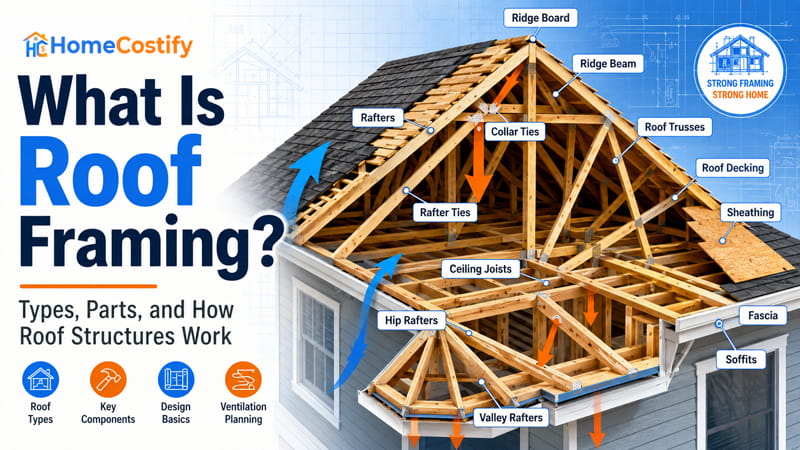
Every residential roof depends on a structural framework that supports the weight above it and keeps the home protected year after year. That framework is known as roof framing. Hidden beneath shingles and roof decking, it forms the backbone of the entire roof system and helps distribute weight safely across the house.
The condition and design of a roof structure can affect far more than appearance. Weak or damaged framing may lead to sagging roof lines, moisture problems, shorter roof lifespan, and expensive structural repairs over time. In areas with heavy rain, snow, or strong winds, the framing system also plays a major role in home safety and long-term stability.
Many homeowners focus on shingles or exterior materials first, but the structure underneath matters just as much. Learning how roof framing works makes it easier to understand common roof designs, spot early warning signs, and make better decisions during repairs or renovations.
If you are new to roofing systems, it also helps to start with the basics of What Is Roof construction and terminology.
What Is Roof Framing?
Every residential roof depends on an internal framework that carries weight, maintains shape, and keeps the structure stable over time. That framework is called roof framing. It acts as the structural skeleton beneath the visible roofing layers and creates the base that supports roof decking, underlayment, and shingles.
In most American homes, the system is built from wood components arranged in specific patterns to match the roof design and span of the house. Some homes rely on rafters assembled on-site, while others use engineered trusses manufactured in a factory. Both approaches serve the same purpose: transferring weight safely into the walls and foundation below.
The roof frame also determines the overall shape of the roof. Gable, hip, flat, and shed roofs all depend on different framing layouts to achieve the proper slope and structural balance. Without that support system underneath, roofing materials alone would not be able to hold their shape or withstand weather exposure for very long.
Many homeowners confuse roof framing with roofing materials, though the two serve completely different functions. Framing provides structural support, while exterior roofing products protect the home from rain, wind, sunlight, and moisture. Shingles, tiles, or metal panels form the outer layer, but the framing underneath carries the actual load of the roof system.
The design of the structure can also influence attic space, ventilation, insulation placement, and long-term durability. A poorly built framing roof may develop sagging sections, uneven roof lines, or stress cracks around ceilings and walls. In severe cases, structural shifting can shorten the lifespan of the entire roofing assembly.
Modern roof framing construction follows engineering principles that account for roof span, climate conditions, weight distribution, and roof pitch. Homes located in snowy regions often require stronger framing systems than homes built in warmer climates with lighter environmental loads.
Because every home has different dimensions and roof styles, builders use specific layouts to create a stable roof support structure that matches the needs of the property. The framing layout must match the structural demands of the roof so the system can remain stable through seasonal weather changes.
Roof Framing Quick Definition
| Term | Meaning |
|---|---|
| Roof framing | Structural framework supporting the roof |
| Rafters | Sloped framing boards supporting the roof deck |
| Trusses | Engineered structural roof assemblies |
| Ridge board | Horizontal board connecting rafters |
Main Roof Framing Parts and Components
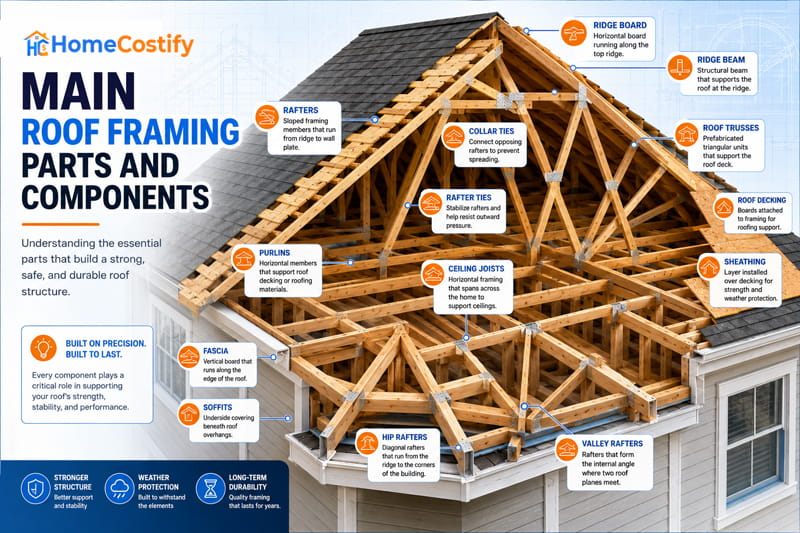
Roof structures distribute pressure across multiple framing members rather than relying on a single support point.
Each component has a specific role within the roof structure, from transferring weight into the walls to stabilizing roof lines and supporting the outer roofing layers. The performance of the entire assembly often comes down to how well these parts connect and distribute structural loads over time.
Some framing members handle downward weight, while others prevent spreading, twisting, or shifting during weather changes. These framing components form the structural base used in many modern residential roof designs.
Rafters
Rafters are sloped framing members that extend from the roof ridge down to the exterior walls of a home. Their main job is to carry the weight of the roof surface and transfer that pressure downward into the supporting walls below.
In traditional rafter roof framing, builders install individual boards on-site using measured spacing patterns based on roof span and structural requirements. The spacing between roof rafters affects how much weight the structure can safely handle and how well the roof decking remains supported across the surface.
Common rafters are the standard sloped members found on many residential roofs, especially gable roof designs. Depending on the roof framing layout, additional rafters may be added near valleys, hips, or dormers to strengthen complex roof sections.
Because framing roof rafters requires precise angles and alignment, even small installation mistakes can create uneven roof lines or long-term structural stress.
Roof Trusses
Roof trusses serve the same general purpose as rafters, though their design works differently. Instead of relying on individual sloped boards, truss roof framing uses interconnected triangular assemblies engineered to distribute pressure more evenly across the structure.
Most modern engineered trusses are prefabricated in factories and delivered to the construction site ready for installation. This approach reduces labor time and creates more consistent framing accuracy compared to traditional site-built systems.
The triangular shape allows roof trusses to span wider distances while maintaining structural stability. Many residential builders prefer engineered systems because they can reduce material waste and simplify installation on large homes.
Trusses also help maintain consistent roof pitch throughout the structure. Since they are manufactured to exact specifications, roof framing construction becomes faster and more predictable once installation begins.
Rafters vs Roof Trusses
| Feature | Rafters | Roof Trusses |
|---|---|---|
| Construction | Built on-site | Factory-built |
| Cost | Higher labor cost | Faster installation |
| Flexibility | Better attic space | Less attic flexibility |
| Structural Efficiency | Moderate | High |
Ridge Board and Ridge Beam
A ridge board sits along the highest point of the roof where opposing rafters meet. Its main function is alignment rather than major structural support. Builders use the ridge board to maintain consistent spacing and positioning between rafters during installation.
A ridge beam serves a different purpose. Unlike a standard ridge board, a ridge beam carries structural weight and transfers loads downward into posts or supporting walls. Homes with vaulted ceilings or large open spaces often rely on ridge beams because they reduce the need for ceiling joists.
The choice between a ridge board and ridge beam depends on the roof framing design, roof span, and structural requirements of the home. Both components sit near the roof ridge, though their load-bearing responsibilities are very different.
Ceiling Joists
Ceiling joists run horizontally between opposing exterior walls and help stabilize the structure under roof pressure. While they also support ceiling surfaces inside the home, their structural role is equally important within the framing system.
As roof loads push downward, rafters naturally create outward pressure against the walls. Ceiling joists help resist that force and reduce the risk of wall spreading over time.
In many homes, ceiling joists help counter the outward force created by rafters. Without that support, sections of the roof structure may gradually shift over time.
Collar Ties and Rafter Ties
Collar ties and rafter ties are smaller framing members installed between opposing rafters, though they serve different purposes within the structure.
Collar ties are typically installed near the upper portion of the roof and help resist wind uplift during strong storms or severe weather conditions. They add stability near the roof peak and reduce movement within the framing assembly.
Rafter ties are positioned lower and help prevent the walls from spreading outward under roof pressure. Without properly installed rafter ties, structural movement can slowly affect wall alignment and roof stability.
Both components strengthen the roof framing system by controlling movement across connected framing members.
Roof Decking and Sheathing
Roof decking forms the flat structural surface attached directly above rafters or trusses. In most residential homes, builders use plywood or OSB roof sheathing panels to create a stable base for shingles and other roofing layers.
These panels help distribute weight evenly across the structure while also reinforcing the framing underneath. Once installed, roof decking creates the surface that supports underlayment and exterior roofing material throughout the roof system.
According to APA – The Engineered Wood Association, uneven roof framing or poor attic ventilation can contribute to moisture buildup, structural stress, and premature roofing problems over time.
Moisture exposure is one of the biggest threats to roof sheathing because trapped humidity can weaken wood panels and reduce long-term structural performance. Proper roof ventilation and installation spacing help protect the decking from expansion, warping, and deterioration.
Purlins, Fascia, and Soffits
Purlins act as secondary support members that reinforce rafters across longer roof spans. They help reduce bending pressure and improve structural stability in certain framing layouts.
Along the roof edges, the fascia board creates a finished appearance while also supporting gutters and protecting exposed framing ends from weather exposure.
Soffits are installed beneath roof overhangs and help regulate attic ventilation by allowing outside air to circulate into the attic space. Proper airflow reduces trapped heat and moisture that can gradually damage framing lumber over time.
Purlins reinforce long spans, while fascia and soffit systems help protect exposed roof edges and improve attic airflow.
Hip Rafters and Valley Rafters
Hip rafters and valley rafters are used where different roof sections intersect at complex angles. These diagonal framing members support areas where standard rafters alone cannot carry structural loads effectively.
Hip rafters extend outward from the roof ridge toward exterior corners on hip roof designs. Valley rafters work in the opposite direction, forming inward angles where two roof slopes meet.
Because these sections handle concentrated structural pressure, builders often use larger lumber sizes for added strength. Accurate installation is especially important around valleys and hips since framing mistakes in these areas can affect roof drainage, roof alignment, and long-term structural performance..
Common Roof Framing Types
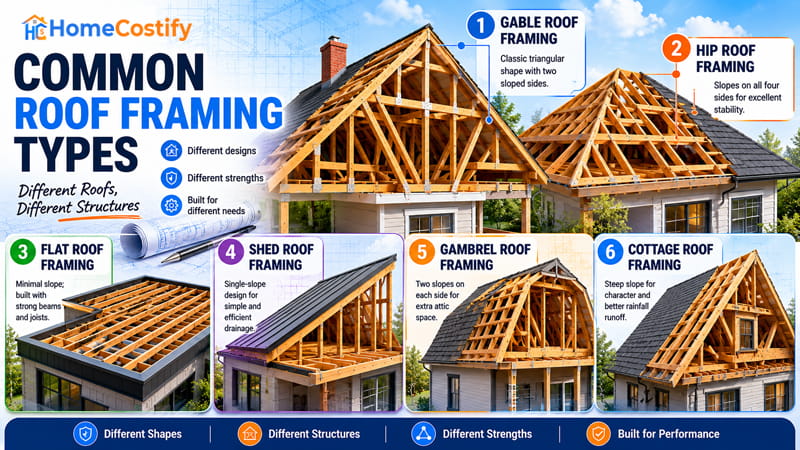
Not every roof uses the same structural layout. The shape of the roof, local climate, architectural style, and structural demands all influence the type of framing used during construction. Some systems focus on simplicity and cost efficiency, while others are designed for larger spans, improved wind resistance, or additional attic space.
The overall roof framing layout also affects drainage, ventilation, ceiling height, and long-term structural stability. In residential construction across the United States, several framing styles appear far more often than others because they balance performance, material cost, and ease of installation.
Different roof framing types can also change the appearance of a home dramatically. A steep gable roof creates a very different structural profile compared to a low-sloped modern roof or a barn-style gambrel design. Each structure depends on a specific arrangement of framing members to support weight safely and maintain roof shape over time.
Gable Roof Framing
Gable roof framing is one of the most common residential framing styles in the United States. This design creates the familiar triangular roof shape seen on many suburban homes, garages, cottages, and traditional houses.
A standard gable roof uses two sloped roof sections that meet at the center ridge. The triangular structure allows water and snow to shed relatively easily while creating a straightforward framing layout underneath.
Because of its simple geometry, this type of roof framing is often easier to build than more complex roof systems. Builders can install rafters at repeating angles and maintain consistent spacing across the structure.
The vertical wall section beneath the roof peak is known as the roof gable or gable end roof area. These sections may include vents, windows, or decorative siding depending on the architectural style of the home.
Gable systems remain popular partly because they provide good drainage, solid attic space, and efficient structural performance for many residential designs.
Hip Roof Framing
Hip roof framing uses slopes on all four sides of the structure instead of only two. The roof planes meet at angled hips rather than vertical gable walls, creating a more compact and stable roof profile.
Many builders prefer this roof framing design in areas exposed to strong winds or severe weather because the shape distributes wind pressure more evenly across the structure.
Hip roofs require more complex framing connections than standard gable designs. Hip rafters, jack rafters, and diagonal supports distribute pressure through the angled corners of the structure.
Although construction costs can be slightly higher, hip roofs often provide excellent stability and a more finished appearance from multiple viewing angles.
Flat Roof Framing
Flat roof framing is commonly associated with commercial buildings, though modern residential architecture has also increased its popularity in recent years. Despite the name, these roofs are not completely flat. Most use a slight roof slope to encourage water drainage toward drains or gutters.
Framing a flat roof requires careful planning because standing water can create long-term structural problems if drainage is inadequate. Builders often use engineered trusses or layered framing systems to maintain proper slope across the surface.
Many flat roof framing details focus heavily on waterproofing, ventilation, and load distribution. Snow accumulation and pooled rainwater place additional stress on low-sloped roof structures compared to steeper roof designs.
This style also changes how roofing materials are installed. Membrane systems, modified bitumen, and specialized coatings are often used instead of traditional shingles.
Flat roofs can create usable rooftop space for HVAC systems, patios, or solar panel installations, which makes them attractive for certain modern home designs.
Shed Roof Framing
Shed roof framing uses a single sloped roof surface instead of two connected sides meeting at a ridge. The design creates a clean, modern appearance while simplifying structural construction in smaller buildings and contemporary residential additions.
This type of roof framing often appears on home offices, porches, detached studios, and minimalist residential designs. The single-direction slope also allows rainwater to drain efficiently toward one side of the structure.
Because the framing pattern is relatively straightforward, builders can often complete installation more quickly than more complicated roof systems. Higher interior ceilings on one side of the structure may also create a more open interior feel.
Gambrel and Cottage Roof Framing
Gambrel roof framing is widely recognized for its barn-style appearance and expanded upper-level space. Instead of using one continuous slope on each side, gambrel roofs use two different slope angles that create additional room beneath the roof.
The lower slope is steeper, while the upper section remains shallower near the ridge. This layout increases usable attic or loft space without requiring a full additional story.
Cottage roof framing can vary depending on regional style, though many cottage designs rely on steep roof slopes, compact framing layouts, and smaller roof spans. In snowy regions, steeper slopes also help reduce snow accumulation during winter months.
Both styles create distinct architectural character while influencing attic size, ventilation, and structural layout within the roof assembly.
Stick Framing vs Truss Framing
One of the biggest differences in residential roof framing construction comes down to stick-built systems versus factory-built trusses.
Stick framing roof systems are assembled piece by piece at the construction site using individual rafters, ceiling joists, and ridge boards. This method gives builders more flexibility when creating custom roof shapes, vaulted ceilings, or irregular layouts.
Conventional roof framing also allows easier adjustments during construction because framing members can be modified on-site if needed. Homes with dormers, intersecting roof sections, or complex architectural details often rely on stick-built framing methods.
Truss roof framing works differently. Instead of building the structure one board at a time, large prefabricated trusses arrive ready for installation. Cranes lift them into position, and crews secure them along the roof span.
Trusses typically reduce labor time and improve structural consistency. Engineered assemblies also distribute loads efficiently across wide spans, making them common in modern subdivisions and large residential developments.
The downside is reduced attic flexibility since the web-like interior framing can limit open storage or future room conversions.
Common Roof Framing Types
| Roof Framing Type | Best For | Main Advantage |
|---|---|---|
| Gable | Residential homes | Simplicity |
| Hip | Windy climates | Stability |
| Flat | Modern homes | Usable roof space |
| Shed | Small structures | Easy drainage |
| Gambrel | Barn-style homes | More attic space |
The type of roof framing used on a home affects far more than curb appeal. Structural behavior, drainage performance, attic space, ventilation, and long-term maintenance are all connected to the framing style selected during construction.
For a closer look at exterior roof anatomy, our guide to Roof Parts explains the visible sections installed above the structural framing.
How Roof Framing Works
A residential roof may appear static from the outside, but the structure underneath is constantly managing pressure, weight, and movement. Each framing component helps the roof remain stable under weather exposure, temperature swings, and long-term structural pressure.
The process starts at the top layer of the roof. Rain, snow, wind, roofing materials, and even maintenance workers place weight on the roof surface. That pressure moves downward through the roof decking and into the structural framing below.
How Roof Loads Move Through the Structure
Once weight reaches the framing members, the system begins distributing pressure across the roof span. In homes built with rafters, the angled boards carry weight downward toward the exterior walls. In truss-based systems, engineered triangular assemblies spread pressure more evenly across multiple connection points.
This movement of pressure is known as load transfer. Instead of allowing one area to absorb all the stress, the framing layout spreads weight throughout the roof structure so the house can remain stable under changing conditions.
Based on the APA Engineered Wood Construction Guide, roof framing works as a structural load-transfer system that distributes roof loads through rafters or trusses into the walls and foundation of the home.
Without proper load transfer, sections of the roof could begin to sag or shift over time. That is why spacing, lumber sizing, and framing connections are carefully planned during roof framing construction.
How Rafters and Trusses Create Structural Support
Rafters and trusses perform similar jobs, but they handle structural pressure in different ways.
Rafters work like sloped support beams running from the ridge to the outer walls of the home. As weight pushes downward, the rafters redirect that force toward the wall framing below. Ceiling joists help counter outward pressure so exterior walls do not spread apart under the weight of the roof.
Trusses use a different approach. Their triangular design creates multiple support points that improve structural balance across wider areas. Because the load is distributed through interconnected members, trusses can often span larger distances without needing interior support walls.
In many modern homes, engineered trusses have become a common roof framing system because they reduce installation time and create consistent structural performance.
How Roof Pitch Changes Weight Distribution
Roof pitch also affects how the system behaves under pressure. Steeper roofs allow rainwater and snow to slide off more easily, reducing the amount of standing weight carried by the framing.
Lower-pitched roofs hold moisture and snow longer, which increases structural demand on the support system underneath. Because of this, structural roof framing often varies based on climate conditions and roof style.
Builders also adjust roof framing design depending on local weather patterns, wind exposure, and expected snow loads. Homes in northern states may require stronger framing layouts than homes in milder climates with lighter seasonal loads.
How the Entire Roof System Stays Balanced
Different framing components handle different structural demands within the roof system. Roof decking stabilizes the upper surface, rafters or trusses redirect pressure downward, ridge boards maintain alignment near the peak, and wall framing carries loads into the foundation.
Even small problems in the roof framing layout can affect structural balance over time. Weak connections, undersized lumber, or poor spacing may place too much pressure on certain areas of the home.
Ventilation also helps protect the framing from trapped heat and moisture. When attic airflow is restricted, wood components may gradually weaken, especially in humid environments or areas with heavy seasonal temperature swings.
How Roof Framing Components Work Together
| Component | Function in the Roof System |
|---|---|
| Rafters | Carry roof weight downward to exterior walls |
| Ridge board | Keeps rafters aligned at the roof peak |
| Trusses | Distribute loads across the roof span |
| Ceiling joists | Prevent walls from spreading outward |
| Roof decking | Creates a stable surface for roofing materials |
Roof Framing Plans and Design Basics
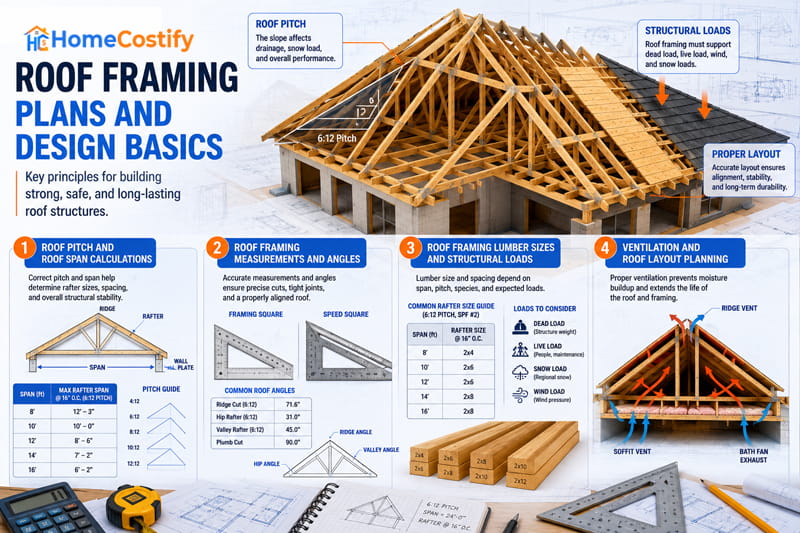
Every successful roof framing project starts long before construction begins. Builders first create a structural plan that determines how the roof will carry weight, maintain balance, and handle long-term weather exposure. The planning stage also affects drainage, attic ventilation, ceiling height, and the overall durability of the roof system.
Different roof styles require different structural layouts. A gable roof does not distribute weight the same way as a hip or flat roof, which means the framing pattern beneath each design must be planned differently from the start.
Roof Pitch and Roof Span Calculations
Roof pitch is one of the first measurements considered during roof frame design. The slope of the roof affects water runoff, snow accumulation, wind exposure, and structural pressure across the entire roof surface.
Steeper roofs usually drain rainwater and snow more effectively, while lower-pitched roofs may require additional waterproofing and reinforcement. Homes in snowy climates often use steeper roof slopes to reduce heavy snow buildup during winter months.
Builders also calculate roof span limitations before construction begins. The distance between supporting walls determines how much weight the framing members must carry and how large the rafters or trusses need to be.
Longer spans generally require stronger support systems, engineered trusses, or larger framing lumber to prevent structural sagging over time. Accurate roof framing measurements help maintain proper balance throughout the structure and reduce stress on individual framing members.
Roof Framing Measurements and Angles
Precision matters throughout the planning process. Small errors in roof framing angles can create uneven roof lines, weak joints, or alignment issues that become visible after installation.
Builders use layout tools such as a framing square and speed square roof framing guides to maintain accurate cuts and consistent spacing patterns across the structure. These tools help establish proper rafter angles, ridge alignment, and overhang dimensions before framing installation begins.
Roof framing details become more complex around valleys, hips, dormers, and intersecting roof sections. Each connection point must align properly so structural loads move evenly through the framing system rather than concentrating pressure in one area.
Even experienced builders spend significant time checking measurements before cutting framing lumber because small layout mistakes can affect the performance of the entire roof assembly.
Roof Framing Lumber Sizes and Structural Loads
Roof framing lumber sizes vary depending on climate conditions, roof pitch, expected loads, and roof span requirements. Homes located in regions with heavy snowfall or strong winds often require larger framing members than homes in milder environments.
Builders must account for permanent structural weight, temporary live loads, and regional weather conditions when selecting lumber dimensions and spacing patterns. Undersized framing materials may weaken under pressure or gradually shift over time.
Modern roof framing plans also consider how structural loads move through the home. Weight from the roof surface must transfer safely into supporting walls and eventually into the foundation below. The framing layout plays a major role in maintaining that structural balance.
Because local building codes vary by region, contractors often review framing requirements before finalizing construction plans. Load ratings, lumber grades, and spacing requirements may differ depending on climate exposure and local regulations.
Ventilation and Roof Layout Planning
Ventilation planning is another major part of roof framing construction. Proper attic airflow helps reduce trapped moisture and excess heat that can slowly damage structural lumber from the inside.
Ridge vents, soffit vents, and attic ventilation channels help regulate airflow throughout the attic space. Without adequate ventilation, moisture may collect around framing materials and gradually weaken wood fibers or roof sheathing panels.
Poor airflow also increases the risk of condensation during seasonal temperature swings. In colder climates, trapped attic heat may contribute to ice dam formation along roof edges, which can eventually lead to water intrusion beneath roofing materials.
The roof framing layout itself can influence airflow patterns inside the attic. Complex roof designs with multiple valleys, dormers, or intersecting slopes sometimes require additional ventilation planning to prevent stagnant air pockets from forming inside enclosed sections of the roof.
Why Roof Framing Plans Matter
Homeowners rarely see the planning work behind a completed roof, but the design stage often determines how well the structure performs years later. A carefully designed framing system helps improve drainage, maintain structural stability, reduce moisture problems, and support the long-term durability of the roof.
Strong roof framing plans also help reduce costly repairs caused by structural imbalance, poor ventilation, or undersized framing materials. In many homes, long-term roof performance begins with the quality of the structural planning underneath.
Common Roof Framing Problems and Mistakes
Even well-built roofs can develop problems over time, especially when framing errors occur during construction or moisture exposure gradually weakens structural materials. Some issues remain hidden inside attic spaces for years before visible warning signs begin appearing throughout the home.
One of the most common structural roof problems involves sagging rafters. When framing members become overloaded, undersized, or weakened by moisture, sections of the roof may begin dipping downward. Sagging areas often appear near the roof ridge or across longer roof spans where structural pressure is concentrated.
Poor ventilation can also create serious long-term damage inside the roof structure. Warm, humid air trapped inside the attic slowly increases moisture levels around wood framing members. Over time, this may lead to wood rot, mold growth, or weakened sheathing panels.
Improper spacing between rafters or trusses is another frequent issue. When framing members are placed too far apart, the roof decking may flex under pressure or fail to distribute loads evenly across the structure.
Some roof framing mistakes occur because builders use lumber that is too small for the roof span or local weather conditions. Undersized framing can create structural movement during heavy snow, strong winds, or seasonal expansion and contraction.
Water intrusion is equally damaging. Small roof leaks may allow moisture to penetrate insulation, decking, and framing lumber long before interior ceiling stains appear inside the home.
Structural shifting may eventually create visible warning signs such as uneven roof lines, cracked drywall, sticking doors, or gaps near ceilings and walls. A professional roof framing inspection can often identify these issues before severe structural damage develops.
Common Roof Framing Issues
| Problem | Possible Cause | Potential Result |
|---|---|---|
| Sagging roof | Weak rafters | Structural stress |
| Moisture buildup | Poor ventilation | Wood rot |
| Uneven roof lines | Improper framing | Roofing failure |
| Cracks near ceilings | Load imbalance | Structural movement |
Roof Framing vs Roof Trusses: What’s the Difference?
Many homeowners use the terms interchangeably, though traditional roof framing and roof trusses are built very differently beneath the roof surface. Both systems support the roof structure and transfer loads into the walls below, but the construction method, flexibility, and structural layout are not the same.
Traditional framing relies on individual rafters assembled directly at the job site. Roof trusses use prefabricated structural units manufactured before installation.
Traditional Roof Framing
- Built on-site using individual rafters and ceiling joists
- Allows greater flexibility for custom roof shapes and complex layouts
- Creates more open attic space for storage or future room conversions
- Easier to modify during remodeling projects
- Common in custom homes and older residential construction
- Usually requires more labor and installation time
Site-built framing gives contractors more control over roof shape and interior ceiling design. Homes with vaulted ceilings, dormers, or irregular roof lines often rely on this approach because framing adjustments can be made during construction.
Roof Trusses
- Prefabricated triangular structural assemblies
- Installed quickly once delivered to the construction site
- Designed for consistent structural performance across large roof spans
- Common in modern residential developments
- Often lowers labor costs during construction
- Less flexible for attic conversions because of internal web members
Most engineered roof trusses are designed using precise load calculations before manufacturing begins. The triangular truss system spreads structural pressure across multiple connection points rather than depending mainly on sloped rafters alone.
Key Differences Between Both Systems
| Feature | Traditional Roof Framing | Roof Trusses |
|---|---|---|
| Construction | Built on-site | Factory-built |
| Flexibility | High | Moderate |
| Attic Space | More open | More limited |
| Installation Speed | Slower | Faster |
| Labor Cost | Higher | Lower |
| Custom Roof Designs | Easier to modify | Less adaptable |
Cost differences often depend on roof complexity, local labor rates, and material pricing. Trusses can reduce construction time on large residential projects, while traditional framing may provide better flexibility for custom homes with unique architectural designs.
Both systems can create durable and reliable roof structures when properly engineered and installed.
Conclusion
The visible surface of a roof only tells part of the story. Beneath the shingles and exterior materials, roof framing supports the entire structure and helps protect the home from long-term structural stress, weather exposure, and shifting loads.
The design of the framing system influences drainage, attic space, ventilation, durability, and overall roof performance. Rafters, trusses, ridge boards, and roof decking each serve different structural roles as roof loads move downward into the walls and foundation.
Learning how roof framing works also makes it easier to recognize warning signs before serious damage develops. Sagging roof lines, ventilation issues, moisture buildup, and structural movement often begin inside the framing long before exterior problems become visible.
For homeowners planning repairs, renovations, or new construction, a better understanding of structural roof systems can lead to smarter decisions and fewer costly surprises over time. A properly built framing structure does far more than hold up roofing materials. It helps determine how well the entire roof system performs for decades.
FAQs About Roof Framing
What is the purpose of roof framing?
Roof framing creates the structural framework that supports the roof surface, distributes weight, and transfers loads into the walls and foundation below.
What are the main parts of roof framing?
Common components include rafters, roof trusses, ridge boards, ceiling joists, roof decking, collar ties, and support beams.
What type of roof framing is strongest?
Engineered truss systems are often considered stronger for large spans because they distribute loads across multiple connected members.
How long does roof framing last?
Properly maintained framing systems can last for decades, especially when moisture exposure and ventilation problems are controlled.
Does roof framing affect roofing costs?
Yes. Roof complexity, framing layout, roof pitch, and structural materials can all influence labor and installation costs.