Roofs do far more than keep rain out. Every section along the perimeter contributes to the way a home handles water, airflow, and long-term exposure to the elements. Among those perimeter features are roof edges, a group of components that often go unnoticed until a problem appears.
Peeling paint, sagging gutters, moisture stains, and rotting trim frequently trace back to issues in these areas.
Most residential roofs include eaves, fascia, soffits, rakes, and drip edges. Each part has a specific purpose, yet none operates in isolation. Rainwater must move away from vulnerable materials, attic spaces need proper airflow, and exposed framing requires protection from repeated moisture exposure.
When one component fails, neighboring materials often suffer the consequences.
Although many homeowners focus on shingles, the outer perimeter of a roofing system deserves equal attention. These sections influence durability, maintenance requirements, and even the lifespan of surrounding building materials.
A closer look at roof edges reveals how several seemingly simple components work as a coordinated defense system against weather-related damage.
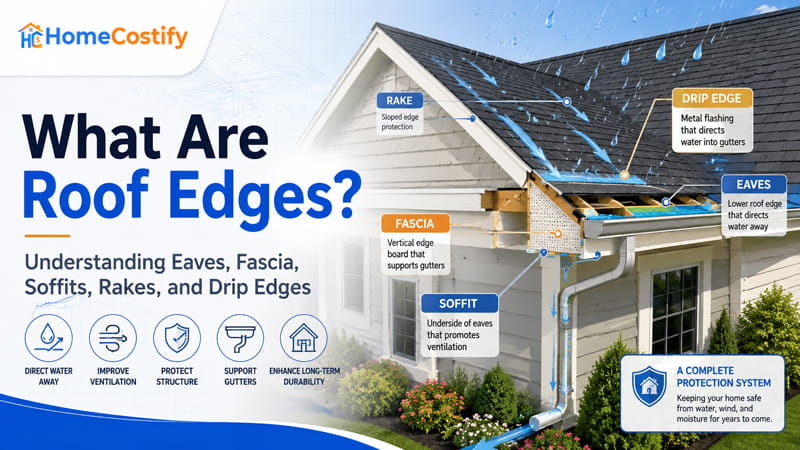
What Are Roof Edges?
Roof edges are the outermost sections located around the perimeter of a roof. They form the transition point between the roofing surface and the exterior walls below. Depending on the roof design, these perimeter areas may include horizontal overhangs, sloped gable ends, exposed trim boards, ventilation elements, and metal flashing designed to control water movement.
In simple terms, the edge of a roof is not a single component. Instead, it refers to the collection of materials and structural features positioned along the boundary of the roofing assembly. These areas define where the roof ends and where the rest of the home’s exterior begins.
Many of these perimeter components are also covered in broader discussions about the parts of a roof because they contribute to both protection and performance.
Why Roof Edges Matter
The importance of roof edges extends well beyond appearance. During heavy rain, these sections guide water away from walls, windows, foundations, and structural materials. Properly designed overhangs reduce direct exposure to moisture, while metal flashing helps prevent water from slipping beneath roofing materials.
Ventilation is another major factor. Components located beneath roof overhangs can support attic airflow, reducing excess heat and moisture buildup. Structural roof protection also depends on these perimeter features. Without adequate safeguards, water can reach wood framing, trim boards, and roof decking, increasing the risk of deterioration over time.
The Main Components of Roof Edges
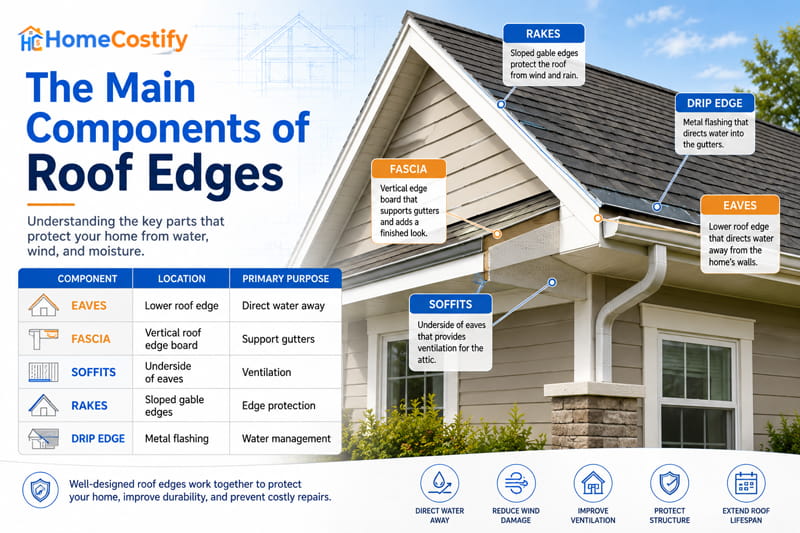
Several individual components make up roof edges, each contributing to protection, roof drainage, roof ventilation, or structural support. Some are highly visible from the ground, while others remain hidden beneath overhangs.
Their combined function creates a protective barrier around the perimeter of the roofing system.
| Component | Location | Primary Purpose |
|---|---|---|
| Eaves | Lower roof edge | Direct water away |
| Fascia | Vertical roof edge board | Support gutters |
| Soffits | Underside of eaves | Ventilation |
| Rakes | Sloped gable edges | Edge protection |
| Drip Edge | Metal flashing | Water management |
The sections below examine how these components function individually and why they remain essential parts of modern residential roofing systems.
Eaves: The First Line of Defense Against Rainwater
Eaves are the portions of a roof that extend beyond the exterior walls of a house. This extension creates a roof overhang that projects outward, creating a barrier between the building envelope and direct rainfall. On many homes, eaves are easy to identify because they form the visible horizontal edge that extends past the siding or brickwork.
The size of a roof overhang varies by architectural style, climate, and roof design. Some homes feature deep projections that provide additional shade and weather protection, while others use shorter overhangs for a cleaner appearance. Regardless of size, eaves remain one of the most important roof edges because they influence how water moves away from the structure.
What Is the Overhang of a Roof Called?
The overhang of a roof is commonly called the eave. In residential construction, the terms “eave” and “roof overhang” are often used interchangeably.
If someone asks, “What is a roof overhang called?” the direct answer is the eave. Likewise, the part of roof that hangs over the exterior wall is generally referred to as the eave. This overhanging edge of a roof provides separation between rainfall and vulnerable building materials below.
The eave also contains several related components. Gutters are frequently attached along this area, while soffits cover the underside. These features work alongside the parts of roof overhang to improve drainage, ventilation, and weather protection.
How Eaves Protect a Home
Rain rarely falls in a perfectly vertical path. Wind-driven storms push water against walls, windows, and doors. Eaves reduce that exposure by directing runoff away from the sides of the house.
Foundation protection is another benefit. Without adequate overhangs, rainwater can collect near the base of exterior walls. Repeated saturation may increase the likelihood of drainage problems around foundations, landscaping, and walkways.
Exterior finishes also benefit from reduced moisture exposure. Siding, trim, paint, and masonry surfaces generally experience less direct rainfall when properly protected by well-designed roof edges. Over time, that reduction in moisture can contribute to lower maintenance requirements and improved durability.
Fascia: Supporting Gutters and Protecting Roof Framing
Fascia is the vertical board installed along the outer perimeter of a roof. Positioned directly beneath the roofing materials, it creates a finished appearance while covering exposed structural elements. Most homeowners recognize the fascia board as the surface where gutters are attached.
Materials vary widely. Wood remains common in many residential neighborhoods, although aluminum, composite products, and PVC alternatives are also used. Regardless of material, the fascia serves both functional and aesthetic purposes.
Among all roof edges, fascia occupies a highly exposed location. It sits at the transition between the roofline and the gutter system, making it one of the first areas affected when drainage problems develop.
Why Fascia Is Important
Gutters rely on a stable attachment point. The fascia board provides that support, allowing the gutter system to remain securely fastened during rainstorms and seasonal weather changes.
Moisture protection is equally important. By covering exposed roof framing members, fascia helps reduce direct contact between structural wood and outdoor conditions. Water intrusion behind gutters can accelerate deterioration, particularly when drainage issues go unnoticed for extended periods.
A damaged roof fascia often reveals itself through peeling paint, discoloration, soft spots, or sections that appear warped. These signs may indicate excessive moisture exposure that requires further inspection.
Fascia and Roof Structure
Fascia does not function independently. It connects directly to structural elements that form part of the roof framing system.
Homeowners interested in the relationship between roof framing and exterior roof components should recognize that fascia acts as a finishing layer attached to the ends of rafters or trusses. Those structural members support the roof assembly above, while the fascia provides protection and a mounting surface for gutters below.
Because of this connection, deterioration at the perimeter can eventually affect nearby structural materials if left unaddressed. Well-maintained roof edges reduce that risk and contribute to the overall longevity of the roofing system.
Soffits: The Ventilation Component of Roof Edges
What Is a Soffit?
A soffit is the finished material installed beneath the eaves. It covers the underside of the roof overhang and creates a clean transition between the roofline and exterior walls.
From the ground, the roof soffit appears as the horizontal surface located underneath the eaves. While many homeowners view it as a decorative feature, its function extends well beyond appearance.
Modern soffits often contain built-in openings that allow air to enter the attic space. These openings are especially common in vented soffit systems designed to improve airflow throughout the roof structure.
What Is the Underside of a Roof Overhang Called?
The underside of a roof overhang is called the soffit.
This answer appears frequently in roofing and construction terminology because the soffit occupies a specific location beneath the eaves. Its placement allows it to conceal structural components while supporting airflow into attic spaces.
Why Soffit Ventilation Matters
Heat and moisture naturally accumulate inside attics. Without adequate air movement, those conditions can contribute to condensation, mold growth, and premature wear of roofing materials.
Soffit ventilation provides an entry point for fresh air. As outside air enters through a vented soffit, it can move upward through the attic and exit through higher ventilation openings. This continuous circulation helps maintain a healthier environment beneath the roof deck.
Temperature regulation is another advantage. Excessive attic heat can place additional stress on roofing materials during warmer months. Proper airflow moderates those conditions and supports long-term performance.
Because ventilation affects multiple parts of a roof system, soffits remain one of the most valuable roof edges for overall building health.
Rakes: Protecting the Sloped Edges of a Roof
A rake is the sloped edge found along the sides of a gable roof. Unlike eaves, which run horizontally, rakes follow the angle of the roof from the ridge downward toward the exterior walls.
These sections create a finished appearance along the gable ends while helping shield exposed materials from weather exposure. On many homes, trim boards and flashing components are installed in this area to strengthen protection.
Difference Between Eaves and Rakes
Although both are located along the perimeter, they occupy different positions and perform different functions.
| Feature | Eaves | Rakes |
|---|---|---|
| Location | Horizontal edge | Sloped edge |
| Found On | All roofs | Gable roofs |
| Purpose | Water control | Edge protection |
Eaves primarily manage runoff and provide overhang protection. Rakes focus on protecting sloped gable edges from weather exposure. Both contribute to the performance of roof edges, but each addresses a different part of the roofline.
Drip Edges: The Critical Water Management Feature
A drip edge is a metal flashing installed along the perimeter of a roof to direct water away from underlying materials. It is typically positioned beneath roofing materials and extends slightly beyond the edge to encourage proper drainage.
A roof drip edge may appear simple, yet it performs a critical function. Without it, water can follow the surface tension of materials and travel backward toward fascia boards, decking, and structural components.
How Drip Edge Flashing Works
Drip edge flashing creates a controlled path for water leaving the roof surface. Instead of allowing runoff to cling to materials, the flashing encourages water to drop cleanly into the gutter system or away from the structure.
This process reduces the chance of moisture reaching vulnerable areas. A properly installed roofing drip edge also helps prevent water intrusion beneath shingles during heavy rainfall and wind-driven storms.
Different types of roof edge flashing are available, with profiles designed for specific roofing applications. The exact configuration often depends on local building practices and the types of roofing materials used on the home.
Roof drip edge flashing is particularly valuable near eaves, where the volume of water leaving the roof tends to be greatest.
Why Drip Edge Is Important
Water exposure is one of the leading causes of deterioration along roof perimeters. A drip edge reduces that risk by directing runoff away from roof decking and exterior trim.
The protection extends to fascia boards as well. When water consistently flows behind gutters, the likelihood of rot and moisture damage increases. A properly installed drip edge minimizes that exposure.
Gutter performance also improves when runoff follows a predictable path. Water enters the gutter more efficiently rather than flowing behind it.
For homeowners asking, “What is a drip edge on a roof?” the simplest answer is that it is a protective flashing designed to control water movement. As for whether every roof needs a drip edge, modern roofing systems generally benefit from its presence because it strengthens moisture protection across vulnerable perimeter areas.
How Roof Edge Components Work Together
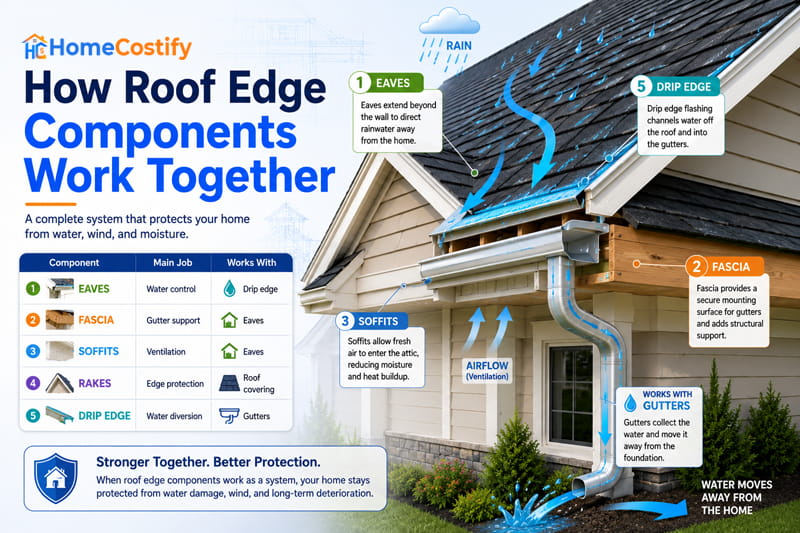
Viewed separately, eaves, fascia, soffits, rakes, and drip edges may seem like independent features. In reality, each one supports a specific part of a larger system responsible for managing water, airflow, and weather exposure around the roofline.
A Complete Roof Protection System
Looking at each component individually makes it easy to miss the bigger picture. Eaves, fascia, soffits, rakes, and drip edges all perform different jobs, yet they are interconnected. A weakness in one area can affect the performance of the others.
Rainwater provides a good example. Water leaves the roof surface and moves toward the perimeter. Eaves help direct that runoff away from exterior walls. Drip edges guide water into a controlled path before it reaches gutters. The fascia provides the support needed to keep gutters securely attached. If any part of that sequence fails, water may reach materials that were never intended to remain wet.
Airflow follows a similar pattern. Soffits allow fresh air to enter attic spaces, helping reduce moisture accumulation and excessive heat. Better ventilation can support the long-term condition of roofing materials and structural components.
Rakes address another area of exposure. Located along gable ends, they help shield sloped roof boundaries from weather-related wear.
This interaction explains why roof edges should be viewed as a coordinated protection system rather than a collection of unrelated parts.
| Component | Main Job | Works With |
|---|---|---|
| Eaves | Water control | Drip edge |
| Fascia | Gutter support | Eaves |
| Soffits | Ventilation | Eaves |
| Rakes | Edge protection | Roof covering |
| Drip Edge | Water diversion | Gutters |
A well-designed roof perimeter relies on each element performing its intended function. When these components work together, the home gains stronger protection against moisture, heat buildup, and premature deterioration.
Why Roof Edges Matter More Than Most Homeowners Realize
Most homeowners notice these areas only when something goes wrong. A loose gutter, peeling paint, or moisture stain often attracts attention first, even though the underlying issue may have been developing quietly for years.
Protection Against Water Damage
Many roofing problems begin at the perimeter. Water rarely damages a roof all at once. More often, it finds a small opening, follows an unprotected path, or repeatedly reaches materials that should remain dry. Over months or years, minor exposure can turn into costly repairs.
This is one reason roof edges deserve more attention than they typically receive. They form the transition zone where water leaves the roof and encounters gutters, flashing, trim boards, siding, and other exterior materials. A breakdown in that area can increase the likelihood of moisture intrusion.
According to the National Roofing Contractors Association (NRCA), roof edge systems play a critical role in protecting roofing assemblies from water infiltration and weather-related damage while supporting long-term roof performance.
That observation reflects what inspectors often see in the field. Rotting wood, deteriorated trim, damaged decking, and stained exterior surfaces frequently originate near the roof perimeter. Water that bypasses drainage components can gradually reach framing members and adjacent building materials.
Support for Long-Term Roof Performance
A roof is not simply a layer of shingles. It is a system composed of structural, protective, and drainage-related components. The perimeter plays an important role in preserving that system.
When roof edges effectively manage runoff and reduce moisture exposure, roofing materials are subjected to less stress over time. Gutters remain better protected, fascia boards stay drier, and ventilation pathways remain functional.
Durability is often measured over decades rather than seasons. Small details at the perimeter can influence whether a roof reaches its expected service life or develops preventable issues years earlier than anticipated.
For homeowners focused on long-term maintenance costs, these perimeter components are worth monitoring. Their condition affects much more than curb appeal.
How Roof Edges Help Protect Homes From Weather and Moisture
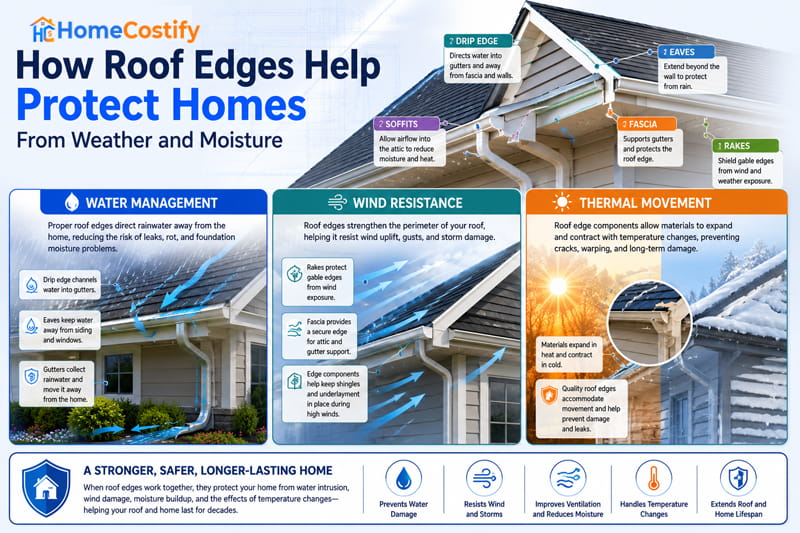
Weather exposure affects every part of a roofing system, but perimeter components face some of the harshest conditions. Rain, wind, and seasonal temperature changes constantly test the materials responsible for protecting the roof’s outer boundaries.
Water Management
Weather exposure is constant. Rain, snow, humidity, and seasonal temperature changes place pressure on every part of a roofing system. The perimeter is particularly important because it controls how water leaves the structure.
Roof edges guide runoff away from vulnerable materials and help reduce prolonged moisture exposure. Proper drainage limits the amount of water reaching fascia boards, wall surfaces, roof decking, and other moisture-sensitive areas.
Without effective water management, deterioration often accelerates. Paint may fail prematurely, wood components may absorb moisture, and hidden damage can develop beneath finished surfaces.
Wind Resistance and Thermal Movement
Based on SPRI roof edge design standards, roof edge systems are engineered to manage water drainage, resist wind loads, and accommodate thermal movement that occurs as roofing materials expand and contract.
Wind can place significant stress on roofing materials, particularly near exposed perimeters. Properly designed edge assemblies help secure vulnerable areas while reducing the chance of weather-related damage.
Temperature fluctuations introduce another challenge. Roofing materials expand during warm weather and contract as temperatures drop. Edge systems must accommodate that movement without compromising performance.
Common Signs of Roof Edge Damage
Damage along the perimeter is often visible long before major structural problems develop. Spotting early warning signs allows homeowners to address issues before repair costs increase.
Damaged Fascia
Fascia boards are highly exposed to water and weather. Rotting wood, peeling paint, discoloration, and soft spots often indicate moisture-related deterioration. Gutters pulling away from the house may also signal underlying fascia damage.
Soffit Deterioration
Soffits can develop cracks, staining, warping, or sagging. These conditions may point to ventilation problems, excess moisture, or long-term exposure to weather conditions.
Loose Drip Edge Flashing
Storm activity, aging fasteners, and repeated temperature fluctuations can loosen drip edge flashing. Gaps or lifted sections should be inspected because they may allow water to reach underlying materials.
Water Stains Near Roof Overhangs
Dark streaks, stains, or discoloration beneath eaves may indicate drainage problems. Water should move away from the structure rather than repeatedly contacting trim and wall surfaces.
| Warning Sign | Possible Cause |
|---|---|
| Peeling paint | Moisture exposure |
| Rotting fascia | Water intrusion |
| Sagging soffit | Ventilation issues |
| Loose flashing | Storm damage |
Homeowners should not assume visible damage is purely cosmetic. In many cases, these warning signs indicate a larger moisture-related issue affecting roof edges.
Roof Edge Maintenance Tips
Routine maintenance does not need to be complicated. A few periodic checks can help identify developing issues before they lead to more extensive repairs.
Inspect Gutters Regularly
Leaves, twigs, and debris can restrict water flow. Overflowing gutters increase the amount of moisture reaching fascia boards and nearby building materials.
Check Fascia and Soffits
A visual inspection from ground level can reveal peeling paint, staining, cracks, or sagging sections. Addressing small problems early often prevents more extensive repairs later.
Look for Damaged Drip Edge Flashing
Metal flashing should remain secure and properly aligned. Bent, loose, or missing sections may reduce drainage performance and expose vulnerable materials to water.
Schedule Periodic Roof Inspections
Professional inspections can identify developing issues that are difficult to see from the ground. Regular evaluations help preserve the condition of roof edges and other roofing components before minor concerns become major repairs.
Conclusion
Roof edges are far more than finishing details. Eaves, fascia, soffits, rakes, and drip edges each contribute to drainage, ventilation, and structural protection. Their effectiveness comes from the way they function as a system rather than as isolated components.
For homeowners, regular inspections and basic maintenance can help preserve these perimeter features, reduce the risk of moisture-related damage, and support the long-term performance of the entire roofing system.
FAQs About Roof Edges
What is the edge of a roof called?
The edge of a roof may refer to several components, including eaves, rakes, fascia boards, and drip edges. The specific term depends on the location being discussed.
What is a roof overhang called?
A roof overhang is commonly called an eave. It extends beyond the exterior wall and helps direct rainwater away from the structure.
What is the underside of a roof overhang called?
The underside of a roof overhang is called the soffit. Many homes use soffits to improve attic ventilation and conceal structural elements.
What is the difference between eaves and rakes?
Eaves are horizontal perimeter sections located along the lower portion of a roof. Rakes are sloped edges found on gable roofs.
What is a drip edge on a roof?
A drip edge is a metal flashing installed along the roof perimeter to direct water away from underlying materials and into gutters.