Few household issues attract attention as quickly as a leaking pipe or a broken furnace. Air quality problems rarely create the same urgency. A home ventilation system can be underperforming for months while the house continues to look clean and well maintained. Dust is removed regularly, surfaces are wiped down, and rooms appear perfectly normal. The air itself often tells a different story.
Home ventilation refers to the process of replacing indoor air with fresh air from outside while removing stale air from inside the house. The goal is simple. Air should not remain trapped indoors indefinitely. Everyday activities continuously add moisture, odors, particles, and gases to the living space. Without regular air movement, those contaminants can accumulate over time.
Many modern homes are also built with tighter construction methods than older houses. Energy efficiency has improved, but fewer natural gaps exist for air to move through the building envelope. As a result, indoor air quality has become a larger consideration than it was decades ago.
Ventilation helps manage that challenge. It supports healthier indoor conditions, controls excess moisture, and contributes to a more comfortable living environment throughout the year.
What Is Home Ventilation?
Air inside a house is constantly changing. Cooking releases heat and particles. Showers add moisture. Cleaning products introduce chemical compounds into the air. Even normal breathing contributes water vapor and carbon dioxide. Home ventilation provides a pathway for those byproducts to leave the building while allowing outdoor air to enter.
The concept itself is straightforward. Air moves into the house, air moves out, and that continuous exchange helps maintain a healthier indoor environment. The process can occur naturally through openings in the building or through mechanical equipment that actively moves air. Regardless of the method, the objective remains the same: prevent indoor air from becoming stagnant.
The Purpose of Home Ventilation
The primary purpose of home ventilation is to support a continuous air exchange between the indoors and outdoors. Fresh air enters the living space while stale air is removed. That cycle helps reduce the concentration of pollutants, moisture, and odors that naturally accumulate during daily life.
A properly functioning fresh air ventilation strategy does more than introduce outdoor air. It also encourages indoor contaminants to leave the building. Cooking fumes, cleaning product residues, and excess humidity all become easier to manage when air is moving consistently. The result is an indoor environment that feels fresher and remains less prone to moisture-related issues.
Home ventilation also contributes to long-term building performance. Indoor air that remains trapped for extended periods can create conditions that affect both comfort and the materials inside the home.
Why Homes Need Continuous Air Exchange
A house generates moisture every day. A single shower can release a significant amount of water vapor into the air. Cooking adds heat, steam, and odors. Laundry equipment contributes additional humidity. Even routine activities such as washing dishes or mopping floors introduce moisture into indoor spaces.
Household products create another challenge. Paints, adhesives, cleaners, and furnishings may release airborne compounds over time. Those substances become more concentrated when air remains trapped indoors. An effective air ventilation for house environments helps dilute those contaminants before they accumulate.
A household ventilation strategy also supports moisture management. Air that remains stagnant for long periods can create damp conditions around windows, bathrooms, and other vulnerable areas. A fresh air system helps maintain circulation and reduces the likelihood of excessive buildup.
Why Home Ventilation Matters

Ventilation affects much more than the way a room feels. Air movement influences indoor air quality, humidity levels, odors, and even the condition of building materials. Many of the most common household comfort complaints can be traced back to inadequate airflow or insufficient air exchange.
The effects often develop gradually. Rooms may begin to feel stuffy. Windows may collect condensation during colder months. Odors may linger longer than expected. Each symptom points to the same underlying issue: indoor air is not being refreshed as effectively as it should be. Home ventilation helps address those conditions before they become larger problems.
Improving Indoor Air Quality
Indoor air contains far more than oxygen and nitrogen. Airborne pollutants can originate from cleaning products, furnishings, building materials, pets, and everyday household activities. Volatile organic compounds, often referred to as VOCs, are one example. These compounds may be released slowly over time and can contribute to poor indoor air quality.
Odors provide another clue. Cooking smells, pet odors, and other airborne contaminants tend to linger longer when stale air remains trapped indoors. Fresh outdoor air helps dilute those pollutants and reduces their concentration.
According to the U.S. Environmental Protection Agency (EPA), inadequate ventilation allows indoor pollutants to accumulate because there is not enough fresh outdoor air entering the home to dilute contaminants or carry them outside. The problem often becomes more noticeable in tightly sealed homes where natural air leakage has been reduced.
Controlling Humidity and Moisture
Humidity is a normal part of indoor living. Problems begin when moisture enters the air faster than it can leave. Bathrooms, kitchens, laundry rooms, and occupied living spaces all contribute water vapor throughout the day.
Excess humidity increases the likelihood of condensation forming on cool surfaces. Windows are often the first place where the issue becomes visible. Water droplets may seem harmless at first. Repeated exposure can create conditions that support mold growth and other moisture-related concerns.
Proper ventilation helps maintain healthier humidity levels by removing moisture-laden air before it accumulates. Consistent humidity control reduces stress on indoor surfaces and supports a more stable indoor environment.
Supporting Comfort and Everyday Living
A room does not need to be visibly dirty to feel uncomfortable. Air that lacks freshness often creates a sense of stuffiness that occupants notice immediately. Odors may linger longer than expected. Certain spaces may feel heavier or less pleasant despite being clean.
Home ventilation contributes to everyday comfort by refreshing indoor air on a regular basis. Air movement reduces the feeling of stagnation that develops when indoor air remains trapped. The difference is often subtle. Over time, however, fresher indoor conditions can make a noticeable impact on how living spaces feel throughout the day.
Protecting the Home Itself
Moisture affects more than comfort. Building materials can also experience long-term exposure when humidity remains elevated for extended periods. Insulation may lose effectiveness if it becomes damp. Drywall can absorb moisture and become more vulnerable to deterioration.
Wood framing and other structural materials also benefit from balanced indoor conditions. Repeated cycles of moisture accumulation increase the likelihood of damage developing over time. Prevention is usually easier and less expensive than repair.
A well-functioning ventilation strategy supports the durability of the home by reducing conditions that contribute to moisture damage. That benefit of home ventilation often goes unnoticed until problems begin to appear.
| Area | Benefit |
|---|---|
| Indoor Air Quality | Dilutes indoor pollutants |
| Humidity Control | Reduces excess moisture |
| Comfort | Minimizes stuffiness |
| Home Protection | Helps prevent moisture damage |
| Everyday Living | Supports fresher indoor conditions |
How Home Ventilation Works
Air inside a house never stays completely still. Every day, occupants generate heat, moisture, odors, and airborne particles through routine activities. Cooking dinner, taking a shower, doing laundry, and even breathing affect indoor conditions. Home ventilation depends on a continuous movement of air that removes unwanted indoor contaminants while bringing outdoor air into the living space.
The process may appear simple from the outside. Air enters the house, air leaves the house, and indoor conditions remain more balanced as a result. The details behind that movement vary from one property to another.
Natural airflow, mechanical equipment, and building design can all influence performance. Anyone asking how does ventilation work in a house is ultimately asking how fresh outdoor air replaces indoor air before pollutants and excess moisture begin to accumulate.
Fresh Air Enters the Home
Every home needs a path for outdoor air to enter the building. In some situations, air moves through windows, doors, vents, and other openings. Wind pressure and normal differences between indoor and outdoor conditions often contribute to that movement. Older homes frequently experience additional airflow through small gaps around building materials.
Mechanical systems can also introduce fresh air into a home. Dedicated ventilation equipment creates a more controlled flow than relying entirely on outdoor conditions. Regardless of the method, home ventilation requires a reliable source of incoming air. Without that supply, indoor air becomes increasingly isolated from the outdoor environment.
Stale Indoor Air Leaves the House
Fresh outdoor air entering the home is only part of the process. Air already inside the building must also leave. Moisture generated by showers, cooking, and everyday living activities needs an exit path. Odors from food preparation, pets, and household products also benefit from regular removal.
Airborne pollutants can accumulate when stale air remains trapped indoors for extended periods. Dust particles, chemical residues, and combustion byproducts may remain suspended within living spaces longer than intended. Effective home ventilation creates opportunities for those contaminants to leave the building rather than continuing to circulate throughout occupied rooms.
Air Exchange Happens Continuously
Ventilation works best when air exchange occurs on a regular basis rather than only during occasional bursts of airflow. Indoor conditions change throughout the day. New moisture enters the air. Additional odors develop. Occupants continue generating carbon dioxide and other byproducts associated with normal living.
A well-functioning fresh air ventilation strategy supports a steady replacement cycle. Fresh outdoor air enters while indoor air exits. That balance helps maintain healthier indoor conditions over time. Whether a home uses a home fresh air system or a more comprehensive air ventilation system, the objective remains consistent. Home ventilation performs most effectively when air movement continues often enough to prevent contaminants, humidity, and stale air from building up indoors.
Types of Home Ventilation
Climate conditions, building design, occupancy patterns, and construction methods all influence how ventilation is achieved. Home ventilation generally falls into several broad categories that differ in both scope and operation. Each serves the same basic purpose of replacing indoor air with outdoor air, yet the way that exchange occurs can vary considerably.
Many homeowners encounter these categories without realizing there are important distinctions between types of ventilation systems. A bathroom exhaust fan, an open window, and a dedicated whole-house system all contribute to ventilation, but they do not perform the same function.
Natural Ventilation
Natural ventilation relies on outdoor airflow moving through openings in the building. Windows, doors, and other intentional openings allow air to enter and leave the home without the assistance of mechanical equipment. This approach has been used for centuries and remains common in many houses today.
Weather conditions play a major role in performance. Wind speed, outdoor temperature, and seasonal changes can all affect how much air enters the building. Natural ventilation represents the simplest form of home ventilation because it does not require fans, motors, or dedicated mechanical components. Air movement occurs through the interaction between the building and its surroundings.
Spot Ventilation
Certain areas of a house produce concentrated moisture, odors, or pollutants. Spot ventilation addresses those locations directly. Bathroom exhaust fans and kitchen range hoods are among the most common examples.
Rather than serving the entire home, these systems focus on a specific room or activity. Steam from a shower can be removed before humidity spreads throughout the house. Cooking odors and airborne grease particles can be captured closer to their source. Home ventilation often performs better when localized problem areas receive targeted airflow where it is needed most.
Whole-House Ventilation
Whole-house ventilation serves the entire building instead of focusing on individual rooms. Air exchange occurs on a broader scale, helping maintain more consistent indoor conditions throughout the home. Mechanical equipment typically supports this process by creating predictable airflow patterns that operate regardless of changing outdoor conditions.
Many modern homes rely on whole-house ventilation because tighter construction methods reduce natural air leakage. Continuous air movement helps support indoor air quality while limiting excessive moisture accumulation across multiple living spaces.
Whole-house systems can use different ventilation strategies, including exhaust, supply, and balanced approaches. Each method moves air differently, although all are intended to support more comprehensive home ventilation throughout the building.
| Type | Primary Purpose |
|---|---|
| Natural Ventilation | Uses outdoor airflow through openings such as windows and doors |
| Spot Ventilation | Removes moisture, odors, or pollutants from specific rooms |
| Whole-House Ventilation | Supports continuous air exchange throughout the home |
Home Ventilation and Modern Homes
Residential construction has changed significantly over the past several decades. Older houses often allowed outdoor air to move through numerous gaps, cracks, and openings in the building envelope. Modern construction places far greater emphasis on energy efficiency. As a result, air movement through the structure is often more restricted than it once was.
That shift has created new expectations for home ventilation. Indoor air quality, humidity management, and controlled airflow have become increasingly important as homes grow more airtight. The methods used to ventilate modern houses frequently differ from those found in older residential buildings.
Tighter Building Envelopes Reduce Natural Air Leakage
Energy-efficient construction focuses on limiting unwanted heat loss and heat gain. Better insulation, improved windows, advanced weather sealing, and tighter building envelopes contribute to lower energy consumption. These improvements deliver important benefits, but they also reduce the amount of uncontrolled airflow entering and leaving the house.
Natural air leakage once provided a degree of incidental ventilation in many homes. Modern construction limits that exchange. Home ventilation therefore becomes more intentional. Air movement is less likely to occur automatically through random gaps in the structure, making dedicated airflow strategies increasingly valuable.
Mechanical Systems Play a Larger Role Today
Mechanical equipment now performs a larger share of ventilation duties in many homes. HVAC systems frequently operate alongside dedicated ventilation components to support indoor comfort and air quality. Temperature control alone does not address moisture, odors, or indoor pollutants. Air movement remains a separate consideration.
Based on ASHRAE Standard 62.2, residential ventilation is intended to provide acceptable indoor air quality by continuously replacing stale indoor air with outdoor air while removing pollutants at their source. The standard has become a widely referenced benchmark for ventilation design in U.S. homes.
Modern residential construction continues to place greater emphasis on controlled airflow. Home ventilation has become an essential part of maintaining healthy indoor environments while preserving the energy-efficiency benefits that homeowners expect from contemporary building practices.
Signs Your Home May Have Poor Ventilation
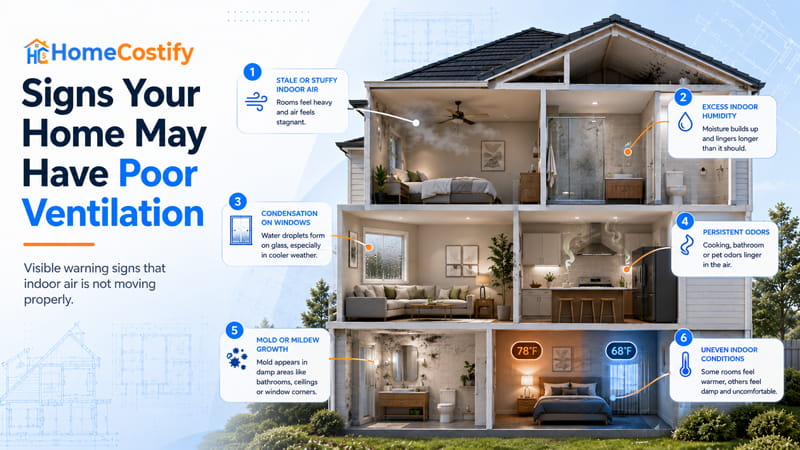
Ventilation problems rarely announce themselves with a flashing warning light. The clues are usually much less dramatic. A room feels uncomfortable even after cleaning. Moisture lingers longer than expected after a shower. A window develops water droplets on a cold morning. Small changes like these often appear before larger air quality or moisture issues develop.
Poor airflow affects daily living in subtle ways at first. Indoor air may feel heavier. Odors may remain trapped longer than they should. Humidity levels can rise without obvious notice. Home ventilation keeps indoor air moving, so changes in air movement often create visible symptoms throughout the house.
Recognizing those symptoms early can prevent minor concerns from turning into more expensive problems later.
Stale or Stuffy Indoor Air
Fresh indoor air feels different. Rooms tend to feel lighter and more comfortable when air exchange occurs regularly. A lack of airflow can create the opposite experience. Air may feel stagnant even when the house is clean and well maintained.
Bedrooms often reveal the problem first. A room can feel stuffy after a night with closed doors and windows. Living spaces may develop a lingering sensation that fresh outdoor air never reaches the area. Among the most common signs of poor ventilation, stale indoor air usually appears before moisture or mold issues become visible.
Excess Indoor Humidity
Everyday activities add moisture to the air. Showers, cooking, laundry, and even normal breathing contribute water vapor throughout the day. Indoor humidity rises quickly when that moisture has nowhere to go.
Bathrooms provide a clear example. Steam may remain in the room long after a shower ends. Kitchen surfaces can feel damp following heavy cooking sessions. Elevated humidity can make indoor spaces feel warmer than the thermostat reading suggests. Home ventilation removes moisture before it accumulates and creates uncomfortable conditions.
Condensation on Windows
Water droplets on interior window glass often signal excessive indoor moisture. The effect becomes more noticeable during colder months when warm indoor air meets cooler window surfaces.
A small amount of condensation is not unusual during certain weather conditions. Frequent condensation across multiple windows tells a different story. Moisture levels inside the house may be exceeding what normal airflow can remove. Window condensation frequently appears among the earliest warning signs of poor ventilation because it is easy to see and difficult to ignore.
Persistent Odors
Cooking smells should fade after a meal. Bathroom odors should not linger for hours. Pet odors should not dominate an otherwise clean room. Lingering smells often indicate that indoor air is not being replaced often enough.
Air carries odors throughout a house. Without adequate airflow, those odors remain trapped indoors and continue circulating through occupied spaces. Home ventilation helps remove odor-causing particles before they become a permanent part of the indoor environment. A house that consistently retains smells may be struggling with insufficient air exchange.
Mold or Mildew Growth
Mold requires moisture to grow. Areas with repeated humidity exposure create favorable conditions for development over time. Bathrooms, laundry rooms, basements, and poorly ventilated corners often become the first locations where mold or mildew appears.
Dark spots around window frames, ceiling corners, or bathroom surfaces should not be ignored. Visible mold growth may indicate that moisture remains present longer than it should. Airflow alone cannot solve every mold problem, but inadequate home ventilation frequently contributes to conditions that allow mold colonies to establish themselves.
Uneven Indoor Conditions
Temperature and humidity differences between rooms can point toward airflow issues. One room may feel noticeably warmer than the rest of the house. Another may feel damp despite similar outdoor conditions.
Poor room ventilation often creates these inconsistencies. Air circulates unevenly, leaving certain areas feeling disconnected from the rest of the home. A bedroom at the end of a hallway may feel stuffy while nearby rooms remain comfortable. Ventilation in room conditions should feel reasonably consistent across occupied spaces. Significant differences often indicate airflow challenges that deserve closer attention.
Simple Ways to Improve Home Ventilation

Major upgrades are not always necessary. Small adjustments can increase airflow and reduce moisture buildup in many homes. Homeowners often begin with simple habits before evaluating larger ventilation improvements.
Use Exhaust Fans Consistently
Bathroom exhaust fans remove moisture close to its source. Kitchen exhaust systems capture cooking odors, heat, and airborne particles. Running these fans during and shortly after moisture-producing activities can significantly reduce indoor humidity levels.
Open Windows When Conditions Allow
Outdoor conditions influence the effectiveness of natural airflow. Mild weather creates opportunities for fresh air to enter the house and replace stale indoor air. Even short periods of window opening can refresh indoor spaces.
Keep Air Pathways Clear
Furniture, storage items, and household clutter can restrict airflow between rooms. Air moves more freely when pathways remain unobstructed. Interior doors, vents, and registers should remain clear whenever possible.
Consider a Whole-House Ventilation Strategy
A whole-house system provides more consistent air exchange throughout the building. Homes with tighter construction often benefit from controlled airflow that operates independently of outdoor weather conditions. Home ventilation becomes more predictable when fresh outdoor air and stale indoor air follow designated pathways.
Conclusion
Home ventilation is the continuous movement of air into and out of a house. Fresh outdoor air replaces stale indoor air while moisture, odors, and airborne pollutants are removed from occupied spaces. The process influences far more than comfort alone.
Indoor air quality depends heavily on regular air exchange. Humidity levels become easier to manage when moisture does not remain trapped indoors. Everyday living conditions also improve. Rooms feel fresher, odors dissipate more quickly, and indoor environments remain more comfortable throughout the year.
Modern homes place greater emphasis on energy efficiency than previous generations. Tighter construction reduces uncontrolled air leakage, creating a greater need for intentional ventilation strategies. Whether airflow occurs naturally, through localized exhaust equipment, or through a whole-house system, consistent air exchange remains one of the most important elements of a healthy indoor environment.
FAQs About Home Ventilation
What is the best way to ventilate a home?
A combination of natural airflow, spot ventilation, and whole-house ventilation generally produces the best results. The ideal setup depends on climate, home design, occupancy levels, and indoor air quality goals.
What is home ventilation called?
Home ventilation is commonly described as residential ventilation. The term refers to the process of replacing indoor air with outdoor air while removing moisture, odors, and airborne contaminants.
What are the signs of poor home ventilation?
Common warning signs include stale air, excess humidity, window condensation, lingering odors, mold growth, and uneven indoor conditions. These symptoms often indicate inadequate air exchange.
How much ventilation does a house need?
Ventilation needs vary according to home size, occupancy, climate, and building design. Residential ventilation standards often use airflow rates and air-change measurements to evaluate adequate ventilation levels.
Which type of ventilation is most effective?
Whole-house mechanical ventilation usually provides the most consistent results because airflow remains controlled regardless of outdoor weather conditions. Natural ventilation and spot ventilation still serve valuable functions in many homes.