Asphalt shingles dominate residential roofing across the United States. Drive through a subdivision in Texas, Ohio, Florida, or North Carolina and the same pattern appears again and again. Roof styles may change from one neighborhood to the next, yet asphalt-covered roofs remain a familiar sight.
Price plays a role, but cost alone does not explain their popularity. A roof replacement often involves balancing appearance, weather exposure, local contractor availability, and long-term ownership plans.
Few roofing materials sit in the middle of all those considerations as comfortably as asphalt shingles. That position has kept them at the center of the U.S. roofing market for decades.
Product choices have expanded considerably over the years. Basic asphalt roof shingles still exist, though many roofs now use thicker designs that create deeper shadow lines and a more textured appearance from the street.
Colors have expanded as well. A roof no longer has to be limited to a flat black or gray finish.
What Are Asphalt Shingles?
Asphalt shingles are the roofing material found on a large share of American homes. They appear on modest ranch houses, suburban developments, and custom-built properties alike. Roof shapes and architectural styles may vary from one region to another, yet these shingles continue to show up in nearly every market across the country.
Each shingle covers only a small portion of the roof. Once hundreds of pieces are installed in overlapping rows, they form a continuous surface that directs water toward gutters and away from the house. From ground level, the roof may look like a single layer. Up close, the pattern becomes much easier to see.
Modern asphalt shingles are built from several materials pressed together into a single product. A fiberglass mat sits at the center, surrounded by asphalt and topped with protective granules. Every layer serves a different purpose. Remove one component and the finished product would look and behave very differently.
Older products often relied on organic materials rather than fiberglass. Those shingles contained paper-based materials saturated with asphalt and typically carried more weight. Fiberglass gradually became the industry standard. Most products sold today follow that construction method.
Weather places constant pressure on a roof throughout the year. Summer heat, heavy rain, hail, wind, and freezing temperatures all leave their mark over time. Roofing materials face those conditions every day. Asphalt shingles remain popular partly because they can perform across a wide range of climates without moving into the price category occupied by slate, tile, or other premium roofing systems.
Main Components of Asphalt Shingles
Several layers come together to create a finished asphalt shingle. Each material occupies a specific position within the product, and the roof would perform very differently if one of those layers were missing. While the finished shingle appears simple from the ground, its construction is more complex than many people realize.
Base Mat
The base mat forms the internal framework of the shingle. Most products sold today use a fiberglass mat, a lightweight material that resists tearing and holds its shape under changing weather conditions. Fire resistance roof also improved after fiberglass became the dominant choice across the industry.
Older shingles often relied on organic mats made from recycled paper saturated with asphalt. Those products still exist in limited situations, though they occupy a much smaller share of the market than they once did.
Asphalt Coating
A thick asphalt coating surrounds the base mat and gives the shingle its weather-resistant qualities. This layer creates the barrier that keeps rain and melting snow from reaching the roof deck below. Flexibility also comes from the asphalt itself.
Temperature changes cause roofing materials to expand and contract throughout the year, and this layer absorbs much of that movement.
Surface Granules
The outer surface is covered with ceramic-coated mineral granules. Roof color begins here. These granules also create the texture and depth visible from the street while standing between the sun and the asphalt underneath.
Years of direct ultraviolet exposure can gradually break down exposed asphalt, which is why this protective layer plays such a large role in the life of the roof.
Types of Asphalt Shingles
Walk through a roofing supplier’s warehouse and dozens of shingle products may appear nearly identical at first glance. The differences become easier to spot once bundles are opened and installed on a roof. Thickness changes.
Shadow lines become deeper. Some roofs look flat and uniform, while others create texture that can be seen from across the street.
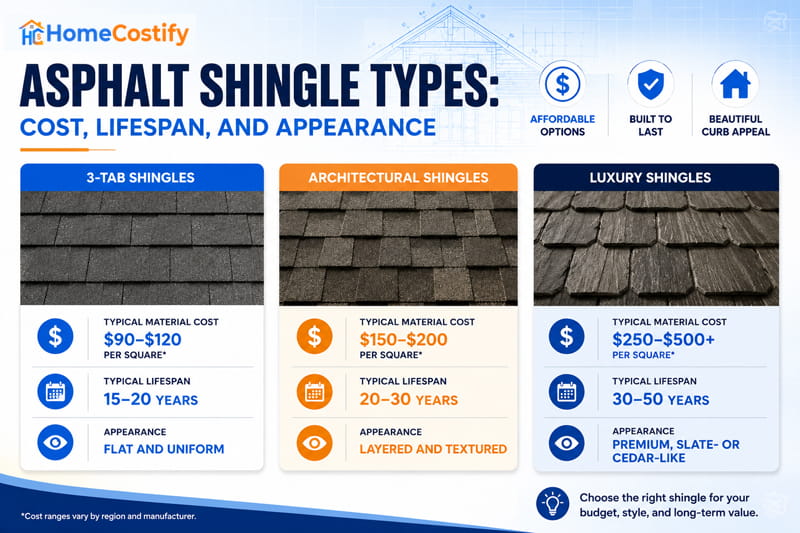
Most residential products fall into three categories: Strip Shingles, Architectural Shingles, and Luxury Shingles. The jump from one category to the next usually affects appearance before anything else. Price follows a similar pattern. Service life often moves upward as more material is added to the shingle itself.
Strip Shingles (3-Tab Shingles)
Strip Shingles, often called 3-tab shingles, represent the traditional version that dominated American neighborhoods for decades. Each shingle contains cutouts that create the appearance of three separate tabs once installed. The finished roof forms a clean, uniform pattern from edge to edge.
Older subdivisions frequently feature this style. Many roofs installed during the 1980s, 1990s, and early 2000s relied on 3-tab products because material costs stayed relatively low compared with thicker alternatives. The design also remained consistent regardless of roof size or house style.
A roof covered with 3-tab shingles tends to look flatter than newer products. Deep shadow lines are largely absent. Texture remains minimal. That simpler appearance is one reason many builders and roofing companies gradually shifted toward architectural products as pricing became more competitive.
Service life generally falls within the 15- to 20-year range, though climate conditions can push actual results higher or lower. Roofs exposed to intense sunlight year after year often age differently than roofs located in cooler regions.
Architectural Shingles (Dimensional Shingles)
Architectural Shingles occupy the middle ground of the market and appear on a large percentage of newer homes. In many areas, they have replaced 3-tab products as the standard choice for roof replacements and new construction projects.
The difference becomes obvious once bundles are placed side by side. Architectural shingles contain multiple laminated layers, creating a thicker profile than traditional 3-tab products. From the curb, that added thickness produces darker shadow lines and a more dimensional appearance across the roof surface.
Many manufacturers design these shingles to imitate the depth associated with wood roofing without replicating every detail. The result feels less flat and more substantial. Larger homes often benefit the most because expansive roof sections become a prominent visual feature.
Price increases compared with basic 3-tab shingles, though the gap is usually smaller than many people expect. For that reason, Architectural Shingles frequently become the default recommendation during roof replacement projects.
Luxury Shingles
Luxury Shingles sit at the top of the asphalt shingle market. Appearance drives much of their appeal. Some profiles resemble natural slate, while others borrow visual characteristics from hand-split cedar shakes.
The added material is immediately noticeable. Individual shingles often appear thicker, heavier, and more detailed than lower-tier products. Roof surfaces gain stronger shadow patterns, creating a look that changes throughout the day as sunlight moves across the house.
Many premium homes use slate or cedar as a design reference. Luxury Shingles attempt to capture a similar visual character without moving into the price range associated with natural stone roofing. The finished roof can dramatically alter how a house looks from the street.
Material costs usually land above both Architectural Shingles and 3-tab products. Buyers attracted to this category often place appearance near the top of the decision-making process.
Comparison of Asphalt Shingle Types: Cost, Lifespan, and Appearance
| Shingle Type | Typical Material Cost per Square* | Typical Lifespan | Appearance |
|---|---|---|---|
| 3-Tab Shingles | $90–$120 | 15–20 Years | Flat and Uniform |
| Architectural Shingles | $150–$200 | 20–30 Years | Layered and Textured |
| Luxury Shingles | $250–$500+ | 30–50 Years | Premium, Slate- or Cedar-Like |
Note: Material costs only. Labor, tear-off, underlayment, flashing, roof complexity, and regional pricing can significantly affect total project costs.
Benefits of Asphalt Shingles
The popularity of asphalt shingles roofing did not happen by accident. Roofing materials have competed for decades on price, appearance, and service life, yet asphalt-based products continue to dominate large portions of the U.S. housing market. A roof replacement can easily cost thousands of dollars, so material selection often becomes one of the biggest decisions in the project.
Several factors continue to drive demand across the country:
- Affordability: Materials such as natural slate, clay tile, and metal roofing can push project costs much higher. Asphalt shingles occupy a more accessible price range, making them a realistic option for a broader range of budgets.
- Availability: Roofing suppliers throughout the United States stock numerous product lines, colors, and profiles. Contractors can usually source materials quickly without lengthy wait times, even in regions with strong roofing demand.
- Ease of Installation: Most roofing crews work with these products regularly. Familiar installation methods often translate into shorter project timelines compared with some specialty roofing materials.
- Repairability: Wind damage, missing tabs, or localized wear do not always require a full roof replacement. Individual sections can often be repaired without disturbing the entire roof system.
- Style Variety: Modern residential roofing shingles are available in a wide range of colors, textures, and profiles. Some products maintain a simple appearance, while others resemble cedar shakes or natural slate from the street.
A homeowner searching for the best asphalt shingles may focus on appearance, while another may prioritize cost or expected service life. The market accommodates both approaches.
Why Homeowners Continue to Choose Asphalt Shingles
Market data paints a clear picture. Based on data from Grand View Research, asphalt shingles held more than 55% of the U.S. roofing materials market in 2023. Researchers attributed much of that market share to lower installation costs and relatively straightforward installation requirements compared with many competing roofing products.
That dominance becomes easier to understand when roofing estimates start arriving. Price differences between material categories can become substantial, particularly on larger homes. Asphalt roofing continues to occupy a position that balances cost, appearance, product availability, and replacement flexibility. Few roofing materials compete across all four areas simultaneously.
Asphalt Shingles Lifespan
Questions about asphalt shingles lifespan often appear long before a roof reaches the end of its service life. Buyers want to know how long a new roof may remain in place, while current owners often wonder whether replacement should happen now or a few years down the road.
The answer varies by product category. Basic 3-tab shingles generally occupy the lower end of the range, while premium products can remain in service much longer under favorable conditions. Even roofs installed on the same day may age differently. Geography alone can create very different outcomes.
Climate carries enormous influence. A roof exposed to intense sunlight for most of the year experiences different stresses than one located in a cooler northern state. Hail, high winds, heavy snowfall, and rapid temperature swings can all leave their mark over time. Roofing materials never experience identical conditions from one region to another.
Questions such as “how long do asphalt shingles last” rarely have a single answer. Product quality matters. Installation quality matters. Roof Ventilation matters. Each factor contributes to the asphalt shingle life expectancy observed in the real world.
Factors That Affect Shingle Lifespan
A roof functions as a system rather than a collection of individual materials. Shingles sit at the top, but conditions underneath the roof surface also influence long-term wear. Poor attic ventilation can trap excessive heat beneath the roof deck during summer months. Moisture accumulation can create another set of challenges.
Installation quality deserves equal attention. Misaligned shingles, incorrect nail placement, or flashing mistakes may not create immediate problems, yet small issues can shorten service life years later. Regular inspections can identify damaged areas before they spread across larger sections of the roof.
| Factor | Impact on Lifespan |
|---|---|
| Climate | High |
| Ventilation | High |
| Installation Quality | High |
| Maintenance | Moderate |
Asphalt Shingles Colors
Roof color influences more than appearance. The shade covering a roof can alter curb appeal, change how architectural details stand out, and affect how the house looks from the street. A color that works beautifully on one home may feel completely out of place on another.
The range of asphalt shingles colors has expanded dramatically. Black, charcoal, weathered wood, driftwood, brown, and gray remain common choices, though manufacturers now offer far more variation than previous generations. Subtle blends often create a richer appearance than single-tone products.
Roof shingle colors also interact with sunlight differently. Darker shades absorb more solar heat, while lighter options reflect a greater portion of incoming sunlight. The effect varies by climate, roof design, insulation levels, and ventilation conditions. Color alone does not determine indoor temperatures, but it can influence how much heat reaches the roof surface.
Visual impact matters as well. Certain shingles colors create stronger contrast against exterior siding, while others blend into the overall design. A roof occupies a large percentage of a home’s visible exterior. Small color changes can dramatically alter first impressions.
How to Choose the Right Shingle Color
Shingle color selection often begins with the architectural style of the house. Traditional homes frequently pair well with charcoal or black roofing. Contemporary designs tend to lean toward gray tones and cleaner color palettes.
Climate deserves consideration too. Light gray and beige roofs appear frequently in coastal regions where lighter colors complement local building styles. Darker roofs remain popular in many other parts of the country because they create stronger visual contrast.
Neighborhood guidelines can influence the final decision. Some communities regulate acceptable roof shingle colors through HOA requirements, limiting certain choices before a project even begins.
| Home Style | Recommended Colors |
|---|---|
| Traditional | Charcoal, Black |
| Modern | Gray |
| Coastal | Light Gray, Beige |
| Farmhouse | Weathered Wood |
Asphalt Shingles Size and Dimensions
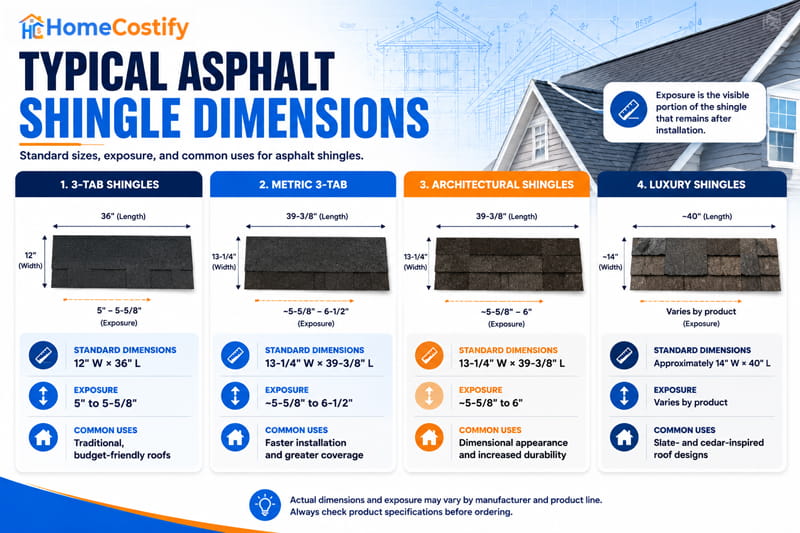
Shingle dimensions influence more than appearance. Contractors use these measurements to estimate material quantities, calculate roof coverage, and determine how many bundles are required for a project. Small differences in size can affect installation speed, material waste, and overall coverage across the roof surface.
The standard asphalt shingles size used in the United States has remained fairly consistent for decades. Traditional 3-tab products typically measure 12 inches wide by 36 inches long, though some manufacturers also produce metric versions with larger dimensions. Architectural and luxury products often use wider and longer formats, creating a more substantial appearance once installed.
Visible exposure is another important measurement. Not every inch of a shingle remains visible after installation because each row overlaps the row beneath it. That overlap creates the layered look associated with asphalt roofing while directing water toward the roof edge. Exposure measurements vary by product type, which means two roofs with similar dimensions can produce very different visual results.
Material calculations rely on roofing squares rather than individual shingles. One roofing square covers 100 square feet of roof area. Bundle requirements vary between manufacturers and product categories, making accurate measurements an important part of the planning process. Reviewing roof shingle dimensions before ordering materials can help avoid shortages or excess inventory during installation.
Typical Asphalt Shingle Dimensions
The figures below represent the most common asphalt shingle dimensions used throughout today’s residential roofing market. Actual measurements can vary by manufacturer and product line.
| Shingle Type | Standard Dimensions | Exposure | Common Uses |
|---|---|---|---|
| 3-Tab Shingles | 12″ W × 36″ L | 5″ to 5-5/8″ | Traditional, budget-friendly roofs |
| Metric 3-Tab | 13-1/4″ W × 39-3/8″ L | ~5-5/8″ to 6-1/2″ | Faster installation and greater coverage |
| Architectural Shingles | 13-1/4″ W × 39-3/8″ L | ~5-5/8″ to 6″ | Dimensional appearance and increased durability |
| Luxury Shingles | Approximately 14″ W × 40″ L | Varies by product | Slate- and cedar-inspired roof designs |
Bundle counts and coverage rates differ between manufacturers. Product specifications should always be verified before ordering materials, particularly when working with architectural or luxury shingles that may require different bundle quantities per roofing square.
Asphalt Shingles Cost
For most homeowners, cost becomes one of the first questions during a roof replacement project. Material selection influences the final price, but it is only part of the equation. Roof size, labor rates, tear-off requirements, and roof complexity can all push costs higher than expected.
The asphalt shingles roof cost typically ranges from $3.50 to $12.25 per square foot, including both materials and labor. On a standard 2,000-square-foot roof, total replacement costs often fall between $7,000 and $20,000. Premium materials, steep roof slopes, and complicated roof layouts can move the project toward the upper end of that range.
Roofing contractors generally calculate pricing using roofing squares, with one square representing 100 square feet of roof area. Discussions about asphalt roof shingles cost per square often focus on materials alone, while complete project estimates include labor, underlayment, flashing, ventilation components, and disposal costs.
Roof design can have a surprisingly large impact on pricing. A straightforward gable roof is usually less labor-intensive than a roof with multiple valleys, dormers, skylights, or intersecting roof sections. Two homes with similar square footage may receive very different estimates because the installation process requires different amounts of labor and material.
Typical Asphalt Shingle Roof Installation Cost
| Roof Size | Estimated Total Cost (Materials + Labor) |
|---|---|
| 1,000 sq. ft. | $3,500–$12,250 |
| 1,500 sq. ft. | $5,250–$18,375 |
| 2,000 sq. ft. | $7,000–$20,000+ |
| 2,500 sq. ft. | $8,750–$30,625 |
Asphalt Shingle Cost by Type
Material selection remains one of the biggest factors affecting the asphalt shingles roof replacement cost. Basic 3-tab products occupy the entry-level segment of the market, while luxury shingles command significantly higher prices due to their thicker construction and premium appearance.
| Shingle Type | Installed Cost per Sq. Ft. | Typical Lifespan |
|---|---|---|
| 3-Tab Shingles | $3.50–$5.00 | 15–20 Years |
| Architectural / Dimensional Shingles | $4.00–$8.50 | 20–30 Years |
| Luxury / Premium Shingles | $7.00–$17.00 | 30+ Years |
Labor frequently accounts for a substantial share of the overall project budget. Material prices are easier to compare, but installation complexity often determines where a project ultimately falls within the estimated range.
Asphalt Shingles Installation
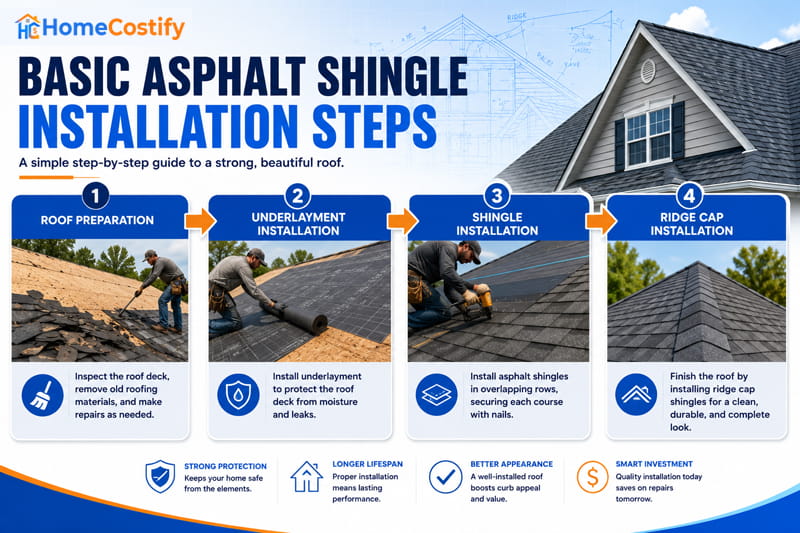
Roofing crews follow a sequence of steps designed to create a weather-resistant roofing system. Every layer matters. The finished roof may appear simple from the street, yet several materials work together beneath the visible surface.
The asphalt shingles installation process usually begins after the roof deck has been inspected. Damaged sheathing, soft spots, and moisture-related issues are typically addressed before new materials are installed. Problems hidden beneath the roof surface rarely improve on their own.
Underlayment comes next. This material sits between the roof deck and the shingles themselves, creating an additional layer of roof protection against water intrusion. Ice and water barriers may also be installed in vulnerable areas depending on local climate conditions and building code requirements.
Nailing patterns deserve close attention during roof shingle installation. Nails placed too high, too low, or at an angle can affect performance over time. Wind resistance roof and long-term durability often depend on details that remain invisible after installation is complete.
Flashing performs another critical function. Metal flashing surrounds roof penetrations, valleys, chimneys, and wall intersections where water naturally concentrates. These areas receive special attention because leaks frequently originate around transitions rather than open roof surfaces.
Basic Asphalt Shingle Installation Steps
Step 1: Roof Preparation
Existing roofing materials are removed when necessary, and the roof deck is inspected for signs of damage. Asphalt shingle repairs typically occur before new materials are installed.
Step 2: Underlayment Installation
Underlayment and moisture barriers are placed across the roof deck. These materials create a secondary layer of protection beneath the shingles.
Step 3: Shingle Installation
Contractors install shingles in overlapping rows using manufacturer-approved fastening patterns. Proper alignment remains important throughout the process.
Step 4: Ridge Cap Installation
Special ridge cap shingles are installed along roof peaks. These components finish the roof system and protect exposed ridge areas.
Why Asphalt Shingles Remain America’s Most Popular Roofing Material
Few roofing products match the market reach of asphalt shingles. They appear on homes in hot southern climates, snowy northern regions, coastal communities, and suburban developments. Regional architecture changes across the country, yet asphalt-based roofing continues to maintain a strong presence.
According to the Asphalt Roofing Manufacturers Association (ARMA), asphalt-based products account for more than 80% of residential roofing installations in the United States. Their widespread use is largely driven by a combination of affordability, weather resistance, and availability across nearly every housing market in the country.
Availability contributes significantly to that dominance. Contractors, distributors, and suppliers already maintain extensive networks built around these products. Replacement materials are often easier to source than specialty roofing systems, particularly after severe weather events.
Design flexibility also plays a role. A modern asphalt shingle roof can complement a wide range of architectural styles, from traditional suburban homes to newer contemporary designs. Manufacturers continue to expand color selections, textures, and profile options, giving buyers more choices than previous generations.
The continued popularity of asphalt roofing shingles reflects a combination of practical and aesthetic considerations. Cost remains important, but appearance, product availability, repair flexibility, and familiarity within the roofing industry also influence buying decisions.
Asphalt Shingles vs Other Roofing Materials
Most roofing materials excel in one or two areas. Asphalt shingles remain popular because they balance cost, appearance, product availability, and installation simplicity without leaning too heavily toward a single advantage.
- Metal Roofing: Longer service life and strong durability, though installation costs are usually higher.
- Clay Tile Roofing: Common in warm climates and Mediterranean-style homes. Weight and installation requirements can increase project costs.
- Concrete Tile Roofing: Known for longevity and strength. Heavier than most roofing systems and often requires additional structural consideration.
- Slate Roofing: One of the longest-lasting roofing materials available. Material and installation costs sit at the premium end of the market.
- Synthetic Slate Roofing: Designed to replicate natural slate while reducing weight and installation complexity.
- Wood Shingles: A traditional roofing option with a clean, natural appearance.
- Wood Shakes: Thicker and more rustic than wood shingles, creating a textured roof profile.
- Composite Roofing: Manufactured from engineered materials and available in a wide range of styles.
- Solar Shingles: Combine roofing and energy generation into a single system, though upfront costs remain relatively high.
For many households, asphalt shingles continue to occupy the middle ground between affordability and appearance. Few roofing materials cover as many priorities at once.
Conclusion
Asphalt shingles remain the most widely used residential roofing material in the United States for good reason. They are available in multiple styles, colors, and price ranges, making them suitable for a wide variety of homes and budgets. Product choices range from basic 3-tab shingles to premium luxury designs that mimic slate or cedar.
Cost matters, but appearance, availability, repairability, and installation familiarity also influence roofing decisions. Few materials perform well across all of those categories simultaneously.
For most U.S. homeowners, asphalt shingles offer the best balance of affordability, appearance, availability, and ease of installation. That combination continues to keep them at the center of the residential roofing market.
FAQs About Asphalt Shingles
How long do asphalt shingles usually last?
Most asphalt shingles last between 15 and 30 years, depending on product quality, climate conditions, attic ventilation, and installation workmanship. Premium products can remain in service even longer.
What is the best type of asphalt shingles?
Architectural shingles are often considered the best overall option because they balance appearance, durability, and cost more effectively than basic 3-tab products.
What are the most expensive asphalt shingles?
Luxury shingles sit at the top of the asphalt roofing market. Many are designed to resemble natural slate or cedar shakes while delivering a premium appearance.
What’s better than asphalt shingles?
That depends on priorities. Slate, metal, and tile roofing can outlast asphalt products, though they usually require a larger upfront investment.
In what country are asphalt shingles made?
Asphalt shingles are manufactured in several countries, but the United States remains one of the largest producers and consumers of asphalt-based roofing products.