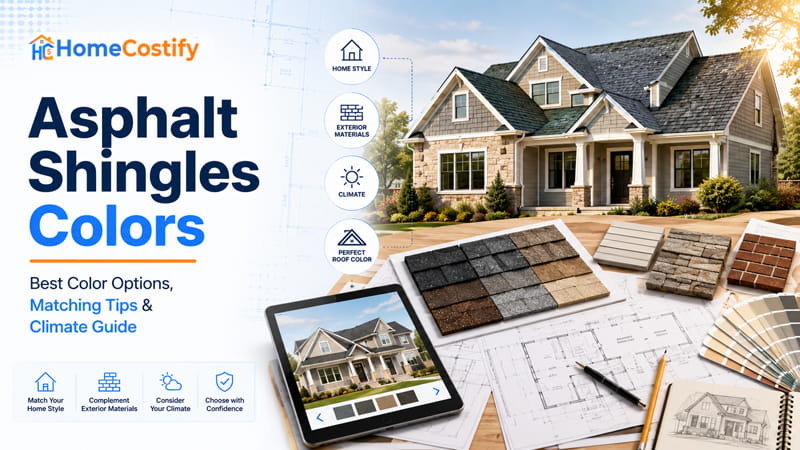
A roof usually catches attention before siding, windows, or landscaping come into view. Asphalt shingles colors shape first impressions long before anyone notices smaller exterior details.
Roof color reaches beyond appearance because sunlight changes its appearance from morning to late afternoon. Even a well-built home can feel visually unbalanced after a roof starts pulling attention away from everything below.
Roof samples cover only a tiny surface, yet a finished roof stretches across thousands of square feet. Asphalt shingles colors that feel balanced on a display board may dominate every roof plane once installation is complete.
Walls, windows, trim, and landscaping stay exactly where they have always been. Broad roof surfaces leave a lasting impression on home exterior design and overall curb appeal.
Why Asphalt Shingles Colors Matter More Than Most Homeowners Think
Drive through any neighborhood and similar houses quickly start to blend together. A single change in roof color can give one home a calmer appearance and make another stand out from half a block away.
Size plays a part because roofing covers far more surface than doors, windows, or trim. Street views begin forming long before smaller exterior details come into focus.
Beyond Curb Appeal
Front porches, shutters, and flower beds occupy surprisingly little visual space. Broad roof planes dominate nearly every angle, giving asphalt shingles colors far greater influence than most people expect.
Good architectural style depends on proportion from top to bottom. Strong visual balance comes from every exterior element feeling comfortable beside another instead of competing for attention.
Brick, siding, and window trim stay exactly where they have always been. Fresh shingles spread across almost every visible slope in a matter of days.
Even subtle changes in roof shingles colors can reshape first impressions from across a street. Much of a home’s curb appeal takes shape before anyone reaches a front door.
How Roof Color Can Influence Energy Performance
Park two cars under summer sun for an afternoon, then place a hand on each hood. Dark paint and light paint rarely feel identical, and asphalt shingle colors respond in much the same way. Color represents only one piece of roof behavior.
Research summarized by the U.S. Department of Energy points to roofing materials, attic conditions, regional weather, heat absorption, solar reflectance, and a hot climate as factors that work together before indoor temperatures settle into a daily pattern.
Understanding Asphalt Shingle Color Families

Most asphalt shingles come in coordinated families with subtle variations that create depth across large roof surfaces.
Viewing colors as related groups gives a clearer picture before comparing products from different manufacturers.
| Color Family | Overall Look | Visual Character |
|---|---|---|
| Black | Very dark | Bold, clean, high-contrast appearance |
| Charcoal | Deep neutral | Modern with subtle depth |
| Slate Gray | Cool gray | Refined and timeless |
| Gray | Neutral | Balanced and highly versatile |
| Brown | Warm | Classic, earthy appearance |
| Weathered Wood | Brown-gray blend | Natural, dimensional texture |
| Driftwood | Soft gray-brown blend | Relaxed, weathered look |
| Beige / Tan | Light neutral | Soft and understated |
Dark Color Families
Deep tones immediately stand out because contrast appears stronger across broad roof surfaces. Black, charcoal, and slate gray each deliver a darker appearance, although visual character changes from one family to another.
Asphalt shingles colors within this group range from crisp, high-contrast finishes to softer neutrals with subtle depth. Small shifts in tone can completely change how light spreads across each shingle.
Solid black creates sharp definition from edge to edge. Charcoal softens that intensity without losing a rich appearance.
Slate gray introduces cooler undertones that feel quieter than black yet carry more depth than medium gray. None relies on bright highlights to create visual interest.
Neutral Color Families
Medium tones remain popular because they sit comfortably between dark and light finishes. Gray and beige avoid strong visual extremes, giving each surface a balanced appearance from multiple viewing angles.
Asphalt shingle colors within this range continue ranking among roof shingles colors most popular across many product lines. Familiarity plays a part, though restrained contrast gives neutral colors lasting appeal.
Gray carries a clean appearance without feeling overly bold. Beige introduces gentle warmth that softens large roof surfaces without drawing immediate attention. Fine texture remains visible because color transitions stay subtle. Broad color swings rarely define this family.
Warm and Blended Color Families
Open almost any current sample board and multi-tone finishes appear far more frequently than flat colors. Brown, weathered wood, and driftwood combine multiple shades inside a single shingle, giving asphalt shingles colors extra depth before installation even begins.
Light and shadow reveal different portions of each blend throughout the day. Surface texture appears richer without relying on dramatic contrast.
Color variation comes from layered mineral granules instead of random printing or painted patterns. Tiny shifts between warm and cool shades break up large roof areas, giving blended shingles a more natural appearance from both near and far.
Flat colors present one continuous tone. Mixed shades introduce subtle movement without overwhelming surrounding surfaces.
Depth remains the biggest difference between blended and solid finishes. Small variations become visible at different viewing distances, making best asphalt shingles colors feel less uniform across thousands of square feet.
Asphalt shingles colors built around weathered blends rarely appear flat under changing daylight. Product names may differ from one manufacturer to another, yet visual character follows remarkably similar patterns.
How to Match Asphalt Shingle Colors With Your Home’s Exterior

Fresh shingles may last for decades, yet siding, masonry, and trim remain in place even longer. Permanent exterior materials set the visual foundation, making roof color far easier to evaluate once every fixed surface enters the picture.
| Exterior Feature | Recommended Color Families | Why They Work Well |
|---|---|---|
| White Siding | Black, Charcoal, Gray | Creates clean contrast while highlighting architectural details. |
| Beige or Tan Siding | Brown, Weathered Wood, Beige | Maintains a warm, balanced appearance without looking overly busy. |
| Red Brick | Weathered Wood, Brown, Charcoal | Complements earthy brick tones while preserving visual depth. |
| Stone Veneer | Gray, Driftwood, Charcoal | Echoes natural stone textures for a cohesive, timeless look. |
| Fiber Cement Siding | Gray, Black, Weathered Wood | Pairs well with both modern and traditional exterior styles. |
| Contemporary Exterior | Black, Charcoal, Slate Gray | Reinforces clean lines and minimalist architectural designs. |
| Traditional Exterior | Brown, Weathered Wood, Gray | Creates a classic appearance that suits a wide range of home styles. |
Start With Permanent Exterior Materials
Brick rarely changes after construction finishes. Stone veneer, vinyl siding, and fiber cement siding stay in place for years as well.
Fixed materials establish color relationships long before new shingles arrive. Asphalt shingles colors should complement surfaces already attached to the house instead of competing for attention.
Red brick carries warm undertones that remain visible under changing daylight. Gray stone veneer introduces cooler textures with natural variation across each wall.
White or beige siding presents a quieter background from street level. An asphalt shingles color chart becomes far more useful after comparing samples beside real brick, stone veneer, vinyl siding, or fiber cement siding, not against isolated color chips.
Balance Roof Color With Architectural Style
Roof color changes visual rhythm even when floor plans remain identical. Clean lines found on contemporary homes create a different impression from wide porches, gables, or exposed rafters seen on traditional, craftsman, and farmhouse designs.
Asphalt shingle colors for roofs should reinforce those proportions instead of competing with them. Exterior character feels more complete once every major surface works within a consistent exterior palette.
Sharp contrast suits some architectural forms far better than others. Soft transitions fit equally well in designs built around broader rooflines and layered details.
Small color adjustments can change visual weight without altering structure. Strong curb appeal grows from proportion, giving each architectural style a natural sense of balance.
Compare Full-Size Samples Before Deciding
Color cards reveal only part of what a finished roof will show. Full-size samples expose texture, shadow, and scale much more accurately under natural daylight.
Morning light often produces a different impression than late afternoon. Final selection deserves a real-world comparison before asphalt shingles installation begins.
Digital tools add another layer of confidence before materials are ordered. A roof color visualizer places different shades onto photos of the house, while a roof shingle color selector narrows suitable options without relying on memory alone.
A quick roof inspection can confirm existing exterior conditions before final selections move into production. Local weather, including hot climate, cold climate, heat absorption, reflective roofing, UV exposure, and solar reflectance, deserves only a quick review at this stage because later sections cover those topics in greater detail.
- View samples in morning and afternoon light.
- Compare colors beside permanent exterior materials.
- Test digital visualizers before ordering roofing materials.
Choosing Asphalt Shingle Colors for Different Climates
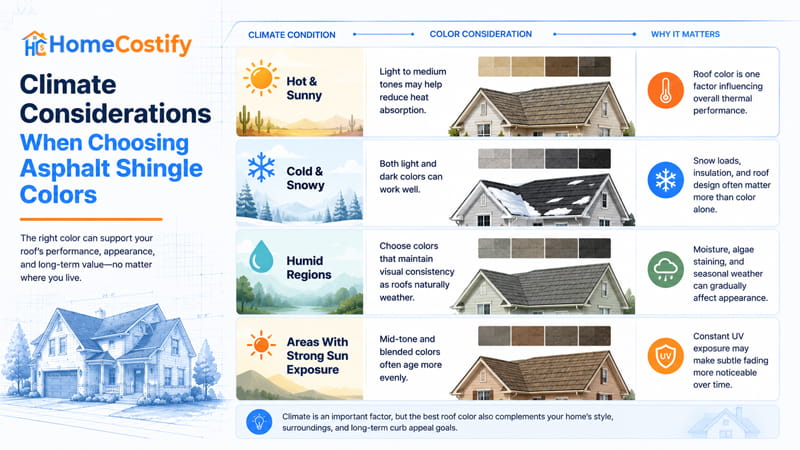
Summer heat, winter snow, coastal humidity, and strong sunshine all leave different marks on a roof over time. Climate deserves a place in the selection process, although appearance and long-term satisfaction deserve equal attention.
| Climate Condition | Color Consideration | Why It Matters |
|---|---|---|
| Hot & Sunny | Light to medium tones may help reduce heat absorption. | Roof color is one factor influencing overall thermal performance. |
| Cold & Snowy | Both light and dark colors can work well. | Snow loads, insulation, and roof design often matter more than color alone. |
| Humid Regions | Choose colors that maintain visual consistency as roofs naturally weather. | Moisture, algae staining, and seasonal weather can gradually affect appearance. |
| Areas With Strong Sun Exposure | Mid-tone and blended colors often age more evenly. | Constant UV exposure may make subtle fading more noticeable over time. |
Light vs. Dark Roof Colors
Long summer afternoons place far more sunlight on roofing than most exterior surfaces receive. Lighter asphalt shingles colors may feel more attractive in a hot climate, especially where sunshine remains intense for much of the year.
Darker shades still deserve consideration in a cold climate, particularly where visual preference outweighs small differences in roof surface temperature. Color alone never determines asphalt shingles lifespan.
Research from Lawrence Berkeley National Laboratory shows continued progress in reflective roofing technology, allowing some colored roofing products to reflect more solar energy than earlier generations.
Asphalt shingles still have practical limits compared with other roofing materials. Ongoing development continues to narrow that gap, giving more options beyond traditional cool roof finishes.
Regional Preferences Across the USA
Neighborhood character changes from one region to another. Streets across the Northeast often display restrained roof colors that blend comfortably with established neighborhoods.
Parts of the Midwest follow a similar direction, although broader suburban developments introduce wider variation.
Southern and Southwestern communities frequently include lighter shades, yet local style remains just as influential as weather.
Real estate listings reveal another pattern over time. Buyers often respond more positively when roofing feels consistent with nearby homes, adding subtle support for resale value without making color the only deciding factor.
Familiar streets create their own visual expectations. Consistency across a home exterior can carry just as much weight as personal preference, especially in neighborhoods where neighborhood consistency shapes first impressions.
Long-Term Appearance: Fading, Aging, and Color Changes
Fresh shingles rarely look exactly the same ten or twenty years later. Sun, seasonal weather, and gradual aging leave subtle changes across every roof, making realistic expectations just as valuable as selecting an attractive color on day one.
Why Some Roof Colors Change Faster Than Others
Bright summer afternoons expose roofing surfaces to years of sunlight long before visible changes appear. Continuous UV exposure, rain, snow, and airborne particles slowly wear protective granules covering each shingle.
Tiny changes accumulate gradually. Asphalt shingles colors may show slight color fading over time, although pace varies with weather conditions, material quality, roof orientation, and local surroundings.
Granules never wear away at exactly the same speed across every roof. South-facing slopes often spend more hours under direct sunshine than shaded sections.
Tree cover, regional weather, and seasonal temperature swings all leave their own marks across roofing surfaces. No single color remains permanently unchanged, yet no single shade always fades first either.
Planning for Long-Term Curb Appeal
Magazine photos capture roofs on a single day. Houses remain in place for decades, giving every color far more time to settle into its surroundings.
Asphalt shingles cost often receives plenty of attention during budgeting, although asphalt shingle colors deserve equal thought because roof color stays visible long after invoices disappear. Long-term consistency carries more value than chasing short-lived design trends.
Future buyers notice overall appearance before learning product details. Familiar colors tend to blend comfortably into changing neighborhoods without feeling dated a few years later. Steady visual character can strengthen curb appeal and quietly support resale value across many housing markets.
- Choose colors that age gracefully.
- Neutral blends usually remain visually consistent as roofs mature naturally.
- Permanent exterior materials deserve more attention than short-term design trends.
- View full-size samples instead of relying only on digital images.
Common Mistakes When Choosing Asphalt Shingle Colors
Color disappointment usually starts long before delivery trucks arrive. Simple oversights during planning can leave a roof feeling out of place, even after high-quality materials cover every slope.
Mistakes That Can Affect the Final Result
Small sample boards reveal only a fraction of what a finished roof will display. Morning sunlight, afternoon shadows, and changing weather can alter color perception far more than indoor lighting.
Popular trends come and go. Permanent features deserve greater attention because they remain unchanged long after roofing work ends.
Neighborhood rules deserve a quick review before final selections move forward. Some communities include HOA requirements covering acceptable roofing colors, making early confirmation worth a few extra minutes.
Changing roof color after completion may lead to unnecessary asphalt shingle roof replacement cost, even though best asphalt shingles remain on the house.
Asphalt shingles dimensions have no meaningful impact on color selection, leaving exterior palette and neighborhood consistency far more relevant during final decisions.
Conclusion
Roof color remains part of a house for decades, making every selection more than a short-term design preference. Asphalt shingles colors deserve careful evaluation alongside surrounding homes, local weather, and overall appearance before materials are ordered.
Lasting satisfaction rarely comes from copying popular inspiration photos alone.
Comparing multiple roof shingles colors against your own house almost always leads to a choice that feels more natural once every roof slope is covered.
FAQs About Asphalt Shingles Colors
What are the different colors of asphalt shingles?
Common choices include black, charcoal, gray, weathered wood, brown, beige, plus various blended colors that combine multiple tones for a more natural and dimensional appearance.
What is the most popular color of asphalt shingles?
Gray and charcoal remain popular because both work across many home designs, creating a balanced appearance without drawing excessive attention from surrounding exterior features.
What are the best colors for asphalt shingles?
No asphalt shingles colors color fits every house. Suitable selections depend on architectural style, exterior materials, local climate, surrounding neighborhood, and personal design preference.
What color of asphalt shingles lasts the longest?
asphalt shingles colors alone does not determine service life. Material quality, weather exposure, installation quality, and environmental conditions have a much greater influence over long-term durability.
How to pick the right asphalt shingles colors?
Start with permanent exterior materials, evaluate samples under natural daylight, consider local climate, then compare asphalt shingles colors options with a visualizer before making a final selection.