The price of a new roof depends on more than square footage alone. Material grade, roof layout, and labor all influence the final estimate. Asphalt shingles cost usually falls within a broad range because three-tab, architectural, and luxury products are built differently and carry different price points.
For a new installation, most U.S. projects range from about $3.50 to $17.00 per square foot installed, with total costs commonly reaching $7,000 to more than $20,000 for a typical 2,000-square-foot roof.
Material quality accounts for part of that difference, yet installation requirements also shape the final quote. Premium asphalt roof shingles often require a higher material budget, and larger or steeper roofs usually increase labor costs as well.
This guide focuses only on the cost of installing a new asphalt shingle roof. Pricing throughout the article reflects new roofing systems, including materials and installation where noted. If you’re comparing roofing shingles for an upcoming project, understanding how pricing is structured makes estimates much easier to evaluate and compare.
A clear budget starts with accurate numbers. Material prices, labor charges, and project scope all contribute to the final roof shingles cost, making it useful to separate product pricing from installed pricing before requesting contractor estimates for an asphalt shingle roof.
How Much Does Asphalt Shingles Cost?
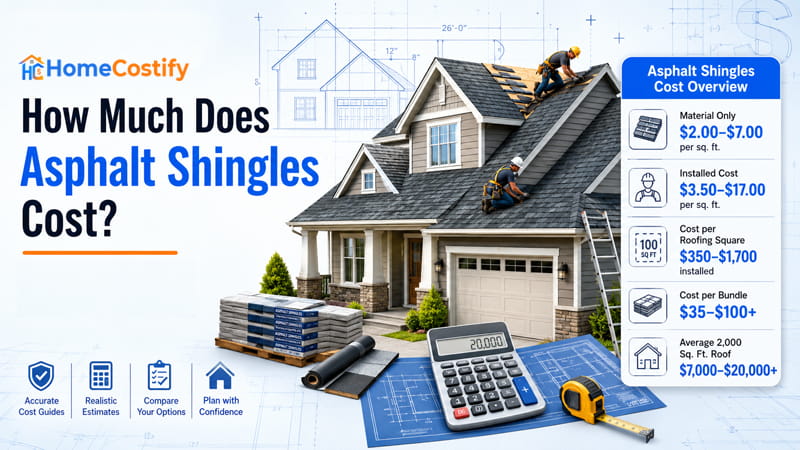
The price of a new asphalt shingle roof varies with material grade, roof size, and installation difficulty. National averages offer a practical starting point, though the final quote depends on the specifications of each project.
| Asphalt Shingles Cost Overview | Average Cost |
|---|---|
| Material Only | $2.00–$7.00 per sq. ft. |
| Installed Cost | $3.50–$17.00 per sq. ft. |
| Cost per Roofing Square | $350–$1,700 installed |
| Cost per Bundle | $35–$100+ |
| Average 2,000 Sq. Ft. Roof | $7,000–$20,000+ |
Across the United States, asphalt shingles cost about $2.00 to $7.00 per square foot for materials alone. Once labor, underlayment, starter strips, ridge caps, and standard installation supplies are included, total installed pricing typically ranges from $3.50 to $17.00 per square foot. That spread covers economical three-tab products through premium designer shingles.
For a roof measuring roughly 2,000 square feet, a complete asphalt shingles installation often totals between $7,000 and $20,000 or more. Roof geometry, local labor rates, and premium product selections can push estimates beyond the national average, even when two homes have similar roof areas.
An installed quote combines product costs with the work required to complete the roofing system, making it the figure most contractors use during project estimates.
Retail pricing usually covers shingles only. A contractor quote includes labor, underlayment, starter shingles, ridge caps, fasteners, and other installation materials, so asphalt shingles cost per square foot at the store rarely matches the final asphalt roof shingles cost for a completed project.
Roofing shingles prices make more sense after separating material-only pricing from installed pricing. That comparison gives a clearer picture of the full asphalt shingle roof cost and the total roof shingles cost before requesting estimates.
Asphalt Shingles Cost by Type

According to the Asphalt Roofing Manufacturers Association (ARMA), residential asphalt shingles are grouped into three primary categories: three-tab, architectural (dimensional), and luxury shingles. Each category carries a different price range, expected service life, and visual finish, so the product selected has a direct impact on both material pricing and the final installation quote.
Two roofs with the same square footage can end up with very different project totals. The shingles themselves account for much of that gap. Entry-level products keep upfront costs lower. Premium options add thicker construction, a longer service life, and a more refined appearance, pushing both material and installation costs higher.
| Asphalt Shingles Cost by Type | Installed Cost per Sq. Ft. | Typical Lifespan |
|---|---|---|
| 3-Tab Shingles | $3.50–$5.00 | 15–20 Years |
| Architectural / Dimensional Shingles | $4.00–$8.50 | 20–30 Years |
| Luxury / Premium Shingles | $7.00–$17.00 | 30+ Years |
3-Tab Shingles
Among the three categories, 3-tab shingles cost the least. For projects where the roofing budget has a firm limit, this product usually sits at the top of the shortlist. The lower price begins at the factory, where each shingle uses a single-layer construction and less asphalt than thicker laminated products.
Installed prices generally range from $3.50 to $5.00 per square foot, placing asphalt shingles cost near the lower end of the national market. Material pricing follows the same pattern. A bundle of shingles typically covers about 33 square feet, so three bundles make up one roofing square.
Appearance reflects the price point. Flat tabs create a clean, uniform roof surface without the shadow lines found on laminated products. Rental homes, starter houses, detached garages, workshops, and similar projects frequently fall into this category because keeping the initial roofing budget under control often carries more weight than premium styling.
Service life is usually shorter than architectural or luxury products, and wind ratings are often lower as well. Even so, properly installed roof shingles in this category remain a practical choice for projects where affordability ranks above upgraded appearance or extended service life.
Architectural Shingles
Across the U.S. roofing market, laminated shingles account for a large share of residential installations. Architectural shingles cost more than basic three-tab products, yet the price increase is far smaller than moving into the luxury category. That pricing position has made them a common selection for new homes and full roof installations.
Architectural shingles Also known as dimensional shingles, these shingles are built with multiple asphalt layers laminated into one piece. The added thickness changes the finished appearance. Shadow lines become more noticeable, giving the roof texture that resembles natural wood shake from ground level without reaching premium pricing.
Installed costs typically range from $4.00 to $8.50 per square foot. A roof measuring 2,000 square feet can see a noticeable price increase compared with three-tab shingles, though the visual upgrade is easy to spot once installation is complete. For plenty of households, that extra cost fits comfortably within the project budget.
Another reason this category remains popular comes from its expected service life. Thicker laminated construction generally stays in service longer than entry-level products installed under similar conditions. A new roof finished with these asphalt roof shingles often combines an attractive appearance with a purchase price that remains well below luxury products.
Some manufacturers also produce impact-rated versions of architectural shingles for regions where hail is a recurring concern.
Luxury Shingles
At the top end of the residential roofing market, luxury shingles cost more than any other asphalt category. Installed pricing commonly falls between $7.00 and $17.00 per square foot, placing these products in projects where appearance carries as much weight as the roofing budget. Large custom homes, upscale neighborhoods, and high-value properties account for a sizable share of this market.
The first thing most people notice is the finished roof. Deep shadow lines, pronounced texture, and larger shingle profiles create a look that closely resembles natural slate or hand-split cedar. From the street, the roof gains far more visual presence than standard laminated products, giving premium homes a finish that stands out without switching to natural roofing materials.
Price also reflects construction. Premium asphalt shingles contain thicker asphalt layers, heavier reinforcement, and more surface granules than lower-priced products. The added weight contributes to a more substantial profile across the roof, and the thicker build typically remains in service longer than entry-level options installed under similar conditions.
For households planning to stay in the same home for years, the higher purchase price may fit long-term priorities centered on appearance and product quality. Buyers preparing a custom build also gravitate toward luxury asphalt shingles when the roof is expected to complement high-end exterior finishes, stone facades, or premium siding materials.
Some premium products are also available in impact-rated versions. Homeowners interested in impact resistance roof may also compare Class 4 Shingles Cost before making a decision.
Asphalt Shingles Material Cost vs Installation Cost

Most roofing estimates combine products, labor, and supporting components into one figure, so the final asphalt shingles cost almost always exceeds the price of shingles alone.
| Material vs Installed Cost | Typical Cost | Includes |
|---|---|---|
| Material Only | $2.00–$7.00 per sq. ft. | Shingles only |
| Installed Cost | $3.50–$17.00 per sq. ft. | Materials + Labor |
| Total Project Cost | $3,500–$30,000+ | Complete roofing project depending on roof size |
A price advertised online often reflects the shingles themselves. That number does not include the crew, installation supplies, or the work required to complete a finished roof. A contractor estimate follows a different format. It combines product pricing with installation, creating the installed cost quoted for the project.
The labor portion can account for a substantial share of the total budget. Roof size influences crew hours, though it is not the only consideration. Steeper roof sections, valleys, hips, and other layout details frequently increase the labor cost to install shingles, adding to the final proposal beyond the cost of materials alone. Those charges fall under roofing labor cost, not shingle pricing.
Shingles are only one line item on a complete estimate. A new roof also requires underlayment, starter shingles, ridge caps, flashing, drip edge, fasteners, and other roofing materials that support the finished system. Each item adds cost, even though buyers rarely see those products once installation is complete.
| What’s Typically Included in an Installed Price? | Usually Included? |
|---|---|
| Asphalt Shingles | ✓ |
| Underlayment | ✓ |
| Starter Shingles | ✓ |
| Ridge Cap Shingles | ✓ |
| Drip Edge | ✓ |
| Flashing Installation | ✓ |
| Roofing Nails & Fasteners | ✓ |
| Basic Jobsite Cleanup | ✓ |
| Building Permit | Depends |
| Roof Deck Repairs | Usually Extra |
The second table shows why two estimates with the same shingle brand can end up far apart. One contractor may include permits, disposal, and cleanup from the start. Another may list those charges as separate items or leave them out of the initial proposal. Reading the scope of work line by line reveals far more than comparing the final dollar amount alone.
A complete project budget reaches beyond shingles and installation. Permit fees, debris removal, and unexpected roof deck repairs may appear after work begins if hidden damage is uncovered beneath the old roofing. Reviewing what is included before signing a contract gives a much clearer picture of the full asphalt shingles cost than relying on material pricing by itself.
Asphalt Shingles Cost per Bundle, Square, and Square Foot

Shingles reach the jobsite in bundles, yet roofing estimates rarely stop there. Contractors calculate material quantities with roofing squares and price the completed job by roof area. Each measurement serves a different purpose, so recognizing how they relate prevents confusion when reviewing estimates.
Asphalt Shingles Cost per Bundle
Retail stores usually price shingles by the bundle. Asphalt shingles cost per bundle typically ranges from $35 to more than $100, depending on the product category, manufacturer, and warranty level. Basic three-tab products occupy the lower end of that range. Luxury lines sit at the opposite end.
A standard bundle of shingles covers about 33.3 square feet. Three bundles make up one roofing square, assuming standard product dimensions. Roofs with hips, valleys, dormers, or extra waste often require additional bundles beyond the calculated roof area, which is one reason contractors rarely estimate a complete project by bundle count alone.
Asphalt Shingles Cost per Square
Roofing contractors usually estimate materials using the roofing square. One roofing square equals 100 square feet of roof area, creating a consistent unit for ordering products and preparing proposals.
Asphalt shingles cost per square generally falls between $350 and $1,700 installed, depending on the shingle category selected. Material quality accounts for part of that spread, though labor and supporting installation products are commonly included in installed pricing as well.
A proposal listing 20 roofing squares, for example, refers to roughly 2,000 square feet of roof coverage. That number reflects roof surface area rather than house size, so homes with similar floor plans may still require different material quantities once roof geometry enters the calculation.
Asphalt Shingles Cost per Square Foot
Square-foot pricing offers the quickest way to compare roofing estimates. Contractors, manufacturers, and cost guides frequently convert larger project totals into this format because it works across roofs of different sizes.
Asphalt shingles cost per square foot typically ranges from $3.50 to $17.00 installed. Readers may also encounter the abbreviation asphalt shingles cost per sf, particularly in estimating software and contractor proposals. Both measurements refer to the same pricing method.
A lower price per square foot usually reflects entry-level products or straightforward roof layouts. Premium shingles, custom roof designs, and higher installation costs can move pricing toward the upper end of the national range.
How Asphalt Shingles Are Sold and Measured
| Unit | Covers | Typical Cost |
|---|---|---|
| 1 Bundle | ~33.3 sq. ft. | $35–$100+ |
| 1 Roofing Square | 100 sq. ft. | $350–$1,700 installed |
| 1 Square Foot | Individual area measurement | $3.50–$17.00 installed |
Asphalt Shingles Cost by Roof Size

Roof size has a direct effect on the final project price because larger roofs require more shingles, more installation materials, and more labor hours. The estimates below use common residential roof sizes found across the United States and reflect complete installed projects rather than material pricing alone.
| Estimated Asphalt Shingles Cost by Roof Size | Estimated Installed Cost |
|---|---|
| 1,000 Sq. Ft. | $3,500–$12,250 |
| 1,500 Sq. Ft. | $5,250–$18,375 |
| 2,000 Sq. Ft. | $7,000–$20,000+ |
| 2,500 Sq. Ft. | $8,750–$30,625 |
Estimated Cost by Common Roof Sizes
Smaller roofs naturally require fewer materials, so total project costs begin at a lower point. A roof measuring about 1,000 square feet may fall between $3,500 and $12,250, depending on the shingles selected and the scope of installation. Moving to a 1,500-square-foot roof raises the estimated range to roughly $5,250 through $18,375.
A 2,000-square-foot roof represents one of the most common reference points in national roofing studies. At that size, asphalt shingles cost often falls between $7,000 and $20,000 or more for a complete installation. Larger homes with roof areas near 2,500 square feet can reach $30,625 when premium materials become part of the project. Those estimates reflect total roof shingles cost, not material purchases by themselves.
How These Estimates Are Calculated
The figures in the table assume a full installation that includes shingles, standard installation materials, and labor. Roof surface area forms the starting point for the estimate, then the selected shingle category determines where the final proposal lands within the published range.
Material upgrades move pricing upward. Basic three-tab shingles remain near the lower end, architectural products occupy the middle, and luxury options sit at the top. That progression appears in the finished asphalt roof shingles cost, even when two roofs cover similar areas.
Why Roofs of the Same Size Can Cost Different Amounts
Two roofs measuring 2,000 square feet can produce noticeably different estimates before work begins. One roof may have long, uninterrupted slopes. Another may include hips, valleys, dormers, intersecting rooflines, or multiple elevation changes that require additional cutting and fitting during installation.
Material selection creates another gap. Premium products carry a higher purchase price than entry-level shingles, pushing the total shingle roof cost beyond the national average shown in the table. Local labor pricing, permit requirements, and project specifications may add further variation, making these figures best suited as planning estimates rather than fixed project quotes.
What Affects Asphalt Shingles Cost?
Two roofs can cover the same amount of space and still receive very different estimates. Material quantities matter, yet they are only part of the equation. Roof geometry, installation conditions, local pricing, and project details all influence the final asphalt shingles cost, even when the square footage appears identical.
Shingle Type
Material selection changes more than the purchase price. Thicker products contain more asphalt, heavier reinforcement, and larger surface granules, raising both shipping weight and installation demands. Entry-level shingles sit at one end of the pricing range. Premium products occupy the other.
The effect carries through the full project estimate. A roof finished with luxury shingles generally costs more than one using standard laminated products, even if both roofs share the same dimensions. Product choice remains one of the largest pricing variables from the first estimate to the final invoice.
Roof Size
Roof size determines how much material reaches the jobsite. Larger roofs require more shingles, more underlayment, more fasteners, and longer installation time. Those additions steadily raise the project total as roof area increases.
The relationship is not perfectly linear. A roof that doubles in size does not always double the final estimate, although larger projects almost always require a higher budget than smaller installations covering the same roof style.
Roof Pitch
A steep roof changes the pace of installation. Crew members move more carefully, additional safety equipment becomes part of the job, and material handling takes longer than it would on a low-slope roof. Those conditions increase labor time before the final shingle is installed.
A modest change in pitch may have little effect on pricing. Sharper slopes often create a much larger jump because productivity slows as roof access becomes more demanding.
Roof Complexity
Simple roof layouts move quickly from one section to the next. Dormers, valleys, hips, intersecting rooflines, and multiple ridges create a very different working environment. More cuts are required, flashing details become more frequent, and waste from trimmed shingles usually increases.
Complex layouts also extend installation time. A house with numerous roof transitions can require far more attention than a basic gable roof, even when both cover nearly the same surface area. That added labor and material waste often appears in the final project estimate.
Labor Rates
Labor pricing changes from one market to another across the United States. Roofing crews working in large metropolitan areas often charge more than crews serving smaller cities or rural communities. Local wages, operating expenses, and regional demand all contribute to that variation.
Seasonal demand can influence pricing as well. Busy roofing months often bring tighter schedules, leaving fewer openings for new projects. During quieter periods, estimates may fall closer to the lower end of the local market. Two identical roofs can receive noticeably different quotes simply because the work takes place in different labor markets.
Geographic Location
Regional pricing extends beyond labor alone. Building codes, permit fees, transportation costs, and climate conditions vary across the country, creating noticeable differences from one state to another.
Cold-weather regions frequently include materials intended for snow and ice exposure. Coastal areas may place greater emphasis on wind resistance. Roofing products available through local suppliers can vary as well, affecting both availability and final pricing. Those regional differences become part of the finished estimate even when the roof design remains nearly identical.
Roofing Components
Shingles account for only one portion of the material budget. A complete roofing system includes supporting products that add to project costs before installation begins. Material selection in these categories can move the final estimate higher or lower, particularly on larger roofs.
| Common Roofing Components That Affect Cost | Typical Material Cost | Usually Required |
|---|---|---|
| Synthetic Underlayment | $0.30–$0.70 / sq. ft. | ✓ |
| Starter Shingles | $30–$60 / bundle | ✓ |
| Ridge Cap Shingles | $45–$90 / bundle | ✓ |
| Drip Edge | $2–$5 / linear ft. | ✓ |
| Flashing | $3–$10 / linear ft. | ✓ |
| Ice & Water Shield | $0.50–$1.20 / sq. ft. | Climate Dependent |
| Roof Ventilation | $300–$1,200 per roof | Recommended |
Material costs rarely move by the same amount across every component. A premium underlayment, upgraded flashing, or expanded use of ice and water shield can raise the total material budget without changing the shingles selected for the roof. Those adjustments become more noticeable as roof size increases, making supporting materials another factor behind differences between project estimates.
Labor Cost to Install Asphalt Shingles
Material prices usually receive the most attention, yet labor often becomes the second-largest expense in a roofing project. Roof layout, working conditions, and installation time all influence the final labor cost to install shingles, even when the same shingles are used.
| Average Labor Cost | Typical Cost |
|---|---|
| Basic Installation | $1.50–$3.00 per sq. ft. |
| Moderate Complexity Roof | $3.00–$4.50 per sq. ft. |
| Steep or Complex Roof | $4.50–$6.00 per sq. ft. |
Basic installations generally fall between $1.50 and $3.00 per square foot. Roofs with more valleys, steeper slopes, or additional roof sections usually move into the middle or upper end of the range. Projects involving difficult access or intricate roof layouts can reach $4.50 to $6.00 per square foot.
Labor charges extend beyond fastening shingles to the roof deck. Estimates commonly include tear-off preparation for a new installation, underlayment placement, flashing work, ridge cap installation, cleanup, and disposal of roofing debris generated during the project. Those tasks make up a substantial portion of roofing labor cost.
The final labor cost to install roof shingles rises as installation time increases. Large roof sections, steep pitches, intersecting rooflines, and limited jobsite access all add working hours, making labor one of the largest variables in a complete roofing estimate.
Are Asphalt Shingles Worth the Cost?
Appearance, expected service life, and long-term ownership expenses all influence how much value a roofing system delivers after installation. A lower estimate may fit one house perfectly, yet a higher-priced roof can make better financial sense for another.
Upfront Affordability
Compared with slate, clay tile, metal, and other premium roofing materials, asphalt shingles remain one of the most accessible choices for residential construction. That lower entry cost gives households more flexibility when balancing roofing needs with the rest of a construction or renovation budget.
Long-Term Durability
Material thickness and product quality influence how long a roof remains in service before replacement becomes necessary. Premium product lines generally stay in place longer than entry-level options installed under similar conditions. Readers interested in expected service life can also review asphalt shingles lifespan.
Home Value and Curb Appeal
A new roof changes how a house looks from the street. Architectural and luxury shingles create deeper shadow lines and more visual texture than basic three-tab products, making them a common selection for homes where exterior appearance carries greater weight during resale.
Long-Term Ownership Costs
Initial installation represents only one part of the money spent over the life of a roof. Product quality, weather exposure, and future upkeep all influence ownership costs over time. Readers comparing long-term planning may also find Asphalt Shingles Life Expectancy useful when evaluating different roofing products.
Choosing the Right Asphalt Shingle for Your Budget
The lowest price does not always lead to the best outcome, and the highest-priced product is not automatically the right fit. Roof design, long-term plans, and appearance all deserve a place in the decision, making the best choice different from one project to the next.
Best Choice for Tight Budgets
Projects with firm spending limits often point toward three-tab shingles. They keep upfront expenses under control and remain a suitable option for detached garages, rental houses, smaller homes, or projects where appearance is not the highest priority. A straightforward roof paired with this product can deliver dependable results without stretching the budget.
Best Overall Value
Architectural shingles sit comfortably between entry-level and premium products. They combine a more substantial appearance with a longer expected service life than basic three-tab shingles, yet they remain far below luxury pricing. That combination has made laminated shingles the category selected for a large share of residential roofing projects across the United States.
Best for Premium Homes
Luxury shingles fit projects where exterior appearance carries as much weight as roofing performance. Larger profiles, deeper shadow lines, and thicker construction create a finish that pairs well with custom homes and upscale architecture. The higher purchase price often aligns with projects already using premium siding, stone, or other high-end exterior materials.
| Which Asphalt Shingle Fits Your Budget? | Recommended Shingle |
|---|---|
| Lowest Initial Cost | 3-Tab Shingles |
| Best Overall Value | Architectural Shingles |
| Premium Appearance | Luxury Shingles |
Additional Considerations Before Installing Asphalt Shingles
Based on guidance from the U.S. Department of Energy, some premium asphalt shingles are manufactured with reflective granules that help reduce solar heat absorption. While these products generally cost more than standard shingles, they may improve energy performance in suitable climates.
Material selection reaches beyond product category alone. Roof color, regional climate, and long-term plans often influence the final decision before installation begins. Those details may not change every project, yet they frequently shape which roofing product feels like the best fit for a particular home.
Reflective shingles have become more common in warmer parts of the country where limiting solar heat gain receives extra attention. Color selection can influence that choice as well. Lighter roofing products reflect more sunlight than darker colors, though appearance remains a deciding factor for plenty of households. Readers comparing available shades may also find Asphalt Shingles Colors useful.
A new installation follows a different path from replacing an aging roof or fixing storm damage. Homeowners preparing for an upcoming replacement project can compare asphalt shingles replacement cost separately, since that work often includes conditions not found during new construction.
Roof damage from wind or hail falls into another category, making asphalt shingles repair cost a different topic with its own pricing considerations.
Conclusion
A new asphalt shingle roof can cost anywhere from a few thousand dollars to well above $20,000, depending on roof size, material selection, and installation requirements. The numbers shown throughout this guide work best as planning estimates, giving you a realistic starting point before requesting project quotes.
Choosing the right shingles involves more than comparing price tags. Three-tab products suit projects with tighter budgets, architectural shingles balance appearance with long-term value, and luxury products fit homes where exterior design carries greater weight. Each category fills a different place in the market.
Reading an installation proposal carefully is just as important as comparing the final total. Labor, underlayment, flashing, ridge caps, permits, and other project items all contribute to the completed roofing system.
A well-informed decision comes from matching the roofing product to the house, the project goals, and the available budget. That perspective creates a clearer path toward a roof that fits both current needs and long-term plans.
FAQs About Asphalt Shingles Cost
What Is Another Name for Asphalt Shingles?
Architectural products are often called dimensional shingles, and asphalt shingles are also referred to as composition shingles in parts of the U.S. roofing industry.
What Are the Most Expensive Asphalt Shingles?
Luxury asphalt shingles usually occupy the highest price range. Their thicker construction and premium appearance place them above architectural and three-tab products.
What Is the Best Asphalt Shingle for the Money?
Architectural shingles are widely viewed as the best asphalt shingle with strongest balance between purchase price, appearance, and expected service life for most residential roofing projects.
What Is the Average Cost per Square to Put on Asphalt Shingles?
Installed pricing generally ranges from $350 to $1,700 per roofing square, depending on the shingle category, roof layout, labor rates, and regional pricing.
How Much Will 1 Square of Asphalt Shingles Cover?
One roofing square covers 100 square feet of roof surface. Standard asphalt shingles usually require about three bundles to cover that area.