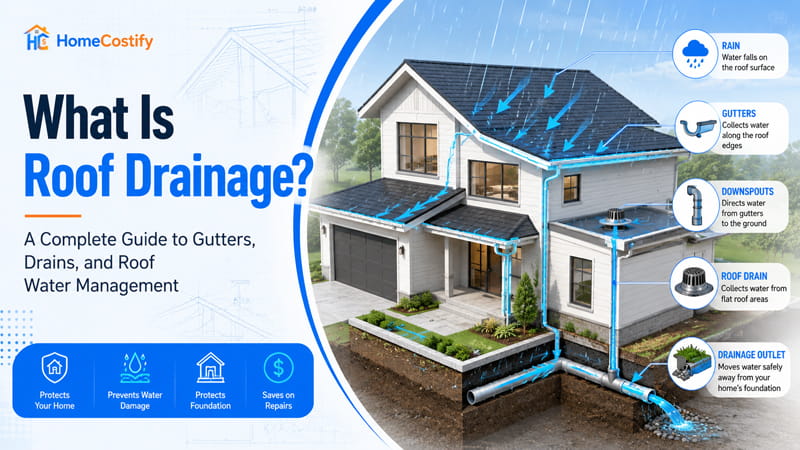
Roof Drainage is the system that collects and directs rainwater away from a roof to help protect the building below. Every roof is exposed to rainfall, but not every roof handles water the same way.
The difference often comes down to how effectively water is collected, moved, and discharged. A well-designed drainage setup helps reduce the risk of leaks, moisture intrusion, and premature roof deterioration.
Rainwater may seem harmless during a typical storm. Problems begin when water remains on the roof longer than intended or flows toward areas that were never designed to handle constant moisture exposure. Small drainage issues can develop gradually.
By the time visible damage appears, the underlying problem may have been present for months or even years.
A properly designed roof drainage system creates a controlled path for water to leave the roof surface. Depending on the building design, that path may include gutters, downspouts, interior drains, scuppers, or other drainage components.
The objective remains the same. Water should move away from the roof efficiently before it can create structural or moisture-related concerns.
Effective roof water drainage does more than protect roofing materials. It also helps safeguard walls, foundations, and surrounding areas from excessive roof runoff.
What Is Roof Drainage?
Roof Drainage is the process of collecting, controlling, and directing rainwater away from a roof surface. Every building receives water during storms, and that water must follow a planned path to prevent accumulation.
When drainage is inadequate, standing water can place additional stress on roofing materials and increase the likelihood of moisture-related problems.
Many people associate drainage with gutters alone. Gutters are important, but they represent only one part of a larger system.
Modern buildings may use gutters, internal drains, scuppers, leader pipes, and other components depending on roof design and water volume. Together, these elements form a network that helps move water from the roof to a safe discharge location.
A well-designed approach also supports broader roof water management goals. Instead of allowing rainwater to flow unpredictably, the system controls how water moves across the roof and away from the structure.
This becomes especially important on low-slope and flat roofs where water does not naturally shed as quickly.
The Purpose of a Roof Drainage System
The primary purpose of a roof drainage system is to remove water from roof surfaces before it can create problems. Water that remains on a roof for extended periods may contribute to leaks, deterioration, and unnecessary structural stress.
Properly designed roof drainage systems also help extend the lifespan of roofing assemblies by reducing exposure to standing water.
Whether the building uses gutters or interior drains, the objective remains the same. Water should move off the drainage roof area efficiently and follow a controlled path away from the structure.
Why Roof Drainage Is Important
Water follows the path of least resistance. If a roof does not provide that path, rainwater will often find one on its own. The results are rarely beneficial. Moisture can enter vulnerable areas, weaken building materials, and create conditions that become more expensive to correct over time.
Roof Drainage plays a direct role in protecting the entire building envelope. Effective drainage helps reduce prolonged moisture exposure, limits water accumulation, and supports long-term durability. It is one of the most overlooked forms of roof protection, yet it influences how well a roof performs throughout its service life.
The impact extends beyond the roof surface itself. Excess water discharged too close to a building can affect soil stability and place additional stress on foundations. Proper drainage supports foundation protection by directing water away from critical structural areas. It also contributes to broader stormwater management efforts by controlling where rainwater flows after leaving the roof.
According to the International Code Council (ICC), roof drainage systems must be designed to safely remove stormwater through properly sized drains, leaders, gutters, and related drainage components. Building codes also establish minimum drainage requirements to help prevent water accumulation and structural stress on the roof.
Consistent water removal also helps preserve many common roofing materials. Moisture that remains trapped against roofing components for extended periods can accelerate deterioration and shorten expected service life. In some buildings, drainage performance works alongside roof ventilation strategies to help manage moisture conditions within the roof assembly.
Problems Caused by Poor Roof Drainage
Drainage failures often begin with small warning signs. A clogged outlet, overflowing gutter, or blocked drain may not seem urgent during light rainfall. The consequences become much more noticeable during heavier storms.
Leaks are among the most common problems associated with inadequate Roof Drainage. Water that cannot exit the roof efficiently may find openings around seams, penetrations, or flashing details. Moisture intrusion can then support mold growth inside concealed spaces. The damage is not always visible right away.
Poor drainage may also contribute to erosion around the building perimeter and increase the likelihood of structural deterioration. Excessive roof runoff can overwhelm nearby areas, while persistent standing water places additional loads on roof assemblies. Effective drainage remains one of the most practical forms of water damage prevention available to property owners.
How a Roof Drainage System Works
A successful drainage system follows a simple sequence. Rain falls onto the roof surface, moves toward a collection point, travels through a designated pathway, and eventually exits the building area.
The process may seem straightforward, but each stage plays a role in preventing water accumulation and protecting the structure below. Roof Drainage works best when every component is properly sized, positioned, and maintained.
Water does not move randomly across a roof. Most systems rely on gravity to direct flow toward designated collection areas. The roof slope influences movement, while the roof drainage layout determines where water is gathered and discharged. If the design is inadequate, water may pool in low spots or overwhelm drainage components during heavy rainfall.
Once water reaches a collection point, it enters a gutter, drain opening, or another designated roof drainage channel. From there, it travels through a pathway designed to carry water away from the roof surface.
On many buildings, that pathway includes a roof drain pipe, downspout, or underground drainage connection. The objective remains the same. Water should leave the roof quickly and follow a controlled route away from the structure.
Water Flow on Sloped Roofs
Sloped roofs naturally encourage water movement because gravity pulls rainwater toward the lower portions of the roof. As water travels downward, it reaches the roof edges where collection systems are typically installed. Gutters capture that flow and direct it toward downspouts, reducing the chance of water spilling onto walls or collecting near the foundation.
The effectiveness of the system depends on proper sizing and placement. Even a steep roof can experience drainage issues if gutters become clogged or downspouts cannot handle the volume of water arriving during a storm. Well-designed Roof Drainage minimizes those risks by creating a predictable flow path from the highest point of the roof to the final discharge location.
Water Flow on Flat Roofs
Flat roofs require a different approach because water does not naturally run off the surface as quickly as it does on a pitched roof. Most low-slope designs rely on interior drains, scuppers, or a combination of both to remove water efficiently. Small slope adjustments are often incorporated into the design to encourage movement toward collection points.
Interior drains collect water at designated low areas and direct it through piping systems hidden within the building. Scuppers create openings along parapet walls that allow water to exit the roof perimeter.
Many flat roofs also incorporate overflow drainage features that provide a secondary path when primary drainage components become blocked. Effective Roof Drainage depends on both primary and backup systems working together to prevent excessive ponding.
Types of Roof Drainage Systems
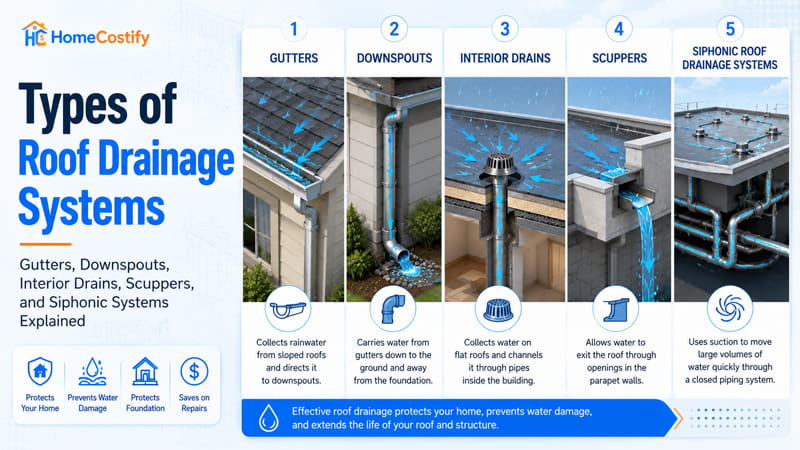
Not all roofs manage water the same way. Building design, roof slope, local rainfall patterns, and drainage requirements all influence the type of system used. Some solutions are common on residential properties, while others are primarily found on commercial buildings.
Gutters
Gutters are among the most common drainage solutions used on residential buildings. They are installed along the roof perimeter and collect rainwater as it flows toward the edges. Once captured, water is directed into downspouts and carried away from the structure.
Most gutters are used on sloped roofs because gravity naturally moves water toward the roof perimeter. They are available in a variety of styles, sizes, and gutter materials, including aluminum, steel, copper, and vinyl. Material selection often depends on budget, durability expectations, and local weather conditions.
One advantage of rain gutters is their simplicity. They are relatively easy to inspect, maintain, and repair. They also work well on many residential roof designs. However, they remain exposed to debris accumulation. Leaves, twigs, and other obstructions can restrict water flow if routine maintenance is neglected.
Modern roof gutters are often integrated into a broader gutter system that includes guards, hangers, and strategically placed downspouts. When properly maintained, they provide a practical and cost-effective way to support Roof Drainage on many homes.
Downspouts
Downspouts serve as the vertical connection between gutters and the ground-level drainage area. Their job is straightforward. They transport water collected by gutters away from the roof and building exterior.
Without properly sized downspouts, even well-designed gutters can overflow during periods of heavy rainfall. Water must leave the gutter quickly enough to prevent backups and edge overflow. The number and placement of downspouts often depend on roof size, gutter capacity, and expected rainfall intensity.
Many systems rely on dedicated drain pipes for gutters to move water even farther from the building. In some installations, underground piping carries water toward stormwater systems or designated discharge areas. Effective drainage from downspouts helps reduce erosion, foundation issues, and unwanted moisture around the property.
Interior Drains
Interior drainage systems are commonly used on flat and low-slope roofs. Instead of directing water toward the perimeter, they collect water through strategically placed drain openings located within the roof surface.
A typical roof drain sits at a low point where water naturally accumulates. Once water enters the opening, it flows through concealed piping within the building structure before being discharged to an approved drainage location. This design helps keep major drainage components hidden from view.
Many commercial properties rely on multiple roof drains to manage large roof areas efficiently. Proper placement is critical. If drains are installed incorrectly or become obstructed, standing water can develop around collection points.
One advantage of interior drains is their ability to manage water without requiring large exterior gutter systems. They are particularly useful on flat roofs where perimeter drainage may not be practical.
Scuppers
Scuppers provide another method of removing water from flat or parapet roof designs. Rather than collecting water through internal drain openings, they create an outlet through the edge of the building or parapet wall.
Water moves toward the opening and exits through the scupper before being directed downward through a conductor head or downspout. This approach is frequently used on buildings with parapet walls where traditional perimeter gutters may not be suitable.
Many drainage designs use scuppers as primary outlets, while others rely on them as backup protection. In those situations, the opening functions as part of an overflow system that activates when water levels rise beyond normal operating conditions.
Properly designed overflow drains and overflow scuppers provide an important layer of protection. They help reduce the risk of excessive water accumulation when primary drainage components become blocked.
Siphonic Roof Drainage Systems
Siphonic systems operate differently than conventional gravity-based drainage designs. Instead of allowing air to mix freely with flowing water, the piping network is engineered to create a siphonic action that increases flow efficiency.
As water fills the system, negative pressure develops within the piping network. This allows water to move at higher velocities and transport larger volumes through smaller pipe sizes. The approach is commonly used in large facilities where traditional systems may require extensive piping infrastructure.
Many siphonic systems are designed for airports, warehouses, stadiums, and other buildings with expansive roof areas. Their ability to move significant amounts of water makes them attractive for commercial roof drainage applications where drainage capacity is a primary concern.
Comparison of Common Roof Drainage Systems
| System Type | Best For | Main Components | Advantages |
|---|---|---|---|
| Gutters | Sloped roofs | Gutters, downspouts | Simple and cost-effective |
| Interior Drains | Flat roofs | Roof drains, leader pipes | Hidden system |
| Scuppers | Parapet roofs | Openings, downspouts | Emergency overflow option |
| Siphonic Systems | Large commercial roofs | Specialized piping | High drainage capacity |
Each approach offers distinct advantages depending on roof design and water management requirements. Selecting the right solution involves evaluating drainage capacity, maintenance needs, building configuration, and long-term performance goals.
While the components may differ, every system shares the same objective. Effective Roof Drainage moves water away from the roof before it can create damage.
Roof Drainage Components
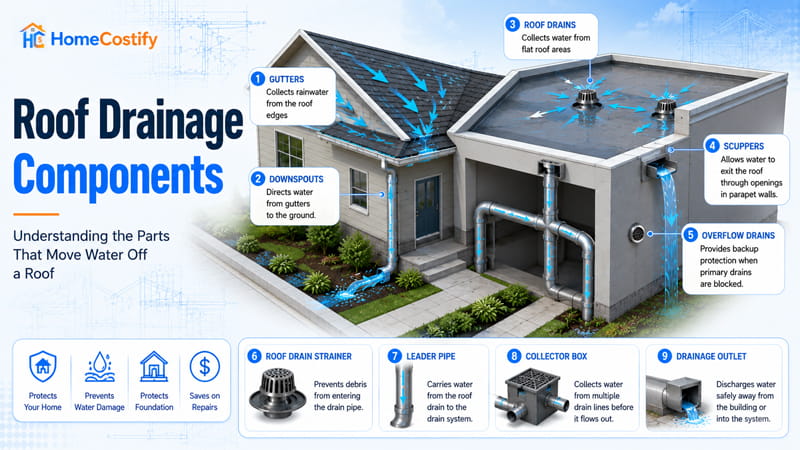
Rainwater rarely leaves a roof through a single component. It usually passes through several collection and discharge points before reaching the ground or a stormwater system. A blockage, damaged fitting, or undersized drain can interrupt that path and leave water where it should not be.
That is why the condition of individual roof drainage components matters just as much as the overall system design.
Gutters and Downspouts
On many homes, gutters handle the first stage of water collection. Positioned along the roof perimeter, they catch runoff before it can spill directly down exterior walls. During a heavy rain event, a surprisingly large amount of water may pass through a gutter system in a short period of time.
Downspouts continue the process by carrying water from the gutter to ground level. Their placement influences how efficiently runoff leaves the property.
Too few downspouts can cause gutters to overflow, while poorly positioned discharge points may concentrate water near the foundation. Gutters, downspouts, drains, and scuppers are among the roof parts that work together to move water away from a building efficiently.
Roof Drains and Drain Pipes
Large flat roofs often rely on internal drainage instead of perimeter gutters. Water flows toward designated low areas where roof drains collect and redirect it into concealed piping. Most commercial buildings use more than one drain because rainfall rarely accumulates evenly across the entire roof surface.
Drain pipes carry water away from collection points and toward approved discharge locations. Their size and placement affect how quickly water leaves the roof. Properly maintained drains reduce the likelihood of standing water after storms and support overall Roof Drainage performance.
Scuppers and Overflow Drains
Some roofs use scuppers rather than internal drains. These openings are commonly installed through parapet walls, creating an exit point where water can leave the roof. The concept is simple. Water reaches the opening and flows outward instead of remaining trapped on the surface.
Overflow drains provide a second route when primary drainage paths become obstructed. During routine rainfall, they may remain inactive. Their value becomes apparent when debris blocks a drain or when rainfall intensity exceeds normal expectations.
Additional Components
Several smaller parts influence how efficiently water moves through the system. A roof drain strainer sits above a drain opening and helps prevent leaves, branches, and debris from entering the pipe below. Without that protection, blockages can develop much more quickly.
A leader pipe transports water from a drain to another section of the drainage network. Some systems also include a drainage outlet that directs runoff toward a designated discharge area. A collector box may be installed where multiple drainage paths converge, helping manage flow before water continues downstream.
Although these parts receive less attention than gutters or drains, many roof drain components have a direct impact on long-term reliability.
Roof Drainage Design Principles
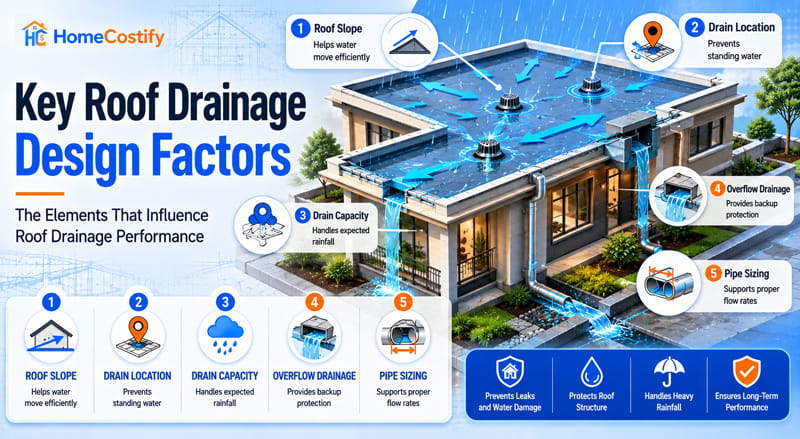
Drainage problems often begin long before a roof is exposed to its first storm. Water follows the path available to it. If slopes are inadequate, drains are poorly positioned, or pipe capacity is underestimated, the system may struggle even when every component is functioning correctly.
Effective Roof Drainage depends on decisions made during the design stage.
Roof Slope and Water Flow
Gravity does most of the work on a roof. Water naturally moves toward lower areas, which is why slope remains one of the most important considerations in drainage planning. On steep roofs, runoff usually reaches gutters quickly. Low-slope roofs require more careful attention because water moves at a slower pace.
A properly designed drainage slope encourages water to travel toward collection points instead of remaining in isolated depressions. The required slope varies depending on roof configuration and drainage method. Roof pitch also influences which drainage components are practical. A system that performs well on a steep residential roof may not be suitable for a large low-slope structure.
Drain Placement and Layout
The location of drains, gutters, and discharge points can significantly affect performance. Water tends to collect in predictable areas. Ignoring those areas during the planning stage increases the risk of ponding after heavy rainfall.
A well-developed roof drainage layout accounts for roof geometry, obstructions, and natural flow patterns. Designers often identify low spots and drainage paths before finalizing a roof drainage plan. Small adjustments in drain location can sometimes improve performance more than increasing drain size.
Drain Capacity and Sizing
Every drainage system has a limit. Once rainfall exceeds the capacity of drains or piping, water begins to accumulate faster than it can be removed. Capacity planning helps reduce that risk.
When sizing roof drains, designers evaluate factors such as roof area and expected rainfall intensity. The selected roof drain size must be capable of handling anticipated runoff volumes. Pipe capacity matters as well. Inadequate roof drain pipe sizing can restrict flow even when the drain opening itself is large enough.
The broader process of roof drainage design involves balancing collection capacity, flow rates, and discharge requirements. A system that moves water efficiently during a moderate storm should also be prepared for more demanding conditions.
Key Roof Drainage Design Factors
| Design Factor | Why It Matters |
|---|---|
| Roof Slope | Helps water move efficiently |
| Drain Location | Prevents standing water |
| Drain Capacity | Handles expected rainfall |
| Overflow Drainage | Provides backup protection |
| Pipe Sizing | Supports proper flow rates |
Roof Drainage for Different Roof Types
Roof shape influences nearly every aspect of drainage. Water behaves differently on a steep residential roof than it does on a large commercial roof with minimal slope. The drainage strategy must reflect those differences rather than relying on a one-size-fits-all approach.
Sloped Roofs
Water moves relatively quickly across sloped roofs because gravity continuously pulls it toward the perimeter. Gutters collect runoff along the roof edge, while downspouts carry that water away from the building. Most residential properties use this approach because it is practical and relatively easy to maintain.
Even so, performance depends on routine upkeep. Debris accumulation can reduce capacity and cause water to spill over gutter edges during heavy storms. Small maintenance issues often become noticeable first at downspout locations where large volumes of water converge.
Flat Roofs
Low-slope roofs present different challenges. Water does not move as quickly, which increases the importance of drain placement and surface grading. A properly planned flat roof drainage strategy creates a clear path toward designated collection points.
Many commercial buildings use interior drains connected to concealed piping networks. This approach keeps drainage infrastructure largely out of sight while accommodating large roof areas. A well-designed flat roof drainage system can remove substantial amounts of water, but performance depends on keeping drains free of obstructions.
Ponding remains one of the most common concerns on flat roofs. Water that remains in the same area after rainfall can increase wear on roofing materials and create long-term maintenance issues. Excessive ponding water can place additional stress on roof framing and increase the likelihood of long-term structural problems.
Parapet Roofs
Buildings with parapet walls require additional planning because water cannot simply flow over the roof edge. Drainage components must provide a controlled exit point. Many parapet roofs rely on internal drains, scuppers, or both.
Based on guidance discussed by the International Institute of Building Enclosure Consultants (IIBEC), roofs that can trap water due to parapet walls or similar perimeter construction should include secondary drainage systems such as overflow drains or scuppers. These backup drainage features help reduce the risk of excessive ponding if primary drains become blocked.
Secondary drainage becomes especially valuable during severe weather. A blocked primary drain may go unnoticed until water levels begin to rise. Overflow systems provide another path for water to escape, reducing the chance of prolonged accumulation and supporting overall Roof Drainage performance when conditions become more demanding.
Common Roof Drainage Problems
Even a well-built roof can develop drainage problems over time. Debris accumulates, components wear out, and water eventually finds weaknesses in the system. Some issues become visible immediately after a storm.
Others develop gradually and may not attract attention until stains, leaks, or structural damage begin to appear. Regular observation often reveals warning signs before repairs become more expensive.
Clogged Gutters
Leaves, twigs, seed pods, and windblown debris frequently collect inside gutters. During dry weather, those materials may seem harmless. Heavy rain changes the situation quickly. Water that should flow toward downspouts can back up and spill over the gutter edge instead.
Persistent clogged gutters often direct water onto siding, windows, and foundation areas. Overflow can also saturate landscaping and create erosion around the home. In some cases, the additional weight of trapped debris and standing water places stress on gutter fasteners and supports.
Blocked Roof Drains
Flat roofs face a different challenge. Drain openings can become obstructed by leaves, dirt, roofing fragments, and other debris carried across the surface during storms. Water continues moving toward the drain, but the blockage prevents normal discharge.
Clogged roof drains often create standing water around collection points. The problem may remain unnoticed from ground level because most drain systems are hidden from view. Property owners sometimes discover the issue only after water begins entering the building or remains on the roof long after rainfall has ended.
Ponding Water
Not all standing water indicates a serious problem, but prolonged accumulation deserves attention. Ponding water occurs when runoff remains in the same area instead of draining away within a reasonable period. Low spots, inadequate slope, and blocked drainage paths are common causes.
Repeated roof ponding can accelerate wear on roofing materials and increase the likelihood of leaks. Water that remains in contact with the same area after every storm often exposes weaknesses that would otherwise remain unnoticed.
Improper Drainage Design
Some drainage problems originate during construction rather than developing over time. Poor placement of drains, insufficient slope, and inadequate planning can limit system performance from the start.
Undersized drains may struggle during heavy rainfall because they cannot remove water as quickly as it arrives. A poor layout can create isolated low areas where runoff naturally collects. Effective Roof Drainage depends on more than maintenance alone. The original design has a significant influence on how water behaves during every storm.
Many of these issues develop slowly. By the time symptoms become obvious, moisture exposure may have been occurring for months. Consistent inspections help identify problems before they reach that stage and support long-term Roof Drainage performance.
Roof Drainage Maintenance Tips
Drainage systems rarely fail without warning. Small changes in water flow, debris accumulation, or component condition often appear before larger problems develop. Routine maintenance helps catch those issues early and reduces the likelihood of unexpected repairs.
Keep Gutters Free of Debris
One of the most important tasks is gutter cleaning. Gutters that remain full of leaves and debris lose capacity over time. Water begins flowing around obstructions instead of through the intended path. Homes located near mature trees often require more frequent cleaning than properties with limited vegetation nearby.
Clean Roof Drains Regularly
Flat roofs benefit from regular roof drain cleaning as well. Drain openings should remain free of debris that could restrict water movement during storms. Even a partially blocked drain can increase the amount of standing water left on the roof surface. Water that lingers after rainfall often signals that cleaning or corrective maintenance is needed.
Schedule Routine Drainage Inspections
Periodic drainage inspection helps identify loose components, damaged connections, corrosion, and other developing concerns. Many property owners schedule inspections during the spring and fall because seasonal weather changes often reveal new issues. Early detection can prevent minor drainage concerns from turning into expensive repairs.
Focus on Preventive Maintenance
A practical roof drainage maintenance routine also includes preventive care. Downspouts should discharge water away from the building, strainers should remain intact, and visible drainage components should be checked after major storms. Small maintenance tasks completed consistently are usually less expensive than correcting water damage later.
Conclusion
Rainwater management affects far more than the roof surface itself. Water that cannot leave the roof efficiently may contribute to leaks, material deterioration, foundation concerns, and long-term structural issues. Roof Drainage addresses those risks by creating a controlled path for runoff from collection point to discharge location.
The most effective systems combine proper design, suitable components, and routine maintenance. Gutters, drains, scuppers, piping, and overflow features each have a place depending on roof type and drainage requirements. For homeowners, consistent upkeep remains one of the simplest ways to protect both the roof and the building beneath it.
FAQs About Roof Drainage
What is the water drain on the roof called?
The name depends on the roof type. Sloped roofs commonly use gutters and downspouts, while flat roofs often rely on roof drains positioned at low points to collect and remove water.
What is a roof drain cover called?
A roof drain cover is commonly called a roof drain strainer or drain dome. It sits above the drain opening and helps keep debris from entering the drainage system.
What is the detail of roof drainage?
Roof drainage details include slopes, drains, gutters, piping, scuppers, overflow protection, and discharge locations. These elements determine how water moves from the roof to a safe exit point.
How to check roof drains?
Inspect drain openings for leaves, dirt, and visible obstructions. Standing water around drains after rainfall may indicate restricted flow, improper slope, or maintenance issues.
How to design a roof drainage system?
The design process considers roof area, slope, rainfall intensity, drain placement, pipe capacity, and overflow protection. The goal is to move water off the roof without creating bottlenecks.