A home heating system usually stays out of sight until a cold morning makes every room feel uncomfortable. People adjust the thermostat, hear equipment start running somewhere in the background, and expect warm air or heat to arrive a few minutes later. That routine happens millions of times each day, yet many people have never looked closely at how does heating work in a house actually takes place.
The process is more organized than it appears. A thermostat monitors indoor temperature, heating equipment generates or captures heat, and a distribution system carries that heat into living spaces. Once the target temperature is reached, the system stops and waits for the next drop in temperature.
Daily use often creates familiarity without much curiosity. A furnace starts, a radiator becomes warm, or air begins flowing from a vent. The sequence feels automatic because most of the activity happens behind walls, above ceilings, inside utility rooms, or beneath floors. Even so, every heating cycle follows a series of steps that move heat from its source to occupied rooms.
The exact details vary from one setup to another. Some systems warm air directly, others circulate heated water, and some pull heat from outdoor air before moving it indoors. Despite those differences, heating work follows the same basic pattern: detect a temperature change, generate or capture heat, distribute that heat, and repeat the cycle whenever additional warmth is needed.
Several pieces of equipment take part in home heating work. Some generate heat, some move it, and others distribute it throughout the house. A thermostat may be the only part most people interact with, but the heating cycle extends far beyond the wall-mounted control.
- Thermostat: Monitors indoor temperature and sends a signal when the temperature drops below the selected setting.
- Furnace: Produces heat through fuel combustion or electric heating elements before warming the air that circulates through the system.
- Boiler: Heats water or creates steam that travels through pipes to different parts of the house.
- Heat Pump: Pulls heat from an outdoor source and transfers it indoors through a refrigeration cycle.
- Blower: Pushes heated air through ductwork and into living spaces.
- Ductwork: Forms the pathway that carries warm air from the heating unit to individual rooms.
- Radiators: Release heat from hot water or steam after it reaches occupied areas.
- Vents and Registers: Mark the final point where heated air enters a room.
A heating cycle begins long before warm air reaches a room or a radiator starts giving off heat. The thermostat detects a temperature change first. From there, heating equipment responds, heat begins moving through the distribution system, and living spaces gradually warm up.
How Does Heating Work in a House?
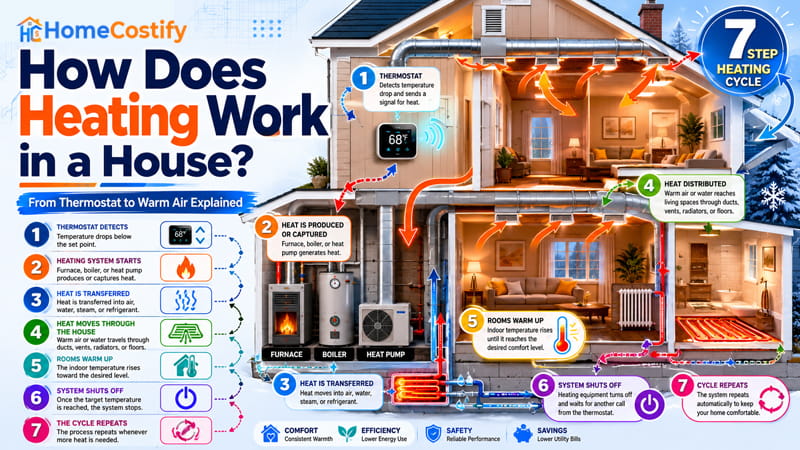
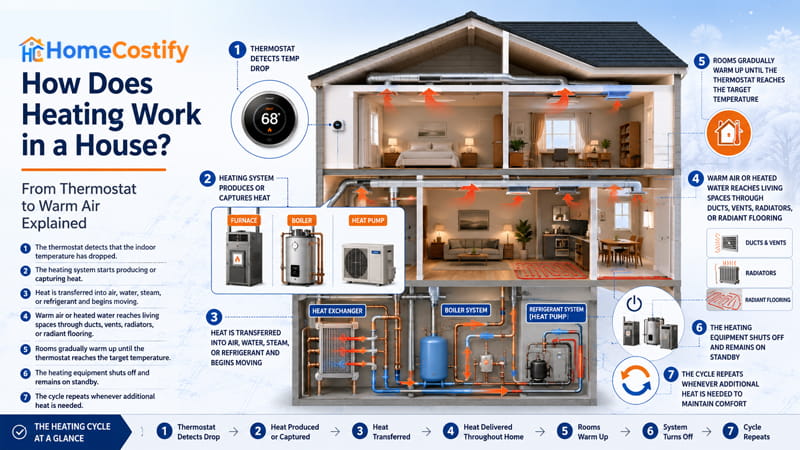
A house does not become warmer the instant someone raises the thermostat setting. Temperature detection comes first. Heat must then be generated or captured, carried through the house, and released into living spaces before indoor conditions begin to change.
| Step | What Happens | Main Components Involved |
|---|---|---|
| Step 1 | The thermostat detects that the indoor temperature has dropped below the desired setting. | Thermostat |
| Step 2 | The heating system starts producing or capturing heat, depending on the equipment installed. | Furnace, Boiler, Heat Pump |
| Step 3 | Heat is transferred into air, water, steam, or refrigerant and begins moving through the home. | Heat Exchanger, Boiler, Refrigerant System |
| Step 4 | Warm air or heated water reaches living spaces through ducts, vents, radiators, or radiant flooring. | Blower, Ductwork, Vents, Radiators |
| Step 5 | Rooms gradually warm up until the thermostat reaches the target temperature. | Thermostat |
| Step 6 | The heating equipment shuts off and remains on standby until another temperature drop occurs. | Thermostat, Heating Unit |
| Step 7 | The cycle repeats whenever additional heat is needed to maintain comfort. | Entire Heating System |
Step 1: The Thermostat Detects a Temperature Drop
The heating cycle usually begins with a small temperature change that most people never notice. A room may gradually cool during the night, after a door has been opened repeatedly, or when outdoor temperatures fall faster than expected. The thermostat continuously monitors indoor conditions. Once the measured temperature drops below the selected setting, the device sends a signal known as a call for heat.
No warm air is moving yet, and no radiator has begun releasing heat. The thermostat serves as the starting point of the cycle. Modern digital thermostats perform this task electronically, while older mechanical models rely on physical components that react to temperature changes. Either way, the first stage of heating work begins with temperature detection rather than heat production.
A large portion of house heating work depends on that initial signal. Without it, the system remains idle regardless of outdoor conditions.
Step 2: The Heating System Produces or Captures Heat
After receiving a call for heat, the equipment responsible for generating or capturing heat begins operating. The exact heating work process depends on the type of equipment installed, which is one reason why people often compare different types of heating systems.
How Furnaces Produce Heat
Gas furnaces generate heat through combustion. Natural gas, propane, or another fuel burns inside a sealed combustion chamber. The resulting heat passes through a heat exchanger, a metal component that separates combustion gases from the air circulating through the house.
As the heat exchanger becomes hotter, air moving across its surface absorbs thermal energy. A blower then pushes that heated air into the duct system. Within a few minutes, warm air begins arriving at supply vents located throughout the house.
Electric furnaces follow a different path. Instead of combustion, electric resistance elements become extremely hot when electricity passes through them. Air flows across those elements before entering the distribution system.
How Boilers Produce Heat
Boilers heat water rather than air. Inside the unit, fuel combustion or electricity raises the temperature of water stored within the system. Depending on the design, that water may remain in liquid form or be converted into steam.
A network of pipes carries the heated water or steam to radiators, baseboard units, or other heat emitters located throughout the building. Heat leaves the water as it travels through occupied spaces. Cooler water then returns to the boiler for reheating.
How Heat Pumps Capture Heat
Heat pumps operate differently because they do not create heat through combustion. Instead, they transfer heat from one location to another.
Even cold outdoor air contains thermal energy. Refrigerant circulating through the system absorbs that energy and carries it indoors. Compression raises the refrigerant temperature significantly before heat is released inside the house. The process repeats continuously during operation.
Although the equipment differs, heating work still follows the same objective: move usable heat into occupied areas.
Step 3: Heat Moves Through the House
Producing heat is only part of the process. That heat still needs a pathway to reach living spaces.
Through Air Ducts
Forced-air systems rely on ductwork. After air passes through a furnace or air handler, the blower pushes it into a network of metal or flexible ducts hidden behind walls, ceilings, attics, crawl spaces, and utility chases.
Some rooms sit only a short distance from the equipment. Others may be connected by dozens of feet of ductwork. Air continues moving until it reaches supply registers positioned throughout the house.
Air eventually returns to the system through return ducts. The cycle continues as long as the thermostat continues calling for heat.
Through Water Pipes
Hydronic systems move heated water instead of air. Pumps circulate water through a closed loop of piping installed behind walls, beneath floors, or inside mechanical spaces.
The water carries thermal energy from the boiler to different parts of the building. Heat transfers from the piping system into radiators, baseboards, or other heating devices. Once some of that energy has been released, cooler water travels back toward the boiler.
Through Floors and Radiators
Radiant heating follows another distribution method. Heated water may circulate beneath finished flooring, or radiators may release heat directly into occupied rooms.
Floors, walls, furniture, and surrounding surfaces gradually absorb heat. Temperature changes often feel less abrupt than in many forced-air installations.
Step 4: Heat Reaches Living Spaces
The distribution stage ends once heated air, hot water, or radiant energy arrives where people actually spend time. Supply vents begin releasing warm air into rooms. Radiators become warmer to the touch. Heated flooring starts transferring energy through the finished floor surface.
The room itself may still feel cool at this point. Heat has arrived, but the temperature throughout the space has not fully changed yet. Walls, furniture, flooring, and other materials continue absorbing energy before a noticeable temperature increase occurs.
Step 5: Rooms Gradually Warm Up
A room rarely warms at the same rate from floor to ceiling. Convection creates continuous air movement as warmer air rises and cooler air settles toward lower areas of the room.
Radiant heat follows a different path. Thermal energy moves from warmer surfaces toward cooler surfaces without relying on moving air. A warm floor, radiator, or nearby wall can influence comfort even before the entire room reaches the selected temperature.
As temperature differences become smaller, indoor conditions become more consistent. Occupants experience the result of heating work during this stage.
Step 6: The Heating Equipment Shuts Off
The thermostat continues monitoring indoor temperature while the system operates. Once the selected setting has been reached, the call for heat ends.
Burners stop firing inside a furnace or boiler. Electric heating elements switch off. Heat pump compressors stop operating. Some systems may continue moving air for a short period afterward, but active heat production has already ended.
This shutdown phase may occur several times throughout the day depending on weather conditions, thermostat settings, insulation levels, and overall heat loss.
Step 7: The Cycle Repeats
Heat gradually escapes through windows, walls, ceilings, doors, and other parts of the building envelope. Indoor temperatures begin falling again once that heat loss exceeds the remaining stored warmth inside the house.
The thermostat eventually detects another temperature drop. A new call for heat follows, equipment starts operating again, and the entire sequence repeats.
Home heating work is not a single event. The process runs continuously throughout the heating season, cycling on and off whenever additional heat is needed to maintain indoor temperatures.
The Science Behind Why Home Heating Work
Every heating system relies on the same physical principle. Heat naturally moves toward colder areas. A warm object placed inside a cool room gradually loses heat. A heated floor transfers warmth into the surrounding space. Hot water inside a radiator releases thermal energy into the room around it. The equipment may differ, but the movement of heat follows the same pattern.
Although furnaces, boilers, and heat pumps use different equipment, they all rely on the same principle: heat naturally moves from warmer areas toward cooler ones. Home heating work is essentially a controlled process of generating or capturing heat and directing it into living spaces before that heat escapes through walls, ceilings, windows, and other parts of the home.
Several forms of heat transfer occur during that process:
- Conduction: Heat moves through direct contact. A warm radiator transfers heat into nearby materials and surrounding surfaces.
- Convection: Warm air rises while cooler air sinks. This continuous movement distributes heat throughout a room.
- Radiation: Heat travels from a warm surface toward cooler objects without requiring moving air.
Every stage of heating work depends on one or more of these mechanisms. Warm air leaving a vent, hot water circulating through pipes, and heated flooring beneath finished surfaces all rely on heat transfer. The equipment changes. The science remains the same.
Why Heating Work Differently From One House to Another
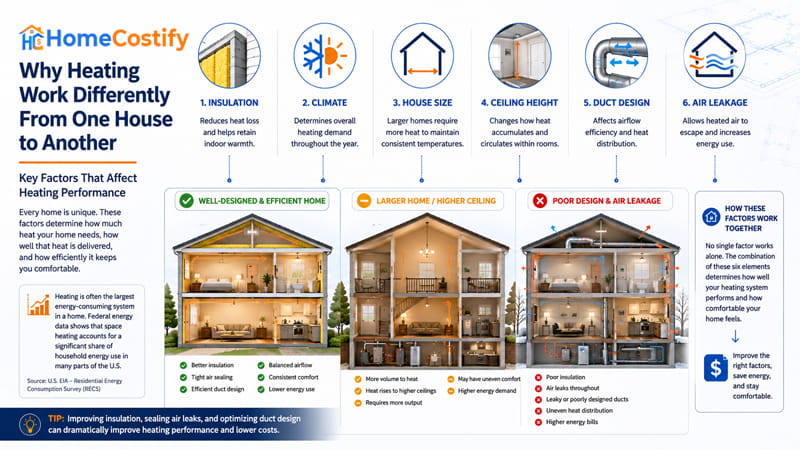
Two houses can use identical equipment and still produce very different results. A furnace that keeps one house comfortable during winter may struggle in another building of similar size. The difference often comes from the structure itself rather than the heating equipment.
Heating is often the largest energy-consuming system in a home. Federal energy data shows that space heating accounts for a substantial share of household energy use across much of the United States. Energy loss affects how frequently equipment cycles and how much fuel or electricity is required throughout the heating season.
Insulation plays a major role. Heat escapes more slowly when attic insulation, wall insulation, and air barriers limit heat loss. Air leakage creates another challenge. Small gaps around doors, windows, utility penetrations, and framing joints can allow heated indoor air to escape continuously.
Climate also influences heating work. A system operating in Minnesota faces very different winter conditions than one located in Georgia or Texas. Outdoor temperature, wind exposure, and seasonal duration all affect heating demand.
In many houses, performance is also influenced by the overall HVAC design, including airflow, ventilation, and equipment sizing. Duct layout, return-air placement, and airflow balance affect how evenly heat reaches different rooms.
| Factor | Effect on Heating Performance |
|---|---|
| Insulation | Slows heat loss and retains indoor warmth longer |
| Climate | Influences annual heating demand |
| House Size | Larger spaces require more heat to maintain temperature |
| Ceiling Height | Changes how heat accumulates and circulates |
| Duct Design | Influences airflow and heat distribution |
| Air Leakage | Allows heated air to escape and increases energy use |
Differences in insulation, air leakage, climate, and airflow can produce very different heating results from one house to another.
Common Problems That Affect Home Heating Work
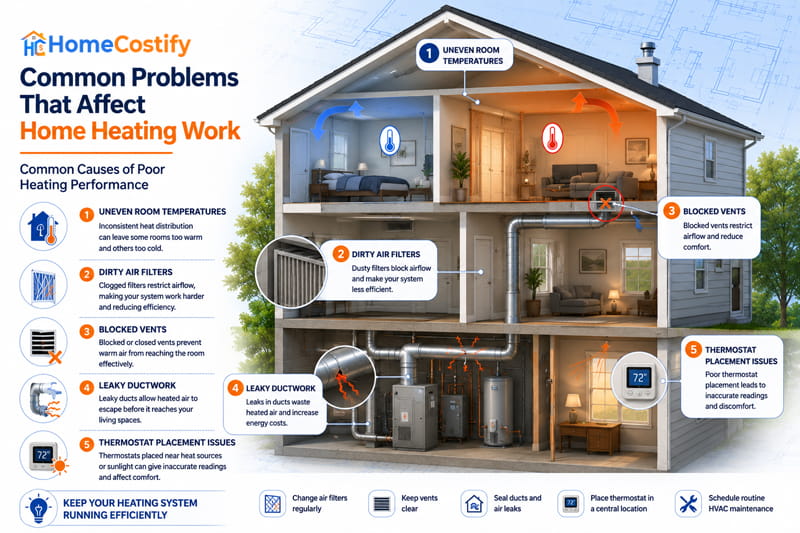
Warm air leaving a vent does not guarantee that every room receives the same amount of heat. Small issues inside the distribution system can change airflow patterns, reduce heat delivery, or affect temperature readings throughout the house.
Uneven Room Temperatures
A bedroom may remain cool while a nearby living room feels comfortable. Long duct runs, restricted airflow, poor insulation, or room location can all contribute to uneven temperatures. Multi-story houses often experience this issue because warm air naturally rises.
Dirty Air Filters
Air filters collect dust, pet hair, and airborne particles over time. As debris accumulates, airflow becomes more restricted. Less air passes through the system. Reduced airflow can affect heating work throughout the house and place additional strain on equipment.
Blocked Vents
Furniture, rugs, curtains, and household items occasionally cover supply vents or return openings. Air movement becomes restricted when that happens. Some rooms receive less heated air while other areas receive more than intended.
Leaky Ductwork
A significant amount of heated air can escape before reaching occupied rooms if duct connections are loose or damaged. Attics, crawl spaces, and wall cavities often conceal these leaks. The heating equipment may continue operating normally while indoor temperatures remain inconsistent.
Thermostat Placement Issues
Thermostat location affects temperature readings. A unit installed near direct sunlight, a drafty doorway, or a heat-producing appliance may register conditions that do not accurately represent the rest of the house. Small measurement errors can influence the entire heating cycle.
Problems like these interrupt normal house heating work even when the furnace, boiler, or heat pump remains fully operational.
Conclusion
The answer to how does heating work in a house comes down to a repeating sequence. A thermostat detects a temperature drop. Heating equipment generates or captures heat. That heat moves through ducts, pipes, radiators, or radiant flooring before reaching occupied spaces.
Indoor temperatures gradually rise as heat spreads throughout the house. Once the thermostat reaches the selected setting, active heating stops. The system remains idle until temperatures begin falling again.
Every form of home heating work follows this general pattern regardless of whether the house uses a furnace, boiler, or heat pump. The equipment may differ, but the cycle remains largely the same: detect, generate, distribute, warm, stop, and repeat.
FAQs About How Does Heating Work in a House
What is the 30 minute heating rule?
The 30 minute heating rule is an informal guideline suggesting that many heating systems should produce noticeable temperature changes within about 30 minutes. Actual timing varies based on outdoor conditions, insulation levels, equipment size, and house layout.
How often should heat kick on in a house?
Most systems cycle several times per hour during cold weather. The exact frequency depends on thermostat settings, outdoor temperatures, insulation quality, and overall heat loss.
How long does it take to heat a house from 50 to 70?
The process may take anywhere from less than an hour to several hours. House size, insulation levels, heating capacity, and outdoor temperatures all influence recovery time.
Is it better to leave your heat on auto or on?
Auto is usually preferred because the fan operates only when heating is needed. Continuous fan operation can increase electricity use and circulate cooler air between heating cycles.
Is it cheaper to keep the heat on or turn it on and off?
Most households spend less energy maintaining reasonable thermostat settings rather than repeatedly raising temperatures after allowing the house to cool significantly.