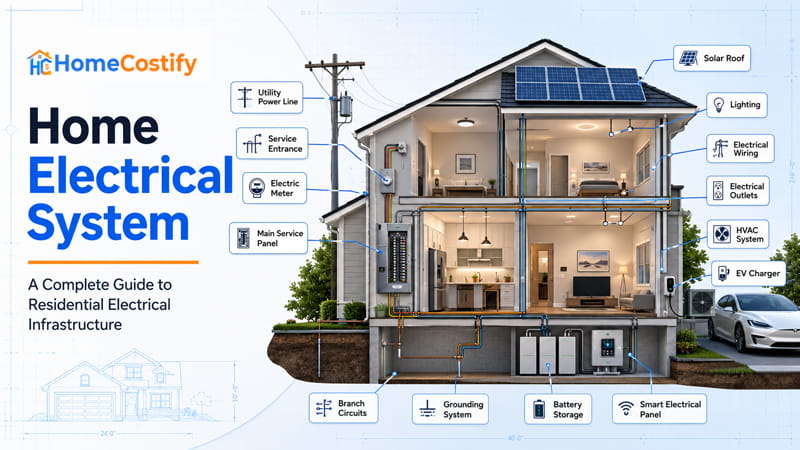
Flip a wall switch, plug in a coffee maker, charge a phone, or start a central air conditioner. Daily routines like these depend on a Home Electrical System operating behind the walls long before anyone notices it.
Electricity reaches rooms in seconds, yet the path it follows remains unfamiliar for countless people who use it every day. A light turning on feels ordinary. The network carrying that electrical energy from the utility line to each outlet is far less obvious.
A large number of people recognize how to use home electricity, although the Home Electrical System itself often remains a mystery. Service equipment, panels, breakers, wiring, grounding, and outlets work as one organized network rather than isolated parts.
That network directs electrical flow from the utility connection toward lighting, appliances, heating and cooling equipment, entertainment devices, and countless other loads found throughout an electrical system in a house.
What Is a Home Electrical System?
A Home Electrical System is the entire network responsible for receiving electricity, directing it through protected pathways, and delivering usable power throughout a house. Power enters at one point, follows designated routes, passes protective devices, and reaches individual circuits serving different rooms and electrical loads.
That organized layout forms the basis of an electrical system definition used across residential construction.
Every component depends on another. Service equipment cannot function independently from the panel. Branch circuits begin inside the panel before extending toward outlets and switches. Grounding forms a separate safety path connected to the same network. Looking at only one part gives an incomplete picture because the network operates as one connected structure rather than isolated equipment.
According to the U.S. Energy Information Administration (EIA), electricity is used in nearly every American home and accounts for a significant share of residential energy consumption.
That widespread dependence makes a properly designed Home Electrical System necessary for delivering electricity to lighting, appliances, HVAC equipment, and everyday electrical loads throughout the house.
Why Every Home Needs an Electrical System
Electricity entering from the utility line cannot flow directly into every appliance without control. Incoming power first passes equipment that measures usage, divides circuits, and limits abnormal current before reaching occupied spaces. Each branch follows a planned route from the panel to its intended destination.
Kitchen appliances, lighting circuits, garage receptacles, laundry equipment, HVAC systems, and entertainment devices all draw electricity from the same household electrical system. Separate circuits keep electrical loads organized while protective devices isolate faults before they spread farther through the network.
Home Electrical System vs. Home Electrical Wiring
The phrase Home Electrical Wiring refers only to conductors carrying electricity between equipment and electrical devices. Wiring represents one portion of the larger network.
A complete Home Electrical System also includes the service entrance, electric meter, main service panel, circuit breakers, grounding equipment, outlets, switches, branch circuits, and distribution equipment. Wiring connects those elements, although it does not define the entire system. That difference becomes useful later when looking more closely at residential wiring as its own subject.
Home Electrical System at a Glance
Electricity follows a predictable route from the utility connection to each electrical load. Viewing the network as a series of connected layers makes the overall layout easier to recognize before exploring individual sections in greater detail.
Electrical System Architecture

Every Home Electrical System begins with a power source supplied by the utility grid, a standby generator, or a solar energy installation. Incoming electricity enters through the service entrance before reaching the electric meter.
From there, the main service panel divides electrical power into branch circuits serving different areas of the house. Wiring carries current toward outlets, switches, lighting fixtures, and permanently connected equipment, while grounding, GFCIs, and AFCIs remain dedicated to electrical safety.
| Layer | Primary Function | Major Components |
|---|---|---|
| Power Source | Supplies electricity | Utility Grid / Generator / Solar |
| Power Intake | Receives incoming electricity | Service Entrance, Electric Meter |
| Power Distribution | Divides electrical power | Main Service Panel, Breakers |
| Power Delivery | Delivers electricity | Branch Circuits, Wiring, Outlets |
| Power Protection | Protects people and equipment | Grounding, GFCI, AFCI |
Main Components of a Home Electrical System
Electricity follows a planned route from the moment it reaches a house until it powers a light, appliance, or HVAC unit. A Home Electrical System contains connected parts arranged along that route, with each one handling a different stage of receiving, directing, or safeguarding electrical power.
Service Entrance
The service entrance marks the point where utility power enters the building. Conductors arriving from an overhead service drop or an underground service lateral terminate here before continuing into the rest of the installation.
This location also separates utility-owned equipment from equipment maintained inside the house. Every Home Electrical System begins at this connection because no electrical energy reaches interior circuits until it passes through the service entrance.
Electric Meter
Immediately after the service entrance, electricity passes through the electric meter. The meter records energy consumption for billing purposes while remaining under utility ownership in most parts of the United States.
It does not distribute electricity or control branch circuits. Instead, it measures the amount of electrical energy moving from the utility supply into the house before that power continues toward the main service panel.
Main Service Panel
The electrical service panel serves as the central distribution point inside a Home Electrical System. Incoming electricity enters the panel, then flows into individual breakers connected to separate branch circuits throughout the building. The main disconnect provides a single shutoff point for the incoming electrical supply during maintenance or emergency conditions.
Circuit breakers occupy individual positions inside the panel, each protecting one circuit from excessive current before electricity reaches lighting, receptacles, or permanently connected equipment.
A closer look at the Main Components of a Home Electrical System reveals that the panel functions as the starting point for every interior circuit rather than the destination of incoming power.
Branch Circuits
Each branch circuit leaves the panel and follows a designated path toward a particular area or electrical load. One circuit may supply bedroom receptacles, while another serves kitchen outlets or lighting fixtures.
Dividing the network into separate circuits keeps electrical loads organized and limits the area affected if one breaker opens.
Electrical Wiring
Electrical wiring forms the connection between the panel and electrical devices installed throughout the house. Conductors carry electricity from one point to another, linking breakers with outlets, switches, lighting fixtures, and permanently connected equipment.
Electrical Outlets and Light Switches
Electrical energy becomes accessible at electrical outlets and controlled through light switches. Outlets supply plug-in equipment, while switches interrupt or complete a circuit feeding lighting or other connected devices.
These locations represent the points where people interact with the electrical network during everyday use.
Grounding System
The grounding system creates a dedicated path for fault current under abnormal electrical conditions. Metal equipment, grounding conductors, and grounding electrodes remain connected through this protective network.
During a fault, current follows that path instead of passing through exposed metal parts that could otherwise become energized.
How Electricity Moves Through a Home Electrical System
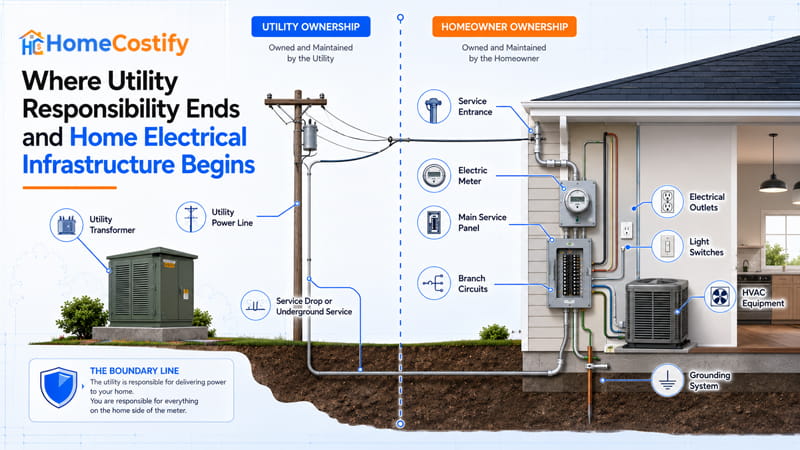
Electricity reaches a house through a sequence that begins outside the property. Every stage has a specific purpose, beginning at the utility connection and ending at an outlet, light fixture, or permanently installed appliance.
That sequence keeps electrical flow under control from start to finish. A Home Electrical System follows the same path every time electricity enters the house, even though the process happens almost instantly.
Utility Power Enters the Home
Electricity starts its journey at a utility transformer located near the property or within the local distribution network. The transformer adjusts voltage to a level suitable for residential use before power travels through overhead conductors or an underground service line. Both delivery methods terminate at the service entrance, creating the first point where utility power enters the residence.
The service entrance forms the boundary between utility equipment and customer-owned electrical equipment. Every watt consumed inside the house passes this location first. Without that entry point, no circuit inside the home receives electrical energy.
Electricity Passes Through the Meter
After entering the property, electricity continues into the electric meter. Its purpose centers on energy measurement rather than circuit control. Each kilowatt-hour consumed by lighting, appliances, heating equipment, electronics, or other electrical loads becomes part of the recorded usage.
The meter does not decide where electricity travels next. Current simply passes through the device before reaching the service equipment. That position allows the utility company to measure consumption without interrupting normal electrical service flow.
Main Panel Distributes Power
Electricity then arrives at the main service panel, often called the breaker panel. This section acts as the starting point for every branch circuit inside a Home Electrical System. Circuit breakers divide incoming electricity into separate pathways serving different areas and electrical loads.
One breaker may supply bedroom receptacles. Another may feed kitchen outlets, lighting circuits, or laundry equipment. Large appliances such as electric ranges or central air conditioners frequently receive their own breaker because higher electrical demand requires an independent circuit. This layout forms the foundation of residential electrical power distribution.
Branch Circuits Deliver Electricity
Each branch circuit extends from the panel toward its assigned destination. General circuits commonly serve lighting and standard receptacles located in living rooms, bedrooms, or hallways. Dedicated circuits supply equipment requiring uninterrupted electrical capacity, including water heaters, clothes dryers, ovens, or HVAC systems.
Every circuit begins at the panel and ends where electricity is consumed. Current remains confined to its assigned pathway until a switch, appliance, or lighting fixture completes the circuit.
Electricity Reaches Electrical Devices
Electricity reaches everyday equipment through outlets, wall switches, or permanently connected appliances. Plugging a device into a receptacle creates one method of using electrical energy. Ceiling lights, exhaust fans, garbage disposals, and built-in HVAC equipment receive electricity through fixed connections installed during construction.
Each stage follows the same sequence from utility transformer to final electrical load. A complete explanation of that sequence appears in How Does Home Electricity Works?, where every stage receives more detailed coverage.
Types of Home Electrical Systems
Residential properties operate under different electrical configurations based on utility service, available energy sources, and household requirements. A Home Electrical System installed in a suburban neighborhood may differ from one serving a remote cabin or a house equipped with solar panels and battery storage.
Single-Phase Electrical System
The single-phase electrical system serves most houses across the United States. Split-phase 120/240-volt service supplies standard receptacles, lighting, kitchen equipment, and larger appliances from the same electrical service. Most residential construction follows this configuration because it matches common household electrical demand.
Three-Phase Electrical System
A three-phase electrical system appears far more often in commercial buildings, manufacturing facilities, and large industrial properties. Certain luxury residences, estates, or properties containing substantial electrical equipment may also receive this service where local utilities offer that option.
Grid-Tied Electrical System
A grid-tied electrical system remains connected to the local utility network at all times. Electricity normally arrives from the utility provider, although solar panels may reduce purchased energy during daylight hours when permitted by local interconnection rules.
Off-Grid Electrical System
An off-grid electrical system operates without a permanent utility connection. Electricity commonly comes from solar panels, battery storage, generators, or a combination of those sources. Rural cabins and remote properties frequently use this arrangement.
Hybrid Electrical System
A hybrid electrical system combines utility service with battery storage and renewable generation. Electricity can originate from more than one source depending on operating conditions and available stored energy.
Smart Home Electrical System
A smart home electrical system adds digital monitoring and automated controls to conventional electrical equipment. Smart panels, energy monitoring devices, and connected controls provide detailed information about household electricity usage without changing the basic path electricity follows inside the residence.
For a broader comparison of these configurations, see Types of Home Electrical Systems.
Electrical Power Distribution in a Home
Electricity reaches the main electrical panel after passing the service entrance and electric meter. From that point forward, power is divided into controlled pathways that supply every area of the house. A Home Electrical System depends on this arrangement because lighting, receptacles, appliances, and mechanical equipment require different circuits with appropriate protection.
Stable electrical power distribution keeps those circuits supplied without placing every electrical load on the same pathway.
Main Electrical Panel
The main electrical panel receives incoming electricity and routes it into multiple breakers. Each breaker feeds one circuit or appliance based on the home’s electrical layout. Large houses may contain additional distribution panels to expand circuit capacity, although the primary panel remains the central source for residential distribution.
Subpanel
A subpanel extends available circuit space when additional rooms, garages, workshops, finished basements, or home additions require more electrical capacity. Electricity originates from the primary panel before feeding the secondary panel through a feeder circuit.
That arrangement shortens circuit runs and keeps electrical distribution practical across larger properties.
Branch Circuits
Branch circuits carry electricity from the panel to different parts of the residence. Living rooms, bedrooms, hallways, bathrooms, kitchens, and outdoor receptacles often receive separate circuits according to electrical code requirements and expected demand.
Every circuit begins at a breaker before continuing toward its assigned destination inside the Home Electrical System.
Dedicated Circuits
Certain appliances require dedicated circuits because they draw substantial electrical current during normal operation. Electric ranges, clothes dryers, HVAC equipment, water heaters, and EV charging equipment commonly receive their own breaker without sharing capacity with general lighting or receptacles.
Circuit separation limits unnecessary breaker trips and supports consistent operation.
Electrical Loads
Every device using electricity becomes one of the home’s electrical loads. Ceiling lights, refrigerators, televisions, computers, air conditioners, and charging stations consume power only after electricity reaches their assigned circuit.
The relationship between panels, breakers, and loads forms the foundation of Electrical Power Distribution across a residence.
| Component | Primary Function | Typical Location |
|---|---|---|
| Main Service Panel | Receives and distributes electricity | Utility entry point |
| Subpanel | Expands circuit capacity | Garage, workshop, additions |
| Branch Circuits | Supply individual areas | House circuits |
| Dedicated Circuits | Supply high-demand appliances | Kitchen, HVAC, Laundry |
| Electrical Loads | Consume electricity | Rooms and appliances |
Modern Home Electrical Systems

Residential electrical infrastructure continues to change as houses add new sources of electricity and larger electrical demands. A Home Electrical System installed today often supports equipment that was uncommon only a decade ago.
Solar panels, battery storage, electric vehicles, and digital controls have introduced new equipment without changing the basic path electricity follows from the utility connection to household circuits.
Smart Electrical Panels
A smart electrical panel performs the same primary function as a conventional panel, then adds digital monitoring and remote management features. Homeowners can view circuit activity, receive notifications, and identify unusual electrical consumption through a companion application.
Certain models also allow selected circuits to be switched on or off without opening the panel door. A home electrical system monitor frequently works alongside these panels, giving a detailed picture of electricity usage across the residence.
Whole-Home Energy Monitoring
A whole-home energy monitor measures electrical consumption as it occurs. Information appears through mobile apps or web dashboards, making it easier to identify large electrical loads, seasonal usage patterns, and equipment that consumes more electricity than expected.
Monitoring does not change circuit operation. It simply provides a clearer picture of where electrical energy is being used each day.
Solar and Battery Integration
Solar integration allows electricity generated by rooftop panels to supplement utility power during daylight hours. Battery storage adds another layer by storing unused electricity for later use. Homes equipped with both technologies can continue powering selected circuits during utility outages when supported by compatible equipment and local electrical requirements.
A modern Home Electrical System often includes provisions for future battery expansion even when storage equipment has not yet been installed.
EV Charging Readiness
Electric vehicles place new demands on residential electrical capacity. Charging equipment commonly requires higher electrical output than ordinary receptacles, making panel capacity and available circuit space important considerations.
Planning for EV charging during renovations or service upgrades often reduces future installation work and simplifies expansion when an electric vehicle becomes part of the household.
Why Understanding Your Home Electrical System Matters
A basic understanding of a Home Electrical System helps homeowners recognize normal operation, identify unusual conditions, and communicate more effectively with licensed electricians. Small observations often reveal larger electrical issues before visible damage appears.
Safety Awareness
Frequent breaker trips, warm outlets, buzzing sounds, or scorch marks deserve prompt attention. Those conditions may indicate overloaded circuits, damaged equipment, or loose electrical connections that require professional evaluation. Early action reduces exposure to electrical hazards.
Better Upgrade Planning
Home additions, larger HVAC systems, rooftop solar arrays, battery storage, or future EV charging equipment may require panel upgrades or additional circuit capacity. Reviewing electrical requirements before construction begins helps prevent unnecessary modifications later.
Maintenance Decisions
According to the Electrical Safety Foundation International (ESFI), more than 30 million U.S. homes in the United States are at least 50 years old. Aging electrical equipment can increase the risk of electrical fires, making periodic electrical inspection, timely electrical maintenance, and properly planned electrical upgrades valuable parts of long-term home ownership, especially for older home electrical systems.
Conclusion
A Home Electrical System forms the foundation of residential electricity, beginning at the service entrance and continuing through panels, circuits, wiring, outlets, switches, and protective equipment. Each part supports a specific stage of receiving, routing, and delivering electricity to everyday devices.
Viewed as one network, residential electrical infrastructure becomes much easier to understand than a collection of unrelated components.
This guide covered the primary components, electrical flow, power distribution, safety features, and current developments shaping residential electrical technology. A clear picture of the Home Electrical System also helps when planning renovations, adding large electrical equipment, preparing for solar energy, or installing future EV charging equipment.
Better knowledge supports safer decisions and more productive conversations with licensed electricians whenever upgrades or inspections become necessary.
FAQs About Home Electrical System
What is the difference between a home electrical system and home electrical wiring?
Home electrical wiring refers only to the conductors carrying electricity between equipment and devices. A complete home electrical system also includes the service entrance, electric meter, panel, breakers, grounding, outlets, switches, and every component responsible for receiving and distributing electrical power.
What is the electrical system in a house called?
The electrical network serving a residence is commonly called a residential electrical system or household electrical system. It includes all equipment that receives electricity from the utility supply and distributes it safely to lighting, receptacles, appliances, and permanently installed equipment.
What is L1, L2, and L3 electrical?
L1 and L2 identify the two hot conductors used in the 120/240-volt split-phase service found in most U.S. homes. L3 appears in three-phase electrical service, which is commonly installed in commercial buildings and selected large properties requiring higher electrical capacity.
What type of electrical system do most U.S. homes use?
Most homes across the United States receive 120/240-volt split-phase service. This single-phase configuration supplies standard receptacles, lighting circuits, HVAC equipment, kitchen appliances, and other residential electrical loads.
Is a home electrical system AC or DC?
Utility electricity entering a residence is alternating current (AC). Household receptacles, lighting circuits, and major appliances operate on AC power. Certain electronic devices convert AC into direct current (DC) internally through power supplies or charging adapters before powering their electronic components.