Winter does not look the same across the United States. Snow may cover driveways for months in Minneapolis, while a January afternoon in Phoenix can feel mild enough to leave the heat off entirely. The equipment found inside those houses often reflects the weather outside, and types of heating systems vary widely from one region to another.
A boiler tucked into the basement of a century-old Boston home serves a very different purpose than a heat pump mounted outside a newer house in Atlanta. Furnaces remain common throughout large parts of the Midwest. Radiators still occupy countless older homes in cities such as Buffalo and Pittsburgh.
Mini-splits continue appearing in renovations, additions, and houses where installing ductwork would require major construction.
The equipment itself is only part of the story. Fuel sources vary. So does the path heat takes before it reaches a bedroom, living room, or kitchen. Some systems move warm air through ducts hidden behind walls and ceilings. Others circulate hot water through pipes. A heat pump follows an entirely different approach.
Sorting through heating system types can become challenging because equipment, fuel sources, and heat distribution methods are often discussed together. A furnace, boiler, and heat pump may all keep a home warm during winter, yet each relies on a very different process.
That variety explains why common heating systems found across the country rarely look the same from one house to the next, and why the market for heating systems for homes extends far beyond a single technology.
What Are Heating Systems?
When outdoor temperatures drop, a heating system takes over the job of keeping living spaces comfortable. The equipment responsible for that task can look very different from one house to another. A furnace tucked beside a water heater, a boiler connected to cast-iron radiators, or a heat pump installed outside the house all serve the same basic purpose. The technology behind them does not.
The phrase types of heating systems covers a broad group of equipment used to warm residential buildings. Some systems burn natural gas, propane, heating oil, wood, or pellets. Others rely on electricity. Heat may travel through ductwork hidden behind drywall, move through pipes carrying hot water, or rise from heated flooring installed beneath finished surfaces.
A heating system is more than the equipment itself. Fuel source, heat production, and heat distribution each play a part in how a house stays warm during winter. Two homes may maintain the same indoor temperature while relying on completely different setups. A boiler connected to radiators operates very differently from a heat pump paired with central ductwork, even if both homes feel equally comfortable.
Those differences help explain how heating works in a house and why some systems are better suited to certain homes and climates. Older neighborhoods in Boston often contain boilers and radiators that have remained in service for decades.
New construction in parts of the South is far more likely to include heat pumps. Across the country, home heating systems, residential heating systems, and other heating methods continue to evolve alongside changes in construction practices, energy prices, and homeowner preferences.
How Heating System Types Are Commonly Categorized
The label attached to a heating system does not always describe the same thing. A furnace is a piece of equipment. Hydronic heating refers to hot water moving through pipes. Radiant heating refers to warmth leaving a heated surface and spreading through a room.
Several heating system types can overlap because the equipment and the method used to distribute heat are not always the same thing.Forced-Air Heating
Forced-air heating moves warmed air through ducts before delivering it into individual rooms through supply vents. Furnaces are the most familiar example. Many central heat pump systems use the same approach. Ductwork may run through attics, crawl spaces, basements, or interior wall cavities, creating a network that distributes heat throughout the house.
The popularity of forced-air systems in the United States is tied partly to convenience. The same duct system can often support central air conditioning during summer. That arrangement appears in millions of homes across the Midwest, South, and West.
Hydronic Heating
Hydronic heating relies on heated water instead of air. Boilers warm water and send it through a network of pipes connected to radiators, baseboard units, or other heat emitters. The water circulates continuously while the system operates.
Hydronic systems remain common in older housing stock throughout cities such as Boston, Buffalo, and Philadelphia. Many of those installations were built decades ago and still serve as the primary source of heat today.
Radiant Heating
Radiant heating warms surfaces rather than moving heated air through a house. Floors are the most recognizable example. Tubing or electric heating elements sit beneath the finished flooring, allowing warmth to rise gradually into the occupied space.
The experience feels different from standing near a supply vent or radiator. Tile and stone floors remain warmer underfoot, and heat spreads across a larger surface area. Radiant systems appear most often in custom homes, major renovations, bathrooms, and high-end residential projects.
The Main Types of Heating Systems Used in Homes

Walk through residential neighborhoods across the United States and a pattern quickly emerges. A few technologies account for the majority of heating installations, even though the houses themselves may differ dramatically in age, size, and design. Some systems rely on combustion. Others move heat from one location to another. The goal remains the same, but the path each system takes can look very different.
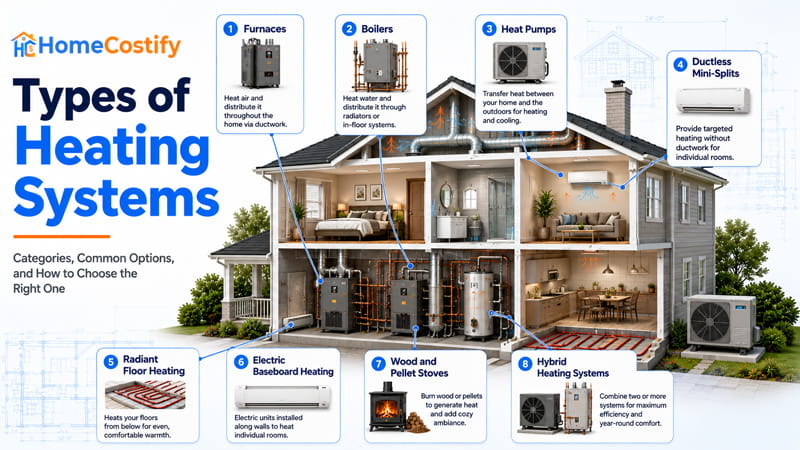
Furnaces remain the primary heating equipment in many parts of the Midwest and Great Plains. Boilers still occupy a large share of older housing stock across cities such as Boston, Buffalo, and Providence. Heat pumps have gained ground in states where winters are less severe, particularly across the South and Southeast. Those three systems account for a large portion of the heating system types installed in American homes today.
Furnaces
The furnace remains the workhorse of residential heating in the United States. In many homes, the system sits out of sight in a basement, utility room, garage, or attic while warm air travels through a network of ducts and supply vents. A homeowner may never see the equipment operate directly, yet it often becomes the primary source of heat throughout the winter.
Several fuel options are available. Gas furnaces dominate large portions of the country because natural gas infrastructure is already in place in many communities. Electric furnaces appear more frequently in areas where electricity costs remain competitive or natural gas service is unavailable. Some properties also use propane-powered equipment.
A modern home furnace can heat an entire house relatively quickly. Warm air reaches multiple rooms through the same duct network, creating a centralized approach that has remained popular for decades. Air conditioning systems often share that ductwork, which reduces installation complexity when both heating and cooling equipment are required.
Where Furnaces Work Best
Furnaces are especially common in states that experience long heating seasons. Cities such as Chicago, Detroit, Indianapolis, and Omaha contain large numbers of homes built around forced-air systems. Existing ductwork also plays a major role. Replacing an older furnace with a newer model is usually less disruptive than converting the entire house to another heating technology.
Boilers
A boiler approaches home heating from a completely different direction. Instead of warming air, it heats water and circulates that water through pipes connected to radiators, baseboard units, or other heat emitters located throughout the house.
Many older homes in Boston, Buffalo, Providence, and Philadelphia still rely on boiler-based systems. Some installations use hot water, while others continue operating through steam heating networks that were installed generations ago. The equipment may be old, but the concept remains effective.
A hydronic heating system distributes warmth gradually. Radiators stay warm for extended periods, and heat continues radiating into surrounding spaces even after the boiler cycles off. The experience feels noticeably different from standing near a supply vent connected to a furnace.
Why Boilers Remain Popular in Older Homes
Many historic homes were originally designed around boilers and radiators. Replacing that infrastructure often requires extensive renovation work. As a result, boiler systems remain deeply rooted in older neighborhoods throughout the Northeast and parts of the Midwest. Some properties have already undergone equipment upgrades while keeping the original piping network intact.
Heat Pumps
Few technologies have received more attention in recent years than the heat pump. Unlike a furnace or boiler, a heat pump does not rely on combustion to create heat. Instead, it transfers heat from one location to another through a refrigeration cycle.
This approach has changed the conversation around residential heating. A modern heat pump system can provide both heating and cooling from the same piece of equipment. That flexibility has contributed to growing adoption across many regions of the country.
According to the U.S. Department of Energy, modern air-source heat pumps can deliver two to four units of heat for every unit of electricity consumed because they transfer heat rather than generate it directly. An air source heat pump uses outdoor air as its primary heat source, even during colder weather.
The market now includes a wide range of options. Some heat pumps for homes connect to central ductwork and operate much like a traditional furnace-based system. Others function as standalone installations serving specific portions of a house. The growing popularity of the electric heat pump has also coincided with broader interest in reducing dependence on fossil fuels.
Among today’s types of heating systems, heat pumps occupy a unique position because they can provide heating during winter and cooling during summer. Few other residential systems combine both functions so effectively.
How Modern Heat Pumps Perform in Colder Climates
Cold weather once limited where heat pumps could be installed successfully. Technology has changed considerably. Newer units continue operating at temperatures that would have challenged earlier generations of equipment. As a result, heating system types built around heat pump technology now appear in regions where furnaces traditionally dominated the market.
Cities such as Minneapolis, Madison, and Burlington continue to test the limits of winter performance, yet manufacturers have responded with systems specifically designed for colder climates. That shift has expanded the role of heat pumps within the broader landscape of heating system types used across the United States.
Ductless Mini-Splits
Not every house has room for ductwork. Older homes, finished attics, converted garages, and room additions often present challenges that make traditional forced-air systems less practical. A ductless mini split approaches the problem differently. Instead of relying on a network of ducts, the system uses one or more indoor air handlers connected to an outdoor unit.
The flexibility of a mini split heat pump has contributed to its growing popularity across many parts of the United States. A homeowner can heat a single room, several rooms, or separate areas of the house without opening walls to install large ducts. That approach is especially attractive in historic homes where major structural modifications are difficult or expensive.
Another advantage comes from zoned heating. Bedrooms, living spaces, and home offices can operate independently rather than sharing a single thermostat. A guest room sitting empty for most of the week does not need the same temperature settings as the rest of the house.
Among today’s types of heating systems, mini-splits occupy a niche that continues to expand as more homeowners look for flexible heating and cooling solutions.
Radiant Floor Heating
Few heating technologies feel as noticeable as radiant floor heating. The difference becomes obvious on a cold morning when tile or stone flooring feels warm rather than icy underfoot. Heat rises gradually from below, warming the occupied space without relying on supply vents or exposed radiators.
Most systems use either electric heating elements or tubing carrying warm water beneath the finished floor surface. A hydronic radiant floor heating system is more common in larger installations because water can transport heat efficiently across wider areas. Electric systems often appear in bathrooms, kitchens, and smaller renovation projects.
The experience differs from many other heating system types because warmth originates from the floor itself. Air movement is minimal. Heat spreads across the room through a large surface area rather than arriving from a single vent or radiator.
Radiant systems appear most frequently in custom homes and major remodels, where flooring is already being replaced or installed.
Electric Baseboard Heating
Electric baseboard heating remains a familiar sight in apartments, condominiums, and older homes throughout parts of the United States. Long metal units installed along walls contain electric resistance heating elements that warm surrounding air as electricity passes through them.
Installation is relatively straightforward compared with many central systems. Ductwork is unnecessary. Boilers and piping are unnecessary as well. The tradeoff often appears on utility bills, particularly in regions where electricity costs remain high.
Many homeowners view baseboard heaters as a practical solution for smaller spaces, vacation properties, or supplemental heating. Entire homes can operate on baseboard systems, although operating costs vary significantly depending on local energy prices.
Wood and Pellet Stoves
Wood-burning appliances remain part of the heating landscape in many rural communities. A modern pellet stove looks very different from the traditional wood stoves found decades ago, yet both rely on combustible fuel to generate heat.
Storage requirements influence how these systems fit into daily life. Firewood requires dedicated space and regular handling. Pellets arrive in manufactured bags and offer more consistent fuel quality. Both options fall under the broader category of biomass heating.
For some homeowners, a stove serves as supplemental heat rather than the primary heating source. Others depend on it throughout the winter, particularly in areas where wood fuel remains readily available.
Hybrid Heating Systems
A hybrid heating system combines two technologies into a single setup. The most common arrangement pairs a heat pump with a gas furnace. Each system operates when conditions favor its strengths.
During milder weather, the heat pump handles most heating duties. When temperatures drop sharply, the furnace takes over. The transition happens automatically through system controls.
This approach is often referred to as dual fuel HVAC. Interest has grown in colder regions where homeowners want the efficiency associated with heat pumps without giving up the cold-weather performance of a furnace.
Among modern heating system types, hybrid systems occupy a middle ground between full electrification and conventional combustion-based heating. That balance has attracted attention in parts of the country where winter conditions change dramatically from one month to the next.
How Different Types of Heating Systems Compare
A furnace, boiler, and heat pump can all keep a house warm during winter, yet the experience of living with each system may feel very different. Installation costs vary. Cooling capability varies. Even the way heat reaches individual rooms changes from one setup to another.
Looking at types of heating systems side by side often reveals details that are easy to miss when focusing on a single technology.
Some heating system options prioritize whole-home heating through ductwork. Others rely on hot water, radiant surfaces, or room-by-room air handlers. A furnace pushes warm air through ducts and typically works alongside a separate air conditioning system.
Boilers circulate hot water or steam and generally do not provide cooling. Heat pumps occupy a unique position because they can handle both heating and cooling from the same system.
Upfront costs also differ substantially. A basic electric baseboard installation may cost only a few hundred dollars, while a large radiant floor project can exceed $20,000. Ductless mini-splits often fall somewhere in between, especially when multiple indoor units are required.
Hybrid systems carry some of the highest installation costs because they combine multiple technologies into a single setup.
| Heating System | Heat Delivery Method | Cooling Capability | Typical Installed Cost |
|---|---|---|---|
| Furnace | Warm Air Through Ducts | With Separate AC | $4,000–$8,000 |
| Boiler | Hot Water or Steam | No | $5,000–$12,000 |
| Air-Source Heat Pump | Heat Transfer | Yes | $6,000–$12,000 |
| Ductless Mini-Split | Zoned Air | Yes | $2,000–$10,000+ |
| Radiant Floor Heating | Radiant Heat | No | $6,000–$20,000+ |
| Electric Baseboard Heating | Convection/Radiant Heat | No | $400–$2,000+ |
| Wood or Pellet Stove | Radiant Heat | No | $3,000–$7,000 |
| Hybrid Heating System | Heat Pump + Furnace | Yes | $10,000–$20,000+ |
Comparing home heating options through cost alone rarely tells the whole story. Climate, house design, utility rates, and existing infrastructure often influence which system makes the most practical choice.
Typical Lifespans of Common Heating Systems
A heating system may remain in service for decades, but age alone does not determine reliability. Installation quality, maintenance history, operating conditions, and usage patterns all influence longevity. Two identical systems installed in different houses can experience very different outcomes over time.
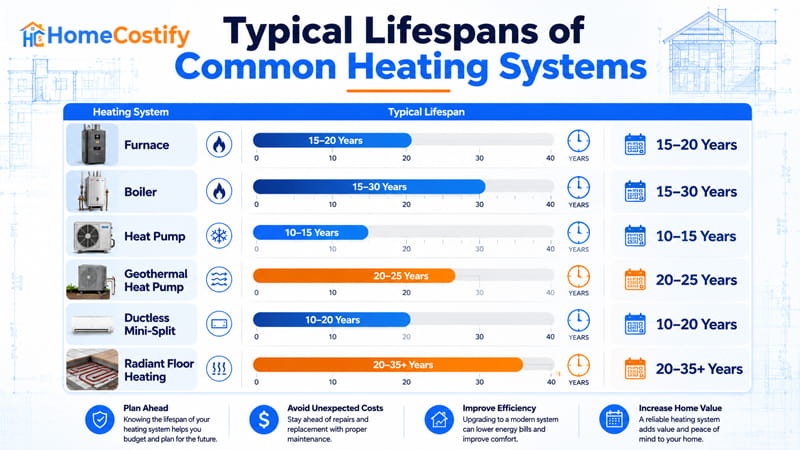
The expected service life of various heating system types varies considerably. A well-maintained boiler can remain operational for thirty years or longer. Heat pumps generally operate for a shorter period because compressors and refrigeration components experience year-round use in many homes.
Radiant floor systems often remain functional for decades because much of the infrastructure stays protected beneath finished flooring.
| Heating System | Typical Lifespan |
|---|---|
| Furnace | 15–20 Years |
| Boiler | 15–30 Years |
| Heat Pump | 10–15 Years |
| Geothermal Heat Pump | 20–25 Years |
| Ductless Mini-Split | 10–20 Years |
| Radiant Floor Heating | 20–35+ Years |
The term heating system lifespan should always be viewed as a range rather than a guarantee. Equipment installed correctly and serviced regularly often remains functional longer than average estimates suggest.
A typical furnace lifespan falls between fifteen and twenty years, although some units remain operational beyond that point. A boiler lifespan can extend even further, particularly in homes where water quality, maintenance, and operating conditions remain favorable. Replacement decisions frequently depend on repair costs, energy consumption, and parts availability rather than age alone.
Which Types of Heating Systems Are Most Efficient?
Energy use varies widely across residential heating equipment. A system with an impressive efficiency rating on paper may not deliver the lowest utility bills in every house. Insulation levels, air leakage, climate conditions, and installation quality all influence real-world performance.
Among modern types of heating systems, heat pumps receive significant attention because they transfer heat instead of generating it through combustion. That operating method often requires less energy under favorable conditions. Furnaces, meanwhile, are commonly evaluated using AFUE ratings. A higher Annual Fuel Utilization Efficiency rating indicates that a greater percentage of fuel becomes usable heat.
Heat pumps rely on a separate measurement known as HSPF. The Heating Seasonal Performance Factor evaluates heating output relative to electricity consumption across an entire season. Comparing AFUE and HSPF directly is difficult because they measure performance differently.
| Efficiency Factor | Potential Impact |
|---|---|
| Home Insulation | High |
| Air Sealing | High |
| Duct Losses | Moderate to High |
| System Sizing | High |
| Thermostat Use | Moderate |
The highest-rated equipment cannot compensate for major air leaks or inadequate insulation. Warm air escaping through gaps around windows, doors, and attic penetrations can erase a large portion of any efficiency advantage.
Which Types of Heating Systems Work Best Across Different U.S. Climates?
Winter conditions in Minneapolis look very different from those in Atlanta or Phoenix. Heating equipment that performs well in one part of the country may be less practical in another, especially when fuel costs, winter temperatures, and cooling needs vary throughout the year.
Climate remains one of the strongest influences on types of heating systems installed across the United States. The best heating system for house in northern Minnesota may not resemble the equipment selected for a suburban home outside Phoenix. Local weather patterns shape many of those decisions.
Northern U.S. States With Long, Cold Winters
Long heating seasons place significant demands on equipment. Extended periods of below-freezing temperatures often favor systems capable of producing large amounts of heat consistently.
Examples include:
- Minneapolis, Minnesota
- Buffalo, New York
- Fargo, North Dakota
- Burlington, Vermont
Common choices:
- Gas furnaces
- Boilers
- Hybrid heating systems
- Cold-climate heat pumps
Many heating system types used in these regions are selected for winter performance first and cooling needs second.
Regions With Four Distinct Seasons
Homes located in transitional climates often require a balance between heating and cooling performance. Summers can be hot. Winters can still be cold enough to demand reliable heating equipment.
Examples include:
- Kansas City, Missouri
- Columbus, Ohio
- St. Louis, Missouri
- Philadelphia, Pennsylvania
Common choices:
- Furnaces
- Heat pumps
- Dual-fuel systems
This portion of the country contains a wide mix of home heating options, partly because no single technology dominates every weather condition.
Southern States With Milder Winters
Heating demands are generally lower in warmer climates. Cooling requirements often receive equal or greater attention during equipment selection.
Examples include:
- Atlanta, Georgia
- Dallas, Texas
- Charlotte, North Carolina
- Phoenix, Arizona
Common choices:
- Heat pumps
- Ductless mini-splits
- Electric heating options
Many heating systems for homes in southern states prioritize year-round versatility. Heat pumps continue gaining market share because a single system can provide both heating and cooling. Among current heating system types, few technologies align as closely with the needs of these warmer regions.
What Should Homeowners Consider Before Choosing a Heating System?
The most suitable heating system is not always the newest or most efficient model on the market. A system that performs well in a newly built home may require expensive modifications in an older property. Installation costs, local fuel prices, climate conditions, and existing infrastructure all influence the final decision.
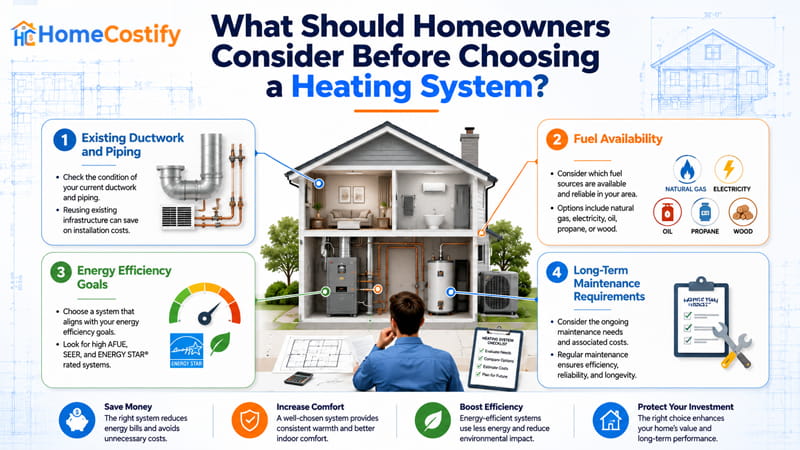
Many of the most important factors have little to do with the equipment itself. A homeowner comparing heating system types may discover that the house already favors one option over another long before installation begins. Existing ductwork, fuel availability, and maintenance expectations can narrow the field quickly.
Existing Ductwork and Piping
A house with existing ductwork already has a major component needed for furnaces and many heat pump systems. Removing that infrastructure or replacing it entirely can add significant expense to a project.
The same principle applies to piping. Homes built around boilers and radiators often contain extensive networks of pipes hidden behind walls, beneath floors, or inside mechanical spaces. Retaining that infrastructure may prove more practical than starting over with a completely different system.
Fuel Availability
Natural gas is widely available in many parts of the country, but that is not true everywhere. Some rural areas depend on propane, heating oil, electricity, or wood fuel instead.
Fuel availability often shapes which heating system options make financial sense. Equipment costs matter, but long-term operating expenses matter just as much.
Energy Efficiency Goals
Energy use has become a larger consideration for many homeowners. Heat pumps continue attracting attention because they transfer heat rather than generate it through combustion. High-efficiency furnaces and modern boilers also remain competitive choices in many regions.
The most efficient equipment on paper does not always produce the lowest operating costs. Climate, insulation quality, and installation practices influence performance throughout the life of the system.
Long-Term Maintenance Requirements
Maintenance needs vary across residential heating systems. Furnaces require filter changes and periodic inspections. Boilers may need attention to pumps, valves, and water-related components. Heat pumps depend on refrigeration equipment and electrical systems.
A system that fits comfortably within a homeowner’s maintenance expectations often remains a better long-term choice than one that introduces unfamiliar service requirements.
Residential Heating Trends and Emerging Technologies
Residential heating rarely changes overnight. Most equipment remains in service for years or even decades, which naturally slows the pace of adoption for new technologies. Even so, a few trends continue shaping the next generation of types of heating systems.
Heat pumps remain at the center of much of that attention. Data from the U.S. Energy Information Administration shows that heat pumps served as the primary heating equipment in roughly 13% of U.S. households in 2020. Growth has continued as more homeowners look for equipment capable of providing both heating and cooling from a single installation.
Manufacturers have also invested heavily in the cold climate heat pump, expanding performance in regions that once relied almost exclusively on furnaces and boilers. Interest in hybrid heating systems has increased as well. Combining a heat pump with a gas furnace allows each technology to operate when conditions favor its strengths.
Conclusion
The residential heating market includes a wide range of equipment, from furnaces and boilers to heat pumps, mini-splits, radiant floors, and hybrid systems. Each category follows a different approach to producing and distributing heat.
No single solution works best for every house. Climate conditions in Minneapolis create different demands than those found in Atlanta or Phoenix. Existing ductwork, piping infrastructure, installation costs, fuel availability, and efficiency goals all influence which system makes the most sense.
Comparing types of heating systems requires looking beyond equipment specifications alone. Long-term operating costs, maintenance requirements, and house design often play equally important roles. The best choice is usually the one that fits both the home and the conditions surrounding it.
FAQs About Types of Heating Systems
What is the most efficient type of heating system?
Modern heat pumps are often considered among the most efficient heating technologies because they transfer heat rather than generate it through combustion. Actual performance still depends on climate, insulation quality, and installation conditions.
What are the 4 main types of heating systems?
Furnaces, boilers, heat pumps, and radiant heating systems account for a large share of residential heating installations across the United States.
What is the new type of heating system?
Cold-climate heat pumps and hybrid systems represent some of the newest developments gaining attention in the residential market.
What are the old types of heating systems?
Steam boilers, cast-iron radiators, gravity furnaces, and wood-burning stoves were common in many American homes before modern HVAC systems became widespread.
What are the classification of heating methods?
Most systems fall into three broad categories: forced-air heating, hydronic heating, and radiant heating. Each distributes heat through a different method.