Replacing an aging air conditioner often starts with a simple question. The answer becomes far less obvious once you realize that the types of air conditioning system available today extend well beyond the familiar equipment found in older houses.
Central air conditioning still dominates a large portion of the U.S. market, yet a ductless mini split, packaged unit, window unit, portable model, or heat pump may deliver a better match for a different floor plan or budget.
Installation costs vary widely. Electricity use does too. A system that looks inexpensive on day one may cost far more to operate over the next decade than another option with a higher purchase price. Maintenance requirements, available space, climate, and existing ductwork all influence the final decision.
The six major residential cooling systems each serve a different purpose. Comparing air conditioning types side by side makes it easier to see where each option fits instead of assuming a single design works for every house.
Every cooling system comes with a different balance of purchase price, electricity use, maintenance, and long-term ownership costs. A central air conditioning system may fit one house perfectly, while a ductless mini split or heat pump makes far more sense in another.
Looking at these differences side by side gives a clearer basis for comparing the available air conditioner types before requesting installation estimates.
Quick Comparison of Air Conditioning System Types
No cooling system wins every category. Floor plan, climate, available space, and budget all influence which option makes the most sense. Reviewing the major air conditioning types in one place creates a faster starting point before looking at each system in greater detail.
| System | Typical Installation Cost | Estimated Annual Operating Cost | Average Lifespan | Best For |
|---|---|---|---|---|
| Central Air | $5,500–$16,000 | $900–$2,100 | 15–20 years | Whole-home cooling with existing ductwork |
| Mini Split | $2,500–$15,000 | $500–$1,500 | 15–20 years | Homes without ducts, additions, room zoning |
| Window AC | $150–$800 | $60–$300 | 8–12 years | Single rooms and apartments |
| Portable AC | $250–$800 | $80–$350 | 5–10 years | Temporary or supplemental cooling |
| Packaged HVAC | $8,000–$15,000 | $900–$2,200 | 15–20 years | Homes with limited indoor equipment space |
| Heat Pump | $8,000–$22,000 | $500–$1,500 | 15–20 years | Heating and cooling with lower annual energy use |
Price tells only part of the story. A lower purchase cost can be offset by higher electricity bills or a shorter service life, while a larger upfront investment may pay back through lower annual operating expenses.
Comparing types of air conditioning system by installation cost, yearly ownership cost, expected lifespan, and day-to-day use gives a clearer picture than focusing on equipment price alone.
Types of Air Conditioning Systems
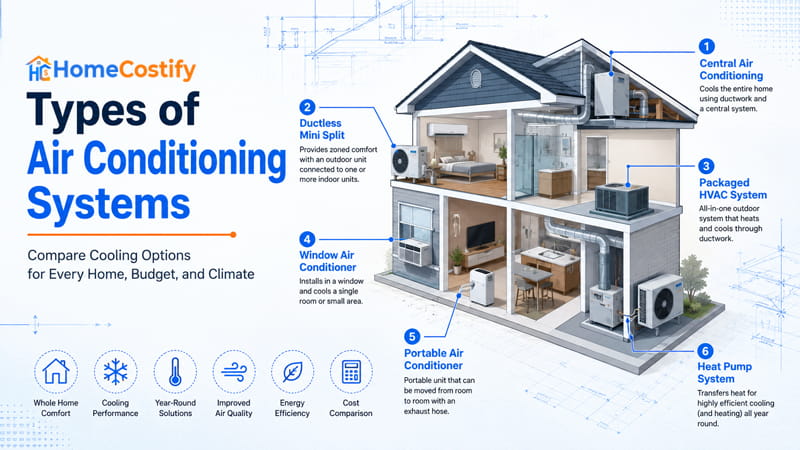
Residential cooling systems vary widely in the way they move air, remove heat, and fit into a home’s structure. Installation can be simple in one house yet become a major project in another once ductwork, electrical capacity, or available space enters the equation.
Climate and long-term ownership costs also influence the final decision. Instead of focusing on the newest equipment, it is more practical to match the types of air conditioning system with the home’s layout and daily cooling needs.
The available air conditioning types cover a broad range of applications, giving homeowners far more flexibility than choosing a single design for every property. These types of air conditioning system also represent the most common air conditioner types installed across the United States.
Central Air Conditioning Systems
A central air conditioning system remains one of the most common ac system types for whole-house cooling. It distributes conditioned air through a network of ductwork, allowing multiple rooms to reach a similar temperature from a single piece of equipment. Houses built with existing ducts usually require fewer structural changes than homes that need an entirely new air distribution system.
How It Works
The outdoor condenser releases heat collected from inside the house. Refrigerant then travels to the indoor evaporator coil, where heat transfers from the indoor air into the refrigeration cycle. An air handler pushes the cooled air into supply ducts while return ducts carry warmer indoor air back to the system. This continuous circulation repeats until the thermostat reaches the selected temperature.
Advantages
Central air cools the entire house through one integrated system. Equipment noise stays outdoors because the condenser sits outside the living area. Consistent airflow also keeps room temperatures relatively even. Homes equipped with a well-maintained central AC system often attract buyers who prefer built-in cooling instead of room-by-room equipment.
Disadvantages
Existing ductwork is almost always required. Installing new ducts can add substantial labor and material costs. Air leaks inside aging ducts may reduce overall performance and increase electricity use. Individual room temperature control is also more limited than systems designed around separate cooling zones.
Installation Cost
A new central air conditioning installation generally ranges from $5,500 to $16,000. Final pricing depends on cooling capacity, duct condition, equipment efficiency, local labor rates, electrical upgrades, and home size.
Annual Operating Cost
Annual electricity costs commonly range from $900 to $2,100, depending on climate, utility rates, system efficiency, thermostat settings, and maintenance. Dirty filters or neglected servicing can increase operating expenses over time.
Best For
Central air performs well in large homes, new construction, and houses that already contain properly sized ducted air conditioning infrastructure.
Ductless Mini-Split Systems
A ductless mini split cools individual rooms without using ductwork, making it one of the most flexible types of ac systems available for residential properties. Each indoor unit operates independently, so one bedroom can stay cooler while another room remains at a different temperature.
That flexibility appeals to homeowners adding living space or upgrading older houses where installing ducts would require extensive remodeling. A mini split AC also occupies less indoor space than a traditional forced-air setup.
How It Works
A mini split system consists of an outdoor compressor connected to one or more indoor wall-mounted units through insulated refrigerant lines. The outdoor equipment removes heat from the refrigerant, while the indoor unit absorbs heat from the room before circulating cooled air back into the living space.
An inverter compressor continuously adjusts its output instead of cycling on and off at full capacity, allowing the system to maintain a steadier indoor temperature across individual zones.
Advantages
High energy efficiency ranks among the biggest reasons homeowners select this type of cooling equipment. Eliminating ducts also removes energy losses that often occur through leaks in traditional air distribution systems.
Each indoor unit operates independently, giving family members greater control over room temperatures without affecting the rest of the house. A split air conditioner also fits locations where attic or crawlspace access is limited.
Disadvantages
The purchase price increases as additional indoor units are added. A whole-house installation can exceed the cost of conventional central cooling. Wall-mounted air handlers also remain visible inside the room, which may not suit every interior design preference.
Installation Cost
Installing a ductless mini split typically costs $2,500 to $15,000, depending on the number of indoor units, cooling capacity, equipment efficiency, electrical upgrades, labor rates, and installation complexity.
Annual Operating Cost
Annual operating costs generally range from $500 to $1,500. Electricity consumption varies with local utility rates, climate, thermostat settings, maintenance history, and daily operating hours. Cleaning air filters and servicing the outdoor unit on schedule keeps performance consistent throughout the cooling season.
Best For
This system fits older homes without existing ducts, home additions, finished basements, converted garages, detached offices, and individual rooms where independent temperature control delivers greater day-to-day comfort.
Packaged Air Conditioning Systems
A packaged HVAC unit places every major cooling component inside one outdoor cabinet instead of separating equipment between indoor and outdoor locations. This design makes it one of the ac system types selected for homes where indoor mechanical space is limited.
A packaged air conditioner is commonly installed beside the house on a concrete pad, while a rooftop unit is another installation option found in suitable residential layouts. Everything remains inside a single packaged unit, reducing the amount of equipment placed indoors.
How It Works
The compressor, condenser, evaporator coil, and air handler are housed inside one cabinet. Cooled air travels into the house through the duct system, while return air moves back into the equipment to repeat the refrigeration cycle.
Housing every major component in one enclosure simplifies equipment placement during installation.
Advantages
Indoor utility rooms remain available for storage or other household equipment. Factory-assembled components also reduce the number of separate units installed around the property. Routine servicing takes place at one location instead of moving between indoor and outdoor equipment.
Disadvantages
The entire system remains outdoors throughout the year, exposing the cabinet to sun, rain, wind, and debris. Repairs may require replacing larger assemblies than a split system. Installation still depends on properly sized ductwork.
Installation Cost
A new packaged air conditioning system generally costs $8,000 to $15,000. Equipment size, efficiency rating, duct condition, electrical upgrades, labor rates, and regional pricing all contribute to the final project cost.
Annual Operating Cost
Most households spend about $900 to $2,200 per year on electricity and routine maintenance, although local utility prices, climate, and cooling demand influence annual expenses.
Best For
Packaged systems fit homes with limited indoor equipment space, single-story houses, and properties across warmer Southern states where outdoor installation remains practical throughout the year.
Window Air Conditioners
A window air conditioner cools one room at a time by placing every cooling component inside a single cabinet. Among the available air conditioner types, this option remains popular because installation is straightforward and equipment costs stay relatively low.
A window AC can cool bedrooms, home offices, studio apartments, and other compact spaces without modifying the home’s existing HVAC equipment. Selecting the proper BTU rating keeps the unit matched to the size of the room.
How It Works
The unit sits inside a window opening or a specially prepared wall opening. Indoor air passes across the evaporator coil before returning to the room at a lower temperature. Heat collected indoors moves through the condenser and is released outside by the rear portion of the unit.
Advantages
Purchase costs remain among the lowest of any residential cooling option. Installation usually requires only a suitable window opening and a nearby electrical outlet. Individual rooms receive cooling without operating a whole-house system.
Disadvantages
Cooling remains limited to the room where the equipment is installed. Window space becomes unavailable after installation, and operating noise stays inside the living area because every component occupies the same cabinet.
Installation Cost
Most window air conditioner installations cost $150 to $800, depending on cooling capacity, efficiency rating, mounting requirements, and labor if professional installation is selected.
Annual Operating Cost
Typical operating expenses range from $60 to $300 per year, with electricity use influenced by climate, room size, thermostat settings, and seasonal operating hours.
Best For
Window air conditioners suit apartments, bedrooms, rental properties, guest rooms, and households seeking an economical way to cool a single living space.
Portable Air Conditioners
A portable air conditioner delivers cooling without permanent installation, making it one of the most flexible air conditioning types for temporary use. The unit sits on the floor and rolls from one room to another when cooling needs change.
That convenience makes it a practical option for renters, guest rooms, or homes where installing a permanent system is not possible. A portable AC usually requires only a nearby electrical outlet and a window for venting warm air.
How It Works
Every major cooling component is housed inside a single cabinet. Heat removed from the room travels through an exhaust hose connected to a window kit, allowing hot air to leave the house while cooled air circulates indoors. Condensation collects inside an internal reservoir or drains automatically, depending on the model.
Advantages
Installation takes very little time and rarely requires permanent changes to the house. Moving the unit between rooms is straightforward, giving homeowners added flexibility during warmer months. Storage is equally simple once the cooling season ends.
Disadvantages
Cooling capacity is lower than whole-house systems, making portable units less practical for large living areas. The exhaust hose remains visible inside the room, and operating noise is generally higher because every component sits inside the cabinet. Some models also require periodic draining when humidity levels increase.
Installation Cost
Most portable air conditioners cost $250 to $800, depending on cooling capacity, energy efficiency, features, and brand. Professional installation is rarely necessary, keeping overall setup costs relatively low.
Annual Operating Cost
Typical operating expenses range from $80 to $350 per year. Electricity use depends on room size, local utility rates, outdoor temperatures, and daily operating hours. Cleaning the air filter regularly keeps airflow unrestricted throughout the season.
Best For
Portable systems work well for temporary cooling, renters, dorm rooms, workshops, home offices, and spaces where permanent equipment cannot be installed.
Heat Pump Systems
A heat pump provides cooling during summer and heating when outdoor temperatures drop, making it one of the most versatile types of air conditioning system available for residential use. Instead of installing separate equipment for each season, one system performs both functions.
Modern units also achieve high efficiency ratings, making them an attractive choice for homeowners planning a long-term investment.
How It Works
Cooling mode operates much like a traditional air conditioner by moving indoor heat outdoors. During colder months, a reversing valve changes the direction of refrigerant flow so the equipment captures available outdoor heat and transfers it inside.
This reverse refrigeration cycle allows the same system to produce cooling and heating without switching to separate equipment. Performance is commonly measured using SEER2 for cooling efficiency and HSPF2 for heating efficiency.
According to the ENERGY STAR Residential HVAC Design Report, residential cooling equipment is evaluated as distinct system categories rather than a single group.
Split central air conditioners, packaged units, ductless mini-split systems, geothermal heat pumps, and air source heat pump systems each require different sizing methods, airflow design, and installation practices. Identical cooling capacity does not always deliver the same comfort or efficiency from one house to another.
Advantages
One system handles year-round temperature control while reducing the need for separate heating and cooling equipment. Modern heat pumps consume less electricity than electric resistance heating in suitable climates. Federal tax credits and local utility incentives may also reduce the initial investment for qualifying installations.
Disadvantages
Purchase costs are generally higher than conventional air conditioners. Extremely cold climates may require supplemental heating during periods of prolonged freezing temperatures, depending on the equipment and local weather conditions.
Installation Cost
Installing a residential heat pump typically costs $8,000 to $22,000. Final pricing depends on system capacity, efficiency rating, home size, electrical upgrades, labor rates, and available federal incentives.
Annual Operating Cost
Annual operating expenses usually range from $500 to $1,500, with electricity consumption influenced by climate, thermostat settings, maintenance, and utility prices. Routine servicing and clean air filters support steady performance throughout the year.
Best For
Heat pump systems fit mixed climates, energy-conscious homeowners, new construction, and households seeking reliable year-round comfort from a single heating and cooling system.
Types of Air Conditioning System Cost Comparison

Equipment price rarely reflects the full cost of ownership. One system may cost less on installation day yet consume more electricity every summer, while another carries a higher upfront investment but keeps utility bills lower for years. Routine servicing also varies by equipment design, adding another expense beyond the original purchase.
Evaluating installation cost, annual operating cost, expected lifespan, and ongoing maintenance cost creates a more complete picture of the available types of air conditioning system. Those differences become easier to recognize once the major air conditioner types are placed side by side.
| Air Conditioning System | Typical Installation Cost | Annual Operating Cost | Average Lifespan | Maintenance Level |
|---|---|---|---|---|
| Central Air Conditioning | $5,500–$16,000 | $900–$2,100 | 15–20 years | Moderate |
| Ductless Mini Split | $2,500–$15,000 | $500–$1,500 | 15–20 years | Low |
| Packaged HVAC System | $8,000–$15,000 | $900–$2,200 | 15–20 years | Moderate |
| Window Air Conditioner | $150–$800 | $60–$300 | 8–12 years | Low |
| Portable Air Conditioner | $250–$800 | $80–$350 | 5–10 years | Low |
| Heat Pump System | $8,000–$22,000 | $500–$1,500 | 15–20 years | Moderate |
What Affects Installation Costs?
Two homes with similar square footage can receive very different contractor estimates. Existing ductwork often has a large effect on labor because damaged ducts may need repairs, sealing, or complete replacement before new equipment can operate efficiently. A house without ducts faces a much larger project than one with a usable distribution system already in place.
The condition of the electrical panel also deserves attention. Older panels sometimes lack enough capacity for modern cooling equipment, creating additional electrical work before installation begins. Local building departments may require permits, inspection fees, or code upgrades that increase the final project cost.
Equipment size influences pricing as well. Larger homes require greater cooling capacity, while multi-story layouts or complex floor plans may increase labor time. Replacing an outdated thermostat, extending refrigerant lines, or relocating outdoor equipment can add further expenses.
Climate and regional labor rates contribute to pricing differences across the country, making central air installation cost and mini split installation cost vary from one market to another. These variables affect every category within today’s air conditioning types, regardless of equipment brand or efficiency rating.
Which Air Conditioning System Costs the Least to Operate?
Electricity consumption depends on equipment efficiency, local utility rates, cooling demand, and maintenance history. Among today’s types of ac systems, modern heat pumps and ductless mini splits usually produce the lowest annual utility bills because inverter technology adjusts compressor output to match changing cooling demand instead of operating at full capacity throughout the cycle.
A higher SEER2 rating generally reduces electricity use, although proper sizing remains equally important. Central air conditioning can also deliver competitive operating costs when paired with sealed ducts and a variable-speed compressor.
Window units and portable models usually consume more electricity for each square foot they cool, particularly when installed in oversized rooms.
Homeowners shopping for an energy efficient air conditioner should also pay attention to the ENERGY STAR label. Certified equipment meets higher efficiency standards established for residential cooling products. Purchase price still matters, yet annual utility costs can outweigh the initial savings from lower-priced equipment.
Factoring both expenses into the decision creates a more realistic picture across the available air conditioner types and types of air conditioning system.
How to Choose the Right Air Conditioning System
The best cooling system depends on far more than equipment price. Floor plan, home size, local climate, insulation quality, existing ductwork, and long-term energy efficiency all influence daily comfort and ownership costs. A system that performs well in one house may become an expensive choice in another.
Reviewing the available types of air conditioning system with the home’s layout in mind usually leads to a better investment than selecting equipment based only on brand or capacity. The same applies to today’s air conditioner types and the wide range of ac system types available for residential use.
Based on Home Size
Cooling capacity should match the amount of living space rather than exceed it. Apartments and condominiums often achieve comfortable temperatures with a window unit, portable model, or ductless mini split. Small single-family homes may perform well with either a compact central system or a multi-zone mini split, depending on the existing layout.
Medium-sized homes frequently benefit from central cooling when ducts are already installed. Larger properties generally require a whole house air conditioner capable of maintaining even temperatures throughout multiple rooms. Equipment that falls short of the required capacity can run longer than expected, while oversized systems may cycle too quickly to remove humidity effectively.
Based on Climate
Weather conditions influence cooling performance throughout the year. Homes located in hot desert regions often benefit from equipment with higher cooling capacity and strong efficiency ratings. Areas with high humidity place additional demand on moisture removal, making dehumidification almost as valuable as cooling itself.
Mixed climates often make heat pumps an attractive option because one system provides both cooling and heating. Dry regions usually place less emphasis on humidity control, allowing homeowners to prioritize cooling efficiency instead.
Evaluating available air conditioning types according to local weather patterns often produces a more practical long-term result than selecting equipment solely by advertised capacity. Homeowners searching for the best AC for hot climate or the best AC for humid climate should weigh local weather patterns before choosing equipment.
Guidance from the U.S. Department of Energy’s Federal Energy Management Program notes that cooling capacity alone should not determine equipment selection. Efficiency ratings, regional weather conditions, and proper installation all influence long-term performance and electricity use. Installing a larger system than necessary does not automatically improve indoor comfort and may reduce overall operating efficiency.
Based on Budget
Budget planning extends beyond the purchase price. Window units and portable models remain the least expensive options upfront, while central systems and heat pumps require a larger initial investment. Electricity consumption, maintenance, and expected service life gradually influence total ownership costs.
Homeowners planning to stay in the same house for years often recover part of the higher purchase price through lower utility bills. A lower-cost system can still become the best AC system for occasional cooling, while a premium installation may represent the best air conditioning system for households seeking long-term efficiency and year-round comfort.
Based on Existing Ductwork
Existing ductwork changes the installation process considerably. Houses with sealed, properly sized ducts can usually accommodate central cooling with fewer structural changes. Damaged or undersized ducts may require repairs before new equipment is installed.
Homes without ducts often benefit from a ductless mini split, particularly during remodeling projects, finished basements, garage conversions, or home additions. Installing new ducted air conditioning throughout an existing house usually requires more labor than adding wall-mounted indoor units connected by refrigerant lines.
Common Mistakes When Choosing an Air Conditioning System
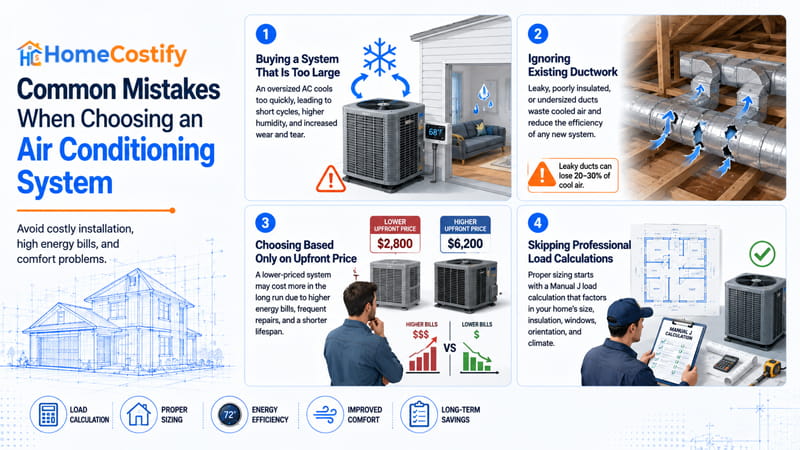
Equipment price often receives the most attention, yet installation quality and proper sizing influence comfort just as much. Selecting the wrong air conditioner types can increase utility bills, shorten equipment life, and reduce indoor comfort even when premium equipment is installed.
Buying a System That Is Too Large
An oversized AC cools rooms quickly but may shut off before removing enough indoor moisture. Short operating cycles also increase equipment wear.
Ignoring Existing Ductwork
Old or leaking ducts reduce cooling performance regardless of equipment quality. Repairing duct problems before installation often produces better long-term results.
Choosing Based Only on Upfront Price
Lower purchase costs do not always translate into lower ownership costs. Electricity use, maintenance, and expected service life deserve equal attention when selecting the best air conditioning system.
Skipping Professional Load Calculations
A Manual J load calculation measures cooling demand based on the home’s size, insulation, windows, orientation, and local weather conditions. Proper sizing begins with accurate calculations rather than estimates.
Conclusion
Selecting among today’s types of air conditioning system involves more than choosing the newest equipment or the lowest price. Home size, local climate, available ductwork, installation quality, and long-term ownership costs all influence the final outcome. The right choice for one property may not deliver the same results in another.
Each of the major air conditioner types serves a different purpose. A central air system works well for whole-house cooling, a mini split suits homes without ducts or individual room control, and a heat pump delivers heating and cooling from one system.
Before signing a contract, request estimates from multiple licensed HVAC contractors and compare equipment specifications, warranties, projected operating costs, and installation details.
You can also explore our Home Heating System, Home Ventilation, and How Does Air Conditioner Work in a House guides for additional planning before investing in a new types of air conditioning system.
FAQs About Types of Air Conditioning Systems
What are the newest AC technologies?
Variable-speed compressors, inverter technology, smart zoning, connected controls, and higher-efficiency refrigerants are among the latest developments improving comfort, energy performance, and temperature consistency.
What is the new AC system called?
A modern heat pump or ductless mini-split is commonly viewed as the newest residential cooling option because one system can deliver efficient cooling and, in most cases, heating.
Which AC is best for less electricity bill?
Heat pumps and ductless mini-split systems usually produce the lowest electricity costs when properly sized, professionally installed, and operated with suitable thermostat settings.
Which temperature is best for AC to save electricity?
Many energy professionals recommend setting the smart thermostat to 78°F (26°C) while the home is occupied during summer to balance comfort and electricity use.
Is it better to turn your AC off during the day or keep it on?
Leaving the system at a higher temperature while away generally uses less electricity than turning it off completely in very hot weather and cooling the house again from a much higher indoor temperature.