Roofing estimates for cedar shakes can differ by tens of thousands of dollars, even when two houses have nearly the same footprint. The average wood shake roof cost usually falls between $18 and $30 per square foot installed, although that figure changes once wood quality, roof shape, labor pricing, and material grade enter the proposal.
A bid that looks inexpensive at first may leave out tear-off work, upgraded underlayment, premium flashing, or other items that appear later as added charges. Small details inside the estimate often carry a much larger price tag than expected.
Wood grade changes material pricing, steep slopes keep installers on the roof longer, and intricate layouts create more cutting waste than simple rooflines. Labor rates follow local markets, so identical projects can receive noticeably different estimates from one state to another.
Regional pricing creates just as much movement as material selection, making roof cost difficult to predict from square footage alone. Budget planning becomes far more accurate once every major cost driver is viewed as part of the same project.
This breakdown follows the numbers behind wood shake roof cost, from material pricing and installation expenses to roof size, wood species, and jobsite conditions that push estimates higher or lower.
Pricing for cedar shake roof cost is included where it adds useful context, along with the work commonly covered under a professional wood shake roof installation cost estimate.
Each section builds toward a clearer picture of what contractors typically price before work begins. Written estimates become much easier to evaluate once every major cost driver has already been identified.
How Much Does Wood Shake Roof Cost?
A typical wood shake roof cost ranges from $18 to $30 per square foot installed across the United States. Material pricing alone usually falls between $8 and $15 per square foot, leaving labor, underlayment, flashing, and other installation work to account for the remaining project total.
A standard 2,000-square-foot roof often lands between $36,000 and $60,000 from start to finish. The quoted range covers complete installation, not just the cedar shakes delivered to the jobsite.
| Pricing Metric | National Average Cost |
|---|---|
| Material Only | $8.00–$15.00/sq ft |
| Installed Cost | $18.00–$30.00/sq ft |
| Roofing Square (Material) | $800–$1,500 |
| Roofing Square (Installed) | $1,800–$3,000 |
| Cedar Shake Bundle | $180–$320 |
| Average 2,000-sq-ft Roof | $36,000–$60,000 |
The wood shake roof material cost represents only one portion of the final proposal. Crews still need to install underlayment, fasten each shake, fit flashing around penetrations, finish hips and ridges, and clean the site before the project is complete.
Labor hours rise quickly on cedar roofing because each course requires careful placement instead of the faster installation common with asphalt shingles. Extra installation time pushes the finished price far beyond raw material expenses.
Bundle pricing often creates confusion during early budgeting. A cedar shake bundle priced between $180 and $320 covers only a limited amount of roofing area, so multiplying bundle prices rarely produces an accurate project estimate.
The complete wood shake roof installation cost includes materials, labor, accessories, waste, delivery, and contractor overhead. A written proposal should identify every included component before any contract is signed.
The average wood shake roof cost becomes much easier to evaluate after every line item is placed beside the quoted total. Two estimates with similar prices may include very different scopes of work, material grades, or installation details.
Price differences between proposals do not always produce a lower finished bill. Reviewing the full scope produces a far better comparison than using shake roof cost or bundle pricing alone.
Average Wood Shake Roof Cost by Roof Size
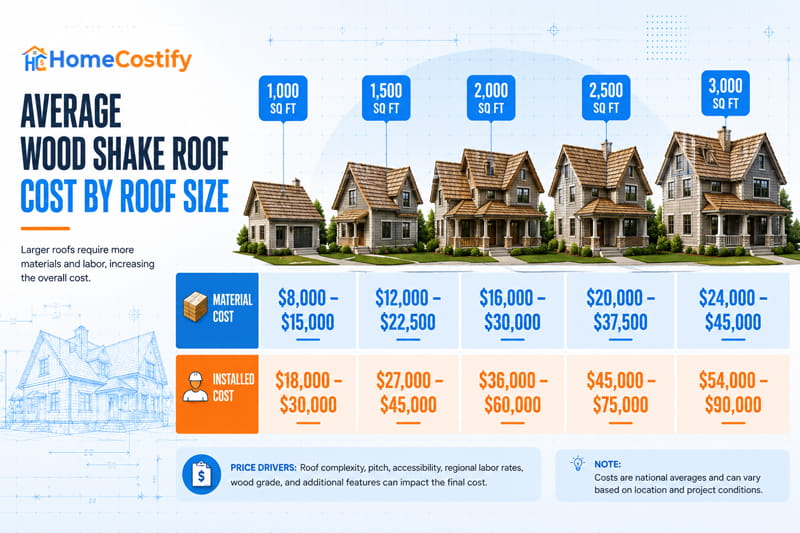
Roof size affects nearly every expense on a cedar roofing project, from the number of shakes ordered to the hours spent on installation. Larger roofs require more material, more fasteners, and longer production time, although pricing does not rise at exactly the same pace in every case.
Roof shape and layout can move the final estimate just as much as square footage. A simple roof often requires fewer labor hours than a roof filled with valleys, dormers, and intersecting ridges.
| Roof Size | Material Cost | Installed Cost |
|---|---|---|
| 1,000 sq ft | $8,000–15,000 | $18,000–30,000 |
| 1,500 sq ft | $12,000–22,500 | $27,000–45,000 |
| 2,000 sq ft | $16,000–30,000 | $36,000–60,000 |
| 2,500 sq ft | $20,000–37,500 | $45,000–75,000 |
| 3,000 sq ft | $24,000–45,000 | $54,000–90,000 |
Small Roofs (Around 1,000–1,500 Sq. Ft.)
Smaller houses, cottages, and compact single-story homes usually fall into this range. A typical wood shake roof cost starts around $18,000 and may reach $45,000, depending on wood grade, roof pitch, and local labor pricing.
Fixed expenses such as equipment delivery, permits, and site preparation consume a larger share of smaller projects. Fixed startup expenses keep the price per square foot from dropping very much.
Medium Roofs (Around 2,000 Sq. Ft.)
A roof measuring about 2,000 square feet serves as the national reference point for residential pricing. Most published estimates for wood shake roof cost use this size because it reflects a common detached house across the United States.
Budget expectations usually fall between $36,000 and $60,000 for complete installation. The average wood shake roof per square foot stays close to the national range unless roof geometry adds substantial labor time.
Large Roofs (2,500–3,000+ Sq. Ft.)
Larger homes demand more cedar shakes, yet labor pricing per unit of area often softens as the project grows. Equipment setup, dumpster delivery, staging, and crew mobilization are spread across a wider roof surface, reducing their impact on each roofing square.
Complex layouts can erase that advantage if crews spend extra time cutting shakes around valleys, hips, skylights, or dormers. Contractors commonly calculate pricing by the wood shake roof per square, then adjust the final proposal to reflect project complexity instead of roof size alone.
Wood Shake Roof Cost Breakdown

A finished roofing proposal covers far more than bundles of cedar shakes stacked on the driveway. The average wood shake roof cost includes materials, installation, roof protection, trim components, and cleanup before the crew leaves the site.
Each item carries its own share of the budget, with labor consuming the largest portion on most projects. Breaking the estimate into categories makes the final roof cost much easier to read.
| Cost Component | Average Cost |
|---|---|
| Cedar Shakes | $8.50/sq ft |
| Labor | $9.75/sq ft |
| Underlayment | $1.20/sq ft |
| Flashing & Drip Edge | $1.10/sq ft |
| Tear-Off & Disposal | $2.40/sq ft |
| Average Installed Total | $22.95/sq ft |
Material Costs
The wood shake roof material cost covers more than cedar shakes alone. Contractors typically include starter courses, ridge pieces, stainless steel fasteners, underlayment, flashing materials, drip edge components, and waste generated during installation.
Premium grades or wider exposure products raise material pricing long before the first shake reaches the roof. Product specifications listed inside the proposal usually reveal where the additional cost is allocated.
Labor Costs
Professional installation accounts for the largest share of wood shake roof cost on most residential projects. Cedar shakes are installed one course at a time, with spacing, alignment, valleys, hips, ridges, and roof penetrations receiving careful attention across the job.
Installation moves much faster with asphalt shingles, where larger sections cover the roof in less time. Higher roofing labor cost reflects the added time required to complete detailed finish work across the roof surface.
Additional Installation Costs
A complete estimate often includes underlayment, flashing, drip edge, tear-off, debris removal, and disposal charges. Older roofs may require extra dumpsters, longer cleanup time, or additional protection around landscaping before work begins.
Underlayment, flashing, tear-off, and disposal charges rarely attract much attention during the first review of a proposal, yet they still become part of the final wood shake roof cost. Reading each line item closely gives a far clearer picture than focusing only on the grand total.
Labor usually overtakes material pricing because cedar installation moves at a slower pace from start to finish. Valleys demand precise fitting, ridge lines require extra finishing work, and flashing around chimneys or skylights leaves little room for rushed workmanship. A roof with identical square footage can consume far more crew hours once valleys, dormers, skylights, and intersecting ridges become part of the layout. Extra crew hours keep wood shake roof cost well above the price of cedar shakes alone.
Wood Shake Roof Cost by Wood Species
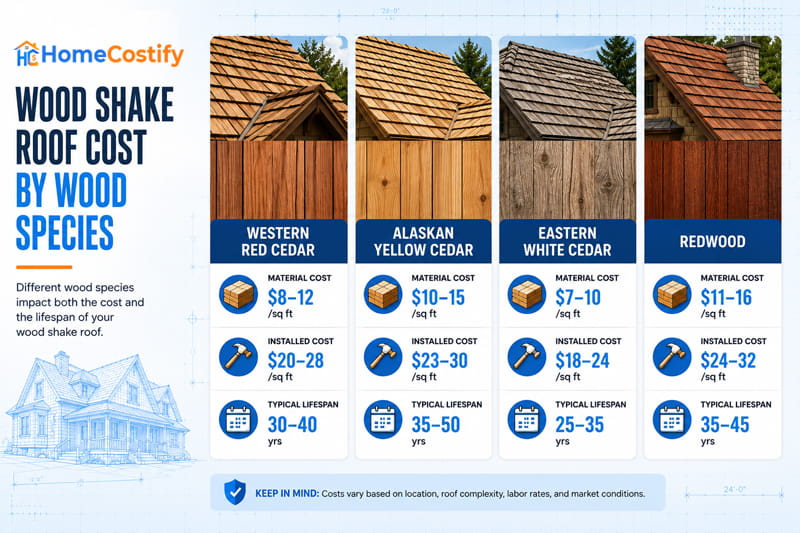
Wood species changes more than appearance on a finished roof. Material pricing, natural resistance to decay, dimensional stability, and expected service life all move in different directions depending on the cedar or redwood selected for the project.
Price variations appear on contractor proposals long before installation begins. Material selection carries a direct impact on both wood shake roof cost and long-term ownership expenses.
| Wood Species | Material Cost | Installed Cost | Typical Lifespan |
|---|---|---|---|
| Western Red Cedar | $8–12/sq ft | $20–28/sq ft | 30–40 yrs |
| Alaskan Yellow Cedar | $10–15/sq ft | $23–30/sq ft | 35–50 yrs |
| Eastern White Cedar | $7–10/sq ft | $18–24/sq ft | 25–35 yrs |
| Redwood | $11–16/sq ft | $24–32/sq ft | 35–45 yrs |
Western Red Cedar
Western Red Cedar appears on a large share of premium residential roofing projects across North America. Material pricing usually lands in the middle of the market, balancing purchase cost with a long service life under suitable conditions.
Mid-range material pricing keeps cedar shake roof cost within reach for buyers seeking premium natural roofing without moving into the highest pricing tier. It remains the benchmark used for countless contractor estimates.
Alaskan Yellow Cedar
Alaskan Yellow Cedar commands higher pricing because of its dense grain and slower natural wear. Material costs rise first, followed by a higher wood shake roof installation cost once premium products enter the proposal.
Longer service life often offsets part of that added expense across decades of ownership. Initial pricing still lands above most cedar alternatives.
Eastern White Cedar
Eastern White Cedar sits near the lower end of the pricing range. Lower purchase costs appeal to projects with tighter budgets, although expected service life generally falls below Western Red Cedar or Alaskan Yellow Cedar.
Shorter replacement cycles can change long-term ownership costs even when the initial estimate looks attractive. Early savings do not always remain the lowest option over time.
Redwood
Redwood ranks among the highest-priced natural roofing materials in this category. Rich color variation and strong natural resistance to weather place it near the premium end of the market, pushing cedar roof cost comparisons upward.
Luxury residential projects account for much of its demand. Material availability can push pricing even higher in regions where supply remains limited.
According to the Cedar Shake & Shingle Bureau (CSSB), premium cedar roofing products use clear heartwood and edge-grain construction and are recommended for roof slopes of 3:12 or steeper.
Product grade, treatment options, and wood species all contribute to the final wood shake roof cost, extending beyond the purchase price of the shakes themselves.
A higher-priced species may remain in service for years beyond a lower-priced alternative, changing long-term ownership costs in ways that are easy to overlook during the bidding stage.
Wood Shake Roof Cost by Grade

Wood grade changes the quality of every cedar shake long before installation begins. Fewer knots, straighter grain, and cleaner pieces raise material pricing, leaving labor charges much closer to the same range from one grade to another.
The final wood shake roof cost reflects the higher material price because the largest increase comes from the product itself. Installation methods change very little once the crew begins work.
| Cedar Grade | Material Cost | Installed Cost | Best For |
|---|---|---|---|
| Common | $8–10/sq ft | $18–22/sq ft | Budget projects |
| Select | $10–13/sq ft | $22–27/sq ft | Most homes |
| Premium | $13–16/sq ft | $27–33/sq ft | Luxury homes |
Common Grade
Common Grade sits at the entry level of the market. Natural defects appear more frequently, creating a lower purchase price that appeals to tighter budgets or secondary structures.
Lower cedar shingles price often becomes the biggest reason buyers choose this grade. Visual consistency and long-term appearance usually receive less priority.
Select Grade
Select Grade occupies the middle ground and appears on a large share of residential roofing projects. Cleaner grain and fewer visible imperfections raise material pricing without pushing costs into the premium category.
Moderate material pricing keeps cost within a range that fits many replacement budgets. Contractors frequently recommend this grade for primary residences.
Premium Grade
Premium Grade contains clear heartwood with straight grain and very few natural defects. Material pricing reaches the highest tier, although installation follows nearly the same sequence used for lower grades.
The added expense comes largely from the cedar itself, pushing cedar shake roof cost upward without creating an equally large increase in labor. Luxury homes and high-end custom construction account for much of its demand.
Moving from Common Grade to Premium Grade changes material expenses far more than crew charges. Roofers still prepare the deck, install underlayment, fasten each shake, and complete ridge and flashing details regardless of grade selection.
Material upgrades raise the proposal, though the finished total rarely climbs at the same pace because labor remains a fairly stable portion of the project. That pricing pattern keeps wood shake roof cost from increasing dollar for dollar with premium materials.
Factors That Affect Wood Shake Roof Cost
Material selection sets the starting point, yet the final proposal continues to change after grade and wood species have been chosen. Roof shape, site conditions, labor markets, and hidden repairs often add costs that never appear in national averages.
Two houses with matching square footage can still receive very different bids. Contractors usually identify the largest price variations after measuring the roof and inspecting the structure.
| Cost Factor | Typical Cost Impact |
|---|---|
| Steep Roof Pitch | +10–25% |
| Complex Roof Design | +10–20% |
| Limited Accessibility | +5–15% |
| Roof Deck Repairs | +$3–8/sq ft |
| Premium Labor Market | +10–30% |
Roof Pitch
Steeper roofs slow production because every movement requires extra safety equipment and careful footing. Crew members spend more time positioning materials and securing each course across the roof surface.
Labor hours rise even though the roof area remains unchanged. Extra labor hours push cost above the national average.
Roof Complexity
Simple gable roofs move much faster than layouts filled with valleys, dormers, skylights, intersecting ridges, and multiple roof sections. Extra cutting creates more waste, and finish work around flashing demands greater precision from the installation crew.
Roof complexity often adds more expense than another few hundred square feet of roofing. Extra labor and material waste raise the final proposal from both directions.
Local Labor Rates
Labor pricing follows regional markets across the United States. Metropolitan areas with higher wages usually produce higher contractor bids than smaller cities or rural communities, even for roofs built with identical materials.
Local market conditions shape roofing labor cost long before work begins. Material invoices may remain similar, yet labor charges often move in a very different direction.
Roof Inspection
A thorough roof inspection can uncover damaged sheathing, moisture intrusion, deteriorated flashing, or ventilation problems hidden beneath the old roof. Hidden damage rarely appears in online cost calculators because it cannot be confirmed until the existing roofing is removed.
Early inspection findings create a more accurate proposal. Surprise charges become less common once hidden conditions are identified before installation.
Structural Repairs
Damaged roof decking, weakened framing, or water-related deterioration must be corrected before cedar shakes are installed. Repair costs vary with the amount of affected framing and sheathing uncovered during demolition.
Structural work often enters the proposal as a separate line item. Structural repairs can add thousands of dollars beyond the base wood shake roof cost.
Accessibility
Crew access changes production speed from the first delivery through final cleanup. Narrow driveways, limited staging space, multi-story homes, and difficult material handling all add time to the project.
Equipment placement becomes more complicated when trucks or dumpsters cannot reach the work area directly. Extra handling time often appears in the finished roof cost even though the roof itself has not changed.
Square footage tells only part of the pricing story. A straightforward 3,000-square-foot roof may require fewer crew hours than a 2,200-square-foot roof packed with valleys, dormers, skylights, and intersecting ridges.
Every additional cut produces more waste, and each transition demands careful installation before the next course can continue. Extra cutting and fitting keep wood shake roof cost closely tied to roof complexity instead of roof size alone.
Natural Wood Shake vs Synthetic Cedar Shake Costs
Natural cedar and composite products occupy different price ranges from the first contractor estimate. A typical wood shake roof cost starts higher than most synthetic alternatives, though purchase price tells only part of the financial picture.
Service life, routine upkeep, and future repair expenses continue long after installation is complete. Long-term ownership costs deserve the same attention as the opening bid.
| Feature | Natural Wood Shake | Synthetic Cedar Shake |
|---|---|---|
| Installed Cost | $18–30/sq ft | $12–20/sq ft |
| Lifespan | 30–40 yrs | 40–50 yrs |
| Annual Maintenance | Moderate | Low |
| Fire Resistance | Moderate | High |
Initial Installation Costs
Natural cedar typically falls between $18 and $30 per square foot installed, placing it above most composite products. Material sourcing, grading, and labor-intensive installation keep the opening proposal higher than synthetic cedar shake roofing.
Composite panels usually arrive with more uniform dimensions, allowing crews to maintain a steadier installation pace. Lower labor time contributes to a lower starting price.
Long-Term Maintenance Costs
Natural cedar requires periodic cleaning, inspections, and protective treatments to remain in good condition over time. Composite roofing demands less routine attention, leaving annual maintenance costs lower across much of its service life.
Recurring maintenance expenses gradually narrow the gap created by the lower purchase price. Long-term ownership costs often follow a different direction than the initial estimate.
Overall Value
The lowest opening proposal does not always produce the lowest lifetime expense. Buyers searching for the best synthetic cedar shake roof often place maintenance and fire resistance near the top of the decision process, even if visual texture differs from natural cedar.
Others prefer authentic wood grain and accept the additional upkeep that follows. A complete comparison of wood shake roof cost reaches far beyond the installation invoice because maintenance and service life continue shaping expenses for decades.
Wood Shake Roof vs Wood Shingle Roof
Wood shakes and wood shingles share the same natural material, yet they arrive on the roof through different manufacturing methods. Different manufacturing methods change installation speed, finished appearance, and the amount charged by roofing contractors.
Material selection influences more than curb appeal. Labor time often separates these two roofing systems just as much as product pricing.
| Feature | Wood Shake | Wood Shingle |
|---|---|---|
| Installed Cost | $18–30/sq ft | $14–24/sq ft |
| Appearance | Rustic | Uniform |
| Installation | More Labor Intensive | Faster |
Cost Differences
A typical wood shake roof cost exceeds wood shingles cost because split shakes require more careful placement across the roof. Their irregular thickness creates additional fitting work during installation, adding crew hours that do not occur with machine-cut shingles.
Material pricing may differ, though labor frequently creates the larger gap between the two systems. Contractor estimates across much of the United States reflect the same pricing trend.
Appearance
Wood shakes produce a deeper shadow line and a more textured roof surface after installation. Wood shingles create a flatter, more uniform finish with tighter visual lines from eave to ridge.
Architectural style often guides this decision as much as pricing. Historic homes and rustic designs frequently lean toward shakes for their natural texture.
Installation Differences
Machine-cut shingles maintain consistent dimensions, allowing roofers to progress at a steadier pace across broad roof sections. Split shakes require more fitting, alignment, and adjustment before each course is completed.
Extra crew hours contribute directly to wood shake roof cost. Buyers comparing wood shake vs wood shingles often notice that installation time, not material alone, accounts for a meaningful share of the final price.
Wood Shake Roof Lifespan and Maintenance Costs
The price paid on installation day represents only part of the long-term expense. Ongoing care, periodic inspections, and routine maintenance continue adding costs over the life of the roof.
Ongoing maintenance expenses deserve a place in any realistic wood shake roof cost calculation. Small maintenance bills often prevent much larger repair invoices years later.
Average Lifespan
A typical wood shakes roof lifespan ranges from 30 to 40 years, although some roofs remain in service much longer under favorable conditions. Climate, installation quality, roof ventilation, and routine maintenance all leave visible marks on aging cedar over time.
Dry regions often place less stress on natural wood than areas with frequent rain or persistent humidity. Service life can vary by more than a decade between two roofs built with similar materials.
Factors That Affect Service Life
The expected wood shakes roof life expectancy depends on much more than the cedar itself. Standing moisture, blocked airflow beneath the roofing system, poor flashing details, or neglected maintenance gradually shorten the roof’s useful life.
Wind-driven debris and heavy shade can accelerate wear by trapping moisture against the wood surface. Small issues left unattended often spread well beyond the first damaged area.
Typical Maintenance Costs
| Maintenance Item | Average Cost |
|---|---|
| Cleaning | $0.25–0.50/sq ft |
| Moss Removal | $0.35–0.75/sq ft |
| Protective Treatment | $0.60–1.20/sq ft |
| Annual Inspection | $250–600 |
Routine maintenance usually includes cleaning, moss removal, protective treatments, and scheduled inspections. Routine maintenance services cost far less than replacing widespread water damage hidden beneath deteriorated cedar shakes.
Annual maintenance expenses remain predictable for most roofs. Repair work rarely follows the same pattern once moisture reaches the roof deck.
Guidance published by the U.S. Forest Service Forest Products Laboratory notes that long service life depends on wood species, sound installation, roof ventilation, finishing methods, and regular maintenance.
Skipping preventive care often shortens the usable life of cedar roofing long before the material reaches its expected age. A few hundred dollars spent on maintenance can avoid repair work costing thousands later. Long-term maintenance expenses deserve equal attention when evaluating wood shake roof cost.
Wood Shake Roof Repair vs. Replacement Costs
Visible damage does not always point to a full reroofing project. A handful of cracked shakes or minor flashing problems may require limited repairs, though widespread deterioration changes the financial picture quickly.
Repair costs and replacement costs follow very different paths. Choosing the right option depends on the roof’s remaining service life as much as the visible damage.
| Project | Average Cost |
|---|---|
| Minor Repairs | $500–1,500 |
| Moderate Repairs | $1,500–4,000 |
| Major Repairs | $4,000–8,000 |
| Full Replacement | $36,000–60,000 |
Wood Shakes Roof Repairs Cost
Typical wood shakes roof repairs cost ranges from $500 to $8,000, depending on the extent of the damage. Small repairs often involve replacing damaged shakes, repairing flashing, or sealing localized leaks before surrounding materials are affected.
Costs rise quickly once water reaches roof decking or structural framing. Early repairs usually remain far less expensive than extensive reconstruction.
Wood Shakes Roof Replacement Cost
A complete wood shakes roof replacement cost generally falls between $36,000 and $60,000 for a 2,000-square-foot roof. The quoted price covers demolition, disposal, new underlayment, cedar shakes, installation, and finishing components included in the contractor’s proposal.
Larger homes or premium materials can push pricing well beyond that range. Local labor markets continue shaping the final total.
When Replacement Makes Better Financial Sense
Repeated repairs on an aging roof can consume a surprising amount of money over just a few years. Multiple service calls, recurring leaks, and isolated patch work often produce uneven results once cedar reaches the later stages of its service life.
At that point, a full roof replacement cost may deliver better value than another round of repairs. Long-term spending often favors replacement when recurring damage continues pushing wood shake roof cost higher year after year.
Is a Wood Shake Roof Worth the Cost?
Higher pricing does not automatically make a roofing material a poor financial choice. The right decision depends on expected ownership length, local climate, maintenance habits, and the value placed on natural cedar.
Buying priorities vary from one house to another. A realistic decision begins with weighing long-term ownership costs alongside the initial wood shake roof cost.
Natural cedar appeals to buyers who want texture that changes with age instead of remaining uniform year after year. Freshly installed shakes display warm brown and amber tones, then gradually weather into soft gray as the roof ages, creating the distinctive wood shakes roof colors seen on older cedar homes across North America.
The gradual color change becomes part of the roof’s visual appeal. A manufactured product follows a much more consistent appearance throughout its service life.
- Choose wood shake if… Natural texture, authentic cedar character, and long service life matter more than periodic maintenance. Budgeting for routine cleaning and protective treatments should remain part of the ownership plan.
- Consider synthetic alternatives if… Lower maintenance costs rank higher than natural wood appearance. Composite products often reduce routine upkeep over decades of ownership.
- Compare multiple contractor quotes… Every proposal should cover the same material grade, installation scope, underlayment, flashing, disposal, and warranty before prices are evaluated side by side.
A premium cedar shake roof carries a higher purchase price than numerous roofing materials on the market. Higher upfront spending often delivers the greatest return for buyers planning to remain in the same house for decades and willing to maintain the roof properly.
Others may place greater value on lower maintenance or reduced installation costs. Matching expectations with long-term ownership expenses creates a far stronger decision than focusing only on wood shake roof cost.
Choosing the Right Wood Shake Roofing Contractor
The contractor preparing the estimate can influence the final project almost as much as the material itself. Differences in workmanship, proposal detail, and material specifications often create noticeable price gaps between competing bids.
A lower estimate may simply leave out work that appears later as additional charges. Reading every proposal line by line produces a much clearer picture of the total wood shake roof cost.
- Request identical scopes. Every estimate should cover the same demolition work, disposal, underlayment, flashing, ventilation details, and finish work before pricing is compared.
- Confirm included materials. Verify cedar grade, underlayment type, flashing specifications, fasteners, and every component included with the cedar roof installation proposal.
- Review warranty terms. Separate manufacturer coverage from workmanship warranties and confirm both before signing any contract.
- Verify licensing and insurance. Current documentation reduces the chance of unexpected liability during construction.
Accurate estimates come from complete project scopes instead of short price summaries. Material grade, installation details, warranty coverage, and included accessories deserve equal attention before any agreement moves forward.
Small differences between proposals often account for thousands of dollars after construction begins. Reviewing proposal details carefully produces a more reliable picture of the final wood shake roof cost.
Conclusion
Estimating wood shake roof cost involves much more than multiplying the roof size by a national average. Material grade, wood species, roof layout, labor charges, and the scope included in a contractor’s proposal all shape the final project price.
Maintenance expenses and expected service life continue affecting ownership costs long after installation has been completed.
Reviewing material specifications, project scope, warranties, and pricing before requesting estimates creates a stronger basis for comparing bids and selecting the roofing option that best matches your budget and long-term plans.
Careful planning today reduces unexpected expenses, improves project outcomes, while supporting confident decisions throughout your entire roofing investment journey ahead.
FAQs About Wood Shake Roof Cost
How long will a wood shake roof last?
A well-installed wood shake roof typically lasts 30 to 40 years, although premium cedar, favorable weather conditions, and consistent maintenance can extend its service life even further.
How many wood shakes per square?
The exact quantity varies by shake size and exposure. Most roofing squares require multiple bundles, with manufacturers providing coverage recommendations based on the selected product specifications.
How thick is a wood shake?
Wood shakes are commonly available in thicknesses ranging from about 1/2 inch to 3/4 inch, with heavier premium products producing a deeper, more textured roof appearance.
How much is a wooden roof?
A professionally installed wooden roof generally costs $18 to $30 per square foot, although material grade, roof size, labor rates, and project complexity can change the final price.
What are wood shakes made of?
Wood shakes are typically manufactured from Western Red Cedar, Alaskan Yellow Cedar, Eastern White Cedar, or Redwood, each offering different pricing, appearance, and expected service life.