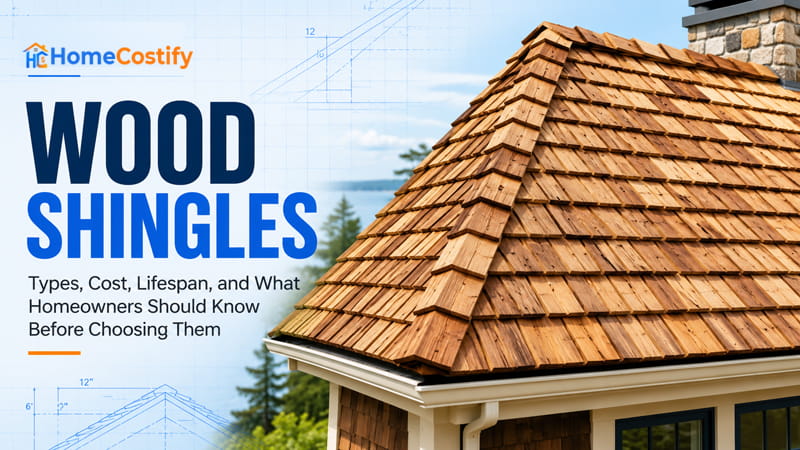
Wood roofing has remained part of American architecture for centuries. Historic homes in New England, coastal cottages, and mountain retreats still showcase roofs and exterior walls covered with natural wood products. Among the many materials available today, wood shingles continue to attract attention because they deliver a look that manufactured products rarely duplicate.
Grain patterns, weathering characteristics, and color variation create a surface that changes gradually with age rather than remaining static.
Price is only one piece of the decision. Service life, upkeep requirements, regional climate, and material quality all influence long-term ownership costs. A roof exposed to heavy snowfall faces different conditions than one installed near a humid coastline.
What Are Wood Shingles?
Wood shingles are thin, tapered pieces of wood installed in overlapping courses across a roof or exterior wall surface. Each course partially covers the row beneath it, creating a layered assembly that sheds water while exposing only a portion of each piece. The visible exposure changes depending on product dimensions, roof slope, and installation specifications.
A wood shingles roof often appears more refined than a shake roof because each piece is sawn on both sides. The resulting surface looks smoother and more uniform from the ground. That distinction becomes noticeable on larger homes where roof texture plays a major role in curb appeal.
Roofing is only part of the story. These products also appear on gables, dormers, and entire exterior facades. In those applications, the material functions as decorative cladding rather than weatherproof roofing. The appearance remains similar, yet installation methods and exposure patterns may differ.
Cedar dominates the market for a reason. Compared with many other wood roofing materials, cedar contains natural extractives that slow moisture absorption and decay. That characteristic has made cedar a common choice across many regions of the United States. Other species exist, though availability varies considerably from one market to another.
Interest in natural wood roofing has remained steady despite the growth of synthetic products. Some buyers prefer the texture and aging characteristics of real timber. Others appreciate the architectural style associated with traditional shingles wood construction, particularly on historic and coastal homes.
Wood Shingle Materials
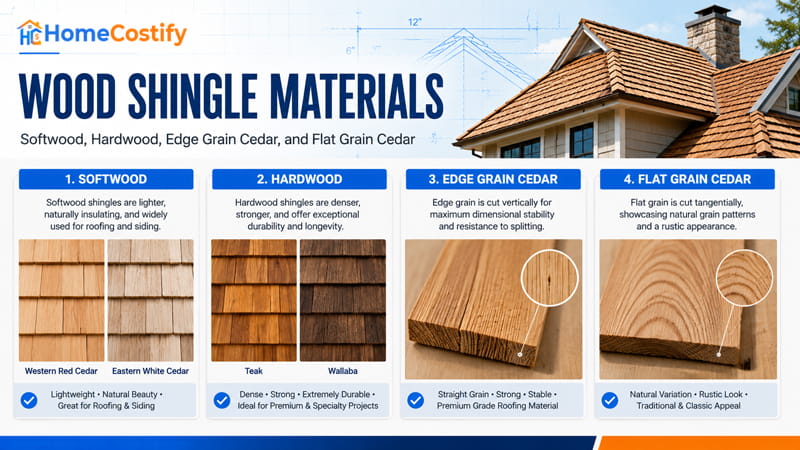
Species names usually receive most of the attention during the buying process. Western Red Cedar, Eastern White Cedar, Alaskan Yellow Cedar, teak, and Wallaba all have different characteristics. Material quality still matters. Two bundles labeled as cedar may not contain the same grade of lumber, grain pattern, or manufacturing quality.
Softwood and Hardwood
Most roofing products in North America are manufactured from softwood species, particularly cedar. Hardwood species such as teak and Wallaba occupy a smaller segment of the market and are generally associated with specialty projects.
Softwoods
- Western Red Cedar
- Eastern White Cedar
- Alaskan Yellow Cedar
Hardwoods
- Teak
- Wallaba
Softwoods dominate residential roofing because they are lighter and more widely available. Hardwoods bring a different set of characteristics, including greater density and higher material costs.
Grain Quality Matters
The section of the log used during manufacturing can influence how shingles age over time.
Edge Grain Cedar
- Straighter grain pattern
- More consistent expansion and contraction
- Fewer tendencies toward warping and cupping
Flat Grain Cedar
- Wider growth-ring pattern
- Greater variation in appearance
- More movement during repeated wet and dry cycles
According to guidance from the Insurance Institute for Business & Home Safety (IBHS), the durability of wood shingles depends heavily on material quality rather than wood species alone. Premium-grade shingles are typically manufactured from edge grain cedar with minimal defects, which improves dimensional stability and helps the roof resist splitting, warping, and premature deterioration over time.
What to Look For
Higher-grade products often share several characteristics:
- Straighter grain patterns
- Fewer knots
- More uniform thickness
- Cleaner edges
- Better manufacturing consistency
Grade, grain orientation, and manufacturing quality frequently have just as much influence on how a roof looks and ages years after installation. High-grade roofing cedar typically contains fewer natural defects and a more consistent grain structure across each bundle.
Types of Wood Shingles
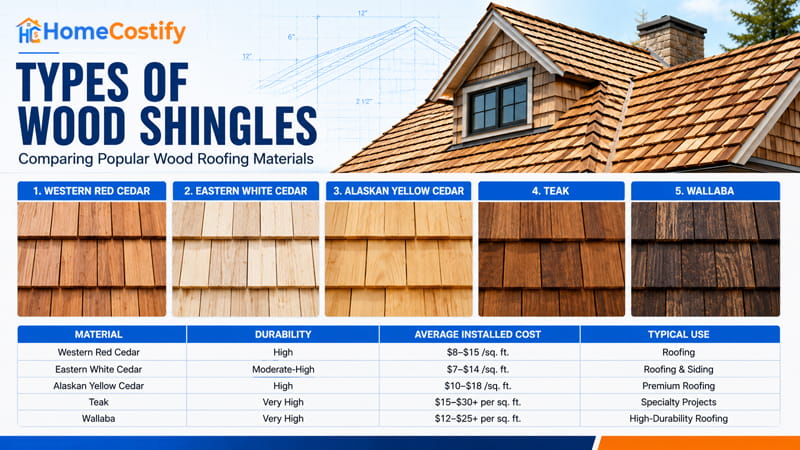
The market includes several species that fall under the broader category of wood shingles. Some have been used on American homes for generations, while others appear more often in specialty projects. Climate, regional availability, appearance preferences, and budget all influence material selection.
A roof installed along the coast of Maine may use a different species than one built in the Pacific Northwest. Those regional preferences developed over decades and often reflect local weather conditions as much as aesthetics.
Western Red Cedar
Western Red Cedar remains the most widely recognized material among the various types of wood shingles available in the United States. Roofing contractors, architects, and restoration specialists frequently specify it because the wood balances appearance, availability, and weather exposure characteristics. Large portions of the cedar roofing market continue to rely on this species.
Freshly installed cedar often displays warm reddish-brown tones mixed with amber and honey-colored highlights. The appearance changes gradually. Exposure to sunlight, rainfall, and seasonal weather patterns eventually produces the silver-gray patina commonly associated with older cedar roofs.
Some people actively seek that weathered look, especially on coastal homes and traditional architectural styles.
The wood also performs well in regions that experience frequent rain. Moisture exposure still affects service life, yet Western Red Cedar has remained a common roofing material partly because it ages more predictably than many alternative species.
Eastern White Cedar
Eastern White Cedar has a noticeably lighter appearance than Western Red Cedar. Cream-colored sapwood and pale golden tones create a softer visual profile that works well with many traditional home styles found throughout the northeastern United States.
Regional availability plays a role here. The species has long been associated with New England and portions of eastern Canada, making it familiar to builders working in those areas. Historic homes, coastal cottages, and Cape Cod-style properties frequently incorporate eastern white cedar roofing or siding materials.
Color changes still occur over time. Sun exposure gradually shifts the appearance toward gray, although many roofs retain lighter tones compared with aging red cedar products. The visual difference may seem minor at installation, yet it becomes more noticeable after years of weather exposure.
Alaskan Yellow Cedar
Despite the name, Alaskan Yellow Cedar is not actually a true cedar. The species belongs to the cypress family, though it has been grouped with cedar roofing products for many years because of similar applications and appearance.
Builders often select this material for projects where long service life ranks high on the priority list. Dense grain structure and natural resistance to decay have contributed to its reputation within premium roofing markets. Wet climates frequently enter the conversation when discussing this species.
The wood starts with pale yellow tones that gradually soften with age. Color variation tends to be less dramatic than what many people associate with red cedar products. Among premium roofing choices, alaskan yellow cedar regularly appears near the top of the list for projects expected to remain in place for several decades.
Teak
Teak occupies a very different category. This tropical hardwood is rarely considered a standard roofing product in North America, largely because of cost and limited availability. Projects that specify teak usually place a strong emphasis on appearance, exclusivity, or long-term material stability.
Natural oils within the wood have made teak famous in marine environments. Boat builders have relied on those characteristics for generations. The same qualities attract attention in specialty roofing applications where exposure conditions can be demanding.
Price remains the largest obstacle. A roof built from teak can cost substantially more than one constructed with cedar. That reality keeps teak within a relatively small segment of the market, though its reputation for extended service life remains well known among designers and high-end custom builders.
Wallaba
Wallaba comes from tropical hardwood forests in South America and carries a reputation for toughness. The wood is considerably denser than many softwood roofing species commonly used in North America. That density influences both weight and installation practices.
Insect activity receives considerable attention when discussing this material. Natural compounds found within the wood have made Wallaba a frequent choice in regions where termites and other wood-damaging insects present ongoing concerns. Environmental conditions still matter, but the species has earned a strong reputation in challenging climates.
The appearance differs from cedar as well. Darker coloration and a heavier visual character create a distinct architectural style. Projects that use Wallaba often do so intentionally. It rarely serves as a substitute for cedar and instead occupies its own niche within the market for high-end roofing materials.
| Material | Durability | Average Installed Cost | Typical Use |
|---|---|---|---|
| Western Red Cedar | High | $8–$15/sq. ft. | Roofing |
| Eastern White Cedar | Moderate-High | $7–$14/sq. ft. | Roofing & Siding |
| Alaskan Yellow Cedar | High | $10–$18/sq. ft. | Premium Roofing |
| Teak | Very High | $15–$30+ per sq. ft. | Specialty Projects |
| Wallaba | Very High | $12–$25+ per sq. ft. | High-Durability Roofing |
Price Disclaimer: The costs shown are industry estimates and may vary based on material grade, regional supply, roof design, accessibility, and local labor conditions. Premium-grade products and specialty hardwood species typically command higher prices than standard cedar roofing materials.
Wood Shingle Sizes and Dimensions
Several standardized sizes appear throughout the roofing industry. Manufacturers may offer specialty products, but most installations rely on a handful of established dimensions that have remained common for decades. Those dimensions influence exposure, appearance, and installation layout.
The 16-inch Fivex shingle is often used where a shorter exposure pattern is desired. The 18-inch Perfection shingle occupies the middle ground and remains a familiar option across many roofing projects. The 24-inch Royal shingle creates a larger exposure and a different visual rhythm across the roof surface.
| Style | Length |
|---|---|
| Fivex | 16 in |
| Perfection | 18 in |
| Royal | 24 in |
Size affects more than appearance. Exposure calculations, roof slope, and material consumption all change as dimensions increase.
Contractors may also compare wood shingle sizes when estimating material quantities, while manufacturers often publish specifications related to wood shingle thickness for different grades and product lines. A few inches can make a noticeable difference once installation begins.
How Much Do Wood Shingles Cost?
A wood roof typically sits above standard three-tab asphalt products in terms of price, though the gap varies depending on species, project complexity, and regional labor conditions. Material selection influences the budget, but it is rarely the only factor. The shape of the roof, access to the work area, and installation difficulty often carry just as much weight.
Current market estimates place wood shingles cost between $4 and $10 per square foot for materials alone. Professionally installed projects generally fall between $8 and $15 per square foot. Higher-end species, premium grades, and complicated roof designs can push pricing beyond those ranges.
| Cost Type | Average Cost |
|---|---|
| Material Only | $4–$10 per sq. ft. |
| Installed Cost | $8–$15 per sq. ft. |
The difference between material and installed pricing reflects labor, disposal, equipment, underlayment, flashing work, and project logistics. Roofing crews may complete a simple gable roof relatively quickly. A roof with multiple valleys, dormers, skylights, and intersecting rooflines requires far more cutting and fitting. Labor hours increase. Material waste often rises as well.
Wood Shingle Cost by Roof Size
Roof size has a direct relationship with project cost because larger surfaces require more material, more labor, and more installation time. The increase is not limited to shingle quantities. Underlayment, fasteners, flashing components, and disposal expenses tend to rise alongside square footage.
A 1,000-square-foot roof represents a very different scope of work than a 3,000-square-foot roof. Labor crews spend more time on site, material deliveries become larger, and waste removal requirements increase. Even roofs with similar designs can produce noticeably different budgets once square footage changes.
| Roof Size | Installed Cost |
|---|---|
| 1,000 sq. ft. | $8,000–$15,000 |
| 1,500 sq. ft. | $12,000–$22,500 |
| 2,000 sq. ft. | $16,000–$30,000 |
| 3,000 sq. ft. | $24,000–$45,000 |
These estimates reflect typical installed pricing ranges for wood shingles and may vary based on species selection, labor rates, and roof design complexity.
Wood Shingle Cost by Material Type
Not all species occupy the same price range. Western Red Cedar frequently serves as the reference point because it remains widely available throughout much of North America. Supply chains are well established, making pricing more predictable than some specialty alternatives.
Eastern White Cedar often falls into a similar range or slightly below Western Red Cedar depending on regional availability. Alaskan Yellow Cedar generally occupies a higher tier because supplies are more limited and demand remains strong in premium roofing markets.
Teak and Wallaba sit in a different category altogether. Both species are associated with specialty applications and smaller production volumes. Transportation costs, sourcing challenges, and material scarcity contribute to higher pricing.
| Material | Relative Cost |
|---|---|
| Eastern White Cedar | Lower |
| Western Red Cedar | Moderate |
| Alaskan Yellow Cedar | High |
| Teak | Premium |
| Wallaba | Premium |
Price Disclaimer: The costs shown are industry estimates and may vary based on material grade, regional supply, roof design, accessibility, and local labor conditions. Premium-grade products and specialty hardwood species typically command higher prices than standard cedar roofing materials.
Wood Shingle Lifespan
Questions about wood shingles lifespan often focus on a single number, yet roof life rarely follows a fixed timeline. Climate, installation quality, material grade, roof ventilation, and maintenance history all influence the outcome. A cedar roof exposed to coastal moisture may age differently than one located in a dry inland climate. Shade can alter the equation as well.
According to the Cedar Shake & Shingle Bureau, the average lifespan of a wood shingle roof is approximately 30 to 40 years. Premium cedar shingles installed correctly and maintained regularly may last 40 to 50 years or longer, while lower-grade products in harsh environments may have a shorter service life.
| Condition | Expected Lifespan |
|---|---|
| Average Installation | 30–40 Years |
| Premium Cedar | 40–50+ Years |
| Poor Maintenance | 20–30 Years |
Weather patterns play a major role. Roofs exposed to persistent moisture often experience different aging patterns than roofs located in dry climates. Debris accumulation can also accelerate wear. Leaves trapped in valleys and shaded areas tend to hold moisture longer after rainfall.
People searching for how long do wood shingles last are often surprised by the range of possible outcomes. Two roofs installed during the same year can follow very different paths over several decades. Material quality, installation workmanship, and ongoing care frequently shape the final result as much as the species itself.
Advantages of Wood Shingles
Wood shingles occupy a different space. Their appeal is tied to natural materials, architectural character, and a roofing tradition that has remained visible across many parts of the United States for generations.
Among the commonly cited advantages of wood shingles are:
- Natural Appearance: Grain patterns, texture variation, and gradual weathering create a look that manufactured products rarely duplicate. No two roofs age in exactly the same way.
- Insulation Value: Wood contains natural insulating properties. Roofing systems built with cedar and similar species often perform differently than dense mineral-based materials when exposed to changing temperatures.
- Lightweight Construction: Compared with slate, clay tile, or concrete tile, wood roofing products place less structural load on the building. Older homes may benefit from that characteristic.
- Renewable Material Source: Cedar and other species originate from natural resources rather than petroleum-based manufacturing processes. Responsible forestry practices influence the environmental profile of the finished product.
- Historic Authenticity: Colonial homes, Cape Cod cottages, coastal residences, and many historic structures were originally designed with wood roofing materials. Certain architectural styles simply look more authentic with cedar products than with modern substitutes.
The appeal of wood shingles extends beyond appearance alone. Material selection often reflects architectural goals, regional traditions, and the character of the structure itself.
Disadvantages of Wood Shingles
A cedar roof installed in a dry inland climate may face a different set of challenges than one located near a humid shoreline. Local conditions influence maintenance demands, aging patterns, and long-term ownership costs.
Among the commonly cited disadvantages of wood shingles are:
- Fire Concerns: Untreated wood products generally carry greater fire exposure risks than metal, tile, or certain composite materials. Fire-retardant treatments are available, though local regulations vary by region.
- Maintenance Requirements: Organic roofing materials require periodic attention. Debris accumulation, clogged gutters, and unchecked moss growth can shorten service life.
- Moisture Sensitivity: Prolonged exposure to damp conditions may contribute to rot, fungal activity, and surface deterioration. Shade can accelerate those conditions in some locations.
- Higher Upfront Cost: Material and installation expenses often exceed the cost of standard asphalt roofing products. Premium species can widen that gap considerably.
Many people are drawn to the appearance of wood shingles, yet ownership expectations should remain realistic. Material choice is only part of the equation. Climate, roof design, and maintenance habits often influence long-term results just as much as the species itself.
Best Climates for Wood Shingles
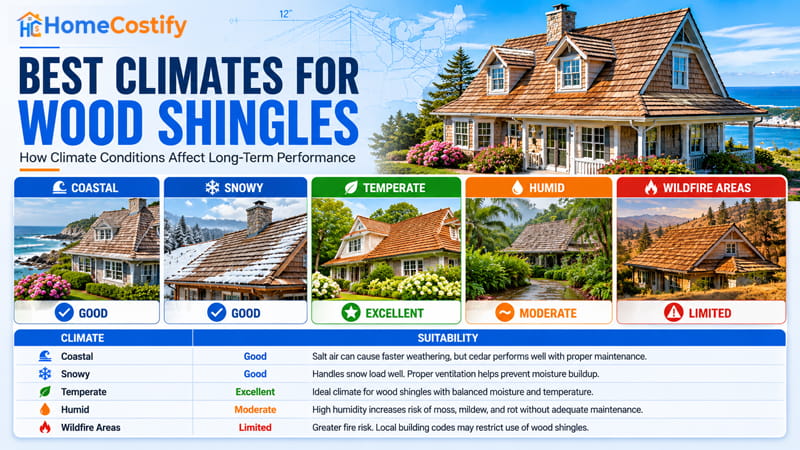
Climate influences how roofing materials age. Sun exposure, rainfall patterns, humidity levels, snowfall, and seasonal temperature swings all leave their mark over time. A roof that performs well in one region may encounter a very different environment elsewhere. Regional conditions deserve consideration before selecting wood shingles for a roofing project.
Coastal Areas
Coastal regions have a long history with cedar roofing products, particularly throughout New England and parts of the Pacific Northwest. Salt air, ocean winds, and changing weather conditions create a demanding environment, yet cedar remains common in these areas. Proper airflow and routine maintenance play a major role in long-term roof condition.
Snowy Regions
Snow accumulation creates repeated freeze-thaw cycles during winter months. Cedar has remained a familiar roofing material across many northern climates because it adapts well to seasonal temperature changes. Roof pitch and roof drainage design become especially important in regions that receive heavy snowfall.
Temperate Climates
Moderate climates often provide the most favorable conditions. Roofs experience fewer weather extremes, and moisture typically evaporates more quickly after rainfall. Many long-lasting cedar roofs are located in regions where temperature swings remain relatively moderate throughout the year.
Areas Requiring Extra Caution
Wildfire-prone regions present unique challenges. Local building regulations may restrict certain roofing materials or require fire-rated assemblies. Humid environments also deserve attention because prolonged dampness can encourage moss, algae, and fungal activity.
| Climate | Suitability |
|---|---|
| Coastal | Good |
| Snowy | Good |
| Temperate | Excellent |
| Humid | Moderate |
| Wildfire Areas | Limited |
Environmental conditions do not affect every roof equally. Tree coverage, roof orientation, shade patterns, and airflow can create very different aging patterns even within the same neighborhood. Those variables often influence how wood shingles perform over several decades.
Why Roof Ventilation Matters for Wood Shingles
Roof ventilation receives less attention than shingles, flashing, or underlayment, yet airflow affects how moisture behaves beneath the roof surface. Conditions inside the roof assembly continue changing long after installation. Seasonal humidity, rainfall, and temperature shifts all contribute to that cycle.
For wood shingles, ventilation is commonly associated with:
- Airflow Through the Roof Assembly: Moving air creates opportunities for moisture to dissipate after rain and seasonal humidity events.
- Moisture Escape: Damp conditions tend to persist longer when airflow is restricted. Roof sections that remain wet for extended periods often show different aging patterns.
- Mold and Fungal Activity: Areas with limited airflow may experience greater biological growth, particularly in shaded sections of the roof.
- Extended Service Life Potential: Drying cycles play an important role in how cedar and other species weather over time.
A roof exposed to sunlight can dry rapidly after rainfall. Nearby trees, deep shade, and limited airflow create a different environment. Small differences often become more noticeable after years of weather exposure. Those conditions influence wood shingles throughout their service life.
Wood Shingle Maintenance Requirements
Roof maintenance rarely attracts much attention during the buying process. Years later, it often becomes one of the biggest factors influencing roof condition. Exposure to rain, leaves, pollen, tree debris, and seasonal weather gradually changes the roof surface. Regular inspections make it easier to identify developing issues before they spread.
Why Maintenance Matters
Maintenance activities often focus on moisture management.
- Moisture remains the primary source of long-term deterioration.
- Leaves, twigs, and pine needles can accumulate in valleys and low-drainage areas.
- Moss and fungal growth thrive in persistently damp environments.
- Surface deterioration may accelerate when wet conditions continue for extended periods.
Based on maintenance guidance from the Cedar Shake & Shingle Bureau, one of the biggest factors affecting wood shingle longevity is moisture retention.
Debris such as leaves, pine needles, and branches can trap moisture against the roof surface, reducing airflow and creating conditions that encourage moss, fungal growth, and wood decay. Regular cleaning and proper ventilation help extend the service life of wood shingles.
Recommended Maintenance Schedule
| Maintenance Task | Frequency |
|---|---|
| Roof Inspection | Annually |
| Gutter Cleaning | 1–2 Times per Year |
| Debris Removal | As Needed |
| Moss Removal | As Needed |
| Preservative Treatment | Every 5–7 Years |
Maintenance schedules vary according to climate, tree coverage, and roof design. Homes surrounded by mature trees often require more frequent inspections than homes located in open areas.
Signs Wood Shingles May Need Attention
Visual inspections can reveal developing issues before major repairs become necessary.
- Cracking
- Curling
- Splitting
- Moss buildup
- Localized decay
A roof does not usually deteriorate evenly. Certain sections may age faster because of shade, moisture exposure, or debris accumulation. Monitoring those areas regularly provides a clearer picture of how wood shingles are aging across the roof.
Wood Shingles and Fire Safety Considerations
Fire performance is often part of the conversation surrounding natural roofing materials. Local regulations, regional wildfire exposure, and insurance requirements can all influence material selection. A roof installed in a densely wooded area may face different requirements than one located in a suburban neighborhood with lower wildfire risk.
Several factors influence how wood shingles perform in relation to fire safety:
- Untreated Products: Natural wood products generally carry a higher fire risk than materials such as metal, clay tile, or concrete tile.
- Fire-Retardant Treatments: Some products are manufactured or treated to achieve improved fire performance ratings. Treatment quality and long-term maintenance requirements can vary.
- Class A Roofing Systems: Fire ratings often apply to the complete roof assembly rather than the shingle itself. Underlayment, decking, and installation methods all contribute to the final rating.
- Local Code Requirements: Building regulations differ by state, county, and municipality. Certain wildfire-prone regions place restrictions on untreated cedar roofing products.
Material selection should always align with local regulations and project requirements. A product approved in one location may not satisfy requirements elsewhere. Fire performance deserves attention before installation begins, particularly in areas where wildfire exposure remains a concern for wood shingles.
Wood Shingle Siding Applications
Roofing is not the only place where cedar products appear. Exterior walls, dormers, gables, and decorative architectural details have incorporated wood-based cladding for generations. The appearance creates a distinctive look that remains common in several regional building styles throughout North America.
Common applications include:
- Traditional Homes: Colonial, Cape Cod, and farmhouse designs frequently incorporate cedar siding details.
- Coastal Homes: Weathered gray cedar has become closely associated with seaside architecture in many parts of the Northeast.
- Cottage Architecture: Rustic cottages often pair natural timber accents with textured exterior surfaces.
- Historic Restoration Projects: Original building materials sometimes influence restoration decisions on older structures.
A well-designed wood shingle siding system can create visual continuity between the roof and exterior walls. Many restoration specialists also use wood siding shingles to preserve historical character. Architectural style remains a major reason why these products continue appearing on a variety of wood shingles house designs across the United States.
Wood Shingles Compared to Other Roofing Materials
Roofing materials differ in appearance, longevity, maintenance demands, and installation costs. Each category occupies a different position within the market.
- Asphalt Shingles: Asphalt remains the most widely used residential roofing material and generally carries a lower upfront cost than cedar products.
- Architectural Shingles: These dimensional asphalt products create a thicker appearance and typically outlast standard three-tab shingles.
- Luxury Shingles: Luxury asphalt roofing often mimics slate or cedar while maintaining asphalt-based construction.
- Metal Roofing: Metal roofs are known for longevity, fire resistance, and low maintenance requirements.
- Clay Tile Roofing: Clay tile delivers exceptional lifespan potential but adds substantial weight to the structure.
- Concrete Tile Roofing: Concrete tile shares many characteristics with clay while offering different styling options.
- Slate Roofing: Natural slate remains one of the longest-lasting roofing materials available.
- Synthetic Slate Roofing: Synthetic alternatives replicate slate aesthetics while reducing overall weight.
- Wood Shakes: Wood shakes create a thicker and more textured appearance than wood shingles.
- Composite Roofing: Composite products combine engineered materials designed to mimic natural roofing surfaces.
- Solar Shingles: Solar roofing integrates weather protection with on-site energy generation.
Conclusion
Wood roofing remains a distinctive option for homeowners who value natural materials and architectural character. Species selection, project costs, expected lifespan, maintenance requirements, and regional climate all influence long-term performance. No single material fits every situation.
The information covered in this guide includes common types, pricing expectations, durability considerations, ventilation needs, and maintenance practices associated with wood shingles. Reviewing those factors together creates a clearer picture of ownership expectations. A thoughtful evaluation of budget, climate conditions, and design goals can make it easier to choose roofing materials that align with the needs of the home.
FAQs About Wood Shingles
Can shingles be made of wood?
Yes. Cedar remains the most common species, although Eastern White Cedar, Alaskan Yellow Cedar, teak, and Wallaba also appear in specialized roofing applications.
Are wood shingles a fire hazard?
Untreated products generally carry greater fire exposure risks than noncombustible roofing materials. Fire-rated roof assemblies and fire-retardant-treated products are available in many markets.
How long will wood shingles last?
Service life often falls within the 30-to-40-year range. Premium materials, favorable climate conditions, and consistent maintenance may extend that timeline.
Do wood shingles last longer than asphalt?
Higher-grade cedar roofs can remain in service longer than many standard asphalt roofing systems. Installation quality and environmental conditions influence actual results.
When to paint or replace wood shingles?
Visible cracking, curling, splitting, localized decay, and widespread weathering often indicate that repairs or replacement should be evaluated.