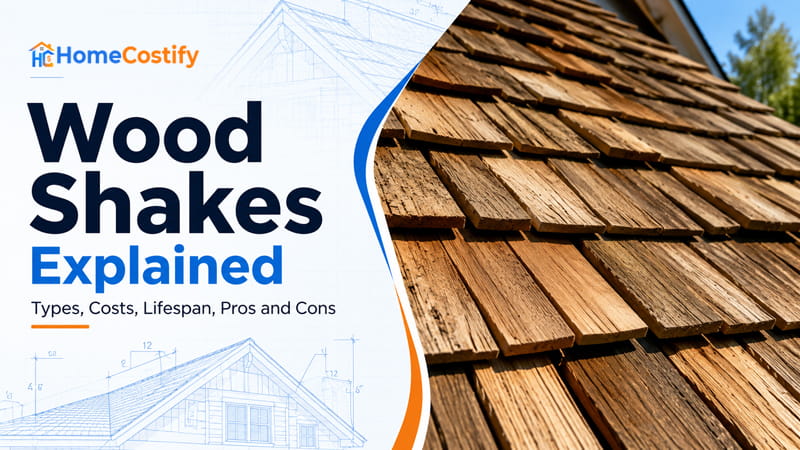
Natural wood has remained part of residential construction for centuries, even as synthetic materials and factory-made products have become more common. Texture plays a major role in that continued appeal. Few exterior materials create the same depth, shadow lines, and handcrafted appearance associated with wood shakes.
These split wood products appear on both roofs and exterior walls across the United States. Some are installed on mountain cabins and coastal cottages, while others appear on high-end custom homes seeking a more traditional architectural style. The look is immediately recognizable from a distance.
A closer look reveals far more than appearance alone. Material selection, installation methods, maintenance requirements, expected service life, and pricing can vary considerably from one project to another.
Roofing applications often receive the most attention, yet wood shake siding remains a common cladding choice as well.
What Are Wood Shakes?
The surface of a shake roof rarely appears perfectly uniform. Thickness varies slightly from piece to piece. Edges are less consistent than machine-cut roofing products, creating a textured profile that changes throughout the day as sunlight moves across the roof surface.
Wood shakes are roofing or cladding products manufactured from natural wood that has been split rather than completely sawn. The process creates a rougher face and a more pronounced texture than standard shingles. Many historic buildings across North America used this style of material long before asphalt roofing became widely available.
Production methods vary by manufacturer. Some pieces are split by machine and finished with a saw on one side, while others retain a more rugged appearance. Those differences affect visual character as much as material thickness.
Several wood species are commonly used. Western Red Cedar remains the most recognized option in the United States because of its natural resistance to moisture and decay. Redwood appears in certain regions, particularly along the West Coast. Cypress and pine are also used, although availability often depends on local markets and regional building traditions.
The finished product can be installed as wood shake shingles for roofing applications or incorporated into exterior wall systems. A completed wood shake roof tends to display deeper shadow lines than a roof covered with machine-sawn shingles. That visual depth explains much of the material’s lasting popularity.
Types of Wood Shakes
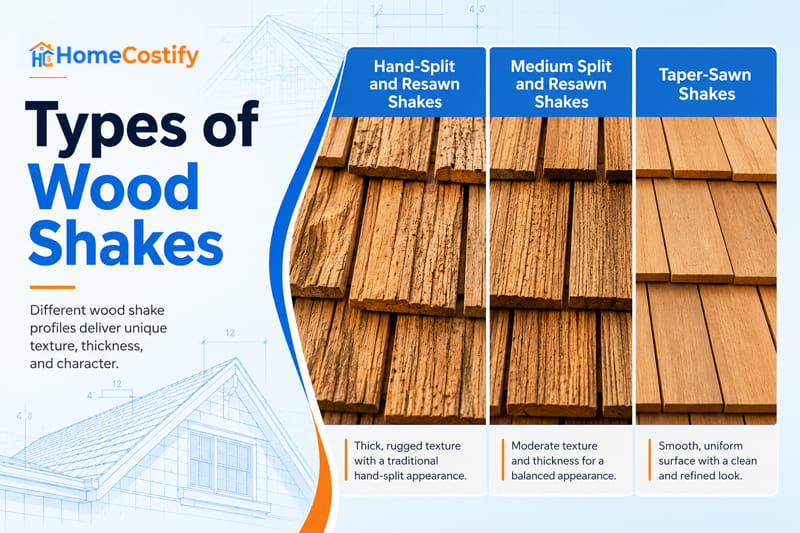
Manufacturing methods influence thickness, texture, exposure, and overall appearance. Small differences during manufacturing can create noticeably different roof surfaces once thousands of individual pieces are installed.
- Hand-Split and Resawn Shakes: Rough on the exposed face and smooth on the back. This style creates a traditional appearance with pronounced texture and irregular shadow lines.
- Medium Split and Resawn Shakes: Similar in appearance to hand-split products but manufactured with reduced thickness. Many projects use this style when a slightly lighter profile is preferred.
- Taper-Sawn Shakes: Cut on both sides for a more uniform appearance. The finished look falls somewhere between traditional shakes and standard shingles.
Best Wood Species Used for Wood Shakes
Material selection affects appearance, weathering characteristics, and expected service life. Species selection can change far more than appearance. Grain structure, natural extractives, and density all influence how the material weathers after years of exposure to rain, sunlight, and seasonal temperature swings.
Western Red Cedar
Western Red Cedar dominates much of the North American shake market. Natural oils within the wood have made it a long-standing choice for roofing and siding applications. Color variations range from light amber to deeper reddish-brown tones.
Alaskan Yellow Cedar
Despite its name, this species carries a pale yellow appearance rather than the darker tones often associated with cedar products. Dense grain patterns contribute to its reputation for stability in challenging weather conditions.
Eastern White Cedar
Eastern White Cedar appears more frequently in the northeastern United States and parts of Canada. The lighter color palette creates a distinctly different appearance from Western Red Cedar.
Redwood
Redwood remains one of the most recognizable premium wood products used in exterior construction. Rich color variation and natural weather resistance continue to attract architects and builders seeking a distinctive finish.
Western Red Cedar appears on a large percentage of shake roofs across North America. Material availability varies by region, which explains why Eastern White Cedar and other species remain common in certain local markets.
Among the commonly recognized 3 types of wood shakes, species choice remains just as influential as manufacturing style.
Wood Shake Roofing and Siding Applications
Wood products have appeared on American homes for generations, though their use extends far beyond traditional roofing. Surface texture, thickness, and natural color variation create design possibilities that many manufactured materials struggle to replicate. Those characteristics explain why wood shakes continue to appear on both roofs and exterior wall systems.
Wood Shake Roofing
A completed wood shake roofing system creates a roof surface with noticeable depth. Individual pieces vary slightly in thickness, creating shadow lines that shift throughout the day as sunlight changes direction. The effect becomes especially visible on large roof planes where texture remains uninterrupted.
Historic homes frequently use shakes because the material aligns with architectural styles developed long before asphalt shingles dominated the market. Restoration projects often follow original construction details, making natural wood a common choice. Some preservation guidelines even favor materials that closely resemble those used during the building’s original construction period.
Cottage-style homes share many of the same visual characteristics. Weathered wood, stone elements, and informal architectural details often work well together. A wood shake roof can reinforce that appearance without relying on decorative additions.
Craftsman homes also remain a frequent application. Deep roof overhangs, exposed rafters, and natural materials already play a major role in the design language of this architectural style. Textured roofing materials tend to complement those details rather than compete with them.
Wood Shake Siding
Roofs receive most of the attention, yet exterior walls represent another common application. Wood shake siding introduces texture across vertical surfaces in a way that standard lap siding cannot duplicate. Light and shadow create visual movement throughout the day.
Some homes use full-wall installations. Others limit the material to dormers, gables, entryways, or upper-story sections. Decorative facades often combine masonry, clapboard, and wood shake cladding within the same exterior design.
Regional preferences influence material selection as well. Coastal communities frequently feature cedar shake siding, while some older neighborhoods continue to use wood shingles siding on homes built decades ago.
Advantages of Wood Shakes
Several characteristics have kept wood shakes in use for generations, particularly on homes where texture and natural materials are part of the overall design.
- Natural Appearance: No two pieces look exactly alike. Variations in grain, thickness, and color create a roof surface with more texture than most factory-manufactured roofing materials.
- Strong Curb Appeal: Deep shadow lines and a handcrafted appearance can make a house stand out from neighboring homes with flatter, more uniform roofing products.
- Additional Insulating Value: Wood contains natural air pockets within its cellular structure. While it does not replace attic insulation, it differs from dense materials such as concrete or slate.
- Renewable Material: Cedar, redwood, and other wood species can be harvested from managed forests. Material sourcing practices vary, though wood remains a naturally occurring resource.
- Long Service Life: A well-maintained roof can remain in place for several decades. Some older neighborhoods still contain cedar roofs that have exceeded the lifespan of multiple asphalt roof replacements.
Disadvantages of Wood Shakes
Attractive appearance comes with a few trade-offs. Cost, maintenance demands, weather exposure, and installation requirements can all influence long-term ownership experiences. These factors deserve just as much attention as appearance before choosing a wood roofing system.
- Higher Cost: Material pricing typically exceeds standard asphalt shingles, and installation often requires additional labor. Roofs with steep slopes, dormers, valleys, or complex layouts can increase project costs even further.
- Regular Maintenance: Leaves, pine needles, and other organic debris can accumulate between courses over time. Shaded areas may also develop moss growth, particularly in damp climates where surfaces remain wet for extended periods.
- Fire Exposure: Local building codes sometimes restrict untreated wood roofing products in wildfire-prone regions. Fire-rated shakes remain available, though requirements vary from one jurisdiction to another.
- Moisture-Related Deterioration: Wood expands and contracts as moisture levels change throughout the year. Years of repeated wetting and drying can lead to cracking, splitting, cupping, or localized decay.
- Installation Complexity: Exposure spacing, fastening patterns, roof pitch requirements, flashing details, and roof ventilation all influence the finished result. Small installation errors may remain hidden for years before visible problems begin to appear.
Wood Shake Cost
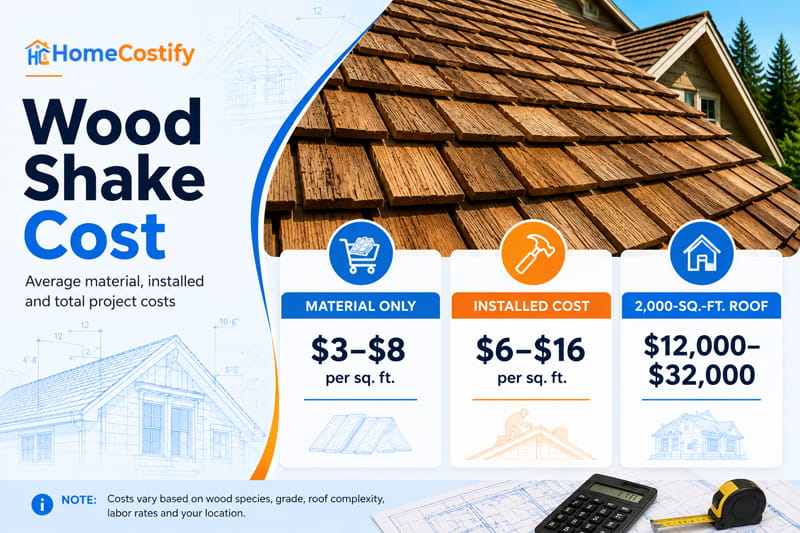
Price ranges for wood roofing often vary more than people expect. Two projects with similar square footage can receive dramatically different estimates depending on material selection, labor conditions, and roof design. That variation explains why published numbers frequently appear so broad.
| Cost Type | Average Cost |
|---|---|
| Material Only | $3–$8 per sq. ft. |
| Installed Cost | $6–$16 per sq. ft. |
| 2,000-Sq.-Ft. Roof | $12,000–$32,000 |
Material-only pricing typically falls between $3 and $8 per square foot. Installation increases total project costs considerably because labor demands are higher than those associated with many standard roofing products. A realistic wood shake cost for a completed roof commonly falls between $6 and $16 per square foot.
For a 2,000-square-foot roof, total project expenses often land somewhere between $12,000 and $32,000. Large homes, premium grades, and complex roof layouts can push estimates beyond that range.
Cost Disclaimer: Wood shake roofing costs vary widely from one project to another. Material selection, roof design, accessibility, contractor pricing, and geographic location can all influence the final estimate.
Factors Affecting Wood Shake Price
The same roof size does not always produce the same estimate. Material selection, roof design, labor conditions, and regional supply chains can create substantial price differences from one project to another.
- Wood Species: Western Red Cedar often occupies a higher pricing tier than pine and some alternative species. Regional availability can influence pricing just as much as the wood itself.
- Product Grade: Premium grades contain fewer knots, splits, and visual imperfections. Lower-grade products usually cost less upfront, though appearance differences become more noticeable after installation.
- Roof Complexity: Valleys, dormers, skylights, steep slopes, and intersecting roof sections require additional cutting and installation time. A simple gable roof typically generates lower labor costs than a roof with multiple architectural features.
- Labor Rates: Roofing labor costs vary significantly across the United States. Contractor demand, local wage levels, and market competition can all influence final project pricing.
- Project Location: Transportation and distribution costs often affect material pricing. Areas located farther from suppliers may experience higher costs than regions with easier access to cedar roofing products.
Wood Shake Lifespan and Durability
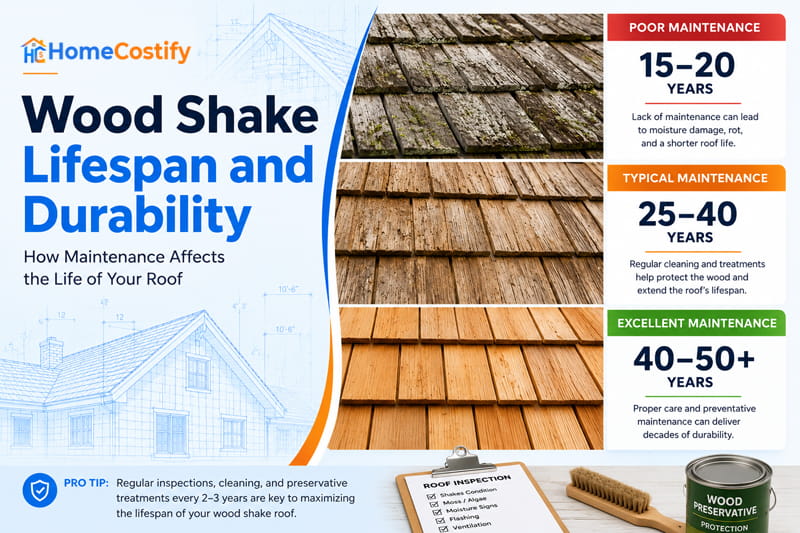
A roof made from natural wood does not age at the same pace in every location. Two houses built during the same year can show very different levels of wear after a few decades. Sun exposure, rainfall patterns, ventilation details, maintenance habits, and installation quality all influence how long the material remains serviceable.
According to the U.S. Forest Service, the long-term performance of wood shakes depends on more than the wood species itself. Installation quality, ventilation, finishing methods, and ongoing maintenance all play major roles in determining how well a wood shake roof performs over time.
| Condition | Average Lifespan |
|---|---|
| Poor Maintenance | 15–20 Years |
| Typical Maintenance | 25–40 Years |
| Excellent Maintenance | 40–50+ Years |
Published lifespan estimates often appear broad because real-world conditions vary so widely. A roof exposed to frequent moisture and neglected maintenance may reach the end of its service life much sooner than expected. Another roof constructed with quality materials and regularly inspected can remain in place for several decades.
The condition of the roof surface matters just as much as the age of the installation. Cracked pieces, trapped debris, moss growth, and repeated moisture exposure can gradually accelerate deterioration. Small issues often develop slowly. Years may pass before visible damage appears from the ground.
Climate also influences durability. Regions with long wet seasons generally place different demands on wood than areas where roofs spend much of the year dry. That difference explains why estimates for wood shakes life expectancy rarely settle on a single number.
Questions about cedar shakes life expectancy often focus on material quality alone, yet environmental conditions frequently shape the outcome. Similar observations appear when discussing cedar shake roof life expectancy, particularly in regions where humidity remains elevated for much of the year.
Best and Worst Climates for Wood Shakes
Weather conditions influence roofing materials long before visible signs of aging appear. Temperature swings, humidity levels, rainfall frequency, and sunlight exposure all leave their mark over time. Some climates create relatively favorable conditions for wood roofing, while others place the material under constant stress.
Best Climates
Dry regions often produce some of the longest-lasting wood roofs. Surfaces dry more quickly after rain, reducing the amount of time moisture remains trapped between courses. Lower humidity levels can also slow the development of moss and fungal growth.
Moderate climates tend to strike a balance between seasonal moisture and temperature variation. Roofs still experience normal weathering, though prolonged damp conditions occur less frequently than in wetter regions. Consistent drying periods make a noticeable difference over decades rather than months.
Mountain regions can also produce favorable results under the right conditions. Cooler temperatures and lower humidity levels often limit biological growth. Snow accumulation may occur during winter, though extended periods of surface moisture remain a larger concern than snow itself.
Challenging Climates
Humid regions create a very different environment. Moisture lingers longer after rainfall, particularly in shaded areas with limited sun exposure. Roof surfaces may remain damp for extended periods during certain seasons.
Coastal environments introduce additional challenges. Salt exposure, persistent humidity, and frequent storms can accelerate weathering. Wind-driven rain often reaches areas of the roof that experience less exposure in inland regions.
Locations with heavy moss growth can also shorten service life. Dense tree cover and persistent shade create ideal conditions for organic buildup. Over time, accumulated moisture may contribute to cracking, decay, and surface deterioration.
Based on research referenced by the National Park Service, climate conditions can significantly affect the service life of wood shakes. In high-humidity environments, wood shake roofs may deteriorate much faster than those installed in drier regions with lower moisture exposure.
Climate-related differences become particularly noticeable when evaluating cedar shake roof lifespan data across different regions. Similar patterns appear in studies examining wood shake roof life expectancy, where local weather conditions often produce dramatically different outcomes.
Installation Requirements for Wood Shakes
Material quality receives a great deal of attention, but installation details often determine how well a roof performs years later. Slope, ventilation, spacing, and moisture management work together as part of the overall roof assembly.
A high-grade product installed incorrectly may deteriorate sooner than a lower-grade product installed with greater attention to detail.
Minimum Roof Slope Requirements
Steep-slope applications remain the most common setting for wood roofing products. A minimum slope of 4:12 is frequently recommended because it allows water to drain more effectively from the roof surface. Lower slopes slow water movement and increase the amount of time moisture remains in contact with the material.
Proper Ventilation Requirements
Air movement beneath the roof assembly influences drying conditions throughout the year. Attics that retain heat and moisture for long periods often experience different aging patterns than well-ventilated spaces. Moisture accumulation may affect roof sheathing, roof framing components, and the roofing material itself.
Required Spacing Between Wood Shakes
Wood expands and contracts as moisture levels change. Small dimensional changes occur naturally throughout the seasons. That movement explains why wood shakes require a minimum separation of several millimeters between adjacent pieces during installation.
Spacing recommendations vary by manufacturer and product type, though the goal remains the same. Pieces need room to respond to changing moisture conditions without crowding one another.
Underlayment and Interlayment
Moisture protection extends beyond the visible roofing surface. Underlayment creates an additional layer between the roofing material and the roof deck, while interlayment helps manage water that may move beneath exposed courses during severe weather events.
These components remain an important part of modern wood shakes construction practices. Water intrusion rarely begins with a dramatic failure. More often, small amounts of moisture find their way into vulnerable areas over many years. Additional protective layers create another line of defense against that process.
Common Wood Shake Defects and Problems
Natural wood changes over time. Sun exposure, moisture, seasonal temperature swings, and biological growth all leave visible marks on the surface. Some changes are purely cosmetic, while others may indicate deeper deterioration within the roofing system. A roof does not usually fail all at once. Small issues often appear first, then gradually spread across larger sections if left unaddressed.
Common examples of wood shakes defect issues include:
- Cracking: Surface cracks may develop after years of expansion and contraction caused by changing moisture levels.
- Splitting: Larger splits can form when wood fibers separate along the grain. This often appears near fasteners or along exposed edges.
- Cupping: Edges may curl upward or downward as different sections of the wood dry at different rates.
- Rot: Prolonged moisture exposure can eventually break down wood fibers, particularly in shaded areas where drying occurs slowly.
- Moss Growth: Moss retains moisture against the roof surface. Dense growth can accelerate weathering and create conditions that favor decay.
Not every visible imperfection signals immediate failure. Minor weathering is common on older roofs. The location, severity, and extent of the damage usually reveal far more than the defect itself.
What Causes Wood Shake Cracks?
A wood shake crack often develops after years of seasonal movement. Wood absorbs moisture during wet periods and releases it during dry weather. That cycle repeats thousands of times over the life of a roof. Small dimensional changes occur each time.
Direct sunlight can accelerate the process. South-facing roof slopes frequently receive more intense ultraviolet exposure than shaded sections. Surface fibers gradually become more brittle as weathering progresses.
Material age also contributes to cracking. Older pieces have experienced decades of environmental stress. Tiny fractures may begin near the surface before gradually extending deeper into the material. A few isolated cracks rarely indicate a serious problem, though widespread damage deserves closer evaluation.
Signs of Moisture Damage
Water-related deterioration often develops slowly. Staining may appear first, followed by darkened wood, soft spots, or visible fungal growth. The progression can be subtle during the early stages.
Areas beneath overhanging trees frequently experience higher moisture exposure. Limited sunlight slows drying after rain, while leaves and organic debris can trap additional moisture against the roof surface. Valleys and low-drainage areas may show similar patterns.
Severely cracked wood shakes sometimes appear alongside moisture-related problems because weakened wood becomes more vulnerable to environmental stress. Discoloration, surface softness, and recurring moss growth often point toward a moisture issue rather than normal weathering.
When Defects Become Serious
Some defects remain largely cosmetic for years. Others create pathways for water intrusion or weaken the roof covering itself. The distinction matters.
Localized cracking on a few individual pieces rarely requires immediate replacement. Large sections showing extensive splitting, rot, widespread moss growth, or structural deterioration present a different situation. Damage affecting multiple roof areas usually warrants a closer inspection.
Age should also be considered alongside visible condition. A roof approaching the upper end of its expected service life may contain defects that appear minor on the surface yet indicate broader deterioration underneath.
Wood Shake Maintenance Requirements
Maintenance routines influence roof condition just as much as material quality. Debris accumulation, prolonged moisture exposure, and neglected surface growth can shorten service life long before the wood itself reaches its natural limit.
A basic wood shake maintenance schedule usually begins with visual inspections. Spring and fall are common times to check roof surfaces for debris buildup, damaged pieces, or signs of biological growth. Severe storms may justify additional inspections.
Leaves, pine needles, and small branches should be removed before they trap moisture against the roof surface. Organic debris tends to collect in valleys, behind chimneys, and beneath overhanging trees. Those areas often remain damp longer than exposed sections.
Moisture management remains a recurring theme throughout the life of a wood roof. Overhanging branches can limit sunlight and restrict airflow. Trimming vegetation may improve drying conditions across vulnerable sections of the roof.
Many maintenance programs include preservative or fungicide treatments every two to three years. Product recommendations vary by manufacturer and local climate conditions. Treatments are commonly used to address fungal growth, mold development, and weather-related deterioration.
Routine cedar shake maintenance often follows the same principles. Clean surfaces, periodic inspections, controlled vegetation, and moisture management tend to appear in nearly every long-term maintenance strategy.
Wood Shakes in Relation to Other Roofing Options
Different roofing materials bring different strengths. Cost, appearance, maintenance demands, and expected service life often influence the final decision.
- Asphalt Shingles: Lower upfront cost and simpler installation, though wood shakes create deeper texture and a more natural appearance.
- Architectural Shingles: Thicker than basic asphalt products but still more uniform in appearance than natural wood.
- Luxury Shingles: Designed to resemble premium materials while maintaining a manufactured profile.
- Metal Roofing: Often lasts longer and requires less upkeep, though natural wood creates a distinctly different visual character.
- Clay Tile Roofing: Known for longevity but considerably heavier than wood products.
- Concrete Tile Roofing: Strong and long-lasting, with a more rigid appearance.
- Slate Roofing: Extremely durable, though higher material weight and installation costs are common.
- Synthetic Slate Roofing: Replicates slate while reducing weight, but lacks natural wood grain.
- Wood Shingles: Smoother, thinner, and more uniform than shakes.
- Composite Roofing: Lower maintenance requirements but a different appearance.
- Solar Shingles: Generate electricity while serving as a roof covering.
Conclusion
Natural texture remains one of the defining characteristics of wood shakes. Deep shadow lines, visible grain patterns, and material variation create an appearance that differs significantly from most manufactured roofing products.
The material is often best suited for homes where architectural character plays a major role in the overall design. Historic properties, cottages, cabins, Craftsman homes, and custom residences frequently incorporate a wood shake roof or related exterior details.
Cost, maintenance requirements, and climate conditions deserve careful consideration before selecting this material. Regular inspections and moisture management can influence long-term durability just as much as the wood itself.
Roofing applications remain the most common use, though wood shake siding continues to appear on many homes seeking additional texture and visual depth.
FAQs About Wood Shakes
Are wood shake shingles expensive?
Yes. Material and installation costs generally exceed those of standard asphalt shingles, placing wood roofing in a higher pricing category.
Is shake siding more expensive?
In many cases, yes. Installation tends to require more labor than several common siding materials.
How much do wood shake shingles weigh?
Weight varies by species, thickness, and moisture content. Most products weigh more than asphalt shingles but less than clay tile or natural slate.
Is wood shake and cedar shingle the same thing?
No. Shakes typically feature a rougher texture and greater thickness, while shingles have a smoother and more uniform appearance.
What maintenance do wood shingles require?
Regular cleaning, debris removal, moisture control, inspections, and periodic preservative treatments are commonly recommended.