A house may contain plastic, copper, steel, and other piping materials in separate parts of its plumbing. The types of plumbing pipes found behind walls, beneath fixtures, or near a service connection correspond to the plumbing task at that location. Water lines, drainage paths, and exterior service connections use pipe products suited to their respective work.
Near a water heater, exposed piping connects with the equipment and nearby water lines. Beneath a bathroom sink, visible pipework surrounds the fixture’s supply and drain connections. Exterior piping marks the service area, where underground lines enter or leave the building. A printed designation along the pipe can show its material when color alone leaves the identification uncertain.
Types of Plumbing Pipes and Their Uses in U.S. Homes

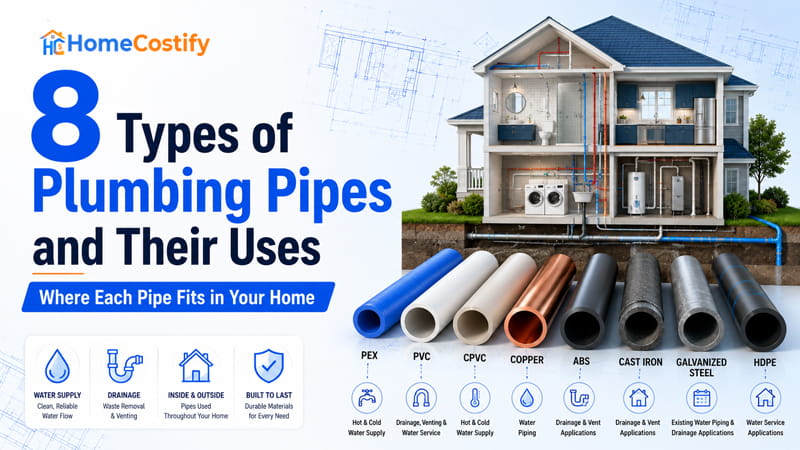
Water distribution, drainage, plumbing venting, and water service account for the main piping uses found around a house. A pipe carrying drinking water sits in a different part of the plumbing from a drain or vent, and service piping reaches the connection outside the building. The eight pipe types below are grouped by these uses.
| Pipe Type | Main Residential Application | Typical Home Context |
|---|---|---|
| PEX | Hot- and cold-water distribution; water service | Interior distribution and service lines |
| PVC | Drainage, venting, and selected water-service applications | Drainage and service contexts |
| CPVC | Hot- and cold-water distribution | Interior water lines |
| Copper | Water piping | Interior plumbing |
| ABS | Drainage and vent applications | Building drainage |
| Cast Iron | Drainage and vent applications | Existing or older plumbing |
| Galvanized Steel | Existing water piping and specified drainage applications | Older residential plumbing |
| HDPE | Water service applications | Underground/service areas |
PEX Pipes
Crosslinked polyethylene, known as PEX, is widely used for hot- and cold-water distribution. Among the plumbing pipe types found in U.S. homes, PEX serves interior water distribution, with runs leading toward faucets, showers, fixtures, and appliances.
The Plastics Pipe Institute’s 2026 guide lists PEX for hot- and cold-water distribution, water service, and building supply lines. At the service connection, PEX can extend toward the point where potable water enters the building. From there, the piping continues into the interior distribution network.
PVC Pipes
PVC, short for polyvinyl chloride, appears in residential drain and vent piping. A bathroom sink drain, a branch drain, or a larger waste line can contain PVC sections. PVC is one of the types of plumbing pipes used for selected water-service work as well.
Drain and vent work places PVC around wastewater routes and vent runs. Water-service piping brings the material into the supply side of a house, including sections near the service connection. The intended use changes with the piping route, not the material name itself.
CPVC Pipes
CPVC stands for chlorinated polyvinyl chloride. Hot- and cold-water distribution is its principal use in homes, with piping running toward faucets, showers, and other fixtures. It belongs on the water-distribution side of the plumbing.
Inside a bathroom or kitchen wall, CPVC can run between the main water lines and fixture connections. A type of plumbing pipe used for this work carries heated or unheated water through the interior. The surrounding fittings and connected fixtures show the setting without requiring a comparison with PVC.
Copper Pipes
Copper is a metal pipe material commonly found in household water piping. Exposed sections turn up in kitchens, bathrooms, utility rooms, and mechanical spaces. Older houses can still show copper around fixtures, equipment, and concealed runs brought to light during later work. Within plumbing pipe types, copper sits primarily on the water-piping side of the house.
Existing plumbing can contain copper alongside plastic or other pipe materials. A remodeled kitchen might retain an older copper run beside newer piping serving the same area. Utility rooms and unfinished spaces can show sections from separate periods of plumbing work. The visible mix reflects changes made to the house over time, with copper remaining in portions of the earlier water piping
ABS Pipes
Black ABS plastic is used in building drainage and vent piping. ABS stands for acrylonitrile butadiene styrene. In a DWV system, the material runs through waste routes and vent lines serving household fixtures.
Above-ground branch drains can contain ABS beneath fixtures or along the waste path. The International Residential Code lists ABS plastic pipe among materials permitted for specified above-ground and underground building drainage and vent applications. The types of pipes used in plumbing include ABS in these drainage and vent locations, including sections below grade where permitted.
Cast Iron Pipes
Larger drainage sections are where cast iron is most commonly encountered in existing houses. The material runs through building drains and substantial waste routes, including portions beneath fixtures and lower areas of a structure.
A cast iron section connects several fixture branches farther along a waste route. Plastic piping can meet the older material at later junctions, leaving the larger drain in cast iron. Types of plumbing piping vary within existing houses, with cast iron occupying larger drainage sections in some older layouts.
Galvanized Steel Pipes
Galvanized steel points toward older residential plumbing. The material consists of steel coated with zinc and appears in water piping found in older houses. Exposed sections turn up in basements, utility spaces, and areas behind fixtures where earlier pipework remains.
Galvanized steel can sit beside newer pipe materials after later plumbing work. An existing house might retain galvanized sections in one area and newer piping elsewhere. These types of plumbing pipes can reflect work completed during different periods of the house’s plumbing history.
HDPE Pipes
HDPE stands for high-density polyethylene and serves residential water-service lines. The pipe runs between the property-side connection and the building, placing it outside the interior fixture network. Plumbing pipe types used for this purpose extend beyond the rooms where faucets and fixtures are located.
Buried sections sit beneath the ground along the property side before reaching the house. HDPE occupies these underground routes and the exterior connection serving the building. Sinks, showers, and other fixtures sit farther inside the house, where interior water piping takes over.
How Plumbing Pipe Types Are Used Around a Home

Pipe locations change as the route moves through a house and toward the ground outside. Interior sections cluster around fixtures and equipment, exterior routes reach beyond the finished rooms, and drainage paths occupy spaces tied to waste outlets. Location can narrow the possibilities when an existing section needs identification.
Inside the Home
Kitchen and bathroom fixtures bring pipework into compact areas around sinks, showers, toilets, and appliances. Exposed sections sit beside water heaters and utility equipment, while concealed runs pass behind finished surfaces. Mechanical rooms can leave longer stretches visible than finished living spaces.
An exposed section also carries clues through its surroundings. A pipe beside a water heater sits in a different setting from a short run serving a bathroom fixture. The types of pipes used in plumbing become easier to narrow when the nearby equipment, fixture, and route are considered together.
Outside and Below the Home
The space beyond the exterior wall marks another area where pipework travels. Plumbing pipe types used here include routes around exterior connection points, buried sections, and areas beneath the house. Crawl spaces can expose portions of these routes without bringing them into finished rooms.
Ground-level sections follow a path toward the building from outside. Buried portions disappear beneath soil, leaving only selected access points visible. A crawl space can expose another stretch beneath the structure, giving the location itself a useful indication of where that route belongs.
Drainage Areas
Drainage pipework follows spaces tied to fixture outlets and larger waste routes. A short section beneath a sink differs spatially from the larger routes farther along the house.
- Under sinks and fixture drains
- Basement drainage areas
- Larger vertical stacks
- Building drain areas
A short sink drain and a large building drain occupy distinct points along the same waste route.
Why a Home Can Have More Than One Type of Plumbing Pipe

A house can contain piping from separate construction phases and serve several plumbing jobs. Original work might coexist with later remodeling or an addition, leaving different pipe types in separate parts of the property.
Different Plumbing Jobs Call for Different Pipe Types
A home has supply routes, waste routes, and exterior connections, each serving a distinct plumbing task. Water-carrying lines serve fixtures and appliances, whereas drainage routes carry used water away from those points. Exterior service piping introduces another setting beyond the rooms inside the house. A type of plumbing pipe used for one task does not automatically serve every route on the property.
The material name alone cannot settle the purpose of an exposed section. Its placement, nearby equipment, and the route it joins add useful context.
Older and Newer Plumbing Can Exist Together
A house built in stages can carry plumbing from several periods. Original construction establishes the first set of lines, then a remodeled room introduces later work without altering untouched areas. A home addition brings another construction phase into the picture.
Visible pipework can reveal this history in ordinary places. A remodeled bathroom may contain newer piping beside older work elsewhere in the house.
- A remodeled bathroom may contain piping installed later than the original house.
- An addition may use a pipe type absent from the original structure.
- Exposed basement piping can reveal work completed during separate construction periods.
The types of plumbing piping present in an existing house can reflect both its original construction and later changes.
What to Check When Identifying a Plumbing Pipe
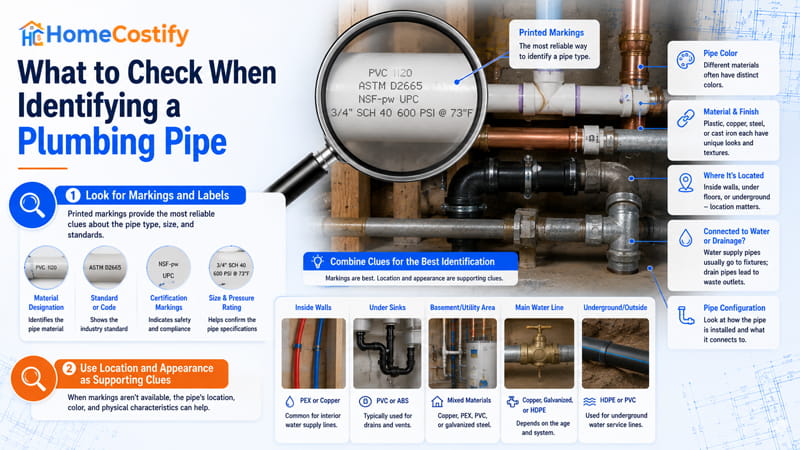
An exposed pipe offers several clues without turning the task into repair work. Printed markings give the strongest starting point, followed by visible traits, location, and the home’s approximate age.
Look for Markings and Labels
Printed lettering along the surface can reveal information that color or shape cannot settle by itself. Manufacturer names, material designations, product markings, and standard references often run lengthwise along the pipe. For types of plumbing pipes, these markings can narrow the material family before other observations enter the picture.
A label might identify the manufacturer, product line, or material designation. Some markings include additional product information, giving the homeowner something concrete to record before relying on appearance. Detailed standard decoding is unnecessary at this stage.
Use Location and Appearance as Supporting Clues
Surface appearance offers useful context, but it should not carry the identification by itself. Color, flexibility, nearby fittings, and the surrounding area add clues that printed information might not cover.
- Printed pipe markings
- Visible color
- Location in the plumbing
- Approximate age of the home
- Whether the line appears to serve water or drainage
Taken together, these observations give plumbing pipe types a clearer context. A pipe’s location beside a fixture, within a utility area, or along a drain route adds meaning to what is visible on its surface.
Plumbing Pipe Terms Homeowners May Encounter
A pipe type refers to a particular product or category. Pipe material names the substance used to make that product, such as copper, plastic, or steel. The application gives the product another layer of context because a material name alone does not describe every use.
Other questions sit outside the basic type classification. Types of plumbing piping can lead to questions about
- pipe sizes
- pipe lifespan
- pipe problems
- pipe installation
- pipe repair
- pipe replacement
- pipe maintenance
- pipe cost.
Those subjects concern separate aspects of a plumbing project and do not need to be resolved when determining the pipe type.
“Best pipe” is another question altogether. No single type of plumbing pipe fits every residential use. The appropriate product depends on the intended application, code acceptance, and product specification. A material name, a product category, and a particular use are not interchangeable terms.
Conclusion
A visible section becomes easier to read when the nearby plumbing components are considered with it. A fitting, fixture, or piece of equipment can show what the line connects to and how that section fits into the house.
Several areas can show different piping within the same property. A bathroom remodel might leave older work nearby, while an addition brings lines installed during a later phase of construction. The house itself can hold traces of separate projects.
That is the practical takeaway. Start with what is visible, then consider the surrounding area and the work associated with that spot. Construction history can fill in another part of the picture. Homeowners do not need to memorize every specification; they need a clear sense of what is present, where it sits, and how that section fits into the house.
FAQs About Plumbing Pipe Types
What are the different sizes of plumbing pipes?
Common residential sizes include ½-inch, ¾-inch, 1-inch, and larger dimensions. The size used varies with the pipe type and its application.
What is the difference between PVC and CPVC pipe?
Both are plastic pipe types, but CPVC is intended for applications involving higher water temperatures than standard PVC.
What type of pipe is used for main water lines?
Several plumbing pipe types can be used for main water lines and water-service routes. The range includes types of water supply pipes suited to different residential locations and applications.
What pipe is used for water supply?
Residential water supply system can involve several products. Water supply pipes vary according to the part of the property involved and the application associated with that route.
Which PVC pipe is strongest?
“Strongest” cannot be judged from the PVC name alone. Schedule, dimensions, and intended application all affect the specification.