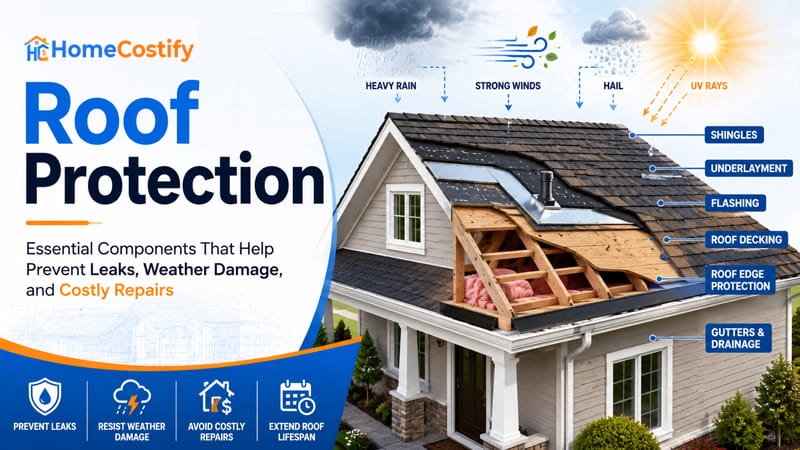
Effective roof protection helps reduce the risk of leaks, storm damage, moisture intrusion, and structural wear. It also plays a major role in preserving indoor comfort and protecting valuable building components. A minor issue around flashing, drainage, or underlayment can eventually lead to damaged insulation, stained ceilings, mold growth, and costly repairs.
Many homeowners focus on visible roofing materials while overlooking the layers and components working beneath the surface. A routine roof inspection can reveal early warning signs before damage spreads. Addressing concerns promptly may prevent extensive roof repair work and delay the need for a full roof replacement.
Despite common assumptions, roof protection is not limited to shingles or tiles. A reliable roofing assembly includes multiple elements designed to manage water, resist weather exposure, and support the long-term durability of the structure. Each component contributes to the overall performance of the system.
What Is Roof Protection?
Roof protection refers to the collection of materials, layers, and structural components that help safeguard a home from environmental exposure and water-related damage. Rather than relying on a single product, modern roofing systems use several integrated elements that work together to keep moisture out while maintaining structural integrity.
A complete roof protection system is designed to defend against rain, snow, hail, wind, UV exposure, and fluctuating temperatures. These threats may affect different parts of a roof in different ways. Heavy rainfall can exploit weak drainage areas, while prolonged sunlight gradually degrades exposed surfaces. Wind-driven storms often test the strength of exterior materials and vulnerable roof edges.
According to the National Roofing Contractors Association (NRCA), roof protection is achieved through a complete roofing system rather than a single product. Components such as the roof deck, underlayment, flashing, drainage elements, and exterior roofing materials work together to defend a home against weather exposure and moisture intrusion.
That perspective highlights an important point for homeowners. Roof performance depends on how individual components function as a whole. The roof deck provides structural support.
Underlayment acts as a secondary moisture barrier. Flashing protects vulnerable transitions around penetrations and intersections. Proper roof drainage directs water away from the structure before it has an opportunity to accumulate.
When evaluating a roof, it helps to think beyond surface coverings. Every layer, connection, and protective detail contributes to long-term performance. From critical roof parts hidden beneath the exterior to the roofing materials exposed to the weather, each component has a specific role in preserving the condition of the home.
Why Roof Protection Matters for Every Home
A roofing system does more than keep rain out. Its condition affects everything from structural durability and indoor air quality to maintenance costs over the life of the home.
Prevents Water Intrusion
One of the most important benefits of roof protection is reducing the likelihood of water entering the building envelope. Even a small opening can allow moisture to reach insulation, framing, and interior finishes.
Over time, persistent exposure may lead to moisture damage, mold growth, wood rot, and recurring leaks. Properly installed underlayment, flashing, and drainage components help control water before it reaches vulnerable areas.
Helps Avoid Structural Deterioration
Water damage is not always visible from the ground. In many cases, deterioration begins beneath the roofing surface and progresses gradually. Based on building-envelope engineering guidance, a roof serves as a home’s primary defense against water intrusion, structural deterioration, and environmental exposure.
Even minor failures in flashing, drainage, or moisture-control layers can compromise the performance of the entire roof assembly.
When moisture repeatedly reaches structural components, problems may develop within the roof framing, roof trusses, and roof decking. Left unaddressed, these issues can weaken the overall structure and increase repair costs.
Reduces Long-Term Repair Costs
Strong roof protection supports preventive maintenance and helps homeowners avoid major expenses. Small deficiencies are generally less costly to address than widespread deterioration. Regular inspections, prompt repairs, and attention to areas such as the roof edge and roof drainage system can extend service life and reduce the likelihood of emergency repairs.
Investing in maintenance today often lowers the chances of extensive roof repair projects tomorrow. It may also postpone a premature roof replacement, helping homeowners get the maximum value from their roofing system.
Essential Roof Protection Components
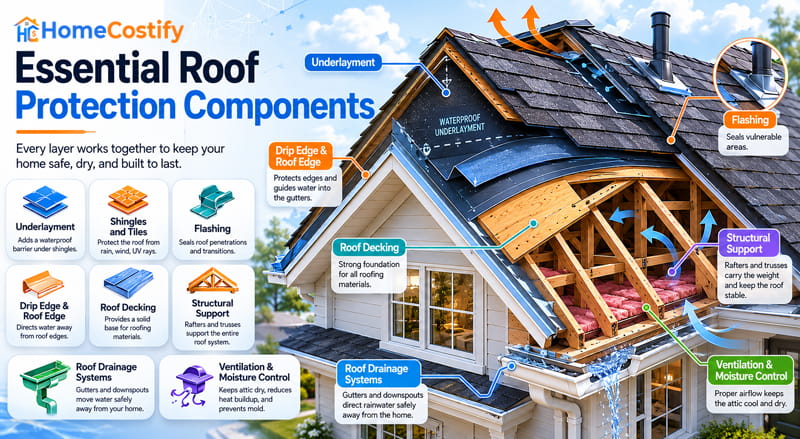
Most homeowners notice shingles first, but they represent only one part of a much larger system. Water management layers, flashing, structural supports, drainage components, and ventilation all influence how well a roof performs over time.
Damage to a single component can increase the risk of leaks, trapped moisture, and premature wear elsewhere. A closer look at these elements shows why long-lasting roof performance depends on more than just the surface material.
Underlayment
Underlayment forms one of the most important hidden layers within a roofing system. Installed between the roof deck and the finished surface material, it acts as a secondary barrier against water infiltration. Modern systems often use synthetic underlayment, which offers improved durability, tear resistance, and weather tolerance compared to traditional products.
Many homes still contain roofing felt, a long-standing material that provides basic protection beneath shingles and other coverings. In regions prone to severe weather, a waterproof underlayment may be installed in vulnerable areas to provide additional defense against wind-driven rain and ice-related moisture issues.
This layer functions as a critical moisture barrier, helping keep water away from structural components if exterior materials become damaged. A properly installed roof underlayment adds another level of security and supports overall roof protection performance throughout the year.
Shingles and Tiles
Exterior coverings provide the first visible layer of roof protection and absorb much of the punishment delivered by changing weather conditions. The type of material selected influences durability, maintenance requirements, appearance, and expected lifespan.
Asphalt shingles remain one of the most common residential choices in the United States because they balance affordability with dependable weather resistance. Many homeowners upgrade to architectural shingles, which are thicker and generally offer improved durability and wind performance.
Other options include clay tiles, known for their distinctive appearance and long service life, and concrete tiles, which provide substantial strength and resistance to harsh conditions. Premium systems may use slate roofing, valued for exceptional longevity and natural beauty.
Different roofing materials perform differently under specific climate conditions. Some excel in hot environments, while others are better suited for areas that experience heavy snow, hail, or strong winds. Choosing the right exterior covering strengthens overall weather resistance and contributes significantly to long-term roof protection.
Flashing
Even high-quality roofing materials can struggle to prevent leaks around transitions and penetrations without properly installed flashing. These metal components seal areas where water is most likely to enter, including roof valleys, chimneys, skylights, vents, and wall intersections.
Step flashing is commonly installed where a sloped roof meets a vertical wall. Individual pieces overlap in sequence to direct water away from vulnerable joints. Valley flashing protects roof valleys, where two roof sections meet and large volumes of runoff naturally concentrate during storms.
Without effective flashing, water can bypass surface materials and reach underlying components. This often leads to hidden damage that may remain undetected until staining or structural deterioration becomes visible.
Because many roofing failures originate near penetrations and intersections, quality roof flashing plays a major role in leak prevention. Proper installation and periodic inspection help maintain dependable roof protection while reducing the risk of moisture-related damage.
Drip Edge and Roof Edge Protection
The perimeter of a roof experiences constant exposure to wind and runoff. A properly installed drip edge helps direct water away from the fascia and roof deck, reducing the likelihood of moisture infiltration along vulnerable edges.
The roof edge is particularly susceptible to weather-related wear because it marks the transition between the roofing system and the exterior walls below. Water that repeatedly reaches exposed wood components can contribute to deterioration over time.
Edge components also support fascia protection by helping control runoff and minimizing direct water contact. While often overlooked, these materials perform an important role in preserving structural integrity and supporting reliable roof protection across the entire roofing assembly.
Roof Decking and Structural Support
Beneath the visible roofing layers lies the framework that supports the entire system. Roof decking provides a stable surface for underlayment and exterior coverings while distributing loads across the structure.
The strength of a roof depends heavily on the condition of the underlying roof framing, which includes essential structural members responsible for carrying weight and resisting environmental forces. Rafters and roof trusses help transfer loads to supporting walls and foundations, ensuring the roof remains stable during normal use and severe weather events.
Moisture intrusion can gradually weaken these components, particularly if leaks remain unresolved for extended periods. Protecting the structural framework from water exposure helps preserve stability and extend the service life of the roofing system.
Because these components support every layer above them, maintaining sound roof framing is an essential part of long-term roof protection and overall building durability.
Roof Drainage Systems
Water management is one of the most important functions of any roofing assembly. A properly designed roof drainage system helps move water away from the roof surface before it can accumulate and cause damage.
Gutters collect runoff along roof edges and direct it toward designated exit points. From there, downspouts carry water safely away from the home’s foundation and surrounding structure. When drainage pathways become clogged with leaves, debris, or sediment, water can back up and create conditions that increase the risk of leaks and material deterioration.
Effective rainwater management reduces stress on roofing components and helps prevent standing water from affecting vulnerable areas. Regular maintenance of the roof drainage network and the broader gutter system supports consistent performance during heavy rainfall and seasonal storms.
For many homes, reliable drainage serves as a critical component of overall roof protection and helps preserve both the roof and the structure below.
Ventilation and Moisture Control
Airflow plays a significant role in maintaining a healthy roofing system. Proper roof ventilation helps regulate temperature levels and reduce excess moisture that can become trapped beneath roofing materials.
Balanced attic ventilation allows fresh air to circulate while removing heat and humidity. During warmer months, this can help reduce heat buildup beneath the roof. In colder conditions, adequate airflow may reduce condensation that can contribute to moisture-related problems.
Effective moisture management protects insulation, framing, and decking from prolonged exposure to damp conditions. It may also reduce the likelihood of mold growth and premature material deterioration.
Although ventilation receives less attention than shingles or flashing, it remains an essential part of long-term roof protection. Consistent airflow supports the performance of other roofing components and contributes to a longer-lasting, more reliable roofing system.
| Component | Primary Function | Protection Benefit |
|---|---|---|
| Underlayment | Secondary water barrier | Leak prevention |
| Shingles/Tiles | Exterior covering | Weather resistance |
| Flashing | Seal vulnerable areas | Water intrusion prevention |
| Drip Edge | Direct runoff | Edge protection |
| Roof Decking | Structural support | System stability |
| Gutters | Water management | Drainage protection |
| Ventilation | Moisture control | Longer roof lifespan |
Common Threats to Roof Protection
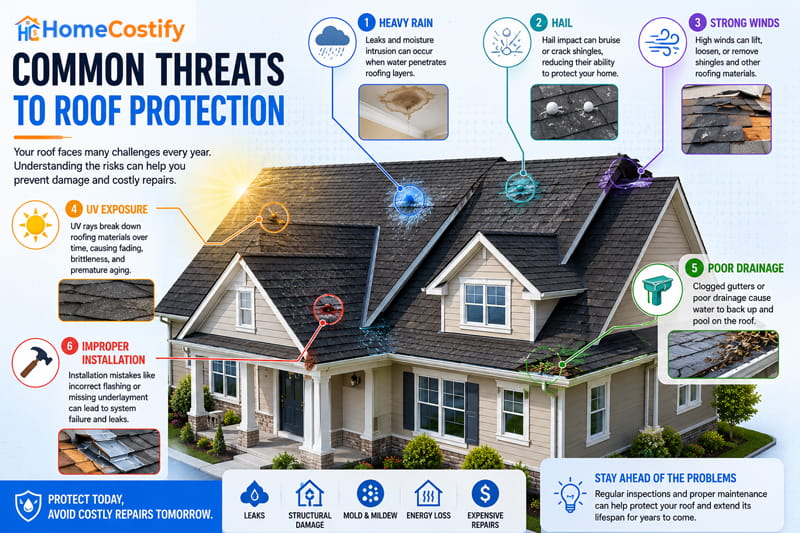
Roofs rarely fail without a reason. Most problems can be traced back to a handful of recurring issues, including severe weather, poor drainage, prolonged moisture exposure, and installation mistakes.
Some cause immediate damage, while others wear down roofing materials so gradually that homeowners may not notice a problem until a leak appears indoors.
Severe Weather
Extreme weather remains one of the biggest challenges to roof protection. Strong winds can lift shingles, loosen flashing, and expose underlying materials to moisture. In severe cases, entire sections of roofing may be torn away, leaving the structure vulnerable to immediate water intrusion.
Wind damage often begins at exposed edges, ridges, and corners where pressure is strongest. Even if damage appears minor from the ground, loosened materials can create entry points for rain during future storms.
Hail damage presents another concern. Impact from hailstones may crack shingles, dislodge protective granules, or weaken roofing materials without creating obvious visible holes. Over time, those damaged areas become more susceptible to leaks and premature deterioration.
Heavy storms frequently combine wind, hail, and intense rainfall. This combination increases the risk of storm damage, particularly on older roofs or systems with existing weaknesses. Regular maintenance helps improve roof protection, but no roofing system is completely immune to severe weather events.
Water and Moisture Problems
Water is often responsible for the most expensive roofing issues because damage can remain hidden for long periods. Once moisture penetrates beneath the surface, it may affect insulation, decking, framing, and interior finishes before obvious symptoms appear.
One common issue involves standing water. When water remains on a roof longer than intended, it increases stress on materials and raises the likelihood of deterioration. Areas with low slopes or poor runoff are particularly vulnerable.
Many problems stem from roof drainage deficiencies. Clogged gutters, blocked downspouts, and improperly designed drainage pathways can prevent water from leaving the roof efficiently. As water accumulates, the chances of leaks increase significantly.
Persistent moisture exposure may also weaken seals around penetrations and flashing connections. Because of these risks, maintaining effective drainage remains an essential part of long-term roof protection and overall system performance.
UV Exposure
Sunlight may seem less threatening than storms, yet years of UV exposure can gradually affect roofing materials. Continuous exposure to ultraviolet radiation accelerates material degradation, especially in regions with intense sunlight and high temperatures.
As roofing surfaces age, they often lose flexibility and become more vulnerable to cracking. Aging shingles may curl, shrink, or shed protective granules, reducing their ability to resist water and weather exposure.
The effects usually occur slowly, making them easy to overlook until visible wear becomes widespread. While quality materials can withstand years of sun exposure, routine inspections remain important for preserving roof protection and identifying age-related deterioration before major problems develop.
Poor Installation
Even premium materials can underperform when installation quality falls short. Many roofing failures trace back to errors made during construction or replacement projects rather than defects in the materials themselves.
Flashing failures are among the most common installation-related issues. Incorrect placement or improper sealing can allow water to enter around roof penetrations and intersections.
Problems may also arise from improper underlayment installation. Wrinkles, gaps, inadequate overlap, or incorrect fastening methods can compromise the effectiveness of this critical moisture barrier.
In some cases, simple contractor mistakes create long-term vulnerabilities that remain hidden until severe weather exposes them. Choosing experienced professionals and verifying installation quality helps support dependable roof protection for years to come.
| Threat | Possible Damage |
|---|---|
| Heavy Rain | Leaks and moisture intrusion |
| Hail | Shingle damage |
| Strong Winds | Missing roofing materials |
| UV Exposure | Premature aging |
| Poor Drainage | Water accumulation |
| Improper Installation | System failure |
Signs Your Roof Protection System Needs Attention
Roofing problems rarely appear without warning. Small indicators often develop before major failures occur, providing homeowners with an opportunity to address concerns early. Recognizing these signs can help preserve roof protection and reduce the likelihood of extensive repairs.
Visible Roof Damage
A visual inspection from the ground may reveal issues that deserve closer evaluation. Cracked shingles can expose underlying layers to moisture, while missing shingles leave portions of the roof vulnerable to weather exposure. Displaced flashing, sagging areas, and loose materials should also be investigated promptly.
Water Stains Indoors
Not all roofing issues are visible outside. Brown discoloration on ceilings or walls often indicates moisture intrusion from above. Persistent ceiling stains may suggest an active leak, even if water is not currently dripping indoors.
Another warning sign is excess attic moisture. Damp insulation, condensation, or musty odors can indicate ventilation or water-management problems affecting the roofing assembly.
Gutter and Drainage Problems
Drainage issues frequently reveal themselves before interior damage occurs. Overflowing gutters during rainfall may signal clogs or capacity problems, while blocked drainage pathways can cause water to back up onto the roof surface.
Scheduling a professional roof inspection when these symptoms appear can help identify the source of the problem. Early intervention often limits damage and reduces the need for extensive roof repair work later.
Best Practices to Maintain Roof Protection
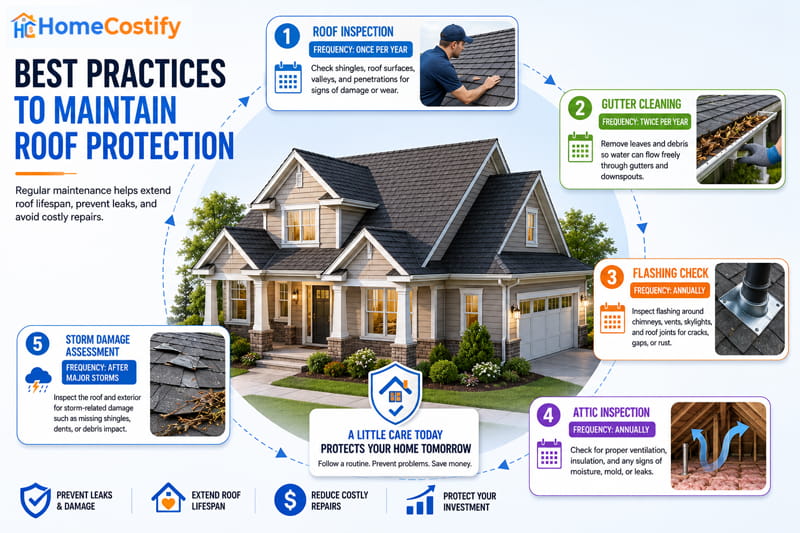
Routine care remains one of the most effective ways to support long-term roof protection. Small maintenance tasks performed consistently can reduce wear, improve performance, and help homeowners avoid unexpected repair costs.
Schedule Regular Inspections
Professional evaluations can identify developing issues before they become significant problems. Many experts recommend annual inspections to assess material condition, flashing integrity, and drainage performance.
Additional storm inspections are often worthwhile after hail events, high winds, or severe weather outbreaks.
Keep Gutters Clean
Leaves, twigs, and debris can interfere with water flow. Keeping gutters clean helps maintain efficient roof drainage performance and reduces the likelihood of standing water near vulnerable areas.
Address Minor Issues Quickly
Small defects tend to become larger and more expensive when ignored. Prompt flashing repair and proactive leak prevention measures can help limit water intrusion and preserve roofing materials.
Maintain Proper Ventilation
Balanced airflow contributes to healthier roof conditions throughout the year. Adequate attic airflow supports temperature regulation and encourages moisture reduction, helping protect decking, insulation, and framing components.
| Task | Recommended Frequency |
|---|---|
| Roof Inspection | Once per year |
| Gutter Cleaning | Twice per year |
| Flashing Check | Annually |
| Attic Inspection | Annually |
| Storm Damage Assessment | After major storms |
How Roof Protection Helps Extend Roof Lifespan
The lifespan of a roof depends on more than the quality of its materials. Maintenance habits, weather exposure, drainage performance, and installation quality all influence how long a roofing system remains in good condition.
Consistent roof protection helps reduce unnecessary wear by limiting moisture intrusion, controlling runoff, and preventing minor defects from becoming major structural concerns. Regular roof maintenance allows homeowners to identify developing issues early, which often leads to reduced repair frequency and lower long-term costs.
Protective components such as underlayment, flashing, ventilation systems, and drainage features contribute to maximizing the lifespan of roofing materials. These elements also help shield structural components from water-related deterioration.
Preserving the condition of roof framing, decking, and support members is particularly important because structural damage often requires extensive repairs.
By investing in routine maintenance and addressing problems promptly, homeowners may delay the need for a full roof replacement while maintaining reliable performance for many years.
Conclusion
A durable roof depends on more than the surface material visible from the street. Long-term performance comes from a combination of components that manage water, resist weather exposure, and support the structure beneath.
Underlayment provides a secondary moisture barrier, flashing protects vulnerable transitions, and roof edge components help direct runoff away from critical areas.
Proper roof drainage plays an equally important role by moving water away before it can accumulate and contribute to deterioration. The condition of roofing materials also affects how well a system withstands wind, rain, hail, and prolonged sun exposure.
Viewed as a complete system rather than a single product, roof protection helps reduce the risk of leaks, structural damage, and costly repairs. Regular inspections, routine maintenance, and timely repairs can make a significant difference in overall performance.
Addressing minor issues early is often far less expensive than dealing with widespread damage after problems have had time to spread.
FAQs About Roof Protection
What is roof protection?
Roof protection refers to the layers, materials, and components that help shield a home from water intrusion, weather exposure, and structural damage. It includes everything from underlayment and flashing to drainage and ventilation systems.
Which component is most important for roof protection?
No single component is more important than the others. Underlayment, flashing, drainage features, and exterior roofing materials each serve a specific purpose and work as part of the overall roofing system.
How often should a roof be inspected?
Most roofing professionals recommend a roof inspection at least once a year. Additional inspections are advisable after severe storms, hail events, or high-wind conditions that may cause hidden damage.
Can roof protection help prevent leaks?
Yes. Properly installed underlayment, flashing, shingles, and drainage components help reduce the risk of water intrusion by directing moisture away from vulnerable areas of the roof.
Does proper drainage improve roof lifespan?
Yes. Effective drainage reduces standing water, limits moisture-related deterioration, and helps roofing materials perform as intended, which can contribute to a longer service life.