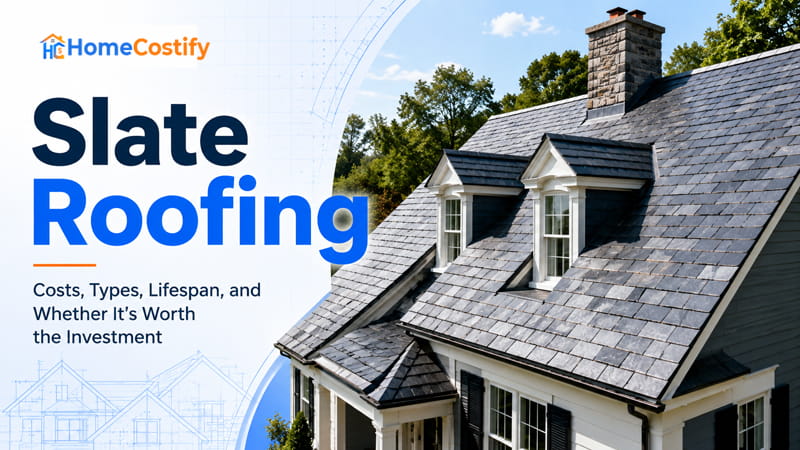
Some roofing decisions are driven by budget. Others are driven by how long the owner expects to stay in the house. Slate roofing tends to enter the conversation when longevity becomes part of the equation. It is one of the few residential roofing systems that is regularly discussed in terms of generations rather than decades.
That reputation explains why the material continues to attract attention despite its higher upfront cost. A properly installed stone roof can remain in service long after many conventional roofing systems have been replaced. Appearance matters too. Natural color variation, texture, and architectural character have made slate a common feature on historic homes, luxury properties, and landmark buildings throughout the United States.
The benefits, however, come with real considerations. Installation costs are significantly higher than asphalt shingles. The weight of stone can create structural challenges. Finding qualified contractors is not always easy, and repairs often require specialized knowledge that differs from standard roofing work.
A decision this expensive deserves a closer look. Cost, lifespan, slate types, maintenance requirements, roof weight, structural limitations, and long-term value all play a role in determining whether this roofing system makes sense for a particular property. Looking at only the purchase price rarely tells the full story.
What Is Slate Roofing?
Most residential roofs are built from manufactured products. Stone roofing follows a different path. Slate roofing uses pieces of natural stone that are cut into individual tiles and installed one at a time across the roof surface. The material itself is not produced in a factory. It comes directly from quarried rock that formed naturally within the earth over millions of years.
That difference affects more than appearance. A slate roofing behaves differently than many common roofing systems because the material covering the house is actual stone rather than a manufactured substitute.
Water does not easily penetrate the dense structure of slate, and prolonged exposure to sun, rain, snow, and freezing temperatures has little effect on high-quality material. Those characteristics help explain why slate remains common on historic buildings that have already outlived several generations of owners.
The term slate roofing materials can describe a wide range of products, but not every slate roofing is identical. Stone sourced from different regions may vary in color, density, texture, and weathering performance.
Some slate roof tiles maintain a consistent appearance for decades, while others gradually develop color changes as they age. Material quality also influences how long the roof is expected to remain in service.
Homeowners are often drawn to natural slate roofing because it occupies a space that few roofing systems can match. Asphalt shingles are usually selected because they cost less upfront.
Metal roofing is often chosen for weight and durability. Slate combines long service life with a distinctive appearance that many buyers associate with premium construction.
How Slate Roofing Is Made
Part of the reason slate commands a premium price comes from the amount of processing required before it ever reaches a job site. Roofing contractors do not receive large stone blocks.
They receive pieces that have already been split, shaped, inspected, and sorted for roofing use.
The process typically involves several stages:
- Quarry Extraction: Large blocks of slate are removed from underground deposits.
- Splitting: The stone is separated along its natural grain to create thinner sections suitable for roofing.
- Cutting and Shaping: Individual pieces are trimmed to specific dimensions based on roofing requirements.
- Grading: Slate is sorted based on thickness, appearance, consistency, and structural quality.
Not all stone deposits produce the same results. Material quarried in Vermont may differ from stone sourced in Pennsylvania, Spain, or Brazil. Color variation, density, and weathering characteristics can all influence performance over time. Those differences are one reason slate roof tile cost can vary considerably from one product line to another.
Buyers may also encounter slate roofing sheets and engineered alternatives designed to resemble traditional slate roofing tiles. While the appearance can be similar from a distance, the materials themselves are produced differently and generally offer different lifespan expectations.
Types of Slate Roofing
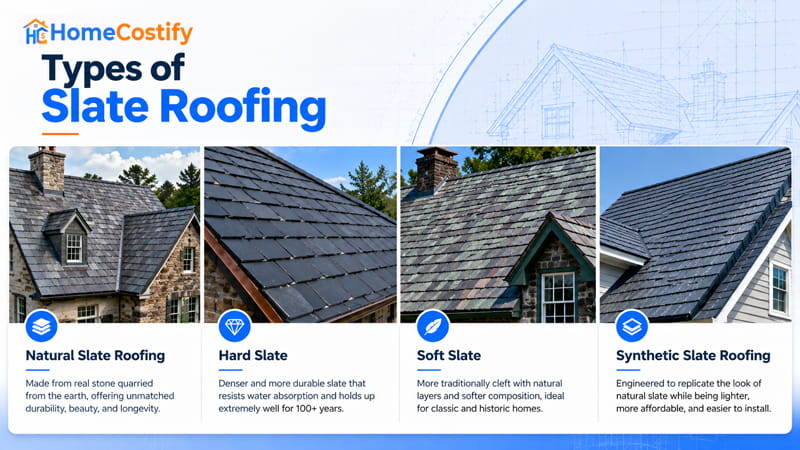
Homeowners typically encounter two main types of slate roofing when researching replacement options: natural slate and synthetic slate. Both are designed to deliver the appearance associated with traditional stone roofs, but they differ in materials, weight, lifespan, and cost.
Natural Slate Roofing
Natural slate roofing uses stone that has been quarried, cut, and shaped into individual roofing tiles. This is the traditional form of slate roofing found on historic homes, churches, universities, and landmark buildings throughout the United States.
One characteristic that separates natural stone from many competing materials is longevity. A properly installed roof can remain in service for decades, and premium products may last considerably longer. Appearance is another reason homeowners continue to choose this option.
Natural color variations, texture, and weathering patterns create a look that manufactured products often attempt to imitate.
Not all natural slate performs the same way. Material quality can vary depending on the source of the stone, which is why natural slate is commonly divided into two categories.
Hard Slate
Hard slate is the premium end of the natural stone market. The material generally weathers slowly and is known for its exceptional durability. Higher purchase prices are common, but many homeowners view the additional cost as part of a long-term investment strategy.
Soft Slate
Soft slate remains a natural stone roofing product, but it typically has a shorter service life than hard slate. Even so, it often outlasts many conventional roofing materials. Lower acquisition costs make it attractive for homeowners who want the benefits of stone roofing without paying for the highest-grade material available.
| Slate Type | Typical Lifespan | Typical Cost | Best For |
|---|---|---|---|
| Soft Slate | 50–125 Years | Lower | Budget-conscious homeowners |
| Hard Slate | 75–200+ Years | Higher | Long-term ownership |
Synthetic Slate Roofing
Synthetic slate roofing is manufactured from engineered materials rather than quarried stone. Depending on the product, manufacturers may use polymers, recycled materials, rubber compounds, or composite blends to create tiles that resemble traditional slate.
Weight is often one of the biggest advantages. A synthetic roof system places less stress on the structure than natural stone, which can reduce the need for framing upgrades. Installation may also be less complicated in some situations.
Cost is another reason homeowners consider this option. Synthetic slate roofing cost is usually lower than the cost of a comparable natural stone installation.
The trade-off is lifespan. While modern products can provide decades of service, they generally do not match the long-term durability associated with high-quality natural slate roofing.
Slate Roof Styles
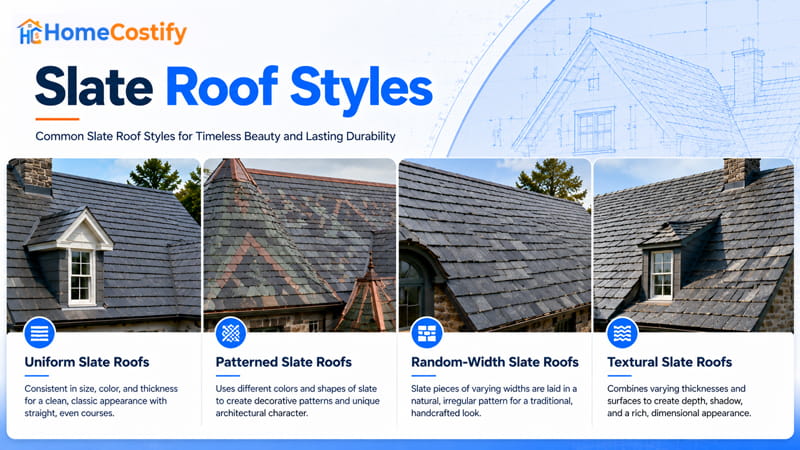
Material selection determines how a roof performs, but installation style has a major influence on appearance. Several slate roofing styles are commonly used in residential and historic construction projects throughout the United States.
Uniform Slate Roofs
Uniform installations use tiles with consistent dimensions arranged in evenly spaced courses. The finished appearance is orderly and symmetrical, making this one of the most common choices for traditional residential construction.
Patterned Slate Roofs
Patterned roofs incorporate different colors, shapes, or layouts to create decorative visual effects. Some designs are subtle. Others become a defining architectural feature of the property.
Random-Width Slate Roofs
Random-width installations use tiles of varying widths across the roof surface. The pattern creates a less formal appearance while maintaining the traditional character associated with stone roofing.
Textural Slate Roofs
Textural designs use slate pieces with varying thicknesses. Changes in depth create additional shadow lines and visual contrast throughout the roof. This approach is often used when homeowners want a more distinctive slate roofing design without relying on multiple colors or decorative patterns.
These slate roofing types demonstrate that appearance can vary significantly from one project to another. Material selection influences performance, while installation style shapes the overall visual character of the roof.
Slate Roofing Cost
The first estimate often surprises homeowners who are accustomed to asphalt shingle pricing. A stone roof occupies a different part of the roofing market. Material costs are higher, installation requires specialized labor, and some houses need structural upgrades before work can begin. Those factors can push a project well beyond the cost of conventional roofing systems.
The final slate roofing cost depends on more than square footage alone. Two roofs with the same size can receive very different estimates if one has steep slopes, multiple dormers, complex valleys, or limited access for material delivery.
Material selection also matters. Premium stone products typically cost more than lower-grade alternatives, and regional labor rates can create significant pricing differences across the United States.
Slate Roofing Cost Per Square Foot
Most contractors calculate pricing using roof surface area rather than home size. Installation complexity, material selection, and local labor costs all influence the final figure, but national averages provide a useful starting point for budgeting.
| Slate Type | Cost Per Sq. Ft. Installed |
|---|---|
| Soft Slate | $10–$20 |
| Hard Slate | $15–$30+ |
| Premium Projects | $20–$43+ |
Soft slate generally sits at the lower end of the market. Homeowners often choose it when they want the appearance and durability of stone roofing without paying for the highest-grade material available.
Hard slate commands a higher slate roofing price because of its durability and longer expected service life. Premium installations can climb even higher when projects involve custom detailing, imported stone, historic restoration work, or unusually complex roof designs.
Labor accounts for a significant portion of the total investment. Slate tiles are installed individually, and mistakes can become expensive. Contractors experienced with stone roofing often charge more than crews focused primarily on asphalt shingles.
Slate Roof Cost by Home Size
Project size remains one of the largest cost drivers. Larger roofs require more material, more labor hours, and additional supporting components.
| Roof Size | Estimated Cost Range |
|---|---|
| 1,500 Sq. Ft. | $15,000–$45,000 |
| 2,000 Sq. Ft. | $20,000–$60,000 |
| 2,500 Sq. Ft. | $25,000–$75,000 |
| 3,000 Sq. Ft. | $30,000–$90,000 |
These figures represent broad national averages rather than guaranteed pricing. A simple roof with straightforward access may fall near the lower end of the range. Complex designs often move in the opposite direction.
Roof measurements can also be misleading. A home with 2,000 square feet of living space does not automatically have a 2,000-square-foot roof. Multiple roof planes, overhangs, dormers, and steep pitches can increase roofing area substantially. That additional surface area affects both material quantities and labor requirements.
Factors That Affect Slate Roof Cost
Square footage provides a starting point, but several other variables influence the total cost of a slate roof.
- Roof Size: Larger roofs require more material and more installation time.
- Slate Type: Soft slate, hard slate, reclaimed slate, and imported products can vary considerably in price.
- Roof Pitch: Steeper roofs require additional safety measures and often increase labor costs.
- Labor Costs: Regions with limited availability of slate specialists may see higher installation rates.
- Flashing Complexity: Valleys, chimneys, skylights, and roof penetrations require additional flashing work.
- Structural Reinforcement: Some homes require framing upgrades to support the weight of stone roofing.
- Regional Pricing: Material transportation costs and local market conditions can influence estimates.
Structural reinforcement deserves special attention because it is often overlooked during early budgeting. A roof structure designed for lightweight shingles may require engineering review before heavy stone products are installed. In some cases, reinforcement adds thousands of dollars to the project cost.
Material sourcing can also create pricing swings. Stone from one quarry may cost substantially more than stone from another. Color availability, thickness requirements, and historical matching needs can all affect the final slate roofing price.
Slate Roof Repair Costs
Repairing a slate roof is usually less expensive than replacing the entire system, but costs can vary considerably depending on the scope of work. Replacing a few damaged tiles is often a relatively small project. Flashing failures, valley repairs, and widespread storm damage can increase costs much more quickly.
| Repair Type | Typical Cost Range |
|---|---|
| Replace Individual Slate Tiles | $50–$300 per tile |
| Minor Slate Roof Repairs | $300–$1,500 |
| Average Slate Roof Repair Project | $785–$3,251 |
| Extensive Slate Roof Repairs | $3,000–$4,000+ |
Matching replacement material often affects pricing. Older roofs may contain slate sourced from quarries that are no longer active, making identical replacements difficult to obtain. Accessibility also plays a role. Steep roofs, multi-story homes, and limited access points typically increase labor costs.
Cost to Replace a Slate Roof
A full slate roof replacement represents a much larger investment than most repair projects. Costs generally depend on roof size, slate type, labor rates, roof complexity, and whether structural upgrades are required before installation begins.
| Replacement Type | Typical Cost Range |
|---|---|
| Soft Slate Roof Replacement | $15,000–$45,000 |
| Hard Slate Roof Replacement | $30,000–$90,000+ |
| Historic Restoration Projects | $50,000–$150,000+ |
Historic homes frequently sit at the higher end of the range. Matching original colors, dimensions, and stone sources can increase material costs, while preservation requirements often add labor complexity. Some projects also require reclaimed slate or specialty-sourced materials that are not readily available through standard suppliers.
Cost Disclaimer: The cost figures presented in this guide are national estimates intended for general budgeting purposes. Actual project costs can vary based on roof size, slate type, material availability, roof pitch, labor rates, structural requirements, accessibility, flashing complexity, project scope, and local market conditions. Homeowners should obtain multiple quotes from qualified roofing contractors before making financial decisions.
How Heavy Is a Slate Roof?
Weight receives far less attention than cost, yet it can influence whether a house is even suitable for stone roofing. A contractor can install asphalt shingles on many existing structures without major concerns. Slate is different. The material places a significantly greater load on the framing system below.
Some homes are already capable of supporting stone roofing. Others require structural review before installation begins. Ignoring weight considerations can create expensive surprises during project planning.
Typical Slate Roof Weight
The difference becomes easier to understand when comparing common roofing materials.
| Roofing Material | Approximate Weight |
|---|---|
| Asphalt Shingles | 2–4 lbs/sq. ft. |
| Metal Roofing | 1–3 lbs/sq. ft. |
| Slate Roofing | 8–15+ lbs/sq. ft. |
The exact slate roof weight depends on tile thickness, material source, and installation specifications. Premium stone products can weigh considerably more than lightweight roofing alternatives.
Why Weight Matters
Roof framing is designed to support both temporary and permanent loads. The permanent portion is commonly referred to as dead load. Roofing materials contribute directly to that load.
Adding a heavy stone roof to a structure originally designed for lightweight shingles can create engineering concerns. Rafters, trusses, wall systems, and foundations may all require evaluation. The issue becomes more important on older homes where construction standards differ from modern building practices.
Weight can also influence project costs. Structural reinforcement adds labor, materials, and engineering expenses before roofing installation even begins. That possibility is one reason contractors often inspect framing conditions early in the planning process.
A slate roofing can provide exceptional longevity, but the structure beneath it must be capable of carrying that weight safely for decades.
Can Your House Support a Slate Roof?
Structural capacity often receives less attention until a contractor begins inspecting the property. That can be a costly mistake. Stone roofing is significantly heavier than asphalt shingles, which means not every house is automatically suitable for a slate roof.
The concern is not limited to older properties. Homes built with lightweight roofing materials in mind may also require additional review before a stone system is installed. A roof that performs well under asphalt shingles may respond very differently once thousands of pounds of additional material are added above it.
When Structural Reinforcement May Be Needed
Some houses can support slate roofing without major modifications. Others may require upgrades before installation can proceed safely.
Older homes are one common example. While many historic houses were originally designed for heavy roofing materials, others have undergone renovations over the decades that altered the roof structure. Previous repairs, water damage, or aging framing members can reduce available roof load capacity.
Lightweight roof conversions can also create challenges. A house that has always used asphalt shingles may not have been engineered for the additional dead load associated with stone roofing. In those situations, reinforcement may be necessary before installation begins.
Framing limitations present another concern. Rafters, trusses, and supporting walls all contribute to the roof’s ability to carry weight. If one component falls short, roof reinforcement may become part of the project scope.
Why a Structural Assessment Matters
A structural assessment helps identify potential issues before materials arrive on-site. The review is usually performed by a qualified structural engineer who evaluates framing conditions and determines whether the building can safely support the proposed roofing system.
Load calculations play an important role in the process. The assessment considers roofing materials, snow loads, local building requirements, and existing structural conditions. Small problems discovered early are usually easier and less expensive to address than structural failures discovered later.
The goal is not simply code compliance. A professional evaluation helps reduce the risk of sagging roof lines, framing stress, and other long-term problems that can develop when a heavy roofing system is installed on an inadequate structure.
Slate Roofing Installation Basics
Installation quality has a direct impact on performance, lifespan, and future maintenance requirements. A premium material can still develop problems if critical installation details are ignored.
Several components work together to keep water moving away from the structure and prevent moisture-related damage over time.
Roof Slope Requirements
Roof slope affects more than appearance. It influences how quickly water leaves the roof surface after rain or snow events.
Steeper roofs generally promote faster drainage and reduce the amount of time moisture remains on the roof. That matters because long-term exposure to standing water increases the risk of moisture migration beneath roofing materials.
Slope also affects installation details. Proper headlap becomes increasingly important as roof pitch changes. Headlap refers to the amount of overlap between courses of slate. Correct overlap helps prevent water from reaching nail holes and vulnerable joints beneath the visible surface.
The relationship between slope and water shedding is one reason many long-lasting stone roofs are installed on steeper roof designs.
Underlayment
The stone itself serves as the primary weather barrier, but underlayment provides an additional layer of roof protection beneath the roofing material.
Underlayment helps protect the roof deck during construction and offers backup moisture protection if water moves beneath the slate. It also contributes to overall system performance during severe weather events.
Some projects incorporate specialized membranes designed to address ice dams and freeze-thaw conditions. Material selection often depends on climate, roof design, and local building practices.
Flashing Systems
Many roofing failures begin around transitions rather than within the field of the roof itself. Flashing helps protect those vulnerable areas.
Chimneys require carefully integrated flashing components because multiple surfaces intersect in a relatively small space. Valleys present another challenge since they concentrate large volumes of runoff during storms.
Roof penetrations also deserve attention. Plumbing vents, exhaust outlets, and other openings interrupt the roof surface and create potential entry points for water. Proper flashing design helps maintain a watertight system around those locations.
Copper Roofing Nails
Fasteners are rarely visible once installation is complete, but they play an important role in long-term performance. Roofing materials expected to last for many decades require fasteners with similar durability.
Copper roofing nails are commonly specified because they resist corrosion and maintain structural integrity for extended periods. Inferior fasteners can deteriorate long before the stone itself reaches the end of its service life.
The goal is simple. If the slate remains functional for generations, the attachment system should be capable of doing the same.
Advantages of Slate Roofing
Few roofing materials remain in service long enough to become part of a home’s history. Slate roofing is one of the exceptions. While many roofing systems are replaced multiple times during a property’s lifespan, stone roofing is often chosen with the expectation that future generations may never need to replace it.
Exceptional Longevity
Longevity remains one of the strongest arguments for choosing slate roofing. High-quality stone can continue performing for decades beyond the lifespan of most competing materials. Some roofs installed in the nineteenth century remain in service today, although flashing and supporting components may have required periodic replacement.
Based on data referenced by the National Association of Home Builders (NAHB), slate is among the longest-lasting residential roofing materials available, with an expected service life exceeding 150 years under favorable conditions. By comparison, conventional asphalt shingles typically require replacement several times during the same period.
That difference changes how many homeowners evaluate cost. The initial investment may be higher, but replacement cycles are significantly reduced.
Fire Resistance
Stone does not burn. That simple characteristic gives slate roofing an advantage in areas where fire resistance is an important consideration.
Unlike combustible roofing materials, slate does not contribute fuel during a fire event. The roof surface remains stable even when exposed to high temperatures. While no roof can guarantee complete protection, non-combustible materials generally perform better than products that rely on organic or petroleum-based components.
Weather Resistance
A properly installed slate roof can withstand decades of exposure to rain, snow, ice, and seasonal temperature fluctuations. Dense stone resists moisture penetration and is largely unaffected by ultraviolet exposure.
Many homeowners choose slate roofing because of its ability to maintain performance in challenging climates. Freeze-thaw cycles that shorten the lifespan of some roofing materials tend to have less impact on high-quality stone. Wind-driven rain is also less likely to become a problem when installation details such as flashing and headlap are properly executed.
Sustainability Benefits
Environmental considerations have become increasingly important in residential construction. Stone roofing performs well from a sustainability perspective because it is a natural material with an exceptionally long service life.
Replacement frequency plays a major role in overall environmental impact. A roof that remains functional for more than a century generates far less replacement waste than a system requiring several full replacements during the same period.
Many slate products can also be reclaimed and reused rather than sent directly to a landfill.
Increased Home Value
Premium roofing materials often influence how buyers perceive a property. A well-maintained stone roof can improve curb appeal, support higher resale values, and create a sense of long-term durability.
Buyers frequently recognize that replacing a roof represents a major future expense. A slate roof that still has decades of remaining service life can become a selling point during a real estate transaction. In some markets, that perception alone may justify part of the additional investment required at installation.
Disadvantages of Slate Roofing
The benefits are substantial, but slate roofing is not the right choice for every house or every budget. Before moving forward with a project, homeowners should understand the limitations that accompany a premium roofing system.
High Upfront Cost
Cost is often the first obstacle. A slate roof typically requires a much larger investment than asphalt shingles, architectural shingles, or many metal roofing systems.
Material expenses are only part of the equation. Labor costs, structural assessments, specialized installation techniques, and potential framing upgrades can significantly increase project budgets. For some homeowners, the higher purchase price outweighs the long-term benefits.
Heavy Weight
Stone is considerably heavier than most residential roofing materials. That additional weight creates challenges that lighter products simply do not have.
Some houses require structural modifications before installation can begin. Roof framing, load capacity, and supporting walls may all need evaluation. Those requirements can add both time and cost to a project.
Specialized Installation
Installing slate roofing requires experience, training, and specialized tools. The installation process differs significantly from the methods used for asphalt shingles or many other roofing systems.
Mistakes can be expensive. Improper fastening, inadequate flashing, and poor tile placement may shorten roof life and increase maintenance requirements. As a result, contractor selection becomes particularly important.
Expensive Repairs
Although stone roofs are durable, repairs are rarely inexpensive when problems occur. Matching replacement material can be difficult, especially on older roofs.
A cracked tile may seem like a simple repair, but locating identical stone often requires additional time and expense. Labor costs also tend to be higher because repairs must be performed carefully to avoid damaging surrounding tiles.
Limited Contractor Availability
Finding a qualified installer is not always easy. Many roofing companies primarily focus on asphalt shingles, while only a smaller group regularly works with slate roof systems.
Availability varies by region. Homeowners in areas where stone roofing is uncommon may have fewer contractor options, longer scheduling delays, and higher labor rates than homeowners living in markets where slate has historically been more popular.
Best Climates for Slate Roofing in the United States
Climate affects every roofing material, including stone. Some regions naturally align with the strengths of slate roofing, while others present conditions that can increase maintenance requirements or shorten service life.
Regions Where Slate Performs Best
The Northeast remains one of the strongest markets for slate roofing in the United States. Historic homes, colder winters, and long-standing construction traditions have contributed to widespread use throughout the region.
The Mid-Atlantic also provides favorable conditions. Moderate seasonal changes, consistent precipitation, and a large inventory of older homes make stone roofing a common choice in many communities.
Parts of the Upper Midwest perform well for similar reasons. Snow, ice, and winter weather generally have limited impact on high-quality stone when installation details are handled correctly.
Mountain regions represent another strong fit. Durable roofing materials are often preferred in areas where weather conditions can change rapidly throughout the year.
Conditions That Can Reduce Performance
Not every environment is equally favorable.
Large hail can crack individual tiles even when the overall roofing system remains intact. Regions that experience frequent severe hail events may see higher repair rates than other parts of the country.
Tornado-prone areas introduce a different challenge. Windborne debris can damage almost any roofing material, including stone. The issue is often the impact itself rather than the weather resistance of the slate.
Improper freeze-thaw management can also create problems. Water infiltration around flashing details or poorly installed components may lead to premature deterioration over time.
| Climate Type | Slate Performance |
|---|---|
| Snowy Climates | Excellent |
| Rainy Climates | Excellent |
| Coastal Areas | Good |
| Hail-Prone Areas | Moderate |
| Tornado Zones | Moderate |
Slate roofing performs best when material quality, installation standards, and local climate conditions work together. In the right environment, few residential roofing materials can match its combination of durability, longevity, and visual appeal.
When Slate Roofing Is Not Recommended
Slate roofing offers exceptional durability, but it is not automatically the best choice for every property. In some situations, the drawbacks outweigh the benefits, particularly when budget, structural capacity, or ownership goals do not align with the characteristics of a stone roof.
Tight budgets are often the biggest obstacle. Even lower-cost slate roofing materials require a larger upfront investment than many alternatives. Installation expenses, structural assessments, and specialized labor can quickly increase project costs. Homeowners focused on minimizing short-term spending may find better value in other roofing systems.
Structural limitations create another challenge. Some houses were not designed to carry the additional weight associated with stone roofing. While reinforcement is sometimes possible, the extra work can add substantial cost to the project. A slate roof is only practical when the supporting structure can safely handle the load.
DIY expectations can also lead to disappointment. Unlike standard shingles, slate roofing requires specialized tools and installation techniques. The material is durable once installed but can crack if handled incorrectly. Homeowners planning to perform their own installation or future repairs often underestimate the skill required.
Short-term ownership plans deserve consideration as well. A premium roof can increase property value, but homeowners planning to sell within a few years may never fully benefit from the long lifespan that makes slate roofing attractive in the first place. In those cases, the return on investment may not justify the additional expense.
Common Slate Roof Problems
A properly installed slate roof can last for generations, but no roofing system is completely immune to wear and aging. Many problems develop gradually rather than appearing suddenly. Early identification often reduces repair costs and helps preserve the overall condition of the roof.
Broken or Missing Slate Tiles
Individual slate tiles occasionally crack due to impact damage, severe storms, falling branches, or accidental foot traffic. Missing pieces expose underlying components to moisture and should be replaced before water infiltration becomes a larger issue.
Flashing Failures
Many aging roofs experience problems around chimneys, valleys, skylights, and wall intersections before the stone itself begins to fail. Flashing materials typically age faster than slate. Water intrusion often starts in these vulnerable areas when flashing deteriorates or separates from surrounding materials.
Moisture Infiltration
A slate roof relies on multiple components working together. Damaged flashing, inadequate headlap, failed underlayment, or missing tiles can allow moisture to move beneath the roof covering. Small leaks may remain hidden for extended periods before visible damage appears inside the home.
Poor Previous Repairs
Not every repair is performed by a slate specialist. Improper fasteners, mismatched materials, excessive sealant use, and incorrect installation techniques can create long-term problems. In some cases, correcting a poor repair becomes more expensive than addressing the original issue.
Freeze-Thaw Damage
Water that enters small cracks can expand during freezing temperatures. Repeated freeze-thaw cycles place stress on roofing materials and surrounding components. High-quality stone generally performs well in cold climates, but existing defects may worsen over time when moisture repeatedly freezes and thaws.
Slate Roof Maintenance
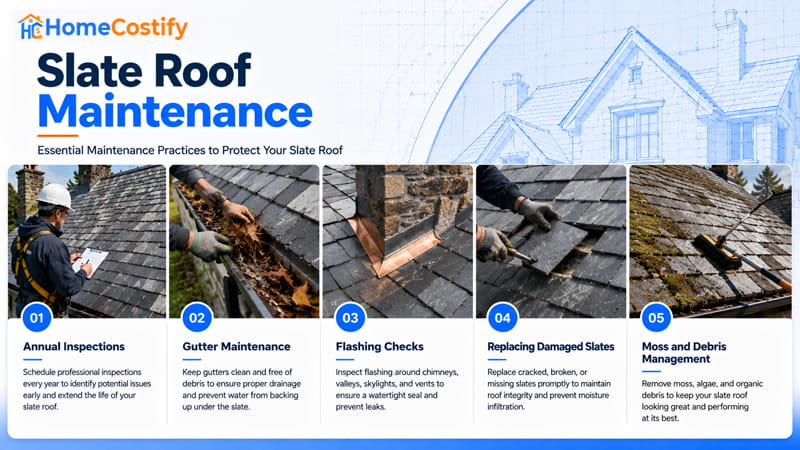
One reason many slate roofs last for decades is that owners address small issues before they become major repairs. Regular maintenance does not require constant attention, but periodic inspections can significantly extend service life.
Annual Inspections
A professional inspection at least once per year helps identify cracked tiles, flashing concerns, loose components, and early signs of deterioration. Small problems are usually easier and less expensive to correct when discovered early.
Gutter Maintenance
Gutters play an important role in roof performance. Leaves, twigs, and debris can restrict water flow and increase moisture exposure along roof edges. Keeping gutters clean helps direct water away from the roofing system and supporting structure.
Flashing Checks
Flashing deserves regular attention because it often reaches the end of its service life before the slate itself. Chimneys, valleys, dormers, and roof penetrations should be inspected periodically for corrosion, separation, or signs of water intrusion.
Replacing Damaged Slates
A few damaged tiles rarely justify major repair work, but they should not be ignored. Prompt replacement helps prevent moisture from reaching underlying components. Matching materials may be easier to obtain before additional weathering occurs.
Moss and Debris Management
Organic debris can trap moisture against the roof surface. Moss growth is not always a structural problem, but excessive accumulation may retain water longer than intended. Branches, leaves, and other debris should be removed periodically to help maintain proper roof drainage and airflow.
Consistent maintenance helps maximize slate roof lifespan and protects the investment homeowners make when choosing slate roofing. Small inspections and minor repairs performed at the right time often prevent far more expensive problems in the future.
Slate Roofing and Other Residential Roofing Materials
Slate roofing is often compared with several other residential roofing materials. While each option has strengths and limitations, the best choice depends on budget, climate, maintenance expectations, and ownership goals.
- Asphalt Shingles: Lower upfront cost but significantly shorter lifespan.
- Architectural Shingles: Improved durability and appearance compared to standard asphalt products.
- Luxury Shingles: Designed to mimic premium roofing materials while remaining less expensive than stone.
- Metal Roofing: Lightweight, durable, and often easier to install than slate.
- Clay Tile Roofing: Similar longevity potential but typically associated with different architectural styles.
- Concrete Tile Roofing: Durable and widely available, though generally heavier than many roofing systems.
- Synthetic Slate Roofing: Replicates the appearance of stone while reducing weight and installation complexity.
- Wood Shingles: Traditional appearance but require more maintenance over time.
- Wood Shakes: Thicker and more textured than wood shingles, with similar maintenance considerations.
- Composite Roofing: Manufactured from engineered materials designed to balance cost, appearance, and durability.
- Solar Shingles: Combine roofing and energy production into a single system but often involve higher installation costs.
Conclusion
Slate roofing occupies a unique position in the residential roofing market. Few materials can match its combination of longevity, durability, fire resistance, and architectural appeal. Homeowners evaluating slate roofing should consider more than initial cost alone.
Material type, expected lifespan, structural requirements, maintenance expectations, and long-term ownership plans all influence whether the investment makes sense.
Natural stone remains the benchmark for durability, while synthetic alternatives provide a lighter and often less expensive option. Structural capacity should always be evaluated before installation, and working with experienced contractors is essential for long-term performance.
For homeowners planning to remain in a property for many years, a slate roof can provide lasting value. Those with tighter budgets or shorter ownership timelines may find that another roofing system offers a better overall fit. The best choice ultimately depends on the house, the budget, and the goals of the owner.
FAQs About Slate Roofing
What is better, a slate or a metal roof?
Neither is universally better. Slate offers longer potential lifespan and a natural stone appearance, while metal roofing is lighter, typically less expensive, and easier to install.
Is slate good for roofing?
Yes. Slate roofing is known for durability, weather resistance, fire resistance, and exceptional longevity.
Is a slate roof more expensive?
Yes. A slate roof generally costs more than asphalt shingles, architectural shingles, and many metal roofing systems.
Why is slate so expensive?
Material extraction, specialized installation requirements, labor costs, and long-term durability all contribute to the higher price.
Do slate roofs last 100 years?
Many do. High-quality stone roofs can remain serviceable for a century or longer when properly installed and maintained.