
Roofing materials do not all place the same demands on a house. Some are lightweight and quick to install, while others add substantial weight and may remain in place for several decades. Concrete Tile Roofing falls into the second category.
The system is known for its long service life, distinctive appearance, and heavy roof load compared with many other residential roofing materials.
Concrete roof tiles are commonly seen in parts of California, Florida, Arizona, and other regions where heat, storms, and wildfire exposure influence roofing choices.
Material composition, roof structure, installation costs, and maintenance requirements all play a role in how these roofs perform over time. Those details are often more useful than color options or curb appeal alone.
What Is Concrete Tile Roofing?
A concrete tile roof consists of individual tiles installed in overlapping courses across a roof deck. Each tile sheds water onto the tile below it, creating a layered system designed to direct rain toward gutters and drainage points.
Concrete Tile Roofing refers to more than the visible tiles. The complete assembly includes underlayment, flashing, fastening methods, ridge components, and roof ventilation details. Water resistance depends on the interaction between all of those elements rather than the tile alone.
A roof can contain high-quality tiles and still experience problems if supporting components are installed incorrectly.
Many people use the terms concrete roof tiles, roofing tiles, and cement roof tiles interchangeably. The terminology varies by manufacturer and region, although the products generally share the same basic composition and installation approach.
Tile profiles also influence appearance. Some roofs feature clean, flat lines that resemble slate. Others use curved shapes that create deeper shadows and a more traditional architectural look. The visible style may change dramatically from one house to another, while the underlying roofing system remains largely the same.
Concrete Tile Roofing also differs from simply purchasing roof tiles. The tiles represent only one portion of the assembly. Underlayment, flashings, roof penetrations, ridge details, and structural support all affect how the roof performs over time.
What Are Concrete Roof Tiles Made Of?
Concrete roof tiles begin as a mixture of mineral-based ingredients that have been used in construction for generations. The recipe itself is straightforward.
Manufacturing consistency, curing methods, and finishing processes create the finished product seen on residential roofs.
Core Materials
Several raw materials form the foundation of most concrete roof tiles.
- Portland cement
- Sand
- Water
- Iron oxide pigments
Portland cement acts as the binding agent. Once mixed with water, it hardens and locks surrounding materials together. Sand contributes bulk, texture, and structural mass. Water activates the cement and allows the mixture to be shaped during production.
Color comes from iron oxide pigments blended into the mixture before curing. Those pigments create shades ranging from earthy browns and terracotta tones to grays, charcoals, and modern architectural colors. The color extends throughout the tile rather than sitting only on the surface.
A technical brief published by the National Association of Home Builders notes that concrete roof tiles are designed to last for the lifetime of a house when installed and maintained correctly.
The Tile Roofing Industry Alliance also reports that concrete tiles typically absorb less than 1% moisture, limiting deterioration associated with freeze-thaw cycles, rot, mold development, and insect activity.
Surface Finishes and Coatings
The manufacturing process does not end once a tile cures. Surface treatments play a major role in appearance and weathering characteristics.
Many products receive acrylic coatings that create a more uniform finish and deeper color presentation. Polymer-based coatings are also common. These finishes can influence surface texture, color retention, and resistance to environmental exposure over time.
Some manufacturers produce smooth finishes intended to resemble slate. Others create textured surfaces that mimic natural stone or wood shake roofing. The underlying composition remains largely the same, but the finished appearance can vary substantially from one product line to another.
Concrete Tile Roofing manufacturers frequently use coatings as a design tool. A roof installed today may look very different from traditional concrete tile roofs built several decades ago.
Types of Concrete Roof Tiles
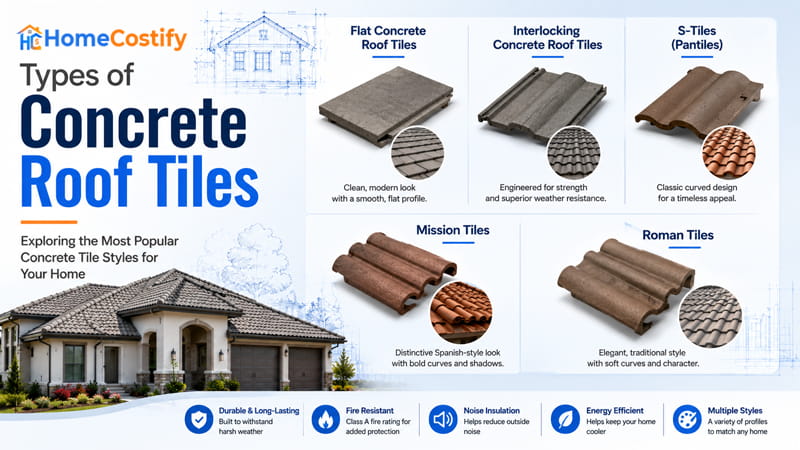
Concrete roof tiles are available in several profiles. Shape affects appearance, shadow lines, and architectural compatibility.
| Tile Type | Appearance | Best For | Key Characteristic |
|---|---|---|---|
| Flat | Clean and modern | Contemporary homes | Minimalist look |
| Interlocking | Functional | Most residential homes | Secure fit |
| S-Tile | Curved | Mediterranean homes | Deep shadow lines |
| Mission | Barrel-shaped | Spanish-style homes | Traditional appearance |
| Roman | Flat and curved | European-inspired homes | Elegant profile |
Flat Concrete Roof Tiles
Flat profiles create a clean roof surface with sharp lines and minimal texture. Contemporary homes often use this style because it pairs well with modern architecture. Some products are designed to resemble natural slate from ground level.
Interlocking Concrete Roof Tiles
Interlocking tiles contain grooves and edges that fit together during installation. The design creates a secure connection between neighboring tiles. Large residential developments frequently use this profile because installation tends to be more straightforward than some specialty designs.
S-Tiles (Pantiles)
S-tiles feature a rolling wave shape that creates noticeable shadow lines across the roof. Mediterranean architecture commonly incorporates this profile. The roof gains visual depth without requiring multiple tile layers.
Mission Tiles
Mission tiles use a barrel-shaped appearance associated with Spanish and Southwestern architecture. Their shape creates a distinctive roofline that remains recognizable even from a distance.
Roman Tiles
Roman profiles combine flat sections with curved elements. The result is a more structured appearance than traditional barrel tiles while retaining visual texture.
Concrete Tile Roofing Cost

Project costs vary widely across the United States. Material selection matters, but labor requirements and roof complexity often create equally large pricing differences.
Average Cost Per Square Foot
Most installations Concrete tile roofing cost fall between $10 and $15 per square foot. Simpler projects using standard profiles generally occupy the lower portion of that range. Premium products, complex roof layouts, and difficult access conditions can push costs substantially higher.
A 2,000-square-foot roof may produce a very different estimate than another roof of the same size. Roof geometry often influences labor hours more than square footage alone.
| Project Type | Average Cost |
|---|---|
| Low-End | $8–10/sq ft |
| Mid-Range | $10–15/sq ft |
| Premium | $15–25/sq ft |
Cost Disclaimer: The figures above reflect national averages for concrete tile roofing projects in the United States. Actual costs can vary based on roof size, tile profile, labor rates, location, roof complexity, structural upgrades, material availability, and contractor pricing.
How Much Does Concrete Tile Roofing Weight?
Weight is one of the first numbers worth checking before a tile project moves beyond the planning stage. Roof color, profile, and appearance usually get more attention, yet structural capacity often determines whether a roof can accommodate tile without modification.
A product designed to last for decades also places a long-term load on the framing below it.
Average Weight
Most standard concrete roof tiles weigh between 9.5 and 12 pounds per square foot. That figure is considerably higher than many residential roofing materials commonly used throughout the United States. On a large roof, the difference can add several tons of permanent weight above the house.
Manufacturers also produce lightweight alternatives. These products typically fall between 5.5 and 7 pounds per square foot, making them easier to accommodate on structures where weight is a concern. The appearance often remains similar from ground level, although product specifications can vary between manufacturers.
| Roofing Material | Approx. Weight |
|---|---|
| Concrete Tile | 9.5–12 lbs/sq ft |
| Lightweight Concrete Tile | 5.5–7 lbs/sq ft |
Why Weight Matters
The roof framing beneath the tiles carries that load every day, year after year. Rafters, trusses, roof sheathing, and supporting walls all contribute to the load path. Houses originally designed for tile roofs generally account for that weight during construction.
The situation becomes different when replacing a lightweight roof with Concrete Tile Roofing. A structure that performed well under asphalt shingles may require a structural evaluation before tile installation begins. Engineers often review roof load capacity, framing dimensions, span lengths, and existing conditions before approving the change.
A roof replacement project sometimes uncovers framing alterations made decades earlier. Cut trusses, modified rafters, or previous repairs can influence whether reinforcement becomes necessary. Those findings rarely appear from the street. They become visible only after a closer inspection.
Roof Pitch and Structural Requirements
Roof pitch influences water drainage, underlayment selection, installation methods, and product compatibility. Not every roof slope is suitable for the same tile system. Manufacturers publish minimum requirements for a reason.
Minimum Roof Slope
Most concrete tile systems require a minimum roof slope of 2.5:12. Roofs below that threshold typically fall into a different category and often require alternate roofing materials.
Additional underlayment requirements usually apply between 2.5:12 and 4:12. Water moves more slowly across lower-pitched surfaces, increasing exposure time during heavy rain events. Extra roof protection beneath the tile layer becomes part of the installation strategy.
A steeper roof changes the equation. Water exits the surface more quickly, although installation complexity and labor demands often increase.
Structural Considerations
A tile roof rests on far more than the visible surface layer. The roof deck, framing system, fastening methods, and supporting structure all contribute to long-term stability.
New construction projects frequently account for tile loads during the design phase. Existing homes present a different situation. Structural reinforcement may become necessary when a roof originally built for lighter materials receives a tile upgrade.
Concrete Tile Roofing places a permanent dead load on the structure. That load remains in place through every season, storm, and weather cycle. Verifying structural capacity before installation is generally far less expensive than correcting structural deficiencies after the project begins.
Concrete Tile Roofing Lifespan
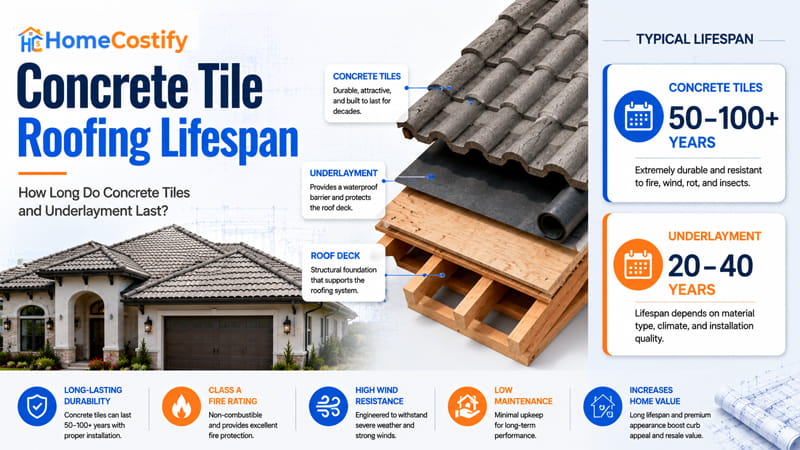
Life expectancy often appears near the top of the list when evaluating roofing materials. Concrete tiles have built a reputation for remaining in service far longer than many alternatives, though lifespan depends on more than the visible tiles.
How Long Do Concrete Tiles Last?
Concrete roof tiles commonly reach 50 years or more under normal conditions. In favorable climates with quality installation and routine maintenance, service lives of 75 to 100 years are not unusual.
Age alone does not determine replacement timing. A roof installed thirty years ago may remain in better condition than a newer roof exposed to severe weather, poor drainage, or installation defects. Roof inspections often reveal a more accurate picture than the calendar.
Color fading can occur over time. Surface wear can also develop. Neither issue automatically signals the end of a roof’s service life.
Tile Lifespan vs Underlayment Lifespan
According to the Tile Roofing Industry Alliance (TRIA), properly installed tile roof systems can outlast many other roofing materials. The overall service life of a concrete tile roof depends not only on the tiles themselves but also on critical components such as the underlayment and installation details.
Industry guidance notes that while concrete tiles may remain serviceable for decades, underlayment systems often require replacement much sooner, typically within 20 to 40 years.
Many owners are surprised when the underlayment reaches the end of its useful life while the tiles remain usable. In reroof projects, crews frequently remove and reinstall existing tiles after replacing the underlying components.
| Component | Typical Lifespan |
|---|---|
| Concrete Tiles | 50–100+ years |
| Underlayment | 20–40 years |
Concrete Tile Roofing often becomes a story of two timelines rather than one. The tile layer and the water-resistant layer beneath it rarely age at the same pace.
Advantages of Concrete Tile Roofing
Several characteristics explain why tile roofs remain common in many parts of the country. The combination of lifespan, weather resistance, and architectural flexibility appeals to builders, architects, and property owners alike.
- Long service life
- Fire resistance
- Wind resistance roof
- Design versatility
- Low maintenance requirements
- Energy efficiency benefits
Many roofs remain in service for several decades before major work becomes necessary. Fire ratings also contribute to the popularity of tile systems in wildfire-prone regions. Certain products carry ratings suited for areas where fire exposure is part of the risk profile.
Wind performance represents another consideration. Properly installed tile roofs can withstand demanding weather conditions, including the high-wind environments found along portions of the Gulf Coast and Atlantic coastline.
Architectural flexibility expands design possibilities. Flat profiles, Roman styles, Mission tiles, and S-tiles create distinctly different appearances while using the same general material category. Concrete Tile Roofing can fit traditional, Mediterranean, Spanish, and contemporary designs without looking out of place.
Disadvantages of Concrete Tile Roofing
Every roofing material involves trade-offs. Tile systems are no exception.
- Heavy weight
- Higher upfront cost
- Potential structural upgrades
- Fragility under foot traffic
Weight remains the most obvious consideration. Structural reviews are not required for every project, though some houses need additional analysis before installation moves forward.
Initial costs also exceed those of many entry-level roofing materials. Budget comparisons often look different when evaluating a thirty-year ownership period versus a ten-year ownership period, but the upfront investment can still be substantial.
Walking on a tile roof requires care. Individual tiles can crack under concentrated loads, particularly when weight is placed in the wrong location. Service technicians familiar with tile systems usually follow specific access paths to reduce that risk.
Structural upgrades create another variable. A reroof project occasionally uncovers framing limitations that were never designed for tile loads. Those discoveries can influence project schedules and budgets long before the first pallet of materials arrives.
Wind, Fire, and Impact Resistance of Concrete Tile Roofing
Weather exposure varies widely across the United States. Some roofs face hail, others face hurricanes, and some spend months under intense sun. Roofing materials that perform well in one region do not always perform the same way elsewhere.
Fire Resistance
Concrete roof tiles are non-combustible materials. Many products qualify for a Class A fire resistant roof rating, the highest fire classification commonly used for residential roofing systems. That rating is one reason tile roofs appear frequently in regions where wildfire exposure is a concern.
The tile itself does not serve as fuel during a fire event, which differs from roofing materials that contain combustible components.
Wind Resistance
Strong winds place pressure on roof edges, ridges, and exposed corners. Proper installation plays a major role here. Fastening methods, underlayment selection, and roof design all influence how a roof responds during severe weather.
Many tile systems are engineered for high-wind applications. This matters in hurricane-prone regions where roofs may encounter repeated storm exposure over several decades.
Impact Resistance
Hail damage often appears as cracks, chips, or surface fractures. Some tile products carry Class 4 impact ratings, a designation associated with resistance to severe hail testing standards.
Impact resistance shingles does not mean damage is impossible. Hail size, storm intensity, and tile profile can all affect the outcome. Even so, Concrete Tile Roofing remains a common choice in regions where hail events occur regularly.
Concrete Tile Roofing Performance in Different U.S. Climates
Climate influences roof aging patterns more than many people realize. A roof in Arizona faces different conditions than a roof in Florida, even when both use the same tile profile.
Hot Climates
Arizona and Nevada experience prolonged heat exposure and intense ultraviolet radiation. Surface temperatures can climb dramatically during summer afternoons. Concrete tiles handle these conditions well because they do not warp in the way some roofing materials can under sustained heat.
Thermal mass also plays a role. Roof surfaces heat up during the day and release that heat gradually after sunset.
Coastal and Hurricane Regions
Florida presents a different challenge. Salt air, humidity, heavy rain, and tropical storms all place stress on roofing systems. Installation quality becomes particularly important in these environments because strong winds can exploit weaknesses around ridges, flashings, and roof penetrations.
Wildfire-Prone Areas
California combines several roofing challenges within one state. Some regions face wildfire exposure, while others experience coastal moisture or extreme inland heat. The fire-resistant characteristics associated with Concrete Tile Roofing have contributed to its popularity across many California communities.
Concrete Tile Roofing Maintenance
A concrete tile roof does not require constant attention, but periodic maintenance remains part of long-term ownership. Small issues can remain unnoticed for years because the roof surface is not inspected frequently.
Annual Maintenance Tasks
An annual visual inspection can identify cracked tiles, displaced sections, damaged flashing, or debris accumulation. Trees often contribute to maintenance needs. Leaves, branches, and organic debris tend to collect in roof valleys and roof drainage areas.
Gutter cleaning also remains part of the routine. Water that cannot exit the roof properly may back up into areas where it was never intended to collect. Overflow stains sometimes point to drainage issues rather than tile failures.
Weather events deserve special attention. High winds, hail, and falling branches can damage individual tiles even when the rest of the roof remains intact.
Common Repairs
The most common repair involves replacing cracked tiles. Impact damage, foot traffic, or accidental breakage during service work can create localized problems.
Slipped tiles represent another issue. Fasteners can deteriorate over time, and extreme weather occasionally shifts individual pieces out of position. Water does not need a large opening to find a path beneath the roof covering.
Underlayment deterioration typically involves larger repair projects. The tiles themselves may still appear serviceable from the outside.
- Inspect tiles annually
- Remove debris
- Check flashing
- Monitor underlayment condition
Routine maintenance costs are generally lower than major corrective repairs. Small defects tend to remain small only when someone notices them.
Concrete Tile Roofing Alternatives to Consider
Concrete roof tiles represent one segment of the residential roofing market. Other materials vary in weight, appearance, installation methods, and expected service life. Cost can also differ significantly from one roofing system to another.
The options below are frequently considered alongside tile roofing during a roof replacement project.
- Asphalt Shingles: Lower upfront costs and broad availability make asphalt shingles the most common roofing material in many parts of the country.
- Architectural Shingles: Thicker construction and dimensional profiles create a more textured appearance than traditional three-tab shingles.
- Luxury Shingles: Premium asphalt products designed to mimic slate, shake, or tile roofing styles.
- Metal Roofing: Lightweight panels and long service life make metal a popular option in areas exposed to snow, rain, or wildfire concerns.
- Clay Tile Roofing: Similar appearance to concrete tile, though clay products often carry a higher price tag.
- Slate Roofing: Natural stone roofing known for exceptional lifespan and substantial weight.
- Synthetic Slate Roofing: Manufactured materials designed to resemble natural slate without the same structural load.
- Wood Shingles: A traditional roofing material commonly associated with cottages and historic homes.
- Wood Shakes: Thicker than wood shingles and known for a more rustic appearance.
- Composite Roofing: Engineered products that imitate premium roofing materials using manufactured components.
- Solar Shingles: Roofing products that generate electricity while functioning as part of the roof surface.
Conclusion
Roofing decisions often involve balancing cost, lifespan, weight, and maintenance requirements. Installation costs commonly range from $10 to $15 per square foot, while many tile roofs remain in service for 50 years or longer.
Weight deserves careful attention because structural capacity varies from one house to another. Concrete Tile Roofing can be a strong fit for homes designed to support tile loads, particularly in regions exposed to heat, storms, or wildfire concerns.
FAQs About Concrete Tile Roofing
Are concrete tiles good for roofs?
Yes. Concrete roof tiles are widely used because of their long service life, fire resistance, and ability to perform in demanding weather conditions.
Are concrete tiles better than shingles?
The answer depends on budget, roof structure, and project goals. Tile generally lasts longer, while shingles usually cost less upfront.
Are concrete roof tiles fully waterproof?
No. The roof system relies on both the tile layer and the underlayment beneath it.
What goes under concrete roof tiles?
Underlayment, flashing components, battens in some systems, and the roof deck all sit beneath the tile surface.
Can I walk on concrete roof tiles?
Yes, but caution is necessary. Improper foot placement can crack individual tiles.