For many U.S. homes, the strongest all-around metal roofing choice is Galvalume steel with a standing seam system. The best metal roof is not determined by metal composition alone. Panel design, installation approach, and the demands placed on the roof all affect the final fit.
Homeowners face different conditions when selecting a roof. Climate affects exposure, while budget sets practical limits. Appearance can matter during a major exterior renovation. Maintenance expectations and ownership horizon also shape the decision, so residential properties do not always call for identical specifications.
Steel appears across several roofing configurations, with standing seam representing only one system choice. Panel profile and fastening method influence how the finished covering handles weather and movement. Looking only at the metal leaves part of the purchase decision unresolved.
Galvalume steel with standing seam earns the default position when its characteristics fit the property. Coastal exposure, architectural requirements, premium ownership goals, and budget pressure all affect whether the default recommendation fits. The deciding factor is how well the complete roofing system matches the home and its intended use.
What Is the Best Metal Roof Overall?
Galvalume steel and standing seam bring separate strengths to the same roofing assembly. The material side addresses durability and corrosion exposure; the system side governs panel arrangement and attachment. Evaluating both provides a clearer basis for an overall recommendation.
Galvalume Steel Standing Seam Is the Best Overall Choice
Steel supplies the structural base behind the roof. For the best metal roofing balance, Galvalume brings corrosion protection to that foundation. Standing seam establishes how the panels are joined across the roof. Material strength and system design consequently work as parts of the same roofing solution.
Galvalume earns its material advantage from the relationship between steel and its protective coating. The steel core supplies strength; aluminum-zinc protection addresses corrosion exposure. Broad residential use also separates it from metals typically selected for premium applications. Homeowners seeking substantial performance without moving into luxury materials can find the best metal roof material in this range.
Concealed fasteners limit direct exposure at connection points. Clips give panels room to respond to temperature changes without restricting normal thermal movement. Panel geometry also affects water management and overall roof behavior. Those physical details make system design part of the best metal roof decision.
7 Best Metal Roof Options for U.S. Homes

No single metal roofing option fits every property equally well. Value, coastal exposure, architectural character, and ownership priorities can move the decision toward different materials. The meaningful comparison comes from the trade-offs attached to each use case.
| Option | Best Fit | Main Advantage | Main Trade-Off | Installed Cost |
|---|---|---|---|---|
| Galvalume steel standing seam | Most homes | Strong balance of durability, maintenance, and value | Higher upfront cost than basic panels | $10–$17/sq. ft. |
| Aluminum | Coastal homes | Excellent corrosion resistance | Softer and typically more expensive than steel | $10–$20/sq. ft. |
| Copper | Premium/architectural homes | Exceptional longevity and appearance | Very high initial cost | $20–$40+/sq. ft. |
| Zinc | Long-term premium ownership | Long service life and natural patina | High cost | $15–$25/sq. ft. |
| Metal shingles | Traditional-style homes | Familiar appearance with metal durability | More detailed system/design | $9–$16/sq. ft. |
| Stone-coated steel | Traditional appearance | Mimics shingles/tile while using steel | More specialized product | System-dependent |
| Exposed-fastener steel | Lower upfront budget | Simpler, economical system | More exposed components | Lower steel/corrugated range |
The table establishes the broad trade-offs across these options. Broad residential projects favor balanced performance. Coastal sites and design-led renovations may point toward other materials. Installed price provides useful context, but the lowest figure does not settle the selection.
Galvalume Steel Standing Seam: Best Overall
A middle-ground choice suits projects where neither premium styling nor minimum upfront cost drives the decision. The best metal roofs for broad residential use balance durability, maintenance demands, and purchase value. Galvalume steel with standing seam sits within that range. Premium architectural metals serve different ownership and design priorities.
Low-maintenance ownership appeals to households expecting a long tenure. Clean panel lines suit modern homes and contemporary exterior renovations. Homes without unusual environmental demands have fewer reasons to move toward a specialized material. Broad applicability gives this option its practical advantage.
Aluminum Roofing: Best for Coastal Homes
Salt spray changes the material decision along the coast. Marine exposure raises corrosion resistance on the priority list, making aluminum a contender for the best residential metal roof in affected locations. Its performance in salty environments gives it an advantage over conventional steel in marine settings.
Softness introduces a separate consideration on exposed properties. Hail can leave dents more readily than it would on harder steel surfaces. Higher material cost further narrows the value proposition. Coastal suitability provides the clearest reason to accept those trade-offs.
Copper Roofing: Best Premium Option
Copper develops a distinctive patina that changes the roof’s color and texture over time. Historic properties and design-led homes gain architectural character from that evolving surface. Standard metal finishes do not offer the same visual transformation. Long service potential supports the material’s appeal, but its identity remains strongly tied to design.
Historic homes, high-end renovations, and design-focused properties provide the clearest setting for copper. For the best metal roofing, copper fits owners who expect a long tenure and value the roof as part of the home’s visual identity. A substantial upfront investment needs strong architectural justification.
Zinc Roofing: Best for Long-Term Premium Ownership
Zinc develops a natural patina as weathering progresses, with the surface gradually taking on its own appearance. The change reflects ongoing material behavior rather than a fixed factory finish. Long-term weathering is central to zinc’s appeal, giving the surface an evolving character suited to premium architectural work.
Long-term ownership places greater weight on maintenance and lifecycle value when evaluating a higher initial investment. For homeowners evaluating the best metal roofing materials, zinc fits projects where evolving surface character and extended ownership carry equal weight. The decision extends beyond the initial purchase, since the material continues changing throughout a long tenure.
Metal Shingles: Best for Traditional Home Styles
Traditional rooflines often favor familiar forms over exposed vertical panels. Stamped and interlocking shingles echo the proportions associated with slate, wood, and asphalt roofing. Smaller units preserve a recognizable roof rhythm beside traditional architecture and established exterior details.
Individual panels create more interfaces across the surface, making detail work more visually significant. Within the range of metal roofing types, shingle formats suit projects where panel scale and roof profile carry design weight. Interlocking edges further shape the finished surface from street level. Architectural compatibility is the main reason to choose the format.
Stone-Coated Steel: Best for Traditional Appearance With Metal Durability
A steel core supports a granular stone-coated exterior, giving the surface a conventional roofing character. The granular surface mimics tile, slate, and shingle aesthetics. Steel remains the underlying material beneath the exterior finish. For some traditional properties, the best metal roof depends heavily on how naturally the exterior complements the home’s existing style.
Traditional subdivisions often have established roof forms that shape curb appeal. Stone-coated steel preserves that visual language when a standing-seam profile would feel visually disconnected. Existing tile, slate, or shingle elements often guide the selection when exterior continuity carries significant weight.
Exposed-Fastener Steel: Best for Lower Upfront Cost
Budget-conscious projects often favor a simpler panel and fastening arrangement. Among best metal roofing materials, exposed-fastener steel remains relevant when lower initial system complexity matters. Corrugated panels and similar formats fit residential projects where elaborate detailing is unnecessary.
Screws and washers remain visible across the surface, making their condition easier to notice during inspections. Fastener wear can create a maintenance concern independent of panel condition. The resulting lifecycle profile differs from systems that conceal connection hardware, giving homeowners another factor to weigh before choosing the simpler format.
How to Choose the Best Metal Roof for Your Home
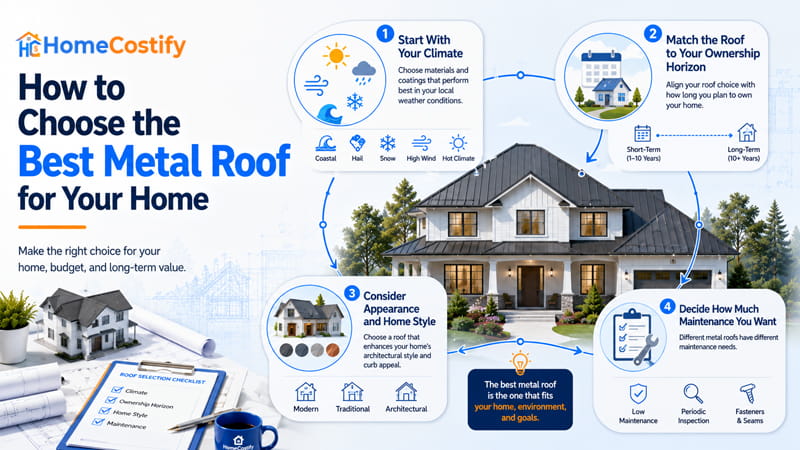
Several roofing systems appear suitable on paper, yet the right choice depends on the home’s circumstances. Climate, ownership horizon, appearance, and maintenance preferences change how each performance criterion should be weighted.
Start With Your Climate
Local exposure determines which performance characteristics deserve the most attention. For the best metal roofing, coastal properties place greater weight on corrosion resistance, while hail exposure raises dent resistance. High winds increase the importance of attachment and wind performance. Snow brings structural and drainage concerns, while hot climates place more emphasis on solar reflectance and thermal emittance.
Cooling performance reflects the interaction between the roof finish and the home’s broader conditions. Insulation, the existing roof, and the heating and cooling system affect the result. Solar reflectance and thermal emittance provide useful measures for assessing a finish. Local climate and house conditions should inform finish selection alongside visual preferences.
Match the Roof to Your Ownership Horizon
Expected tenure changes how an owner weighs the initial investment. Short-term ownership places greater emphasis on upfront spending and resale considerations. Long-term ownership shifts attention toward maintenance and lifecycle value. For the best metal roof, ownership duration helps determine which financial priorities deserve the most weight.
The value of a premium purchase rests on the attributes the homeowner actually wants. Design preferences, maintenance expectations, ownership duration, and regional conditions shape that value. Paying more for an unwanted feature does not improve the economics of the decision.
Consider Appearance and Home Style
The home’s architecture establishes an important visual reference for the roof. Modern designs often pair naturally with clean standing-seam profiles. Traditional properties favor familiar proportions, while metal roofing colors can reinforce the relationship between the roof and exterior finishes. Copper and zinc offer another route when the roof itself forms part of the architectural statement.
Decide How Much Maintenance You Want
Maintenance expectations also depend on system details and environmental exposure. For best metal roofing materials, maintenance demands deserve consideration alongside the material selection. Fastener exposure, sealants, penetrations, and installation detailing shape the maintenance profile. Owners should weigh those demands against their willingness to provide periodic attention.
What Matters More Than the Metal Itself?
Thickness, panel profile, surface protection, connections, and workmanship can vary under the same material name. Those details belong to the roof system specification a homeowner actually receives.
Gauge and Panel Thickness
A 24-gauge steel panel is thicker than a 26-gauge panel. Metal roofing dimensions include panel thickness, which contributes to rigidity and resistance to deformation. Panel profile and structural design add another part of the specification. Wind uplift requirements and local code provisions can influence the appropriate thickness. The best metal roofing material cannot be judged from gauge alone.
Coating and Corrosion Protection
Weather reaches the protective surface before the underlying steel. Galvalume and galvanized coatings offer different approaches to corrosion protection. PVDF, Kynar 500, and SMP finishes provide additional surface characteristics for the best metal for roof applications. Paint finishes influence color retention, weathering, and protection against outdoor exposure.
Fasteners, Seams, and Thermal Movement
Temperature changes cause metal panels to expand and contract. Fasteners hold panels in place, while clips and seam geometry provide the movement allowance built into compatible systems. Concealed and exposed fasteners also create different connection arrangements. Panel security and thermal movement must both be addressed by the connection design.
Installation Quality
Roof details become critical once specified products reach the jobsite. Flashing, penetrations, underlayment, and ventilation all require proper execution within the finished roof. Installing metal roofing also involves carrying the specified seam and fastening details into field work. Familiarity with the particular system helps preserve the intended specification through workmanship.
How Much Does a Metal Roof Cost?
A national range is useful for planning, but it is not a contractor quote. Installed metal roofing cost covers the roofing work and professional installation. Local labor, property conditions, and project scope can move the final figure above or below that benchmark.
| Material/System | Installed Cost |
|---|---|
| Steel | $7–$14/sq. ft. |
| Aluminum | $10–$20/sq. ft. |
| Zinc | $15–$25/sq. ft. |
| Copper | $20–$40+/sq. ft. |
| Corrugated metal | $7–$12/sq. ft. |
| Metal shingles | $9–$16/sq. ft. |
| Standing seam | $10–$17/sq. ft. |
Typical Installed Cost for U.S. Homes
Basic panel systems and premium architectural roofs occupy very different price positions. System complexity contributes to that spread, along with the value of the underlying metal and the requirements of the finished installation.
A roofing square equals 100 square feet. At $10 per square foot, one roofing square represents $1,000 in installed work. Contractor pricing often uses this unit, so the conversion helps interpret a quote without recalculating the table.
Why Your Local Quote Can Be Higher or Lower
A contractor’s number reflects the conditions at the property, not national averages alone. For the best metal roof, labor availability, roof pitch, geometry, tear-off requirements, access, and material availability all influence project scope. Contractor expertise and local conditions add further variation. Comparable scope provides a fairer basis for evaluating competing quotes.
How Long Does a Metal Roof Last?
Roof aging accumulates through environmental exposure, component condition, and workmanship. A roof may remain structurally serviceable even when individual components require attention earlier. Service life therefore describes the condition of the complete roof over time.
How Metal Roofs Age Over Time
Environmental exposure is only one variable affecting metal roof lifespan. Coating condition, seam performance, fasteners, sealants, installation quality, and ancillary components can all influence deterioration. A component may require attention before the underlying substrate becomes unusable. Serviceability belongs to the complete roof rather than one material layer.
An assessment of 14 U.S. low-slope roofs used 55% aluminum-zinc-coated steel standing-seam systems. Comparable systems built using best practices were projected to provide more than 60 years of service life. Sealants and ancillary components formed part of the assessment. The finding applies to comparable systems studied, not every residential roof.
When Repairs or Replacement Become the Better Choice
An isolated leak, damaged panel, or localized corrosion can remain metal roofing repair cost territory when surrounding components remain sound. Widespread corrosion, recurring failures, or systemic deterioration may shift the decision toward metal roofing replacement cost.
How to Match the Best Metal Roof to Your Priorities?
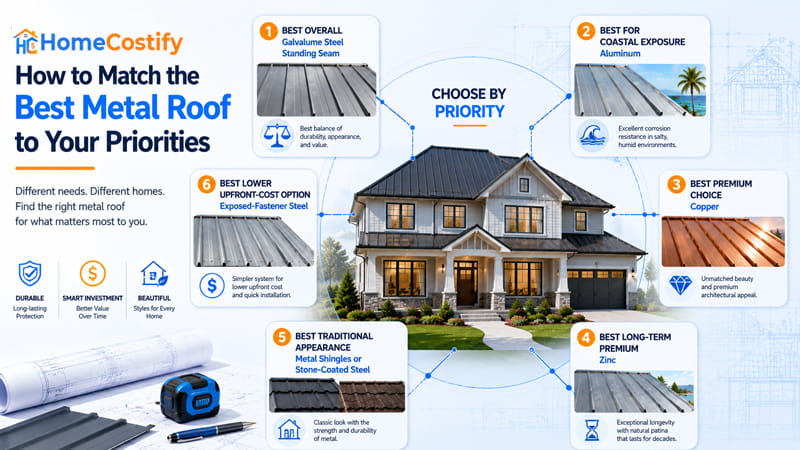
The priority usually comes before the product selection. Coastal exposure raises the importance of corrosion resistance, while design-led projects place greater weight on architectural character. Budget, ownership plans, and traditional appearance can shift the preferred option in another direction.
- Best overall: Galvalume steel standing seam — the best metal roofs for broad residential use balance durability, maintenance, and value.
- Best for coastal exposure: Aluminum — the best metal roof material for significant salt-air exposure when corrosion resistance carries the greatest weight.
- Best premium choice: Copper — suited to design-led homes where architectural character and long ownership support the investment.
- Best long-term premium: Zinc — appropriate for projects where natural patina and extended ownership are central priorities.
- Best traditional appearance: Metal shingles or stone-coated steel — suitable where conventional roof forms need to remain visually consistent.
- Best lower upfront-cost option: Exposed-fastener steel — suitable for projects where simpler initial construction takes priority over concealed components.
How to Compare a Metal Roofing Quote?

A proposal becomes comparable only when the included work and specifications are clear. Missing details can make two prices represent different scopes, even when both proposals cover the same property. Scope of work should therefore be established before the dollar amounts receive close comparison.
What to Verify in the Proposal
- Metal: Exact substrate or material specified.
- Gauge/thickness: Exact specification rather than “heavy-duty metal.”
- Coating/finish: Named product or coating system.
- Profile/system: Standing seam, metal shingles, corrugated, exposed-fastener, or another stated format.
- Fasteners/clips: Specified fastening approach.
- Underlayment: Product and installation scope.
- Flashing: Valleys, walls, chimneys, penetrations, and edges.
- Tear-off: Removal and disposal of existing roofing.
- Warranty: Material or finish coverage separated from workmanship coverage.
- Installer: Experience with the specified roofing system.
Scope completeness matters when assessing the best metal roofing proposal. A lower figure may leave tear-off, flashing, underlayment, or specified finish components outside the quoted work. A higher figure may include those items rather than represent a higher charge for identical work. Equivalent scope provides the proper basis for comparing value.
Final Takeaway
Galvalume steel standing seam remains the strongest all-around choice for many U.S. residential applications. The best metal roof combines durable performance, manageable maintenance, and broad residential suitability without depending on a premium material position.
The strongest choice is the one that fits the property’s priorities and project requirements. Climate, ownership horizon, appearance, budget, specification, and installation quality all belong in that judgment. A strong default becomes the right choice when its characteristics match the property’s priorities and project requirements.
FAQs About Best Metal Roofing
What is the longest lasting metal roof?
Copper and zinc can provide exceptionally long service lives, potentially reaching a century or more with suitable specification, installation, maintenance, and environmental conditions.
What is the strongest gauge of metal roofing for residential use?
24-gauge steel is generally thicker and more rigid than 26-gauge steel. The suitable specification depends on panel design, structural requirements, wind loads, and local conditions.
How long can a metal roof last?
A properly specified metal roof can last for decades. Actual service life varies with material, coating, environment, workmanship, and the condition of supporting roof components.
What type of metal roof is the strongest?
A properly specified standing seam steel system offers strong structural performance and secure panel attachment. Actual results depend on the complete system and its specification.
What color of metal roof is best?
The best color depends on climate, architecture, and personal preference. Lighter finishes can reflect more solar energy, while darker colors may suit certain architectural styles.