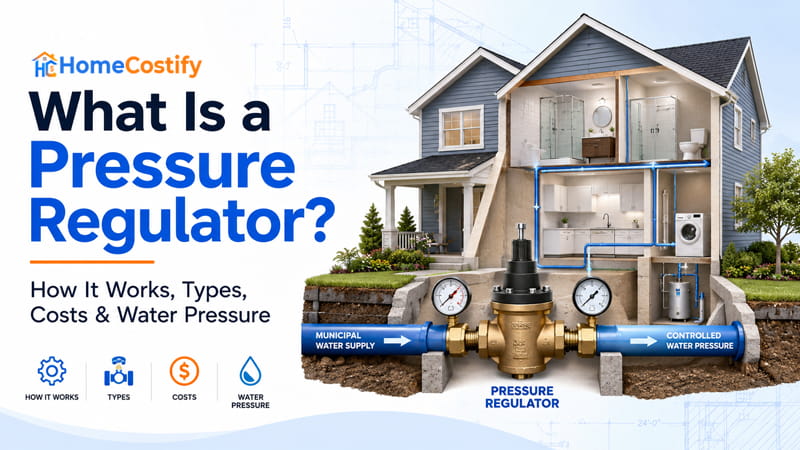
Water pressure begins at the property’s incoming supply before reaching faucets, appliances, and other fixtures. A pressure regulator becomes relevant when the supply arrives at a level unsuitable for household plumbing. Several branches and fixtures share the same incoming supply, so an unsuitable level can create problems in different parts of the house.
A steadier supply makes everyday water use more predictable at faucets and connected equipment. In residential water plumbing, pressure control starts with managing the incoming supply before it travels through the home’s distribution piping.
What Is a Pressure Regulator?
At its simplest, the device controls pressure on the outlet side of a fluid line. Unlike a basic shutoff, it does not remain in one fixed position while water passes through. Its opening changes as the pressure on the controlled side rises or falls. That response is the feature that defines a pressure regulator.
Pressure at the inlet may change as supply conditions shift. A pressure-reducing regulator receives the upstream supply and delivers a lower level on the outlet side. One side connects to the source; the other feeds the home’s plumbing at the regulated level.
A fixed restriction behaves differently because its opening does not adjust in response to downstream pressure. Flow may become more limited, but the restriction itself has no active pressure response. For residential plumbing, a pressure reducing valve provides the automatic control needed when supply pressure must be brought down before distribution.
Residential plumbing gives the term its most familiar application. Water arriving from the supply must pass into the home’s distribution piping at a manageable pressure. A water pressure regulator handles that transition without functioning as a simple device for stopping flow.
How Does a Pressure Regulator Work?
Inside the valve, a change on the outlet side sets a mechanical response in motion. A diaphragm or piston moves against a spring, shifting the opening through which fluid passes. The resulting flow change brings the controlled pressure back toward its intended operating point.
The Sensing Element
A diaphragm or piston sits where pressure can act on its sensing surface. Rising pressure pushes the surface one way, while falling pressure permits movement in the opposite direction. That displacement supplies the mechanical input for the valve’s next response. Direct-acting residential designs commonly use diaphragms, although some models use pistons instead.
The Loading Mechanism
A spring supplies the opposing force in many residential direct-acting designs. The pressure regulator balances that spring load against pressure acting on the sensing element. Increasing spring tension requires greater pressure to move the mechanism, which changes the operating set point. The spring therefore establishes the reference force for the valve’s response.
The Control Element
Force movement reaches a poppet, plug, or disc positioned against a valve seat. Its position determines the size of the passage available for flow. More clearance permits greater flow through the valve; less clearance produces stronger restriction. Here, mechanical movement becomes a change in the physical flow path.
Maintaining the Set Pressure
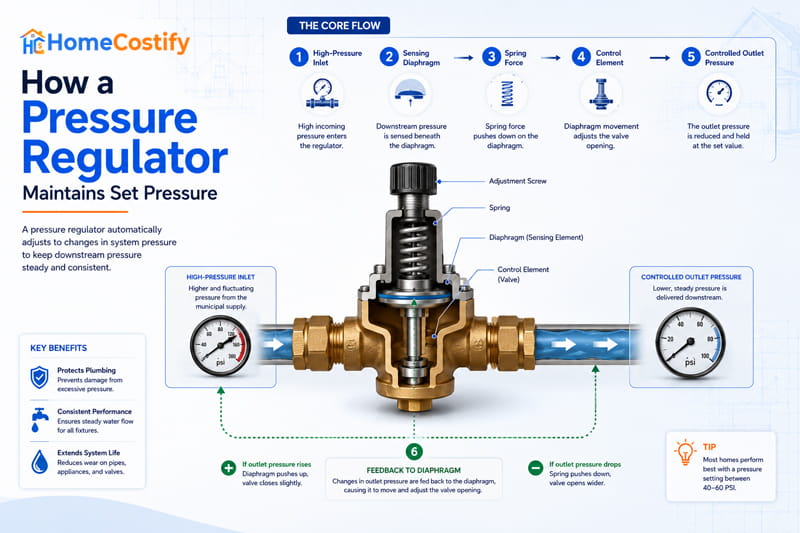
Higher downstream demand reduces the pressure at the outlet. The resulting shift lets the spring move the control element toward a wider opening, admitting more flow. Pressure then moves upward again as the demand is supplied.
When demand falls, pressure at the outlet increases and pushes the sensing mechanism back in the opposite direction.
The opening becomes smaller, limiting passage through the valve. The pressure regulator working principle depends on this repeated feedback between pressure, spring force, sensing movement, and valve opening
The Main Types of Pressure Regulators?
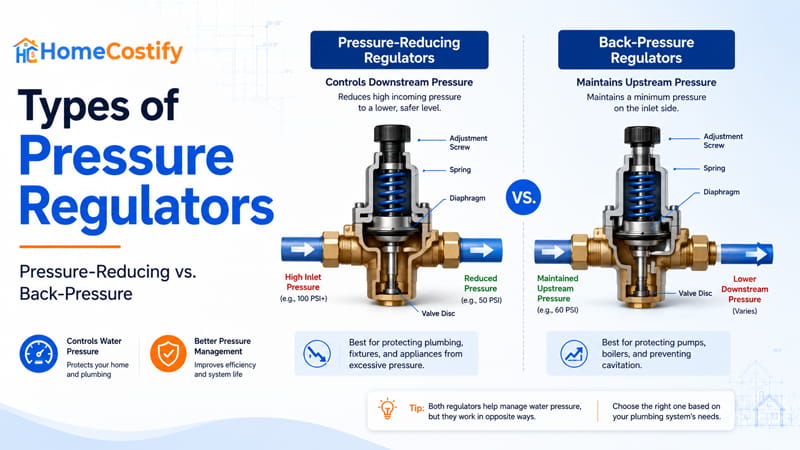
Pressure-regulator types differ according to the side of the system held at the desired pressure. A pressure-reducing regulator controls the downstream side, whereas a back-pressure regulator holds pressure upstream.
Pressure-Reducing Regulators
Higher or variable pressure arrives from the upstream source and leaves the valve at a lower controlled level. A pressure regulator keeps the downstream pressure below the source pressure. Residential water service commonly uses this configuration before water reaches the home’s distribution piping.
The pressure entering the property can differ from the level delivered to downstream fixtures. This arrangement suits systems where incoming pressure exceeds the level required by downstream equipment and fixtures.
Back-Pressure Regulators
Upstream pressure serves as the controlled reference for a back-pressure regulator. The valve remains closed until inlet pressure reaches its set point. At the set point, the valve opens and permits forward flow, relieving pressure on the upstream side.
Its purpose is to hold upstream pressure at the selected level. Household water service normally relies on pressure reduction instead of this type of upstream control. The two types consequently serve opposite pressure-control positions within a fluid system.
Water Pressure in Residential Plumbing
A home’s pressure reading needs context before the number means much to a homeowner. A practical range offers one reference point. A code threshold marks another. The effects of sustained high pressure form the third part of the picture.
What Water Pressure Is Recommended for a Home?
For residential service, 45–60 psi is a useful benchmark for incoming pressure. The U.S. EPA WaterSense program recommends about 45 to 60 psi for residential water systems. That range works as a practical reference, not a fixed setting for every house.
Fixture demand, building layout, and service conditions vary from one property to another. A reading near the middle of the range still needs to be considered alongside the home’s actual setup. The number works best as a starting point when evaluating pressure entering the water supply system.
When Does Pressure Become Excessive?
Static pressure above 80 psi carries a code significance of its own. The 2021 International Plumbing Code requires an approved pressure reducing valve when static pressure inside a building exceeds 80 psi.
The valve must reduce static pressure to 80 psi or less. The 45–60 psi range is a residential benchmark; 80 psi marks the cited code threshold. The 2021 IPC is a model code, so local adoption determines how its provisions apply in a particular jurisdiction.
Why Excessive Pressure Matters
High pressure that persists places added stress on piping, fixtures, and appliances. Connections and fittings experience that load during normal household use. Repeated exposure contributes to fixture damage, equipment wear, premature failure, and leaks.
At fixtures, higher pressure pushes more water through during ordinary use. Where extra flow serves no practical purpose, household water consumption rises.
Finding the Regulator on Your Home’s Water Line
The search starts at the point where the main service enters the property. A meter or shutoff area usually marks the beginning of the home’s primary service route. Follow the supply lines toward branch piping that distributes water throughout the house. The regulator is generally associated with this main path, not with an individual faucet.
Its placement varies with the home’s plumbing configuration. Some installations sit near the meter or shutoff, while others appear farther along the service line. The route also helps identify related parts of a plumbing system without treating each branch as a separate service path.
Look for an inline valve body tied into the main service. Some models have an adjustment screw or bolt on the upper section. The plumbing components list may include nearby valves with similar shapes, so position along the main service helps distinguish the regulator.
Checking Your Home’s Water Pressure
A pressure gauge needs a suitable point where it can read the service entering the house. A hose bibb, washing-machine cold-water connection, or suitable cold-water faucet can serve this purpose. EPA WaterSense guidance identifies these locations for checking service pressure.
What to Check Before Interpreting a Pressure Reading
- Turn off active water use.
- Make sure the gauge connection is secure.
- Check whether the property has more than one water source.
- Record the number before making any adjustment.
With fixtures inactive, the gauge shows static pressure in the system. This is the resting condition, without active fixture demand. A water pressure regulator does not change the meaning of a static reading.
Opening a faucet creates another hydraulic state as water moves through the piping. The resulting number describes pressure under flow instead of the system at rest.
A measured number outside the expected range calls for closer investigation of the supply and pressure-control equipment. The number alone does not establish a failed regulator.
Supply conditions, measurement conditions, and control equipment all deserve consideration. A pressure regulator may be involved, but the reading alone does not identify the source.
How Pressure Control Affects a Home Plumbing System
Pressure entering the main service feeds piping that serves different areas of the house. Branch lines carry that supply toward faucets, appliances, and other plumbing fixtures. The home plumbing system links those branches to the same service source, giving multiple areas a shared downstream condition.
The pressure regulator is installed on the main service line before the piping divides into separate branches. Controlled pressure then moves through the distribution piping toward fixtures across the property.
A kitchen faucet and bathroom fixture can connect through separate branches while remaining part of the same distribution network.
Thermal Expansion After Pressure Reduction
Pressure reduction addresses the incoming supply, but household heating creates another source of pressure change. Water expands as its temperature rises, with a water heater providing the most common residential setting for this process.
Why Heating Can Raise Pressure
Heated water occupies greater volume than cooler water. Inside a water heater, rising temperature gradually increases the volume held by the system. Thermal expansion becomes significant when the surrounding piping has limited room to accommodate the added volume.
Why a Closed System Changes the Pressure
A closed plumbing system limits movement back toward the supply source. Expanded water therefore has less room to move as heating continues. Pressure can rise inside the piping as the additional volume has nowhere else to go.
The U.S. EPA WaterSense guidance notes that a pressure-reducing valve can create a closed plumbing system. Thermal expansion then becomes a separate consideration for the residential installation. The pressure regulator does not cause the water to expand. Its role concerns the incoming pressure entering the downstream piping.
The Role of an Expansion Tank
An expansion tank provides additional space for water that expands during heating. Its purpose differs from the work performed by a water pressure regulator.
The regulator manages pressure arriving from the supply, while the tank accommodates volume created by temperature increases. Each component addresses a different source of pressure within the same household system.
How Much Does a Water Pressure Regulator Cost?
The price of replacing a regulator depends on the work surrounding the component. Access, pipe size, connection condition, labor, and additional plumbing work can all affect the final bill.
Typical 2026 U.S. Replacement Costs
| Cost Item | Typical 2026 U.S. Cost |
|---|---|
| Residential replacement overall | $200–$700 |
| National average | About $400 |
| ¾-inch residential regulator | $200–$400 |
| 1-inch residential regulator | $300–$600 |
| Plumber labor | $75–$200/hour |
| Typical accessible replacement | 1–2 hours |
| Permit, where required | $25–$100 |
What Drives the Final Price?
Pipe size affects the regulator and the connections required for the job. The existing installation also determines how easily a plumber can reach the component.
Tight access can increase labor, while deteriorated connections can add plumbing work beyond the valve itself. Installation complexity therefore varies considerably between properties.
Local labor rates create another difference in the pressure regulator price. Permit or inspection requirements can add separate charges, depending on the jurisdiction.
Emergency service can carry higher labor costs than scheduled work. Additional problems discovered at the connection can expand the original scope.
Repair vs. Replacement
An existing unit in sound physical condition may remain worth servicing. Minor wear does not automatically make a new valve the better financial choice. The condition of the body, connections, and internal mechanism matters when evaluating continued service.
Corrosion, substantial wear, or recurring pressure-control problems can change the economics. Repeated service becomes less attractive if the underlying unit continues to deteriorate.
Water pressure regulator replacement cost matters most when repair work begins approaching the cost and reliability of installing a new component.
How to Choose a Water Pressure Regulator
Pipe diameter alone does not tell a homeowner whether a regulator will suit the installation. The operating pressure, expected demand, connection, materials, and maintenance needs all belong in the selection.
Pressure and Flow Requirements
Pressure at the service connection establishes the operating range the device must handle. The model’s rated range should cover the pressure entering the unit without relying on pipe size as a substitute for performance requirements.
The downstream target also needs to match household demand. Fixtures and appliances draw water at different rates, so expected flow belongs in the selection. A water pressure regulator psi specification indicates the range a model can handle. The chosen unit still needs adequate capacity for the home’s actual flow demand.
Size, Material, and Serviceability
The connection must physically match the existing service arrangement. Thread type, connection size, and material compatibility affect whether the unit can work with the surrounding piping. Pipe diameter is useful here as a physical reference, not as the sole selection criterion.
Maintenance becomes another consideration once physical fit has been established. An accessible strainer can simplify cleaning, while a serviceable design can make future work easier. Certification also helps establish whether a pressure regulator valve for house use meets applicable product requirements.
Pressure Regulator Problems and Warning Signs
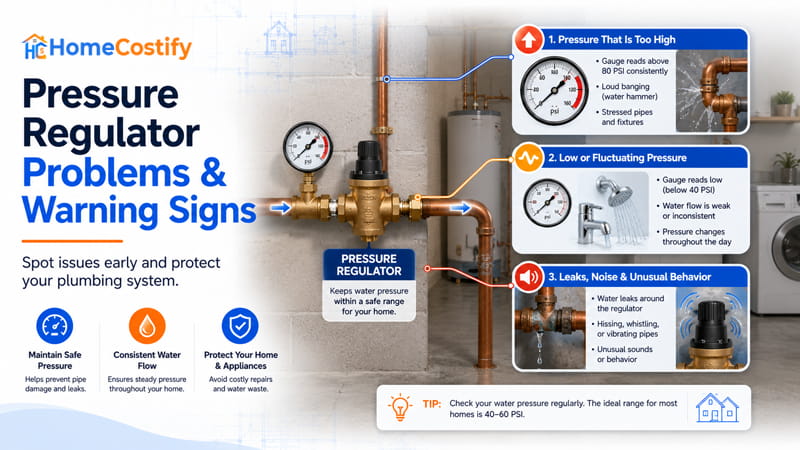
An elevated pressure reading does not prove the regulator has failed. The pattern matters more than a single unusual number. Persistent pressure changes, unstable flow, or physical symptoms can provide useful clues during an initial assessment.
Pressure That Is Too High
Pressure that stays elevated on the downstream side deserves attention, especially with pressure-control equipment already installed. Pressure creep points to a regulation issue, but the incoming supply can produce a similar pattern.
A sustained increase during ordinary household use gives the symptom greater diagnostic value. The pressure regulator becomes one area to examine, rather than an automatic explanation for the result.
Low or Fluctuating Pressure
A weak stream at one fixture does not automatically identify a failed component. Several fixtures operating together can draw down available pressure, while restrictions or limitations in the incoming supply create similar symptoms.
The water pressure regulator problems associated with poor performance form one possibility among several. Persistent fluctuations deserve closer attention when normal household demand does not explain the pattern.
Low water pressure after regulator installation also deserves context. Changes in the supply, restrictions in the piping, or other equipment can produce the same complaint. The observed behavior narrows the possibilities, but it does not establish a specific fault.
Leaks, Noise, and Unusual Behavior
Dripping fixtures, pipe noise, and unexpected pressure changes can accompany pressure-related problems. A faucet that begins dripping or piping that develops unfamiliar sounds provides a physical clue worth investigating.
The pressure regulator valve may be involved, although similar symptoms can arise elsewhere in the plumbing. Signs of a bad water pressure regulator are useful diagnostic clues, not proof of a failed valve.
Pressure Regulator vs. Other Plumbing Valves

Several valve types may appear along the same residential water network. Their roles differ because each addresses a particular operating need. Confusing those roles can lead to the wrong component being selected for the problem at hand.
| Component | Primary Function |
|---|---|
| Pressure regulator / PRV | Reduces or controls downstream pressure |
| Shutoff valve | Stops or permits water flow |
| Pressure relief valve | Releases excessive pressure |
| Check valve | Limits reverse flow |
| Expansion tank | Absorbs thermal expansion |
The plumbing valves listed above do not respond to the same requirement. A shutoff provides flow isolation, while a relief valve handles excessive pressure. A check valve limits reverse movement, and an expansion tank accommodates thermal expansion. Pressure regulation has its own distinct purpose.
A replacement therefore needs to match the problem being addressed. Similar appearance or placement does not make two components interchangeable. Installing a shutoff, relief valve, or check valve in place of a regulator would leave downstream pressure control unresolved.
Final Takeaway
An actual pressure reading gives the homeowner a better starting point than assumptions based on fixture behavior. The number shows the condition present at the point of measurement.
That reading still needs context. Household demand, the surrounding piping, applicable requirements, and the performance of existing equipment all affect how the result should be understood. A pressure value alone does not establish the correct response.
The decision comes down to the home’s actual operating condition and the reliability of its pressure-control equipment. A regulator has value when the system requires controlled pressure and the existing device can maintain it consistently.
FAQs About Pressure Regulator
How Do You Know if Your House Has a Water Pressure Regulator?
Check near the incoming main water line for an inline valve body, often with an adjustment feature. A pressure test can provide additional confirmation.
How Do I Adjust My House Water Pressure Regulator?
Use a pressure gauge and follow the manufacturer’s instructions. Adjustable models change their set point through the adjustment mechanism, so make small changes and recheck the reading.
Does a House Need a Pressure Regulator?
Not every house automatically needs one. The need depends on incoming pressure, system conditions, and applicable local requirements. Excessive pressure may make reduction necessary.
What Happens if You Don’t Have a Water Pressure Regulator?
Persistently excessive pressure can place greater stress on plumbing, fixtures, and appliances. It can also contribute to leaks, equipment problems, and unnecessary water use.
Where Is the Pressure Regulator Located in My House?
A pressure regulator is typically found along the main incoming water service near the point where water enters the property. The exact location varies by home layout.