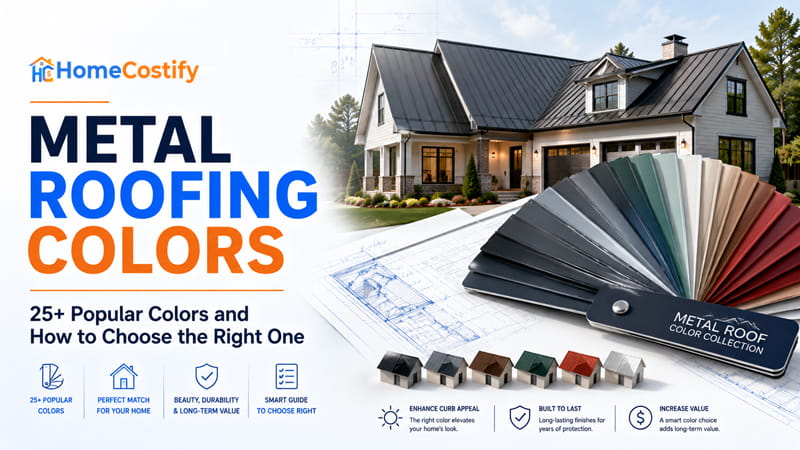
A house roof spans thousands of square feet above siding, brick, trim, and windows. Metal roofing colors therefore take on a different presence once that tiny sample becomes a broad roof plane. Landscaping and nearby surfaces add another layer, especially from the street.
The catalog offers a starting point, not a final answer. Availability sets the choices on the table, then residential popularity adds useful market context. Exterior materials bring their own tones.
Light and dark shades change the amount of visual attention a roof receives, while finish and coating alter its surface appearance. A roof planned for decades of service also needs a color that works with future exterior changes.
Digital previews place a selected shade against a simulated exterior, with lighting and surrounding roofing materials rendered on screen. Physical samples bring the finish beside the siding, trim, brick, or stone already fixed to the house. The final comparison happens at full scale, under the light surrounding the actual roof.
Metal Roof Color Availability
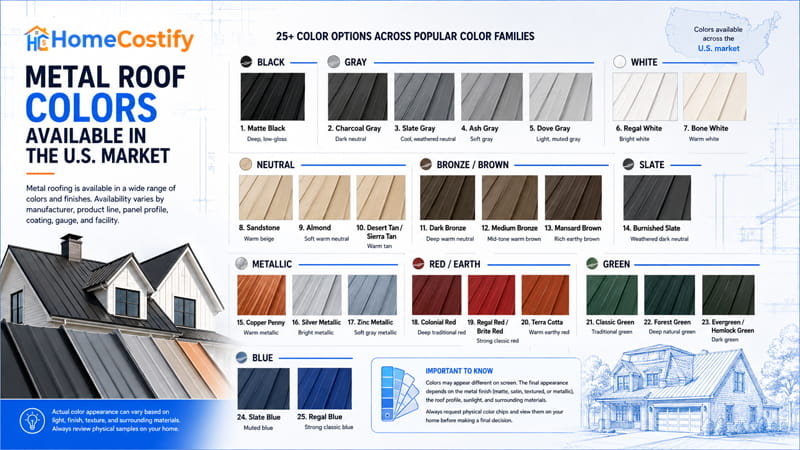
U.S. metal roofing colors available today span dark neutrals, pale tones, earthy shades, traditional accents, metallic surfaces, and natural metal finishes. Metal roof colors listed by manufacturers range from matte black and charcoal to copper, green, blue, and warm tan.
| Color / Finish | Family | Appearance |
|---|---|---|
| Matte Black | Black | Deep, low-gloss |
| Charcoal Gray | Gray | Dark neutral |
| Slate Gray | Gray | Cool weathered neutral |
| Ash Gray | Gray | Soft gray |
| Dove Gray | Gray | Light muted gray |
| Regal White | White | Bright white |
| Bone White | White | Warm white |
| Sandstone | Neutral | Warm beige |
| Almond | Neutral | Soft warm neutral |
| Desert Tan / Sierra Tan | Neutral | Warm tan |
| Dark Bronze | Bronze | Deep warm neutral |
| Medium Bronze | Bronze | Mid-tone warm brown |
| Mansard Brown | Brown | Rich earthy brown |
| Burnished Slate | Slate | Weathered dark neutral |
| Copper Penny | Metallic | Warm metallic |
| Silver Metallic | Metallic | Bright metallic |
| Zinc Metallic | Metallic | Soft gray metallic |
| Colonial Red | Red | Deep traditional red |
| Regal Red / Brite Red | Red | Strong classic red |
| Terra Cotta | Earth/Red | Warm earthy red |
| Classic Green | Green | Traditional green |
| Forest Green | Green | Deep natural green |
| Evergreen / Hemlock Green | Green | Dark green |
| Slate Blue | Blue | Muted blue |
| Regal Blue | Blue | Strong classic blue |
The table is a market reference, not a universal catalog. Manufacturer palettes vary by product line, panel profile, gauge, coating system, and production facility. Color availability varies between standing-seam panel profiles.
The range also extends through metal roofing material types such as Galvalume, zinc, copper, painted steel, specialty finishes, and custom colors. Colored metal roofing therefore requires product-level verification before ordering.
Popular Metal Roofing Colors for Homes
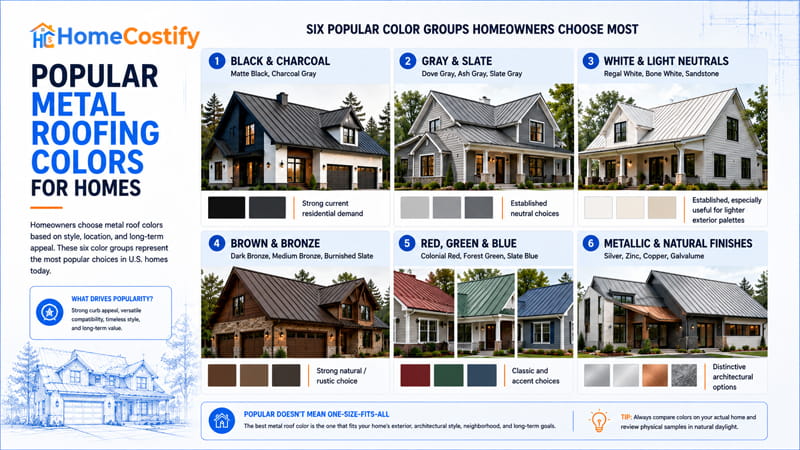
Black and charcoal currently lead residential metal roofing demand, according to industry survey data and manufacturer reports. Gray, slate, white, bronze, and brown form established residential palettes. Red, green, blue, and metallic finishes serve narrower design niches.
| Popular Color Group | Representative Colors | Residential Position |
|---|---|---|
| Black & Charcoal | Matte Black, Charcoal Gray | Strong current residential demand |
| Gray & Slate | Dove Gray, Ash Gray, Slate Gray | Established neutral choices |
| White & Light Neutrals | Regal White, Bone White, Sandstone | Established lighter palette |
| Brown & Bronze | Dark Bronze, Medium Bronze, Burnished Slate | Strong natural/rustic choice |
| Red, Green & Blue | Colonial Red, Forest Green, Slate Blue | Classic/accent choices |
| Metallic & Natural Finishes | Silver, Zinc, Copper, Galvalume | Distinctive architectural options |
Black and Charcoal
Light-colored facades give dark roofing its strongest contrast. Matte Black fits contemporary and farmhouse architecture, particularly where dark window frames and restrained exterior tones already define the facade. The roof then reads as a strong dark element against the lighter wall surface.
Charcoal softens that contrast without losing the depth associated with black. Current industry reporting places black and charcoal at the top of residential demand, with matte and textured surfaces gaining traction alongside them.
Gray and Slate
Gray covers a wide tonal range, from pale ash to deeper slate. That range gives architects and builders room to work with cool or slightly warm exterior palettes without moving into a strong accent color. Slate carries a weathered quality, especially under softer daylight. These tones fit both traditional and contemporary architecture, making gray a recurring category in metal roof colors and styles.
White and Light Neutrals
A light roof gives a pale exterior a quieter upper profile. White works naturally with coastal homes, traditional architecture, and clean contemporary exteriors. Solar performance is a separate question; paint color alone does not establish cool-roof performance.
Brown and Bronze
Warm roofing tones add an earthy character to residential architecture. Dark Bronze has depth without the stark contrast of black, and Medium Bronze falls closer to brown. Burnished Slate bridges gray and earthy tones.
Red, Green, and Blue
Accent colors require a stronger architectural reason. Colonial Red and traditional greens fit selected farmhouse and rural settings, especially where classic building traditions give the facade a distinct visual identity.
Slate Blue and deeper blue tones bring a stronger color presence to coastal and distinctive contemporary palettes. Their stronger color presence calls for careful coordination with the rest of the facade.
Metallic and Natural Finishes
Silver, zinc, copper, and Galvalume put the metal surface at the center of the visual composition. Their surface character differs from painted roofing, so the material reads as part of the architecture. Silver and zinc lean toward contemporary or industrial settings, whereas copper introduces a warmer architectural note.
Metal Roof Colors for Different House Exteriors

The wall material sets the visual starting point for the roof. White siding, brick, gray cladding, timber, and stone each introduce different tones and textures. Metal roof colors read differently beside those surfaces, so a shade that looks balanced on a sample can read differently across the facade.
| House Exterior | Colors to Consider | Why They Work |
|---|---|---|
| White House | Black, Charcoal, Slate Gray, Dark Bronze, Metallic Gray | Strong contrast or balanced neutrality |
| Brick Homes | Dark Bronze, Brown, Burnished Slate, Charcoal, Copper | Complements warm masonry and earthy tones |
| Gray or Beige Siding | Charcoal, Black, Slate Gray, Bronze, Brown | Works with cool or warm neutral undertones |
| Wood and Stone Exteriors | Bronze, Brown, Forest Green, Charcoal, Copper, Weathered Zinc | Connects with natural exterior materials |
Metal Roof Colors for a White House
White siding leaves a broad, pale field around the roofline. Black gives that field the strongest tonal separation, especially on homes with simple trim and dark window frames. Charcoal brings the contrast down a notch.
Slate gray offers a quieter relationship, whereas dark bronze introduces warmth. Metallic gray adds a sharper material quality that can fit contemporary architecture. On white house designs, surrounding trim sets the balance between stronger contrast and softer separation.
Metal Roof Colors for Brick Homes
Brick carries its own color range, often including red, brown, orange, tan, or muted earth tones. Dark bronze and brown reinforce those warmer masonry notes without introducing a competing hue.
Burnished Slate bridges gray and brown, giving the roof a weathered appearance against mixed brick tones. Charcoal produces a stronger tonal break. Copper works best when warm colors already run through the masonry, doors, trim, or nearby hardscape.
Metal Roof Colors for Gray or Beige Siding
Gray siding requires attention to its underlying cast. A cool gray facade pairs naturally with charcoal, slate, and black, especially when window frames repeat cool tones. Beige and taupe lean warmer, opening the door to bronze and brown.
The roof does not need to copy the siding. A measured difference between wall and roof gives the facade clearer definition.
Metal Roof Colors for Wood and Stone Exteriors
Wood and stone bring texture and natural color variation to the facade. Bronze and brown reinforce earthy tones, especially around cedar, fieldstone, and darker timber. Forest green works well in wooded settings where surrounding vegetation already carries deep natural hues.
Copper and weathered zinc add stronger architectural character. Stone deserves attention across its full range of visible tones, since a single piece rarely represents the color found across the facade.
Light or Dark Metal Roof: Which Is Better for Your Home?
Metal roof color has a strong visual effect, yet appearance does not tell the full thermal story. Pale shades recede against a light exterior, whereas dark shades place stronger emphasis on the roof. Climate and surface properties add a separate layer to the decision.
Choose a Light Metal Roof Color When…
Pale exterior palettes pair naturally with lighter roofing, leaving the upper facade visually open. White, light gray, sandstone, and other soft tones work well with coastal architecture and homes built around a bright exterior palette. On homes with extensive roof coverage, lighter shades can reduce the visual dominance of the upper structure.
A steep roof presents a larger field of color from the street, so a light finish draws less attention to the upper facade. Compact roofs expose less surface from street level, whereas larger sections give the selected shade greater visual impact.
Choose a Dark Metal Roof Color When…
A large roof surface gives dark shades a strong architectural presence. Black, charcoal, and deep bronze anchor a light exterior, producing clear tonal separation without additional decorative elements. The effect is particularly pronounced on homes with simple lines and substantial roof sections.
Dark roofing fits architecture built around deliberate contrast. White or pale walls place greater emphasis on the upper structure, while charcoal softens the black-and-white relationship. A steep pitch exposes a larger field of the selected shade from street level.
Consider Your Climate and Solar Reflectance
A roof’s visible color does not indicate its full response to sunlight. The U.S. Department of Energy and Lawrence Berkeley National Laboratory identify solar reflectance and thermal emittance as key surface properties for cool-roof behavior. Coating characteristics also affect how the surface responds to solar radiation.
Solar reflectance measures the fraction of sunlight reflected away from a roof surface. Thermal emittance describes how readily that surface releases thermal radiation. Weather exposure alters reflectance over time, changing the surface properties measured when the roof was new.
Climate changes the practical value of these properties. Cooling savings from highly reflective roofing tend to be greater in hot regions, whereas colder climates can experience increased heating demand from reduced winter heat gain.
A visible shade should not serve as the sole thermal test. Steel roofing with a reflective coating can have surface properties that differ from what its color suggests, so product ratings deserve attention alongside the color name.
How to Compare Metal Roof Colors Before Buying
A manufacturer catalog contains dozens of finishes across different product lines. Comparing them works best as a narrowing process: start with the published palette, test combinations digitally, then inspect physical material under natural light.
Start With a Metal Roofing Color Chart
Manufacturer charts place a wide range of finishes within a single reference. Color families stand out more clearly, with standard shades separated from specialty finishes tied to specific product lines. A metal roofing color chart also puts the available finishes side by side before physical samples enter the process.
The exact panel system still needs verification. A generic manufacturer palette does not necessarily cover every profile or product line. The metal roofing colors chart should correspond with the selected panel series, including its listed finishes and color names. Keep those specifications with the metal roof color samples used for the final comparison.
Use a Metal Roof Color Visualizer
A rendered image places the roof within a simulated exterior setting. Siding, trim, doors, and other visible elements form part of the digital scene. Several combinations can be tested against the simulated facade without changing anything on the actual house.
Screen images have limits. Display brightness, screen settings, image processing, and rendering quality all affect perceived shade. A metal roof color visualizer works as a comparison aid, but its image should not serve as the final reference for physical appearance. Metal roof colors visualizer tools and steel roof color visualizers also vary in image quality and available product libraries.
Compare Physical Samples in Different Light
Actual metal shows surface details absent from a screen image. Gloss changes the highlights, texture alters perceived depth, and nearby colors affect the way a finish reads.
Place the sample beside permanent exterior materials. Direct sunlight and shade produce different readings of the finish, with morning light giving another visual reference from stronger afternoon sun. A physical piece puts the actual surface beside the materials surrounding the roof, something a digital rendering cannot reproduce.
Final Color Comparison Checklist
- Place the sample beside the existing siding.
- View the finish under direct sunlight.
- Check its appearance in shade.
- Revisit the sample at different times of day.
- Set it beside trim and doors.
- Compare the actual metal with the screen image.
How to Choose the Right Metal Roof Color
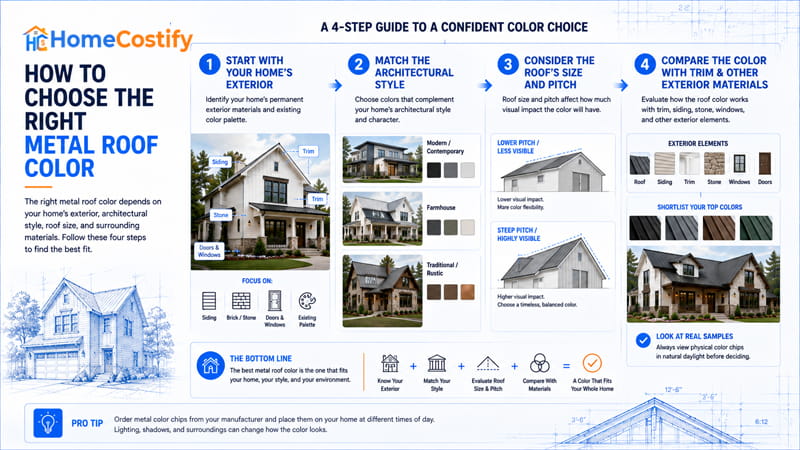
A shortlist becomes useful only after it is tested against the house itself. Fixed materials, architectural form, roof geometry, and small exterior details all deserve attention before a color is approved.
Start With Your Home’s Exterior
The facade supplies the first visual reference. Siding, brick, stone, windows, doors, trim, and permanent landscaping already occupy the view around the roof. Metal roof colors need to sit within that existing setting, not compete with every surface at once.
Permanent materials deserve greater attention than accents that can be changed later. Brick and stone will stay in place for years, whereas a door color or planter can change with a modest project.
Match the Architectural Style
Building form gives the color decision another reference point. Modern houses can carry strong contrast and metallic finishes without making the roof feel out of place. Farmhouse architecture pairs naturally with black, charcoal, bronze, and traditional shades.
Traditional houses often call for restrained neutrals and earth tones. Rustic settings have room for brown, bronze, green, and weathered finishes, particularly around timber, stone, and other natural materials.
Consider the Roof’s Size and Pitch
A steep roof exposes a larger portion of its surface from street level. Large roof areas also give a chosen shade greater visual presence, especially when the roof has few breaks or dormers.
Scale enters the picture through metal roofing dimensions, roof pitch, and the amount of surface visible from the street. Dark shades carry stronger visual mass, so their effect grows with roof size and visibility.
Compare the Color With Trim and Other Exterior Materials
Window frames, doors, and trim can alter the relationship between the wall and the roof. A dark frame can reinforce a darker shade above it, while lighter trim can soften the boundary between surfaces.
Panel specifications become relevant when installing metal roofing, particularly when a preferred finish belongs to a limited product series. Searches for the best metal roofing should not replace verification of the actual color, finish, and panel system available for the house.
Final Selection Checklist
- Does the shade coordinate with permanent exterior materials?
- Does it fit the home’s architectural style?
- Does the roof’s visibility support the selected tone?
- Would the palette still work after a future siding change?
- Is the exact finish offered for the selected panel system?
- Do HOA rules or local design restrictions affect the project?
Metal Roof Colors, Finishes, and Coatings
A product sheet shows the shade, but the coating specification adds another layer of information. Surface treatment then affects the way light reflects from the finished panel.
PVDF vs. SMP Color Performance
PVDF and SMP use different resin formulations for the coating layer. That difference affects how the finished surface responds to sunlight, moisture, and repeated weather exposure.
PVDF is commonly specified for stronger long-term color retention, whereas SMP covers a broad range of residential applications. Product specifications should list the coating system alongside the color and finish.
Ultraviolet radiation, moisture, temperature swings, and local weather all place stress on the coating film. A dark shade from two different coating systems can therefore age at different rates under outdoor exposure.
Matte, Gloss, and Textured Finishes
Surface finish changes the way sunlight reflects across a panel. Matte treatments scatter reflected light and give darker shades a softer appearance. Gloss finishes produce sharper highlights when direct sunlight strikes the surface.
Texture adds another visual layer. Fine patterns break up reflected light and give the surface greater depth without changing its basic metal roof color family.
On a standing seam metal roof, panel geometry adds its own pattern of light and shadow. Smooth gloss can emphasize the clean lines of standing seam metal roof panels, whereas matte or textured surfaces produce a quieter reading.
Color Fading and Long-Term Appearance
Ultraviolet radiation gradually stresses exterior coatings during years of outdoor exposure. Rainfall, humidity, airborne particles, and temperature cycling add further weathering pressure, with local conditions affecting the pace.
The re can extend for decades, yet the original shade can change during that period. Coating formulation, UV exposure, and local weather conditions all influence color retention.
A dark finish can show tonal changes differently from a pale finish as the coating ages. Manufacturer data on color retention gives a stronger basis for judging long-term appearance than the shade name printed on a product sheet.
Metal Roofing Colors and Long-Term Cost
A standard finish from a regular product line is easier to price than a specialty finish with limited availability. Color enters the equation through the product specification attached to it.
When Color and Finish Can Affect Price
A standard shade listed across a regular panel series is generally easier to source. The metal roofing cost can change when the selected shade belongs to a narrower product line or requires a specific finish.
Specialty finishes bring another pricing variable. A premium coating, unusual surface treatment, or limited production series can carry a higher material price than a standard finish. Metal roofing prices therefore need to be tied to the actual panel specification being quoted.
An older roof presents a different problem when replacement panels need to match the existing system. The available color must correspond with the panel profile and finish, and discontinued products can narrow the available options. That can affect metal roofing replacement cost.
A repair has an even narrower material requirement. The replacement piece needs the correct profile, coating, and finish, with color matching handled alongside those specifications. Limited stock or special ordering can affect metal roofing repair cost.
For this reason, colored metal roofing prices should be checked against the actual product line and finish specification. A color name by itself does not establish the material price.
Conclusion
A metal roof color needs to work with the house as a complete exterior, not just look attractive on a catalog page. The available palette sets the realistic options, then siding, masonry, architectural form, and roof visibility narrow the field.
Climate and surface properties add a separate performance consideration. Physical samples deserve the final check beside the materials already fixed to the facade.
A shade that looks balanced on a small chip or digital image still needs to hold that balance across the finished roof. That is where the right metal roofing colors choice proves itself.
FAQs About Metal Roof Colors
What color of metal roof is best?
The best metal color depends on exterior materials, architectural style, climate, roof visibility, and coating specification. There is no universal winner.
What color metal roof fades the most?
Fading varies with UV exposure, coating quality, finish, color characteristics, and manufacturer specifications. No metal roofing color universally fades fastest.
What are some good paint colors for a metal roof?
Black, charcoal, gray, bronze, brown, white, and muted green are common roofing shades. House paint and roof coatings are separate products.
What is the cheapest color of metal roofing?
Standard metal roofing colors within a regular product line often carry fewer sourcing complications. Product series, coating, finish, and availability can affect pricing.
Is it better to have a light or dark metal roof?
Light shades can reduce visual dominance, while dark shades add contrast. Solar reflectance, thermal emittance, and climate add performance considerations.