Replacing a roof usually starts with a budget. The metal roofing cost across the United States commonly ranges from about $14,000 to $30,000, although smaller projects may fall below that range and large homes can push well beyond it.
Online estimates often vary by thousands of dollars. Much of that variation comes from the amount of roofing surface that must be covered, not simply the size of the house.
National averages give a useful reference during the early planning stage. Contractors, though, measure the roof itself before preparing a roofing estimate.
Garages, covered porches, intersecting roof sections, and long roof planes all add surface area that isn’t always obvious from the street. Those measurements directly affect the final metal roof cost.
Current metal roofing prices make more sense once they’re compared with the size and shape of the roof instead of a single national average.
That perspective makes it easier to judge whether a proposal falls within a normal range or deserves a second quote. Anyone preparing for a future roof replacement cost can use those numbers as a practical reference before committing to a full metal roofing installation.
Metal Roofing Cost at a Glance
Most residential projects fall between $7 and $30 per square foot installed, with national averages landing near the middle of that range. Actual pricing can move lower or higher, although these figures offer a reliable starting point for estimating a new metal roofing cost before requesting local quotes.
Average Metal Roofing Cost

The average metal roofing cost across the United States typically ranges from $14 to $16 per square foot installed. That places a full roof replacement near $14,000 to $30,000 for many homes, though compact roofs often remain below that range and large residential projects frequently exceed it.
Roof measurements matter more than interior square footage, so two houses with similar living space do not always end up with similar pricing.
| Project | National Cost |
|---|---|
| Average Installed Cost | $14,000–$30,000 |
| Typical Range | $7–$30 per sq. ft. |
| National Average | $14–$16 per sq. ft. |
National averages make budgeting easier during the planning stage. Local proposals can move in either direction once roof measurements are completed. A quote that sits outside these ranges is not automatically unusual, although it deserves a closer review before any contract is signed.
Metal Roofing Cost by Roof Size
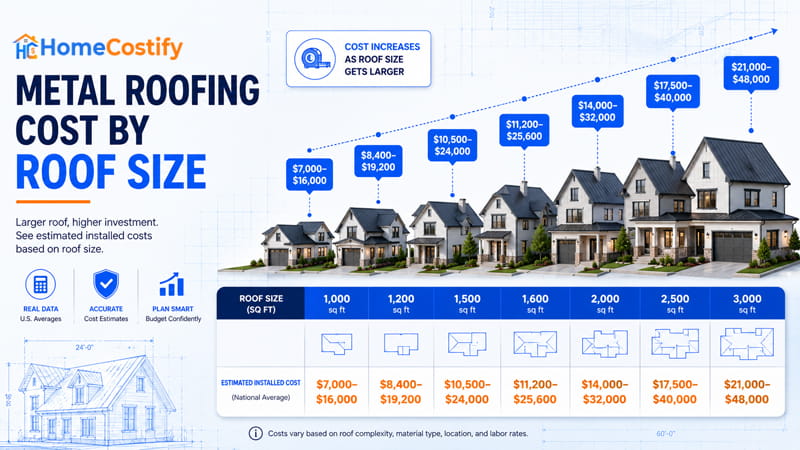
Roof area remains one of the easiest ways to estimate a future project budget. More roofing surface requires more coverage, so total pricing usually rises as the metal roof size increases.
Contractors commonly measure the roof in roofing squares, making square footage a practical reference during the early planning stage.
| Roof Size | Estimated Installed Cost |
|---|---|
| 1,000 sq ft | $7,000–$16,000 |
| 1,200 sq ft | $8,400–$19,200 |
| 1,500 sq ft | $10,500–$24,000 |
| 1,600 sq ft | $11,200–$25,600 |
| 2,000 sq ft | $14,000–$32,000 |
| 2,500 sq ft | $17,500–$40,000 |
| 3,000 sq ft | $21,000–$48,000 |
The 1000 sq ft metal roof cost commonly ranges from $7,000 to $16,000, making it one of the more affordable project sizes on a national basis.
Adding just a few hundred square feet can raise the budget by thousands of dollars. Extra roof area requires additional panel coverage, and that increase appears quickly in the total estimate.
A typical 1500 sq ft metal roof cost falls between $10,500 and $24,000, with larger roofs continuing upward from there. Homes carrying roughly 2,500 square feet of roofing surface often move beyond $30,000 under national pricing.
Comparing projects by roof area usually paints a clearer picture of the expected metal roof cost than comparing houses by interior living space alone.
Metal Roofing Cost by Material

Material selection accounts for the largest share of metal roofing cost. Swap one metal for another and the total can move by thousands of dollars, even if the roof size never changes. Price is only part of that equation. Expected service life changes how those dollars are spread over the years.
Steel Roofing
Steel delivers the lowest entry point among the four major roofing metals. National installed pricing runs about $7 to $14 per square foot, keeping a steel roof near the bottom of current metal roofing prices. That gap becomes much easier to notice on larger roofs, where every additional dollar per square foot multiplies across hundreds or even thousands of square feet.
Steel fits projects where the first estimate carries the most weight. A roof covering 2,500 square feet tells the story quickly. Choosing steel over copper can trim tens of thousands of dollars from the initial proposal without changing the roof footprint.
Aluminum Roofing
Salt air changes the conversation in coastal regions. Homes sitting only a few miles from the shoreline face a level of corrosion that inland neighborhoods rarely experience. That demand keeps aluminum roofing in regular use despite installed pricing of roughly $10 to $20 per square foot.
The material itself accounts for most of the price difference. Inland markets often produce a much smaller financial return from paying extra for aluminum, so steel frequently stays near the top of contractor estimates outside coastal areas.
Copper Roofing
Few roofing materials create the same reaction as copper roofing once the estimate arrives. Installed pricing starts around $20 per square foot, and custom projects regularly pass $40 per square foot. Material alone represents a substantial share of that number.
The first invoice can feel expensive. Forty or fifty years later, that number often looks different because replacement may never become part of the conversation again. Houses expected to stay within the same family for decades frequently place copper in a completely different financial category than a short-term purchase.
Zinc Roofing
Zinc roofing falls between aluminum and copper on the national price scale. Installed costs usually land around $15 to $25 per square foot. That figure places zinc well above steel, though it still sits below premium copper projects.
The purchase price attracts owners thinking well beyond the next few years. A roof expected to stay in service for sixty years or longer spreads that expense across a much longer timeline, changing the way total ownership cost is viewed.
| Material | Installed Cost | Typical Lifespan |
|---|---|---|
| Steel | $7–$14 | 40–70 Years |
| Aluminum | $10–$20 | 40–60 Years |
| Zinc | $15–$25 | 60–100 Years |
| Copper | $20–$40+ | 70–100+ Years |
Why Material Has the Biggest Impact on Metal Roofing Cost
The metal roofing material cost appears in every square foot of the estimate. Adding three dollars to each square foot may not seem dramatic on paper. Spread across a 3,000-square-foot roof, that single decision raises the budget by roughly $9,000 before any other project expense enters the picture.
Metal roofing material types choice reaches beyond the first invoice. Steel carries the lowest purchase price, zinc stretches service life much further, and copper occupies a category of its own. Those trade-offs shape the total metal roof cost long after the roof has been completed.
Guidance from the U.S. Department of Energy points beyond the installation invoice when evaluating a metal roof over decades of use. Climate, insulation quality, and the way a house manages heat all contribute to long-term value.
Reflective sheet metal roofing products can lower cooling demand under suitable conditions, although the outcome depends on local weather patterns and the construction of the home.
Metal Roofing Cost by Roof System

Choosing a roof system changes the final metal roofing cost even when the same metal is used. Panel design, fastening method, and the amount of work required on the roof all affect the total price.
That difference becomes clear once estimates for corrugated panels, standing seam, and metal shingles are placed side by side.
Corrugated Metal Roofing Cost
Corrugated panels sit at the lowest end of national pricing. Installed costs usually range from $7 to $12 per square foot, making this system a common starting point for projects with tighter budgets. A lower price does not come from thinner metal alone.
The panel profile and fastening method keep manufacturing and installation costs lower than premium systems.
That price gap becomes much more noticeable on larger roofs. Covering 3,000 square feet with corrugated panels can trim thousands of dollars from the proposal compared with a standing seam system.
For buyers placing the initial budget ahead of appearance, corrugated panels often produce the lowest metal roof cost.
Standing Seam Metal Roofing Cost
The standing seam metal roofing cost usually falls between $10 and $17 per square foot installed. Much of that increase comes from the concealed fastening system. Fasteners remain hidden beneath the panels, creating cleaner roof lines and adding precision to the installation process.
Panel alignment demands tighter tolerances from one end of the roof to the other. Small mistakes become far more noticeable once adjacent panels lock into place. That additional work raises the total price, even when steel panels are used for both roofing systems.
Metal Shingles Cost
Metal roofing shingles typically range from $9 to $16 per square foot installed. The finished roof resembles traditional asphalt shingles, wood shakes, or slate without using those materials. That appearance attracts buyers who want a more familiar architectural shingles style without moving away from metal roofing.
The price usually lands between corrugated panels and standing seam systems. Decorative panel shapes require more manufacturing than flat corrugated sheets, adding to the purchase price. Even so, metal shingles remain below the upper end of premium standing seam projects in many residential markets.
| Roof System | Installed Cost (Per Sq. Ft.) |
|---|---|
| Corrugated Metal | $7–$12 |
| Standing Seam | $10–$17 |
| Metal Shingles | $9–$16 |
One estimate can vary sharply from another even after the same metal has been selected. Panel shape, fastening method, and manufacturing complexity all contribute to that spread.
Comparing roof systems before requesting contractor quotes gives a clearer picture of where the final metal roofing cost is likely to land, especially when balancing appearance with the expected metal roof cost.
Metal Roofing Installation Cost Breakdown

Material accounts for only part of the total project price. Most metal roof installation cost comes from labor, roof preparation, and the supporting components needed before the first panel goes into place. Breaking those costs apart gives a clearer picture of where the money actually goes.
| Cost Component | Typical Cost |
|---|---|
| Materials | 30–40% |
| Labor | 60–70% |
| Tear-off | $1–$5 / sq. ft. |
| Underlayment | $0.10–$0.90 / sq. ft. |
| Flashing | Varies by roof design |
Metal Roofing Material Cost
Raw materials usually account for 30% to 40% of a completed roofing project. That portion covers metal panels, trim pieces, ridge caps, fasteners, closures, and other products delivered to the jobsite. Material prices change with market conditions, coating options, panel profile, and the type of metal selected.
A difference of only a few dollars per square foot can push the purchase price much higher on larger roofs. Covering 3,000 square feet requires far more material than a compact ranch house, so even small price increases become noticeable once the order reaches the supplier. That portion forms the foundation of any metal roofing replacement cost, though it represents only part of the final proposal.
Roofing Labor Cost
Labor accounts for roughly 60% to 70% of the total roofing labor cost on most residential projects. Crew size, installation time, safety equipment, and panel handling all contribute to that figure. Long panels demand careful positioning across the roof, leaving little room for mistakes during placement.
Simple roof layouts move faster from one section to the next. Valleys, dormers, skylights, and multiple roof sections slow production because each area requires additional measuring, cutting, and fitting. Those extra hours appear in the final metal roofing labor cost, even when the same roofing material is used from one project to another.
Additional Installation Costs
Some expenses appear only after work begins. Others depend on the condition of the existing roof or local building requirements. These items often account for the difference between an online estimate and a contractor’s written proposal.
- Roof tear-off: Removing old roofing materials typically adds $1–$5 per square foot, depending on the number of existing layers.
- Underlayment: New underlayment generally costs $0.10–$0.90 per square foot, with pricing changing by product type.
- Flashing replacement: New flashing is commonly installed around chimneys, skylights, roof valleys, and other roof penetrations.
- Permit and inspection: Local permit fees and inspection charges vary by city and county.
- Roof deck repairs: Sections of the roof deck may need replacement if rot or structural damage appears after the old roof has been removed.
What Affects Metal Roofing Cost?
National averages provide a useful starting point, yet they rarely match every estimate. Houses with the same roof area can receive very different proposals because site conditions, roof design, and local market conditions all shape the final metal roofing cost long before work begins.
Roof Size
Roof size remains one of the strongest price drivers because every additional section of roofing surface requires more panels, trim pieces, and fastening components. A larger roof also extends the time needed to complete the project. Even a few hundred extra square feet can move the total estimate well beyond the national average.
Contractors measure roofing surface instead of interior living space. Garages, covered patios, and roof overhangs add to that measurement, even though they do not increase the home’s floor area. That difference often surprises people comparing online estimates with contractor proposals.
Roof Pitch
A steep roof pitch changes the working conditions from the moment the crew reaches the roof. Workers move more slowly, additional safety equipment becomes necessary, and material handling takes longer than it does on a low-slope roof. Those conditions raise the final metal roof cost without changing the roofing material.
Two roofs with identical square footage can produce different estimates simply because one roof is much steeper than the other. The roof itself stays the same size. The amount of time required to complete the project does not.
Roof Complexity
Simple roof layouts keep pricing closer to national averages. Roofs filled with valleys, dormers, hips, intersecting sections, and multiple skylights require far more cutting and fitting before each panel reaches its final position.
A rectangular roof allows long panel runs with fewer interruptions. Complex layouts break those panels into shorter sections, increasing waste and slowing progress across the roof. Those details accumulate steadily from one roof section to the next.
Geographic Location
Location shapes pricing in more than one way. Labor markets differ from one state to another, building regulations vary by municipality, and transportation costs change with distance from suppliers. The same roofing project may receive very different estimates in Texas, Florida, or California despite using identical materials.
Seasonal demand creates another pricing gap. Areas with shorter roofing seasons often experience heavier demand during peak months, leaving fewer openings on contractor schedules.
Material Availability
Some products remain easy to source across the country. Others require longer shipping distances or special orders before work can begin. Premium panels and specialty finishes do not reach every distributor in the same quantities.
Limited inventory can extend delivery times and raise purchase costs. Regional supply conditions sometimes have just as much influence on a proposal as the roofing system selected for the project.
Contractor Experience
Experience influences pricing because crews familiar with metal roofing often work with specialized equipment, established installation practices, and manufacturers’ requirements. Contractors concentrating on metal roofing may charge more than general roofing companies, particularly for premium roofing systems.
Lower bids are not always comparable. One proposal may include experienced metal roofing crews, whereas another relies on installers who spend most of the year working with different roofing products.
Projects usually cost more when:
- The roof includes multiple valleys, dormers, or skylights.
- Material and equipment accessibility is limited.
- Premium panels require specialized installation.
- Local labor rates exceed the national average.
Metal Roofing Cost vs Shingles
The lowest estimate does not always produce the lowest ownership cost. Comparing upfront pricing with expected service life gives a clearer picture of where the money goes over time, especially when weighing metal roofing cost vs shingles for a long-term roofing project.
Upfront Installation Cost
Asphalt shingles carry the lowest starting price across most residential roofing projects. Installed costs usually range from $6 to $10 per square foot, leaving them below the typical metal roof cost, which starts around $7 per square foot and reaches much higher with premium systems.
That price gap becomes obvious during the first contractor estimate. A house receiving asphalt shingles may require thousands of dollars less at the time of installation, making shingles a common choice when the available budget drives the decision.
Lifetime Ownership Cost
The first invoice tells only part of the financial story. Most asphalt shingle roofs remain in service for about 15 to 30 years, whereas metal roofing lifespan commonly reaches 40 to more than 100 years, depending on the material selected. A longer replacement cycle changes how roofing costs accumulate across decades of ownership.
Research from Oak Ridge National Laboratory found that reflective metal roofing can reduce heat transfer into a house, lowering cooling demand in warmer climates. Energy savings still depend on roof design, insulation quality, and local weather, so results vary from one location to another. That added value sits alongside the extended metal roofing life expectancy, not apart from it.
Which Option Offers Better Long-Term Value?
A roof expected to stay in place for only fifteen or twenty years creates a very different ownership picture than one expected to last several decades. That difference becomes more noticeable for families planning to remain in the same house for a long period. Paying more at the beginning can reduce the likelihood of facing another full roof replacement later.
Short-term ownership points in a different direction. Selling the house within a few years may place greater weight on the initial contract price than on decades of future service. Matching the roofing system with ownership plans usually produces a more balanced decision than comparing the first estimate alone.
| Roofing Material | Installed Cost | Typical Lifespan |
|---|---|---|
| Asphalt Shingles | $6–$10 / sq. ft. | 15–30 Years |
| Metal Roofing | $7–$30 / sq. ft. | 40–100+ Years |
Common Hidden Costs Homeowners Often Miss
Some project costs stay hidden until work begins. The first estimate covers the expected scope of work, yet removing old roofing materials can expose conditions that were impossible to confirm from the surface. Setting aside room in the budget reduces the chance of unexpected surprises after construction starts.
Additional costs may include:
- Structural repairs discovered before the new roof is installed.
- Upgrading attic ventilation to meet current building requirements.
- Premium paint finishes and specialty metal roofing colors.
- Snow guards for homes located in cold-weather regions.
- Disposal fees for old roofing materials.
Structural damage beneath the old roof can raise the total bill beyond the original proposal. Damaged decking, deteriorated framing, or moisture-related issues may require repairs before new panels can be installed.
Those conditions can influence the final metal roof repair cost, even though they were not visible during the first site visit.
Conclusion
National averages offer a useful place to begin, though they represent only part of the picture. The final metal roofing cost changes with the material selected, the roof system, total roof area, and the shape of the roof itself. Two projects carrying the same square footage can still receive different estimates once those details are measured on site.
Price deserves attention, yet it should not become the only deciding factor. Steel, aluminum, zinc, and copper each create a different budget. Corrugated panels, standing seam systems, and metal shingles follow the same pattern. Small changes in those choices can add thousands of dollars to the final contract without changing the size of the house.
Online estimates work best metal roof as an early budgeting reference. They give homeowners a realistic range before requesting local proposals, making it easier to recognize whether a quote falls close to national pricing or moves well beyond it. Comparing estimates from more than one qualified contractor remains one of the most reliable ways to judge the expected metal roof cost for a specific home.
FAQs About Metal Roofing Cost
Is a metal roof worth the higher upfront cost?
For households planning to stay in the same home for decades, the higher purchase price can make financial sense. A longer service life spreads that cost across far more years than asphalt shingles.
How much does a metal roof cost for a 2,000-square-foot home?
National pricing places a typical 2,000-square-foot project between $14,000 and $32,000, depending on the roofing material, roof system, and project requirements.
Does roof pitch increase metal roofing cost?
Yes. Steeper roofs require more time, additional safety equipment, and slower panel handling, all of which increase the final project price.
Can you install metal roofing over shingles?
In some areas, building codes permit installation over a single layer of existing shingles if the roof structure remains in good condition. Local code requirements should always be verified before work begins.
Does homeowner insurance cover metal roof replacement?
Insurance may pay for roof replacement when damage results from a covered event, such as hail or wind. Coverage depends on the policy terms, the cause of the damage, and the insurer’s claim evaluation.