Receiving multiple roofing quotations does not guarantee identical scopes of work. Tear-off, flashing replacement, underlayment, disposal, cleanup, and labor can differ across estimates. As those items change, the architectural shingle replacement cost changes with them, producing totals that can be thousands of dollars apart.
A quoted replacement price covers everything scheduled for the roof, not just new shingles. Labor, roof removal, preparation, permit fees, and supporting roofing components all carry their own share of the final amount.
Early budgeting starts with national planning estimates, then moves to contractor quotations prepared for the home. That progression gives U.S. homeowners a practical financial reference before comparing local pricing. Final contract amounts still come from project-specific proposals prepared for the house, site conditions, and replacement work requested for the roof.
Architectural Shingle Replacement Cost at a Glance
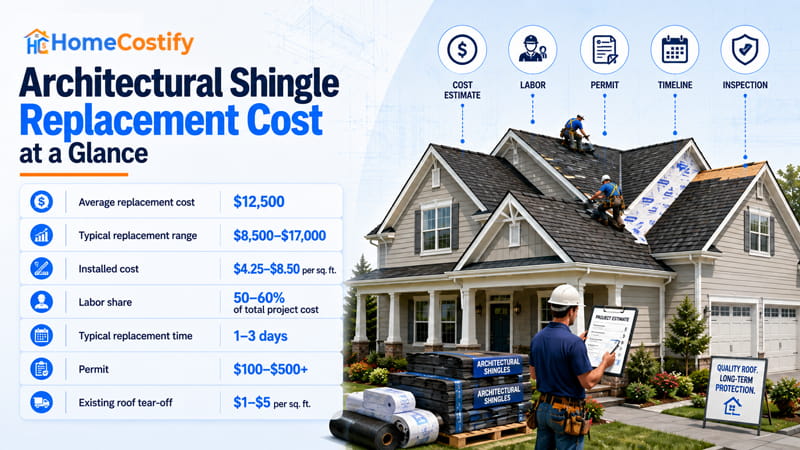
Budget planning begins with a realistic national price range instead of a contractor quotation. Current national averages place the architectural shingle replacement cost near $12,500, with most replacement projects falling between $8,500 and $17,000.
Installed pricing generally ranges from $4.25 to $8.50 per square foot, giving homeowners an early cost snapshot before requesting local estimates.
| Item | Typical National Estimate |
|---|---|
| Average replacement cost | $12,500 |
| Typical replacement range | $8,500–$17,000 |
| Installed cost | $4.25–$8.50 per sq. ft. |
| Labor share | 50–60% of total project cost |
| Typical replacement time | 1–3 days |
| Permit | $100–$500+ |
| Existing roof tear-off | $1–$5 per sq. ft. |
Numbers in the table belong to early budgeting, not a signed construction contract. Installed pricing already includes labor allocation, permit charges, roof removal, and related installation activities.
Aging decking, damaged flashing, ventilation corrections, and structural repairs can expand installation requirements without changing the shingle selected for the house. Those field conditions influence final pricing long before detailed cost breakdowns enter the conversation.
Based on national estimates, replacement pricing commonly falls within the ranges shown above. Contractor quotations remain specific to the roof, inspection findings, and installation requirements for each home.
What Does an Architectural Shingle Replacement Cost Include?
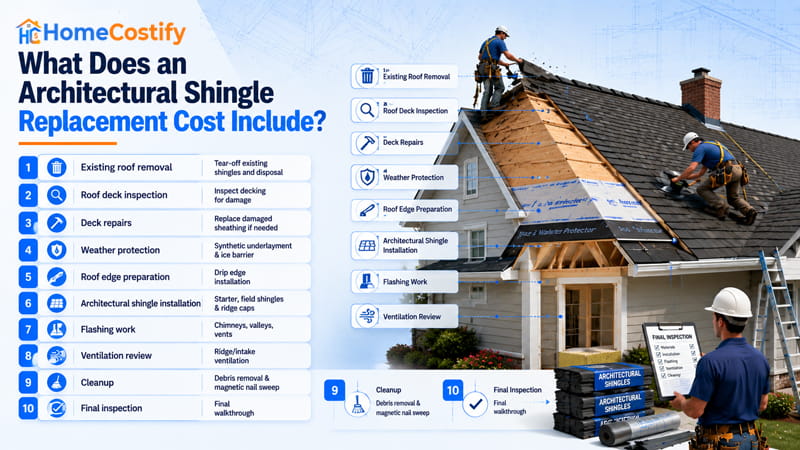
Finished shingles hide nearly everything completed underneath. Deck preparation, synthetic underlayment, flashing, drip edge, ventilation adjustments, and cleanup disappear from view after installation. Architectural shingle replacement cost covers every stage required to reach that finished roof, not just the shingles visible from the street.
| Project Stage | Usually Included |
|---|---|
| Existing roof removal | Tear-off existing shingles and dispose of roofing debris |
| Roof deck inspection | Inspect decking for moisture damage, rot, or structural deterioration |
| Deck repairs (if needed) | Replace damaged roof sheathing before new installation |
| Weather protection | Install synthetic underlayment and ice-and-water barrier where required |
| Roof edge preparation | Install or replace drip edge components |
| Architectural shingle installation | Starter shingles, field shingles, ridge caps, proper fastening |
| Flashing work | Replace or integrate flashing around chimneys, valleys, vents, and roof penetrations |
| Ventilation review | Upgrade or retain ridge and intake ventilation when appropriate |
| Cleanup | Remove debris and perform magnetic nail sweep |
| Final inspection | Final walkthrough and workmanship verification |
Removing the Existing Roof
Loose granules, brittle shingles, aging felt, and rusted flashing disappear first. Open roof decking replaces the finished surface that had covered the house for years.
Valleys, vent openings, chimney intersections, and roof edges now sit fully exposed, giving roofing crews an unobstructed view of conditions that remained hidden beneath the previous roof covering.
Inspecting and Repairing the Roof Deck
Dark moisture stains, swollen sheathing, soft wood, and loose fastening areas stand out once the old covering is gone.
Damaged panels are removed wherever solid fastening can no longer be achieved. Sound decking leaves a stable surface for synthetic underlayment and every roofing layer installed above it.
Installing the New Architectural Shingle Roofing System
Protection develops through overlapping roofing layers instead of shingles alone. Synthetic underlayment separates moisture from roof sheathing. Drip edge directs runoff away from exposed wood.
Flashing seals valleys, chimneys, skylights, and vent penetrations. Installing architectural shingles comes after those surrounding details are in place. Architectural shingle materials and architectural shingle dimensions differ across manufacturers, yet fastening patterns and ridge caps still complete the finished roof.
Cleanup and Final Inspection
Driveways, lawns, planting beds, patios, and walkways receive as much attention as the roof itself. Scrap materials leave the property, followed by a Magnetic Nail Sweep across surrounding surfaces.
Final walkthroughs check visible workmanship, roof penetrations, flashing details, and site cleanliness before the job reaches completion.
Average Architectural Shingle Replacement Costs by Roof Size
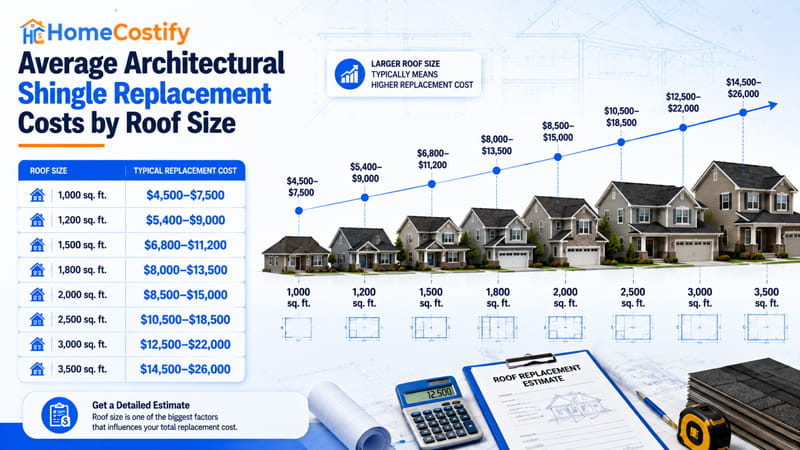
Square footage offers the quickest starting point for early budgeting. Architectural shingle roof replacement cost rises as measured area increases, although larger layouts do not always produce a higher price per square foot.
The table below gives planning ranges for full replacement projects before homeowners request a roof replacement estimate.
| Roof Size (sq. ft.) | Typical Replacement Cost |
|---|---|
| 1,000 | $4,500–$7,500 |
| 1,200 | $5,400–$9,000 |
| 1,500 | $6,800–$11,200 |
| 1,800 | $8,000–$13,500 |
| 2,000 | $8,500–$15,000 |
| 2,500 | $10,500–$18,500 |
| 3,000 | $12,500–$22,000 |
| 3,500 | $14,500–$26,000 |
Homes with straightforward layouts sometimes produce lower square-foot pricing than smaller houses containing multiple valleys, dormers, and roof penetrations. Larger surface area does not automatically produce a higher unit cost because simpler layouts reduce cutting, material waste, and crew movement across the structure.
Measured dimensions establish material quantities, disposal volume, crew hours, and equipment needs used to prepare an architectural shingle roof replacement cost. Expanding the roof footprint generally increases those requirements, although the increase does not always follow a straight line from house to house.
Equal square footage can still produce different replacement totals. A broad rectangular footprint demands different material layouts than a house broken into multiple intersecting sections, leaving identical measurements with different installation demands.
Size-based figures work best as an initial comparison against the dimensions of a house. Local quotations should still reflect measured area, and a roof replacement cost calculator should be treated as a screening tool rather than the final price for an architectural shingle roof replacement cost.
Why Architectural Shingle Replacement Costs Vary
Proposal totals reflect scheduled work, equipment needs, production hours, and local compliance. A higher figure does not automatically indicate excessive pricing. Additional work written into the proposal can raise an architectural roof replacement cost without changing the architectural shingles selected for the home.
Roof Pitch and Accessibility
Steeper slopes change the way crews move across the surface. Harness systems, roof brackets, staging equipment, ladder placement, and material loading all slow production compared with low-slope homes.
Distance from driveways, limited equipment access, and landscaping obstacles add handling time before installation even begins. Physical access influences labor planning long before shingle bundles reach the work area.
Existing Roof Condition
Aging roofing surfaces rarely present identical working conditions. Multiple existing layers, brittle shingles, deteriorated underlayment, and widespread moisture exposure increase preparation before fresh materials can be installed.
Estimating visits document visible conditions across the structure, allowing architectural shingle replacement cost to reflect the work expected at the property instead of relying only on measurements.
Regional Labor Costs
Hiring markets differ across the country. Wage levels, seasonal demand, workforce availability, and local competition influence proposal totals even when specifications closely match.
A roofing cost estimator or roofing cost calculator offers broad planning figures, although local labor markets still shape the amount homeowners ultimately pay.
Permit and Disposal Requirements
Municipal rules vary from one jurisdiction to another. Permit applications, landfill policies, disposal regulations, and hauling procedures introduce administrative work beyond material delivery and installation.
Local compliance requirements can increase an architectural roof replacement cost, even where construction specifications remain unchanged.
Contractors calculate production hours, site logistics, safety requirements, regulatory obligations, and planned work before assigning a price. Homeowners frequently compare the number at the bottom of the proposal first, even though much of the calculation happens long before the first shingle is installed.
Hidden Costs That Can Increase an Architectural Shingle Replacement Project
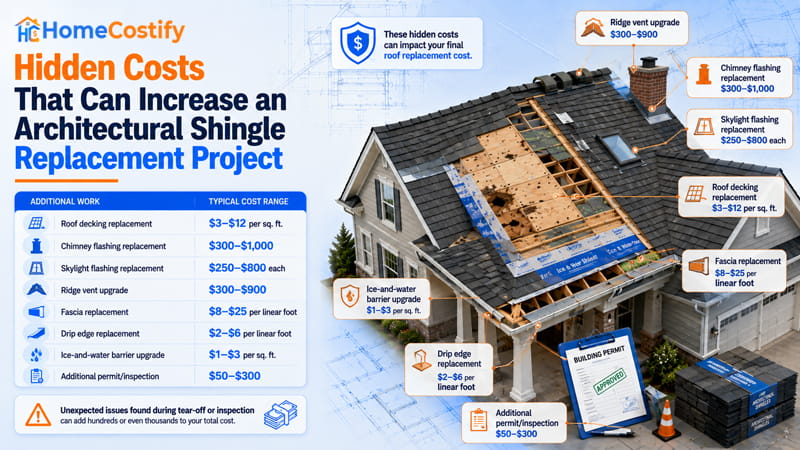
Exterior inspections cannot verify every concealed condition beneath an aging roofing system. Tear-off exposes surfaces hidden for years, bringing deteriorated wood, worn metal, moisture intrusion, or code-related deficiencies into view for the first time.
Added work identified after removal can change the agreed project total, leaving adjustments to architectural shingle replacement cost supported by photographs, written findings, and homeowner approval.
| Additional Work | Typical Cost Range |
|---|---|
| Roof decking replacement | $3–$12 per sq. ft. of damaged decking |
| Chimney flashing replacement | $300–$1,000 |
| Skylight flashing replacement | $250–$800 per skylight |
| Ridge vent upgrade | $300–$900 |
| Fascia board replacement | $8–$25 per linear foot |
| Drip edge replacement (if not included) | $2–$6 per linear foot |
| Code-required ice-and-water barrier | $1–$3 per sq. ft. (affected area) |
| Additional permit or inspection fees | $50–$300 |
Hidden conditions rarely justify surprise billing without documentation. Photographs, written descriptions, revised pricing, and signed approval give homeowners a clear record of every added task before work resumes.
Careful documentation matters as much as the repair itself whenever revisions affect architectural roof replacement cost.
Unexpected work that may increase replacement costs includes:
- Damaged roof decking uncovered during tear-off.
- Worn chimney or skylight flashing requiring replacement.
- Code-mandated underlayment or ice barrier upgrades.
- Ridge ventilation improvements for proper airflow.
- Fascia or roof edge repairs discovered after shingle removal.
Unexpected Decking Repairs
Moisture staining, delaminated sheathing, and localized wood decay stay concealed until older materials leave the structure. Surface inspections cannot confirm those conditions with certainty because finished roofing covers the supporting panels.
Limited sections sometimes need fresh sheathing before new materials return, preventing weakened wood from supporting the finished roofing assembly.
Flashing and Ventilation Upgrades
Rust, separated joints, cracked sealant, and worn ridge vents frequently surface during tear-off. Fresh shingles placed against deteriorated metal leave vulnerable transition points around chimneys, skylights, valleys, and vent penetrations.
Replacing surrounding components adds work reflected in architectural roof replacement cost, even though the selected shingles never change.
Building Code Requirements
Local regulations occasionally require construction practices absent from older homes. Ice-and-water barriers, edge protection, or similar upgrades can become mandatory during reroofing despite sound existing materials.
Compliance enters architectural roof replacement cost through current building standards instead of visible deterioration or product failure.
Structural Repairs Found During Tear-Off
Open framing sometimes reveals localized deterioration hidden beneath finished surfaces. Damaged blocking, weakened attachment points, or isolated framing defects become visible only after older roofing layers are removed.
Written authorization should precede corrective work, supported by photographs, updated pricing, and a documented change order identifying every added item separately from the original agreement.
How Long Does an Architectural Shingle Replacement Take?
Weather, building design, and site conditions influence the calendar from the first delivery through the final walkthrough. Most homes finish within a few working days under favorable conditions, although unexpected discoveries or extended rainfall can lengthen the schedule after crews begin replacing architectural shingles.
| Project Stage | Typical Time |
|---|---|
| Material delivery & preparation | Half day–1 day |
| Tear-off existing roof | ½–1 day |
| Roof deck inspection & minor repairs | Same day–1 day |
| Installing new roofing system | 1–2 days |
| Cleanup & final walkthrough | Several hours |
Typical total duration: 1–3 working days for an average single-family home.
Simple layouts frequently move from delivery to final walkthrough faster than houses filled with valleys, skylights, chimneys, and intersecting sections. Daily progress follows crew productivity as much as measured area, leaving two similarly sized homes with noticeably different completion dates.
Typical Replacement Timeline
Material delivery and equipment setup normally begin first. Existing materials come off next, followed by deck evaluation and any localized corrections. Fresh underlayment, shingles, ridge components, and finishing details follow across the active surface.
Cleanup, magnetic nail collection, and the final walkthrough complete the schedule. Under favorable conditions, replacing architectural shingles for an average home commonly fits within one to three working days.
What Can Extend the Project?
Rain stops exposed surfaces from moving into the next stage until conditions dry. Localized sheathing replacement, complicated layouts, limited material deliveries, and difficult site access can add extra calendar time without changing the original project size. Temporary interruptions affect scheduling far more than the published timeline shown above.
Active job sites bring steady noise, material deliveries, trailers, and limited driveway access during daylight hours. Temporary inconvenience forms a normal part of the process and usually ends after cleanup and the final walkthrough.
A roof replacement estimate outlines the planned schedule, although actual completion still follows field conditions rather than the original calendar. An architectural shingle roof replacement cost does not predict how quickly a crew can finish the job.
Insurance Considerations for Architectural Shingle Replacement
Insurance decisions begin with the cause of loss, not the roofing material selected for the home. Wind, hail, falling tree limbs, and other covered perils are evaluated differently from gradual deterioration or age-related wear.
Eligibility for payment follows the source of the damage, leaving cost to replace architectural shingle roof secondary to the claim itself.
When Insurance May Cover Replacement
Severe wind, hail impacts, fallen branches, and similar storm events commonly form the basis of a covered claim. Adjusters evaluate physical evidence, weather records, and visible storm-related destruction before approving payment.
A sudden event documented after a specific date carries stronger claim support than gradual deterioration developing across years.
What Homeowners Usually Pay Out of Pocket
Natural aging, granule loss, fading, curling, and ordinary wear commonly fall outside standard policy protection. Localized deterioration sometimes justifies an architectural shingle repair cost instead of full replacement when surrounding areas stay serviceable.
Widespread storm destruction approved under the policy follows a different claim path than deterioration linked to normal service life. Personal funds frequently cover cost to replace architectural shingle roof when age becomes the primary reason for the project.
Documentation Contractors Often Provide
Photographs, inspection reports, written findings, and a roof estimate form the foundation of most claim files. Date-stamped images, marked damage locations, and detailed scope descriptions give adjusters consistent evidence during review. Organized documentation reduces uncertainty by connecting visible conditions with the reported loss.
How to Read an Architectural Shingle Replacement Estimate
A written estimate should describe the job in enough detail to answer questions before any agreement is signed. Line items, material specifications, allowances, and written procedures carry greater value than the final number alone.
| Estimate Item | Why It Matters |
|---|---|
| Roof size measurement | Defines project scope |
| Tear-off scope | Confirms removal of existing roofing |
| Deck repair allowance | Explains how hidden damage will be handled |
| Flashing replacement | Prevents water intrusion |
| Underlayment specification | Shows weather protection system |
| Ventilation work | Improves long-term roof performance |
| Cleanup & disposal | Confirms project completion standards |
| Warranty information | Defines post-installation coverage |
Line items deserve attention before the final total. Allowances, material specifications, written scope, exclusions, and payment terms reveal exactly what each company intends to perform. Missing descriptions leave room for uncertainty later, even when pricing appears competitive.
What a Complete Estimate Should Include
Measurements, material specifications, removal details, underlayment descriptions, ventilation notes, cleanup standards, and written allowances belong in a complete document. Every section should describe the expected scope with enough detail to prevent assumptions.
Detailed paperwork gives homeowners stronger context than roofing cost estimates built around a single dollar amount.
Why Two Estimates Can Look Very Different
Different documents rarely follow identical formats. Product specifications, material grades, disposal methods, allowances, and optional upgrades vary from company to company. Some proposals also list architectural shingles colors even though color selection has little effect on project scope.
Higher totals sometimes reflect broader written specifications, leaving cost to replace architectural shingle roof supported by additional detail instead of unexplained pricing.
Questions to Ask Before You Sign
Written approval should answer every unresolved question before signatures reach the agreement page. Clarify payment timing, allowance limits, optional items, and the procedure for unexpected findings.
Every Change Order deserves written authorization with revised pricing before additional tasks begin. A free roofing estimate offers an initial reference, although signed paperwork carries the binding project terms.
How to Compare Architectural Shingle Replacement Quotes
Choosing between written quotations starts with the information printed on each page, not the lowest number at the bottom. Clear descriptions, detailed specifications, stated responsibilities, and written commitments reduce uncertainty during the decision process.
Better documentation gives homeowners stronger confidence than a single figure tied to replace architectural shingles.
| Item to Review | Why It Matters |
|---|---|
| Roof size measurement | Defines project scope |
| Tear-off scope | Confirms removal of existing roofing |
| Deck repair allowance | Explains how hidden damage will be handled |
| Flashing replacement | Prevents water intrusion |
| Underlayment specification | Shows weather protection system |
| Ventilation work | Improves long-term roof performance |
| Cleanup & disposal | Confirms project completion standards |
| Warranty information | Defines post-installation coverage |
Transparent paperwork reduces assumptions. Missing descriptions leave unanswered questions that frequently surface after signatures, leaving homeowners uncertain about responsibilities, exclusions, or optional items already expected by the company.
Before choosing a contractor, confirm that every proposal clearly identifies:
- Complete tear-off and disposal.
- Roof deck inspection procedures.
- Flashing and underlayment specifications.
- Warranty coverage and exclusions.
- Cleanup responsibilities and final inspection.
- Additional work approval process.
Comparing Scope Instead of Price Alone
Specification pages deserve attention before dollar amounts. Material descriptions, disposal methods, ventilation details, written allowances, and exclusions reveal how each company plans to complete the job.
Documents occasionally list architectural shingles cost, although appearance should never outweigh written scope when selecting a company. Broader specifications frequently deliver better long-term value than proposals focused only on replace architectural shingles.
Reviewing Warranties and Contractor Credentials
Licensing, certifications, local references, and communication standards deserve equal attention. Review both Workmanship Warranty and Manufacturer Warranty, then confirm which responsibilities belong to each party.
Product literature mentioning architectural shingles lifespan or identifying the best architectural shingles should support the written specification instead of replacing clear contractual language.
Detailed documentation lowers uncertainty long before signatures reach the agreement page. A roofing cost estimator offers broad budgeting guidance, yet the written quotation remains the stronger decision tool because commitments, exclusions, responsibilities, and documented specifications continue long after the project concludes.
Conclusions
Few homeowners replace a roof frequently enough to learn every detail before the first proposal arrives. Reading the paperwork carefully, understanding the planned scope, and asking questions about unclear items can prevent costly misunderstandings after construction begins.
A well-documented agreement gives both sides a shared expectation from the first delivery through project completion, making the decision far stronger than choosing a company based only on the lowest number.
FAQs About Architectural Shingle Replacement Cost
How often should an architectural shingle roof be replaced?
Replacement depends on roof condition rather than age alone. A professional inspection is the best way to determine whether the roofing system still performs as intended.
Can a new architectural shingle roof be installed over existing shingles?
Some jurisdictions and roof conditions allow overlay installations, but full tear-off generally provides a better opportunity to inspect the roof deck and supporting components.
Is replacing only one roof section a good alternative?
Partial replacement may work after localized damage, but widespread deterioration often makes a complete replacement more practical and consistent.
Will premium shingles significantly increase replacement costs?
Premium products can increase the proposal, but labor, roof complexity, and project scope usually have a greater impact on the total replacement cost.
When should I request multiple roofing estimates?
Obtaining at least two or three detailed written estimates helps homeowners compare project scope, warranties, and contractor recommendations before signing a replacement contract.