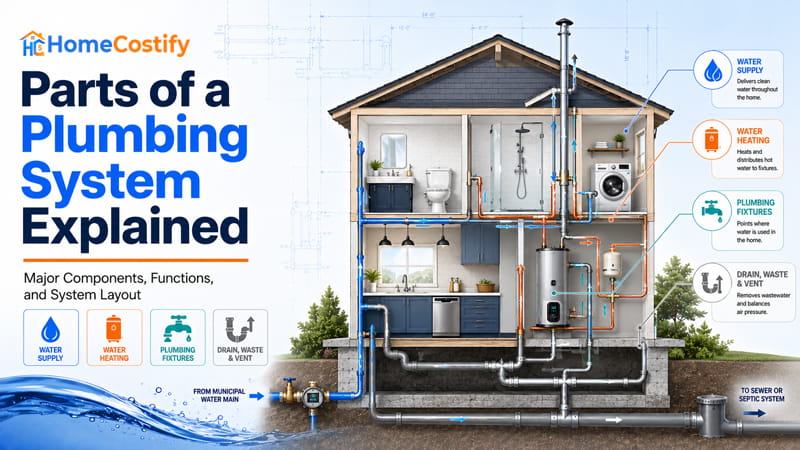
A residential plumbing system includes far more than a single pipe carrying water across a house. The parts of a plumbing system are arranged into functional groups that bring fresh water indoors, distribute hot water for daily use, carry wastewater away, and maintain stable air pressure inside enclosed piping.
Treating plumbing as a list of pipes leaves out its underlying structure. Houses contain a service entry, supply lines, locations where water is used, drainage routes, and supporting components, each occupying a defined position within the network.
Technical references classify these elements by function instead of listing them as unrelated parts. The result matches the physical layout found inside a house.
What Are the Main Parts of a Plumbing System?
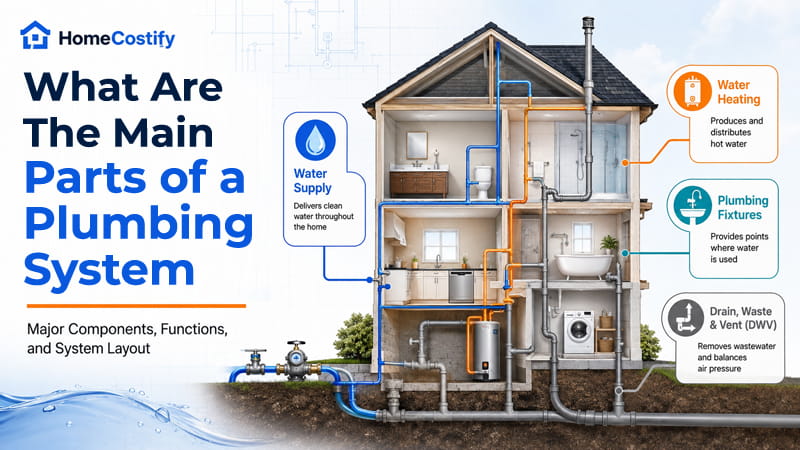
Most residential systems contain dozens of components, yet parts of a plumbing system fall into four primary categories based on function. This structure identifies where a component belongs within the system without introducing technical details too early.
Water supply carries potable water from the service entry into the distribution piping. Water heating supplies heated water for fixtures requiring higher temperatures. Plumbing fixtures serve as the locations where water is used during everyday activities. The drain, waste, and vent (DWV) system carries wastewater away and maintains balanced air pressure inside drainage piping.
| Plumbing Subsystem | Primary Function |
|---|---|
| Water Supply | Delivers clean water throughout the home |
| Water Heating | Produces and distributes hot water |
| Plumbing Fixtures | Provides points where water is used |
| DWV System | Removes wastewater and balances air pressure |
Water Supply Parts That Deliver Clean Water
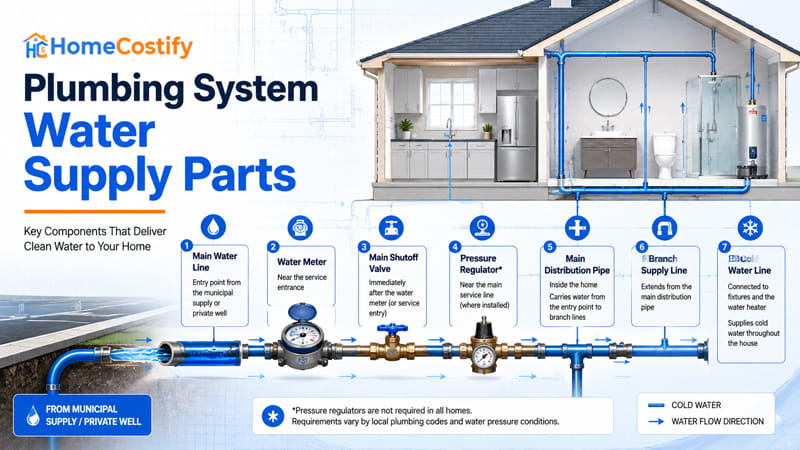
Water supply covers the plumbing equipment that carries potable water from the source to household fixtures. Pipes, valves, and control devices occupy specific locations between the utility connection and points where water is used.
| Water Supply Component | Location in the System | Primary Function |
|---|---|---|
| Main Water Line | Entry point from the municipal supply or private well | Brings clean water into the home |
| Water Meter | Near the service entrance | Measures household water consumption |
| Main Shutoff Valve | Immediately after the water meter (or service entry) | Stops water flow to the entire house when needed |
| Pressure Regulator* | Near the main service line (where installed) | Maintains stable water pressure |
| Main Distribution Pipe | Inside the home | Carries water from the entry point to branch lines |
| Branch Supply Line | Extends from the main distribution pipe | Delivers water to plumbing fixtures |
| Cold Water Line | Connected to fixtures and the water heater | Supplies cold water throughout the house |
The layout begins at the property connection and ends at plumbing fixtures. Control devices remain concentrated near the service entrance, whereas interior piping extends toward kitchens, bathrooms, laundry areas, and outdoor hose bibs. Each section occupies a defined location within that layout, creating a continuous route from the source to every point of use.
Main Water Entry Components
Connection to a municipal water system or private well begins at the main water line, marking the boundary between public infrastructure and household plumbing.
Positioned near the service entrance, the water meter measures household consumption for utility billing or usage records.
Installed beside the meter or service connection, the main shutoff valve isolates household plumbing from the incoming utility line whenever the water supply must be stopped.
A pressure regulator appears where incoming pressure exceeds local requirements. These plumbing system parts define the transition between the public water supply and interior plumbing.
Distribution Pipes Inside the Home
The main distribution pipe carries potable water across the house. Branch connections extend to kitchens, bathrooms, laundry areas, and exterior hose bibs.
Each branch supply line serves a designated fixture or fixture group. The cold water line supplies fixtures requiring unheated water and feeds the water heater. These parts of a plumbing system form the interior distribution network linking trunk piping to fixture branches.
Why Reliable Water Distribution Matters
Every fixture depends on an uninterrupted path extending from the property connection to the outlet. A closed shutoff valve, a missing branch line, or a disconnected trunk pipe interrupts delivery beyond that location.
The function as successive sections of one network, not isolated pieces of equipment. Service equipment occupies the entry point, trunk piping spans the structure, and branch lines terminate at fixture connections.
Water Heating Parts That Supply Hot Water
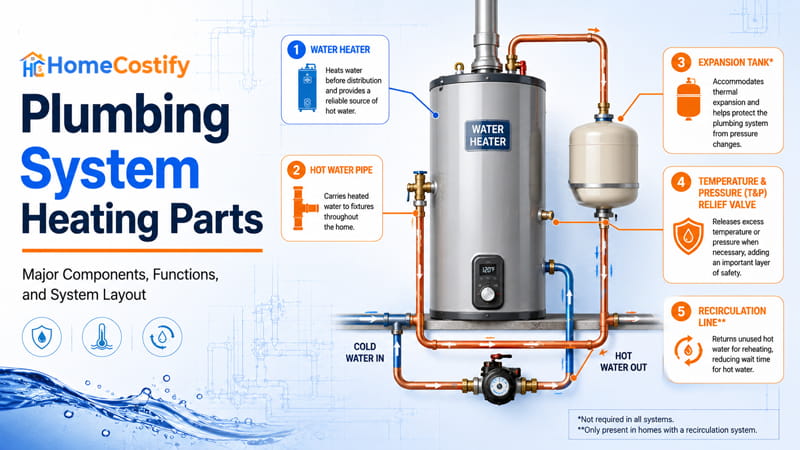
Hot water reaches household fixtures through a separate heating section within residential plumbing. Heating equipment, distribution piping, safety devices, and optional return piping occupy different positions between the water heater and fixture connections.
| Water Heating Component | Primary Role | Why It Matters to the System |
|---|---|---|
| Water Heater | Heats water before distribution | Provides a reliable source of hot water for household use |
| Hot Water Pipe | Carries heated water to fixtures | Delivers hot water where it is needed throughout the home |
| Expansion Tank* | Accommodates thermal expansion | Protects the plumbing system from pressure changes caused by heated water |
| Temperature and Pressure (T&P) Relief Valve | Releases excess temperature or pressure when necessary | Adds an important layer of safety for the water heating system |
| Recirculation Line** | Returns unused hot water for reheating | Reduces wait time for hot water in homes equipped with a recirculation system |
Heating equipment represents only one section of the hot-water network. Safety devices occupy positions near the heater, distribution piping extends toward fixture branches, and recirculation piping appears only on systems built with a return loop.
Core Components of a Water Heating System
A water heater raises incoming cold water to the required operating temperature. Heated water leaves the appliance through a dedicated outlet serving the hot-water network.
A hot water pipe carries heated water from the appliance to fixture branches located across the house. Kitchens, bathrooms, laundry areas, and other fixture groups receive service from this piping.
An expansion tank accommodates the additional volume created as heated water expands inside a closed plumbing system. Pressure changes remain contained within the heating section instead of transferring into connected piping.
The temperature and pressure relief valve opens when temperature or internal pressure exceeds its rated limit. Discharge passes through a dedicated relief pipe rather than returning to the distribution network.
Together, these plumbing system parts form the main parts of a plumbing system responsible for household hot-water delivery.
How Hot Water Reaches Plumbing Fixtures
A hot water line carries heated water from the appliance to fixture connections requiring warm or hot water. Separate branches supply sinks, showers, bathtubs, washing machines, and similar plumbing fixtures.
The cold water line continues serving fixtures requiring unheated water and supplies the water heater with fresh incoming water. Both piping networks operate alongside each other without sharing the same distribution branch.
A recirculation line appears on systems built with a return loop. Unused hot water returns to the heater instead of remaining inside branch piping until the next demand.
Within the parts of a plumbing system, hot-water piping functions as a dedicated distribution network operating alongside the cold-water network. Both remain separate from the drainage system, yet terminate at many of the same plumbing fixtures.
Plumbing Fixture Parts Where Water Is Used
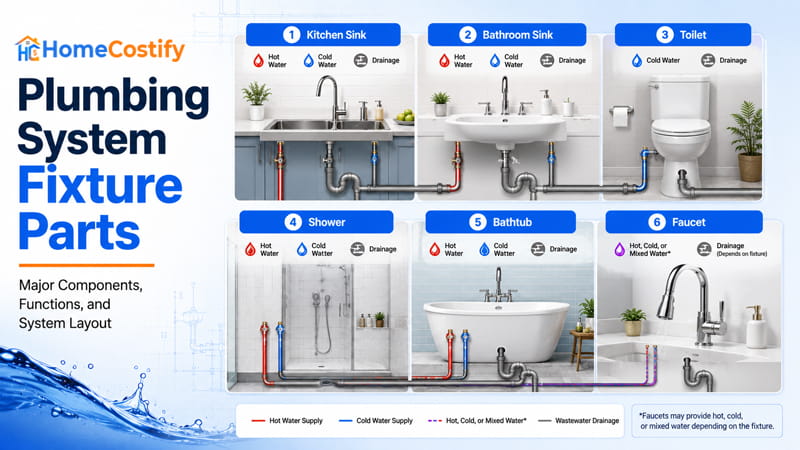
Plumbing fixtures mark the endpoint of the household water supply. Every fixture receives clean water for a specific purpose and transfers used water into the drainage network after use.
| Plumbing Fixture | Water Supply | Wastewater Drainage | Primary Household Function |
|---|---|---|---|
| Kitchen Sink | Hot & cold water | Yes | Food preparation, dishwashing, and cleaning |
| Bathroom Sink | Hot & cold water | Yes | Handwashing, grooming, and personal hygiene |
| Toilet | Cold water | Yes | Waste removal and flushing |
| Shower | Hot & cold water | Yes | Bathing and personal care |
| Bathtub | Hot & cold water | Yes | Bathing and soaking |
| Faucet | Hot, cold, or mixed water* | Depends on the connected fixture | Controls water flow at plumbing fixtures |
Each fixture joins two plumbing networks. Supply piping terminates at the point of use, and drain piping begins after water leaves the fixture. That junction appears throughout residential plumbing regardless of fixture type.
Common Plumbing Fixtures Found in Homes
A kitchen sink supports food preparation, dishwashing, and general cleaning. Separate drain piping carries wastewater away after use.
A bathroom sink serves handwashing, shaving, toothbrushing, and other daily hygiene activities. Most homes include one or more units connected to the drainage system.
A toilet receives cold water for flushing and directs waste into the home’s drain and plumbing vent network.
A shower delivers mixed hot and cold water through a shower valve and drain assembly. A bathtub follows the same supply and drainage arrangement while adding a larger basin for bathing.
A faucet regulates water discharge at a plumbing fixture. Kitchens, bathrooms, laundry sinks, utility sinks, and outdoor fixtures use different faucet configurations according to their intended function.
These plumbing system parts represent the locations where household occupants interact directly with residential plumbing.
Appliances Connected to the Plumbing System
Some household appliances connect to the plumbing network even though they are not classified as plumbing fixtures.
A dishwasher receives water through a dedicated supply connection and discharges wastewater into the kitchen drain. A washing machine follows a similar arrangement with separate supply hoses and a standpipe drain.
Some refrigerators include a water dispenser or ice maker supplied through a small branch line. Models without either feature operate independently of household plumbing.
Together with fixed fixtures, these appliances form additional parts of a home plumbing system because they draw water from the supply network and discharge wastewater after use.
Why Fixtures Complete the Supply Cycle
Every fixture marks the transition between clean-water delivery and wastewater removal. Supply piping ends at the point of use, and drainage begins once water leaves the fixture.
Among the major parts of a plumbing system, fixtures occupy the boundary between distribution and drainage. Every sink, toilet, shower, bathtub, appliance connection, and faucet links those two networks through a single point of use.
Drain, Waste, and Vent Parts That Remove Wastewater Safely
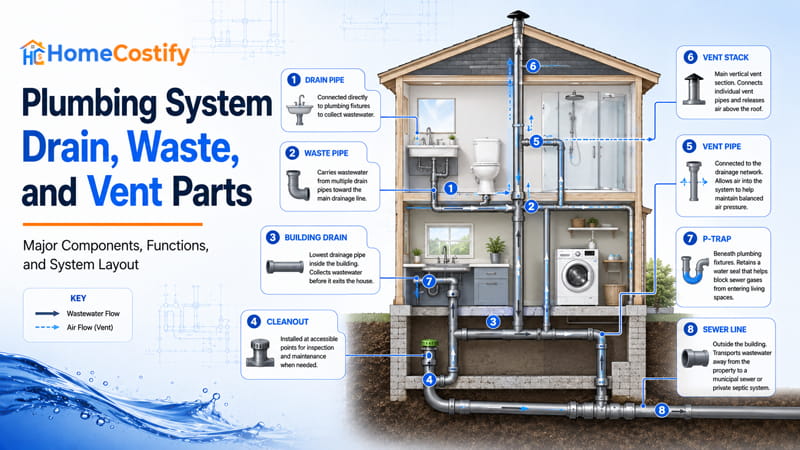
Household plumbing separates wastewater from the clean-water supply. Drain, waste, and vent (DWV) components collect used water, route it toward the building exit, and maintain stable air movement within the drainage network.
| DWV Component | Position in the Drainage System | Primary Role |
|---|---|---|
| Drain Pipe | Connected directly to plumbing fixtures | Collects wastewater from sinks, showers, tubs, and other fixtures |
| Waste Pipe | Between fixture drains and the building drain | Carries wastewater from multiple drain pipes toward the main drainage line |
| Building Drain | Lowest drainage pipe inside the building | Collects wastewater before it exits the house |
| Sewer Line | Outside the building | Transports wastewater away from the property to a municipal sewer or private septic system |
| Vent Pipe | Connected to the drainage network | Allows air into the system to maintain balanced air pressure |
| Vent Stack | Main vertical vent section | Connects individual vent pipes and releases air above the roof |
| P-Trap | Beneath plumbing fixtures | Retains a water seal that blocks sewer gases from entering living spaces |
| Cleanout | Installed at accessible points along the drainage system | Provides access for inspection and maintenance when needed |
DWV components occupy different locations within one continuous drainage network. Fixture drains connect to larger collection piping, vent piping accompanies the drainage path, and access fittings appear at selected points where the network changes direction or extends over longer distances.
Drain Components That Collect Wastewater
A drain pipe connects directly to a plumbing fixture and carries wastewater away after use. Every sink, shower, bathtub, floor drain, and similar fixture begins the drainage path with its own branch drain.
A waste pipe receives discharge from multiple drain pipes serving the same area of the house. Branches from kitchens, bathrooms, and laundry rooms merge into larger waste piping as the drainage network expands.
The building drain forms the lowest horizontal drainage section inside the structure. All interior drainage piping joins this line before leaving the building envelope.
A sewer line continues the drainage path outside the house and transports wastewater away from the property. The discharge point connects to a municipal sewer or a private onsite disposal system without changing the function of the piping itself.
Within the parts of a plumbing system, these drainage components create a continuous route from household fixtures to the property’s external wastewater connection.
Vent Components That Balance Air Pressure
Drainage piping operates alongside a separate venting network. Vent piping extends upward from the drainage system and terminates above the roof.
A vent pipe introduces air into the drainage network, supporting stable gravity flow inside drain and waste piping. Fixture branches and larger drainage sections connect to vent piping at designated locations.
A vent stack collects vent connections from different parts of the building into one primary vertical section. Roof termination allows the vent network to remain open to the atmosphere.
Among residential plumbing system parts, venting components occupy the same overall drainage system as waste piping while performing a different function. Water and air travel through separate passages connected within the DWV network.
Supporting Components That Improve Maintenance Access
A P-trap sits beneath plumbing fixtures and retains a standing water seal between occupied spaces and the drainage network.
A cleanout creates an access point along drainage piping where inspection equipment or maintenance tools can enter the system. Changes in direction, long pipe runs, and building exits commonly include cleanout fittings.
According to the U.S. Environmental Protection Agency (EPA), building plumbing includes interconnected piping, fixtures, and equipment that distribute clean water and collect wastewater as one integrated infrastructure. The drainage network therefore forms one of the major parts of a plumbing system, not a separate utility.
How All Plumbing System Parts Work Together
Residential plumbing operates as one connected network. Water supply, hot-water distribution, plumbing fixtures, and drainage occupy different sections of the same infrastructure, with each section transferring water to the next stage of household use.
From Water Entry to Waste Removal
The service connection marks the starting point of the household plumbing network. Incoming water passes through supply components before entering the interior water distribution piping.
Cold-water branches deliver water directly to fixtures requiring unheated water. Additional supply piping feeds the water heater, where a separate hot-water network serves fixtures requiring heated water.
Every plumbing fixture marks the point where water leaves the supply network and enters household use. Sinks, toilets, showers, bathtubs, appliances, and similar connections discharge wastewater into the drainage system after use.
Drain pipes collect wastewater from individual fixtures before joining larger waste piping inside the building. The building drain transfers combined discharge to the sewer line, completing the drainage path beyond the structure.
Viewed as a whole, the parts of a plumbing system form a continuous plumbing network extending from the property water connection to the external wastewater connection. Each group of plumbing system parts occupies a defined position within that network.
Why Every Subsystem Depends on the Others
Water distribution, hot-water supply, fixtures, drainage, and venting perform different functions but operate within the same infrastructure. A disruption affecting one subsystem changes the performance of the connected sections because every group transfers water or wastewater to the next stage.
The American Society of Plumbing Engineers (ASPE) classifies water distribution, drainage, venting, fixtures, and associated plumbing equipment as fundamental elements of building plumbing reference standards. That framework places subsystem relationships alongside individual component functions as part of technical plumbing design.
How plumbing works reflects the interaction between the parts of a home plumbing system, where water supply, fixtures, drainage, and venting operate as connected subsystems.
Conclusions
Residential plumbing combines water supply, water heating, plumbing fixtures, and the DWV network within one plumbing network. Clean-water distribution and wastewater removal occupy different sections of that infrastructure, yet both depend on continuous pipe connections between subsystems.
Plumbing system parts therefore represent functional sections of one residential network rather than isolated pipes, fixtures, or fittings.
FAQs About Parts of a Plumbing System
What are the main parts of a plumbing system?
The parts of a plumbing system generally include the water supply network, water heating system, plumbing fixtures, and the drain, waste, and vent (DWV) system.
What is the difference between plumbing parts and plumbing components?
Plumbing parts describe individual items or subsystem groups, whereas plumbing components functions as a broader term covering the elements that make up the complete plumbing system.
Are the same plumbing parts found in every home?
Most homes contain the main parts of a plumbing system, although the number, size, and arrangement of components vary with building design and plumbing layout.
Do all types of plumbing systems use the same basic parts?
Most types of plumbing systems share the same core subsystems, although distribution layouts, system capacity, and component configurations differ between buildings.
Why are vent pipes important in a plumbing system?
Vent pipes maintain balanced air pressure within the drainage network, and their inclusion forms part of modern plumbing codes governing residential plumbing systems.