
The cheapest way to heat a house depends on the home’s existing heating setup, available fuel source, and how much space needs to be heated. Natural gas can be among the lowest-cost whole-house approaches where gas service and suitable equipment already exist, while heat pumps can be a strong low-cost alternative for homes that rely on electricity.
The answer can change when only part of a house needs heat. A home with only a few occupied rooms has a different heating demand from one that requires consistent whole-house heating. That makes cheap ways to heat your home dependent not simply on the purchase price of a heater, but on the amount of space being heated and the setup already available.
10 Cheapest Ways to Heat a House
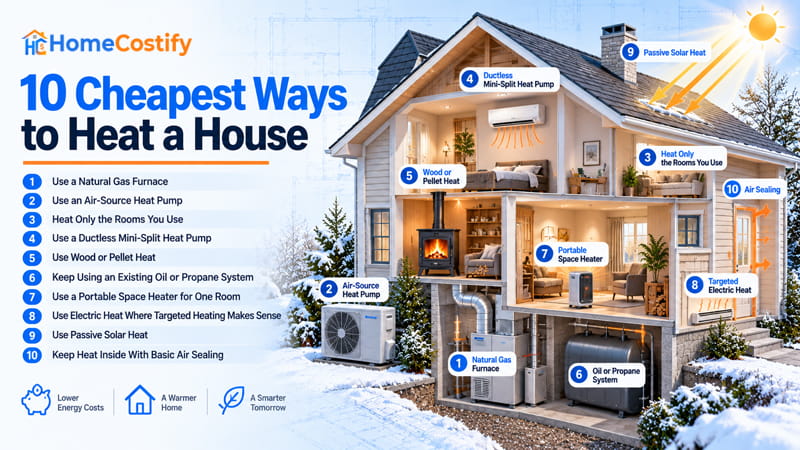
The cheapest heating approach depends on more than the price of the energy itself. Existing equipment, the area that needs heat, and the infrastructure required to deliver it can all change which option costs the least in practice.
1. Use a Natural Gas Furnace
A natural gas furnace can be one of the lowest-cost ways to provide consistent heat throughout a house when natural gas service and a suitable central heating system are already available. Its advantage is strongest when the home already has the equipment and distribution needed for whole-house heating.
Existing ductwork and a gas connection also reduce the need for additional infrastructure. That makes natural gas particularly practical for a homeowner who can continue using an established system rather than paying to introduce a different heating source. The economics can be less favorable when new gas service, ductwork, or major equipment installation is required.
2. Use an Air-Source Heat Pump
An air-source heat pump can provide whole-house heating without directly generating all of its heat through electrical resistance. Instead, it transfers available heat into the home. ENERGY STAR says an air-source heat pump can deliver up to three times more heat energy to a home than the electrical energy it consumes, although actual performance depends on the system and operating conditions.
That efficiency can make a heat pump a strong low-cost heating choice for homes that already rely on electricity, particularly when replacing less efficient electric resistance equipment. A central heat pump can use existing ductwork, while a ductless configuration can serve homes without conventional air distribution. The economics still depend on local electricity rates, climate, system performance, and installation requirements.
3. Heat Only the Rooms You Use
The amount of space being heated directly affects how much heat a home needs. If bedrooms, guest rooms, or other areas remain unused for long periods, maintaining the same temperature throughout the house can create a larger heating load than focusing warmth on occupied areas.
The main advantage of this approach is reducing the scope of heating, rather than changing the fuel or heating equipment. It can work well in homes where daily activity is concentrated in only part of the house, provided cooler unused areas do not create problems for plumbing, moisture control, or the condition of the space. In that situation, cheap ways to heat your house can come from heating fewer square feet rather than finding a different heating system.
4. Use a Ductless Mini-Split Heat Pump
A ductless mini-split can be a cost-effective heating approach when installing or extending conventional ductwork would add significant complexity. The system delivers conditioned air directly into individual rooms or zones, avoiding the need for a full central air-distribution network.
Its economic advantage therefore comes from the distribution side of the heating system rather than simply from using electricity. A home without usable ducts may avoid a major infrastructure project by installing a ductless system instead. The approach can also suit additions, converted spaces, or layouts where extending existing ductwork would be difficult.
5. Use Wood or Pellet Heat
Wood or pellet heating can be inexpensive to operate when the fuel is readily available at a favorable local cost and the home already has suitable equipment. Firewood prices can vary substantially by location, while pellet costs depend on local supply, transportation, and seasonal demand, so the economics are highly dependent on where the home is located.
Fuel handling is part of the practical cost. Wood heating may require storage, loading, and ash removal, while pellet systems require a reliable supply of pellets and appropriate storage. For a homeowner who already has the equipment and affordable fuel access, those requirements may be reasonable; for someone starting from scratch, installation and ownership demands can change the calculation.
6. Keep Using an Existing Oil or Propane System
An existing oil or propane system can remain a practical low-cost choice when the equipment, distribution system, and fuel arrangement are already established. Continuing to use a serviceable system avoids immediately taking on the cost of replacing equipment or changing the home’s heating infrastructure.
This does not mean oil or propane will always have the lowest operating cost. The key consideration is the difference between continuing with an existing system and paying for a conversion to another heating source. Fuel prices, equipment condition, maintenance needs, and the cost of a replacement all influence whether changing systems would actually reduce the homeowner’s total expense.
7. Use a Portable Space Heater for One Room
A portable space heater can be economical when the actual requirement is limited to one occupied room for a relatively short period. Instead of supplying heat throughout the house, the appliance concentrates its output where warmth is immediately needed.
The limitation is scale. A portable heater that works well for occasional room heating may become a poor economic choice when used for long periods or to maintain comfort across multiple rooms. As operating time increases, electricity consumption becomes a larger part of the decision, so its low upfront cost should not be confused with the lowest cost for whole-house heating.
8. Use Electric Heat Where Targeted Heating Makes Sense
Existing electric resistance systems can remain practical when a home already has baseboard heaters, wall-mounted units, or similar equipment that is still serviceable. Keeping that system avoids turning a change in heating technology into a larger replacement project involving new equipment or distribution infrastructure.
The key issue is therefore replacement economics, not whether electric resistance is the most efficient heating technology. If replacing the system requires substantial upfront work, the potential operating savings from a different system may take time to offset that investment. For an existing system that still meets the home’s heating requirements, continuing to use it can be a reasonable choice and may help save on your electric bill when heating is limited to the areas that actually need warmth.
9. Use Passive Solar Heat
Passive solar heat can provide warmth without purchasing fuel for the sunlight itself. Winter sunlight entering appropriately positioned windows can warm floors, walls, and furnishings, allowing those surfaces to contribute heat to the interior during colder periods.
Its usefulness depends on factors the homeowner may not be able to change easily, including window orientation, solar exposure, shading, and the home’s ability to retain heat after sunset. Passive solar therefore works best as a source of additional heat rather than as a guaranteed replacement for mechanical heating. Its potential cost advantage comes from using naturally available solar gain when the home can capture it effectively.
10. Keep Heat Inside With Basic Air Sealing
Basic air sealing can make heating less expensive by reducing uncontrolled air leakage through common gaps around doors, windows, and other openings. When less heated indoor air escapes and less cold outdoor air enters, the heating system has less work to do to maintain the desired indoor conditions.
This approach differs from replacing a furnace or installing another heating appliance because it reduces the heat demand placed on the existing system. The most useful starting point is noticeable leakage that directly affects comfort or allows substantial outdoor air movement. Air sealing does not replace the need for adequate heating capacity, but it can make the heat already being produced go further.
Which Way Is the Cheapest for Most Homes?

The lowest-cost choice depends on the starting point of the house. Existing fuel service, heating infrastructure, and the amount of space that needs regular warmth can change which method has the strongest cost advantage.
| Home situation | Strongest low-cost candidate | Why it can make sense |
|---|---|---|
| Existing natural gas + ductwork | Natural gas furnace | Uses existing distribution and a relatively low-cost fuel |
| No natural gas + electric service | Air-source heat pump | Uses electricity more efficiently than resistance heat |
| No ductwork | Ductless mini-split | Avoids adding a full duct system |
| One occupied room | Targeted space heating | Avoids heating the entire house |
| Existing inexpensive wood supply | Wood heating | Local fuel availability can lower operating cost |
When Natural Gas Is Available
For a house that already has natural gas service and suitable ductwork, the main advantage is that the homeowner does not need to create an entirely new heating infrastructure. The existing setup can make natural gas a cheapest heating system to run in some locations, depending on local fuel prices and equipment performance.
The comparison changes when gas service or central heating infrastructure would need to be added. In that situation, the cost of establishing the system becomes part of the decision rather than simply comparing the price of natural gas with other fuels.
When the Home Uses Electricity
An all-electric home still has multiple heating-cost pathways because the technology using the electricity matters. Heat pumps transfer heat rather than relying entirely on electrical resistance, while existing resistance systems produce heat directly from electricity.
That distinction means the cheapest heat source for house heating is not determined by the electricity rate alone. The home’s existing equipment, system efficiency, and heating requirements all influence which electric approach is most economical.
When Only Part of the House Needs Heat
The size of the heated area can change the economics even when the home’s energy prices and equipment remain unchanged. Heating an entire house requires a different amount of delivered heat from warming only a small occupied area.
This is especially relevant when occupancy is uneven. A method designed for whole-house heating may not have the same cost advantage when only one or two areas require regular warmth, making heating scope an important part of the comparison.
According to the U.S. Energy Information Administration, final 2025–26 winter estimates put average household expenditures at about $642 for natural gas, $1,133 for electricity, $1,210 for propane, and $1,390 for heating oil. These figures are broad household averages rather than direct switching-cost comparisons, and individual results can vary with local rates, weather, home size, building efficiency, and existing equipment.
What Makes One Heating Method Cheaper Than Another?
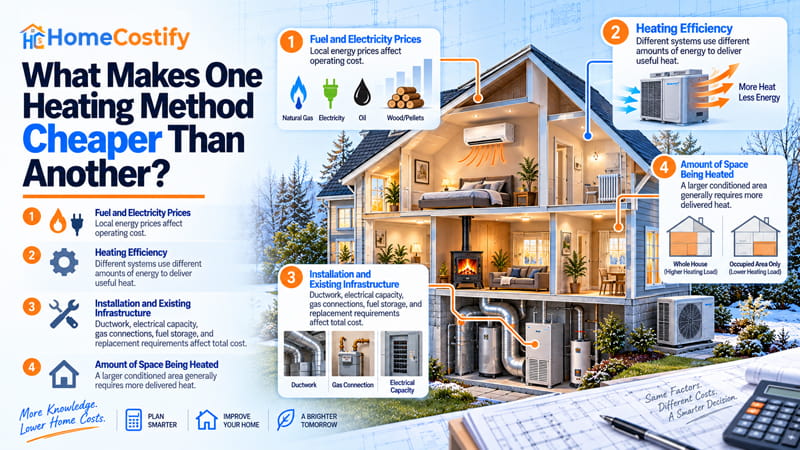
“Cheapest” is determined by the relationship between energy use and energy price, but those factors do not operate alone. Equipment requirements, existing infrastructure, and the amount of heat a home needs can all change the practical cost of a heating method.
Fuel and Electricity Prices
Energy prices directly affect operating cost, but they are location-specific and can change over time. Natural gas, electricity, propane, and heating oil can therefore produce different results from one market to another.
The useful comparison is the local price of the energy source combined with how much that system needs to deliver the required heat. A low fuel price does not automatically produce the lowest heating cost if the system uses relatively more energy to provide the same amount of useful heat.
Heating Efficiency
Heating efficiency determines how effectively an energy source is used to provide useful warmth. Two systems can consume different amounts of energy while maintaining similar indoor conditions, so comparing only the posted price of the fuel can give an incomplete picture.
Looking at heating cost per BTU helps connect energy pricing with the amount of useful heat a system delivers. This is particularly important when comparing technologies that use electricity differently or when evaluating a change from one heating source to another.
Installation and Existing Infrastructure
Operating cost is only one part of the financial decision when a new heating system is being considered. Ductwork, electrical capacity, gas connections, fuel storage, and replacement equipment can all add costs before the system begins producing heat.
Existing infrastructure can therefore change the result substantially. A system with favorable operating economics may not be the cheapest practical choice if adopting it requires major modifications, while an existing system may remain financially reasonable even when another technology has lower operating costs.
Amount of Space Being Heated
The heating load depends partly on how much conditioned space needs to remain warm. A larger area generally requires more delivered heat, while a smaller heated area can reduce total energy demand regardless of the heating technology.
This is why the amount of space being heated can influence whether a household can save on your heating bill through a different heating approach. The equipment matters, but so does the quantity of heat the home actually needs to maintain comfortable conditions.
Thermostat settings are another factor because indoor temperature affects how quickly a home loses heat during cold weather. Recommended thermostat settings depend on the household and season; the temperature to set thermostat in winter can affect heating demand, while the temperature to set thermostat in summer is primarily relevant to cooling rather than choosing a heating system.
Cheapest Ways to Heat a House Without Natural Gas
A home without natural gas is not limited to electric resistance heating. Heat pumps, solid fuels, propane, and oil can all remain relevant depending on the equipment already installed, local fuel availability, and the home’s heating requirements.
Heat Pumps
Heat pumps provide an electric alternative to combustion-based heating without relying on electrical resistance as the sole source of heat. For an all-electric house, the cheapest way to heat your home may therefore involve evaluating a heat pump rather than assuming that direct electric heating is the only practical choice.
Ducted heat pumps can use an existing air-distribution system, while ductless mini-splits can serve homes where conventional ductwork is unavailable or impractical. The better fit depends on the home’s existing layout and the scale of the heating requirement.
Wood, Pellets, Propane, and Oil
Other fuel sources can remain practical when they are locally accessible or when compatible equipment is already installed. Wood and pellets may have an advantage where fuel is readily available, while propane and oil can remain viable when a home already has the equipment and delivery arrangements required to use them.
The cheapest method to heat a house without natural gas therefore depends heavily on the home’s starting point. Avoiding a major equipment or infrastructure change can sometimes matter as much as the operating price of the replacement fuel.
Cheapest Way to Heat One Room
Heating one room changes the cost calculation because the goal is no longer to maintain comfortable conditions throughout the entire house. The most economical approach depends on how often the room is used, how long it needs heat, and whether a suitable heating system is already available.
For occasional or short-duration use, localized heating can avoid the cost of conditioning unused parts of the home. For frequent heating, operating efficiency and the cost of delivering heat become more important. The cheapest electric heater to buy may have a low entry price, but repeated use makes its electricity consumption more relevant to the overall cost.
A mini-split can also make sense when one room requires regular heating and the home does not need the entire house conditioned at the same time. Its higher upfront investment needs to be considered against how frequently the room is heated and whether the system can serve other areas when needed.
Cheapest Ways to Heat a House by Home Situation
The same heating method can have very different economics from one house to another. These situations provide a practical starting point for narrowing the choice before comparing equipment prices, fuel costs, or installation requirements.
- Existing natural gas and ductwork: Continuing with a suitable central system avoids creating a new fuel or distribution infrastructure.
- All-electric home: A heat pump deserves consideration when electricity is the primary available energy source, particularly when replacing resistance heating.
- Home without ducts: Ductless heating can avoid the construction and space requirements associated with adding conventional ductwork.
- One-room or limited occupancy: Reducing the area that receives regular heat can lower total heating demand.
- Rural home with accessible wood: Local firewood availability can change the economics compared with fuels that must be purchased and delivered.
- Existing oil or propane system: The cost of replacement or conversion should be considered alongside the system’s ongoing operating cost.
These conditions illustrate why cheap ways to heat your home cannot be determined from equipment price alone. The home’s existing infrastructure, available fuel, heating scope, and expected usage all influence which approach is most practical.
Bottom Line
There is no single heating system that is cheapest for every house. Natural gas can be a strong low-cost whole-house choice where gas service and suitable equipment already exist, while heat pumps can be an important alternative for homes that rely on electricity.
The cheapest practical approach is the one that matches the home’s existing infrastructure, available energy source, and actual heating demand. A method becomes less attractive when achieving its lower operating cost requires major changes that outweigh the potential savings.
FAQs About Cheapest Way to Heat a House
What is the most affordable way to heat my house?
The cheapest way to heat a house may be natural gas where available, while heat pumps can offer low operating costs for many all-electric homes.
What’s the cheapest heater to run on electricity?
Heat pumps are generally cheaper to run than electric resistance heaters because they transfer heat rather than generate it directly from electricity.
How to heat a room cheaply without electricity?
A wood stove or fireplace can provide room heat without electricity where safely and legally available, with proper ventilation and installation.
How to make heat in your home without electricity?
Wood-burning stoves and fireplaces can generate indoor heat without electricity when suitable fuel, ventilation, and safe installation are available.
How can I heat my house without a furnace?
Heat pumps and boilers can provide whole-house heating without a conventional furnace, while wood or pellet systems offer other alternatives.