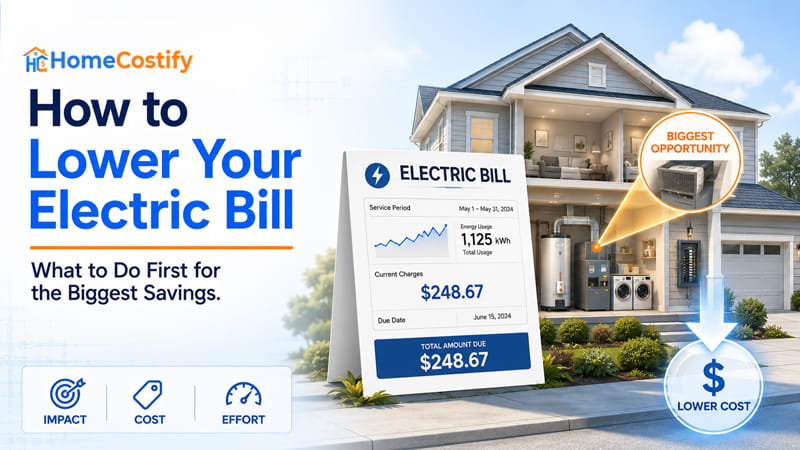
A small reduction in electricity use can leave the final bill almost unchanged. The effect is limited when the saving comes from a minor part of household spending, even if the measure is easy to carry out. Someone looking to lower your electric bill needs to look beyond the number of habits adopted.
The amount of cost reached by each measure has greater financial significance than the sheer number of changes made.
A no-cost measure requires no money at the outset. Its value still rests on the amount it can save and the work required to put it into practice. Spending more brings a different calculation: the expense needs a sufficiently large savings opportunity behind it.
Cost, effort, and potential impact belong in the same decision, with no single factor settling the choice by itself.
9 Ways to Lower Your Electric Bill
The monthly bill puts a dollar value on household electricity use. To lower your electric bill, each approach deserves consideration for its likely effect on that amount. The cost and work involved also matter before a homeowner decides what to pursue.
1. Tackle the Biggest Electricity Costs First
Start With the Size of the Opportunity
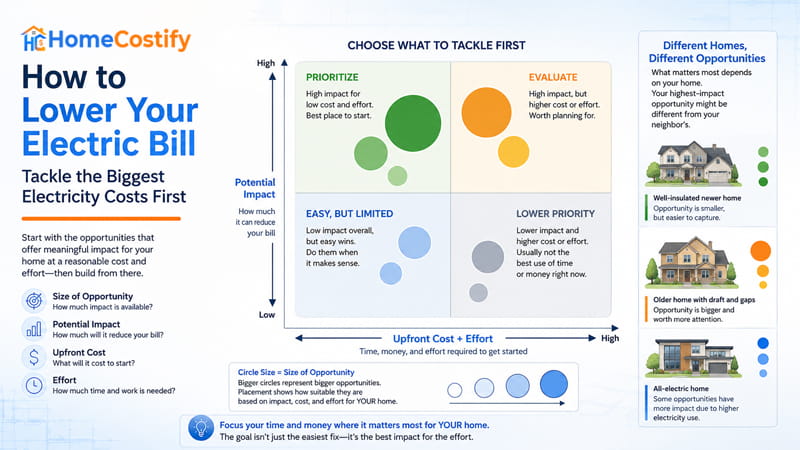
A large electricity expense leaves greater room for savings from a small reduction. A lower electric bill often starts with substantial usage, not simply the easiest task to complete. A modest cut in heavy usage can affect household spending noticeably. The same percentage applied to a minor expense produces a smaller financial change. The size of the expense gives the reduction its financial weight.
Compare Impact, Cost, and Effort
A free measure removes upfront spending, but the potential savings still matter. Time carries a cost when a task requires repeated work. A low-cost choice may consume considerable effort for a limited reduction. Higher spending presents another concern: the resulting savings may not support the expense. Potential impact, upfront cost, and effort should be considered together.
Match the Priority to the Home
An electric bill reflects the household’s total electricity use, not the source behind that spending. The underlying cost structure can place greater weight on one area of use than another. Household conditions affect the room available for savings. A priority based on the actual pattern of use gives the available effort a clearer direction.
2. Lower Your Electric Bill With $0 Changes
Change How Long Equipment Runs
Equipment consumes electricity during operation. Shortening unnecessary runtime reduces that consumption without changing the equipment. Fewer operating hours can lower your electric bill while the equipment continues serving the same purpose. The saving comes from reducing runtime, not improving the equipment itself.
Use Thermostat Settings as a Behavior Change
The thermostat sets the indoor temperature the system is asked to maintain. A higher or lower setting alters the amount of heating or cooling required. Results vary with the equipment, outdoor weather, comfort preference, and condition of the home. No equipment replacement is involved.
Reduce Unnecessary Operating Cycles
Full loads can reduce the number of laundry or dishwasher cycles required for household tasks. Save money on electric bill costs by avoiding partial loads where waiting is practical. Cold-water washing removes unnecessary water-heating demand where the task allows it. The focus is the timing and manner of the task, not the efficiency rating of the equipment.
Turn Off Use That Does Not Need to Continue
Active operation consumes electricity for as long as the device is running. Switching it off ends that consumption after the task no longer requires operation. A connected device may still draw standby power after active use stops. That remaining draw comes from a different operating state.
3. Make Low-Cost Fixes That Can Reduce Energy Waste
Gaps around doors, windows, and penetrations give conditioned air a path out of the house. Weatherstripping and caulk can close specific gaps at relatively low cost. For a homeowner seeking to reduce electric bill costs, these targeted repairs address an identifiable source of loss.
Lighting offers another physical efficiency measure. An LED bulb uses fewer watts for the same basic lighting function, helping lower your electric bill through a smaller hourly load. The bulb replacement changes electrical demand without relying on different usage habits.
Idle devices create a separate question. A charger sitting in an outlet does not prove that standby consumption is significant. Smart power strips have a clearer use case for groups of related devices that stay connected. Checking the actual load first keeps a small standby draw from becoming an unnecessary purchase.
The physical source should lead the purchase decision. A specific waste point gives a low-cost fix a clear purpose. An energy-saving label does not show how much electricity the product will save in that setting. The expense has little justification if the targeted source contributes very little consumption.
4. Focus on Heating and Cooling When They Drive the Bill
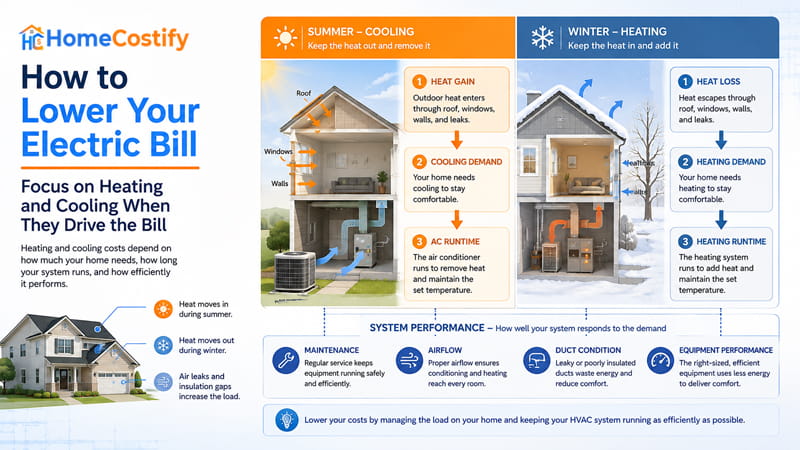
Heating and cooling can take a substantial share of household electricity use under the right operating conditions. Climate, system type, building characteristics, thermostat settings, and runtime all contribute to conditioning demand. Actual usage determines whether this category deserves a high place in the savings plan.
Lower Cooling Costs in Summer
Hot outdoor air increases the temperature difference the cooling system must overcome. Sunlight through windows adds heat indoors, along with heat produced inside the home. Drafts and other envelope gaps increase the heat entering the space. That added heat raises the amount of cooling required.
Thermostat targets set the indoor temperature the system works toward. A higher target places less cooling demand on the system. Ceiling fans improve perceived comfort without requiring a lower target. Window coverings block part of the sunlight entering occupied rooms.
A dirty filter restricts airflow through the cooling system. Restricted airflow may leave some rooms less comfortable and extend operating time. Neglected maintenance brings similar performance problems. Duct leaks or poor duct placement reduce the amount of cooled air reaching the intended rooms.
Lower Heating Costs in Winter
Winter heating follows the opposite heat-flow problem. Heat leaves the house through the building enclosure as outdoor temperatures fall. Heating schedules can follow actual use of each space, including rooms left unused for long periods. A lower thermostat setting reduces heating demand at a comfortable indoor temperature.
Persistent drafts point to places where heat is escaping. Poorly performing areas of the building enclosure can add to that loss. The heating system then has to replace the lost heat to maintain the indoor temperature.
5. Cut Electricity Use From Water Heating
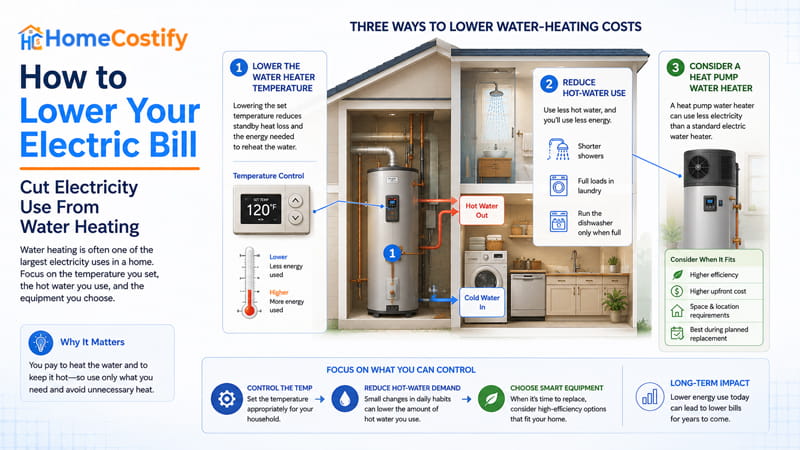
Hot water requires electricity whenever the household heats it for use. Longer showers, repeated use, and larger volumes increase the amount of water requiring heat. The resulting electricity use comes from the heating demand attached to that water.
Lower the Water Heater Temperature
The water-heater setpoint establishes the temperature maintained inside the tank. A lower setting reduces the heat needed to maintain stored water and can lower your electric bill. Manufacturer instructions and household safety requirements set the limits for any adjustment.
Reduce Hot-Water Demand
Shower length directly changes the volume of hot water used. Shorter showers reduce the amount that needs heating and help save electricity. Repeated hot-water use throughout the day adds to the total volume. Grouping suitable tasks can reduce repeated heating without changing the water heater.
Consider a Heat Pump Water Heater
Heat pump water heaters use a different method to produce hot water. That method can reduce electric bill costs through lower electricity use for water heating. Existing equipment, household demand, installation conditions, and replacement timing all affect the decision. A functioning water heater does not automatically justify replacement solely for potential savings.
6. Reduce the Cost of Running Appliances
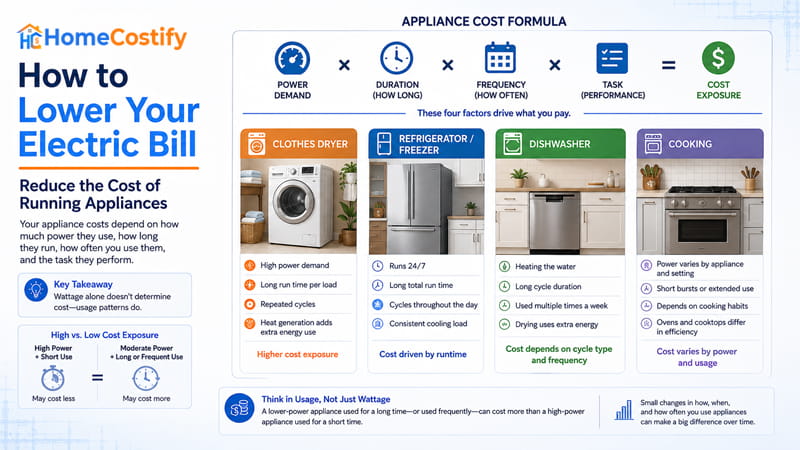
An appliance label shows its power demand during operation. Annual electricity cost also reflects how long the appliance runs and how often it is used. A moderate load with frequent use can accumulate substantial electricity consumption.
| Appliance / Use | Main Cost Driver | What to Check First |
|---|---|---|
| Clothes dryer | High power and repeated cycles | Cycle frequency and load size |
| Refrigerator/freezer | Long operating time | Age, condition, and temperature |
| Dishwasher | Heating and repeated cycles | Load frequency and settings |
| Laundry | Washing and drying | Hot-water and drying habits |
| Cooking | Power demand and frequency | Cooking frequency and appliance choice |
The useful comparison is the operating pattern behind each entry. Household use gives context to the power rating shown on the label.
Why Wattage Alone Misleads
A high-wattage appliance may run for only a short period. A lower-wattage appliance can accumulate substantial use through long daily operation. Save money on electric bill costs by considering power demand alongside operating time. Frequent cycles add further consumption over a year.
Find the Usage Pattern That Actually Matters
Frequency gives repeated appliance use its financial weight. Long runtimes increase the electricity consumed during each operating period. Heating functions add electricity demand to tasks that already require appliance operation. Repeated cycles can produce the same cumulative effect across routine household work.
Change the Operating Cycle Before Replacing Equipment
A full laundry or dishwasher load makes each cycle serve more items. Cut electric bill costs by avoiding unnecessary runs and partial loads where practical. Cold-water washing removes avoidable water-heating demand for suitable loads. Dryer frequency deserves the same review, while basic maintenance supports normal appliance operation.
7. Check Whether Your Electricity Rate Is Making the Bill Higher
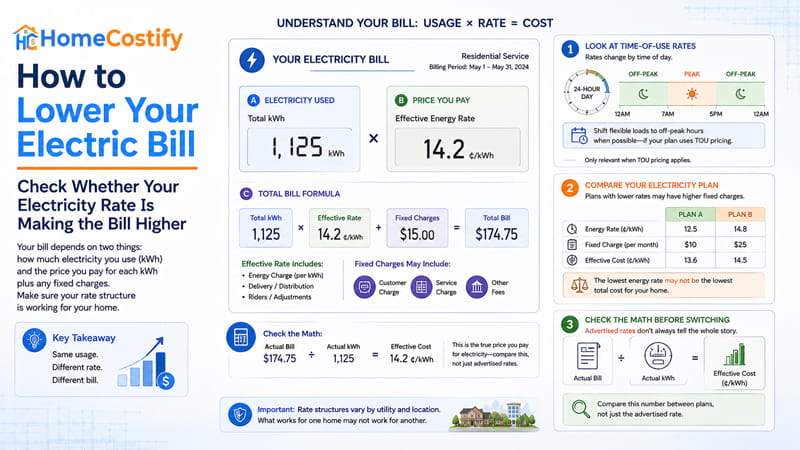
The bill combines electricity consumed with the price charged for that consumption. Price per kilowatt-hour gives each unit of electricity a financial value. Two bills with similar usage can still carry different charges under different pricing structures.
According to the U.S. Energy Information Administration (EIA), the average U.S. residential bill reached $144 per month in 2024. Average monthly consumption was 865 kWh, with an average residential price of 16.5¢ per kWh. EIA also reports differences among states.
Look at Time-of-Use Rates
Time-of-use pricing charges different rates during specified periods. Flexible loads can move to cheaper periods under a plan with this structure. The resulting reduction depends on how much use can be moved and the rate difference involved. A standard plan provides no comparable benefit from timing alone.
Compare Your Electricity Plan
The advertised rate may not match the price reflected in the completed bill. Compare the kWh charge with energy charges and applicable fixed fees. The same consumption can produce a different payment under another pricing structure. Recent bills show what the current plan actually charges.
Check the Math Before Switching
Several recent billing periods give a better basis for comparison than one statement. Divide total electricity charges by the corresponding kWh to estimate the effective price per unit. Fixed charges and changes in consumption still need separate consideration. A new plan warrants comparison with actual past bills before any switch.
8. Decide Which Home Improvements Are Worth the Upfront Cost
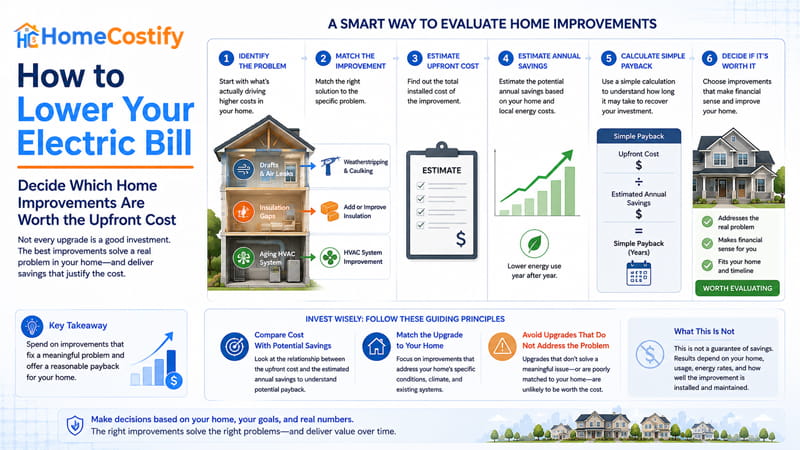
A paid improvement requires money before any savings appear. The expense is immediate, while the financial return accumulates over time. Expected savings therefore need to justify the amount spent on the project.
| Improvement | Upfront Cost Level | Best Fit | What Determines Value |
|---|---|---|---|
| Weatherstripping / caulk | Low | Noticeable drafts | Size of leakage problem |
| Air sealing | Low–Moderate | Drafty homes | Effect on conditioned space |
| Insulation | Moderate | Under-insulated areas | Existing thermal performance |
| Smart thermostat | Moderate | Compatible HVAC | Potential runtime reduction |
| Major HVAC replacement | High | Aging/inefficient system | Existing performance + replacement cost |
Compare Cost With Potential Annual Savings
Simple payback offers a quick screening method for a paid project. Divide the upfront cost by estimated annual savings to estimate the recovery period. This calculation can help save money on electric bill costs by separating attractive projects from weak ones. The result is an estimate, not a guarantee, and other project factors still need review.
Match the Upgrade to Your Home
An improvement has value only where the property has room for that improvement to matter. Drafts may justify air-sealing work, while a well-performing home may offer little opportunity there. The goal of lowering your electric bill does not alter those physical conditions. Existing performance provides a better basis for judging the project than age alone.
Avoid Upgrades That Do Not Address the Cost Driver
An energy-saving label says little about the financial value of a product by itself. The purchase needs a clear connection to a source of electricity cost in the home. A device aimed at a minor load can consume money without producing a meaningful return. Problem-first purchasing keeps the spending tied to an identifiable opportunity.
Based on ENERGY STAR estimates, air sealing and insulation in specified areas can produce meaningful savings in modeled scenarios. For typical existing U.S. homes, heating and cooling costs fall by an average of 15%, or total energy costs by about 11%. Actual results vary with climate and home characteristics.
9. What You Should Do First Based on Your Situation
The first place to look depends on what has actually changed in the home or on the bill. A sudden increase calls for a different check than a long-standing expense. The available evidence should determine where the investigation begins.
If Your Bill Suddenly Increased
Start by comparing the latest kWh with the previous bill and checking the billing period. Weather, occupancy, and newly added equipment can explain part of the change. Confirm the source of the increase before spending money on a new solution.
If You Rent
Limited control over the property narrows the available choices. Reversible operating changes, controllable thermostat settings, lighting use, and appliance habits offer the clearest starting points. Eligible low-cost measures can follow if the rental agreement permits them.
If You Own an Older Home
Age alone does not establish poor efficiency. Persistent drafts, insufficient insulation, or aging systems provide stronger reasons to inspect physical performance. A targeted check can help reduce electric bill costs when the building itself presents a significant opportunity.
If HVAC Drives Most of Your Bill
Heavy conditioning use puts HVAC near the top of the investigation list. Check thermostat operation, system performance, maintenance, and envelope factors before spending effort on minor plug loads. The concentration of electricity use determines where the first review has the greatest relevance.
If Your Electricity Rate Is High
A high price per kWh raises the charge attached to every unit consumed. Review the rate structure if usage is already under reasonable control. A pricing issue may matter more than small reductions from minor loads.
Can You Really Cut Your Electric Bill by 75 Percent?
A 75 percent reduction is possible under particular circumstances. It is not a normal expectation for every energy saving for household. A claim to cut electric bill by 75 percent needs a clear basis for comparison.
The starting condition sets the amount of reduction available. Serious waste, unusual consumption, or severe inefficiency can leave substantial room for improvement. A cut electric bill claim has little meaning without knowing what the original usage looked like. A 90 percent claim raises the same question: what was the starting condition?
Unusually high consumption leaves more room for a substantial reduction. Severe HVAC inefficiency or serious building problems can produce the same situation. Large operating adjustments may also alter the result. A new electricity rate can change the amount paid without changing consumption. None of these conditions guarantees a particular reduction.
Most ordinary energy-saving measures reach only part of total consumption. A small load may account for little of the overall usage, leaving most of the original consumption intact. Several modest reductions can therefore leave a large share of the total untouched. Addressing a substantial source of waste has a much larger effect.
A savings percentage needs a defined reference point. Before accepting a claim, ask:
- 75% of what?
- Is the figure based on the bill or on kWh?
- Which period provides the baseline?
- What intervention produced the reported change?
- Did the electricity rate change?
- Did household usage change during the comparison period?
Without a defined baseline and measurement basis, the percentage does not show the actual size of the savings.
Final Takeaway
The bill shows whether a reduction has actually affected what you pay. To lower your electric bill, look for a source that accounts for a meaningful share of the charge. Cutting a minor part of usage may barely move the amount due. A change has greater financial weight when it reaches a larger part of that expense.
No single device or habit works equally well in every home. The better choice is tied to the source of the expense and the improvement that source can realistically support.
FAQs About How to Lower Your Electric Bill
Does turning off lights really save electricity?
Yes. Switching off a light ends its active lighting consumption. The avoided use reflects the bulb’s wattage and the remaining runtime.
Does turning power switches off save electricity?
Switching off the controlled load stops its active use. Some connected devices still draw standby power, so the switch state alone may not lower your electric bill.
Is it cheaper to turn off lights or leave them on?
Turning them off avoids the electricity used during those hours. The amount saved depends on wattage, bulb type, and operating duration.
Is leaving lights on at night a good idea?
Unnecessary overnight lighting adds operating hours and electricity use. Security or safety lighting may justify continued operation when that purpose requires it.
How much electricity is wasted by leaving lights on?
There is no universal amount. Multiply a light’s wattage by its operating hours to estimate watt-hours, then add the loads from multiple bulbs.