Roof replacement research often starts with a simple goal: finding a material that balances cost, appearance, and service life. The challenge appears once terms like composite roofing, architectural shingles, synthetic slate, and composition shingles start showing up across contractor websites and manufacturer catalogs.
The phrase composite roofing creates more confusion than most roofing terms because it does not describe a single product category. Some systems are built around asphalt and fiberglass. Others use polymers, recycled plastics, rubber compounds, or proprietary blends molded to resemble slate, cedar shake, or clay tile. Cost ranges vary. Expected lifespan varies as well.
A roof marketed as a composite product may occupy the budget end of the market or sit among the most expensive residential roofing materials available today. That wide range makes product comparisons difficult. Surface appearance tells only part of the story.
What Is Composite Roofing?
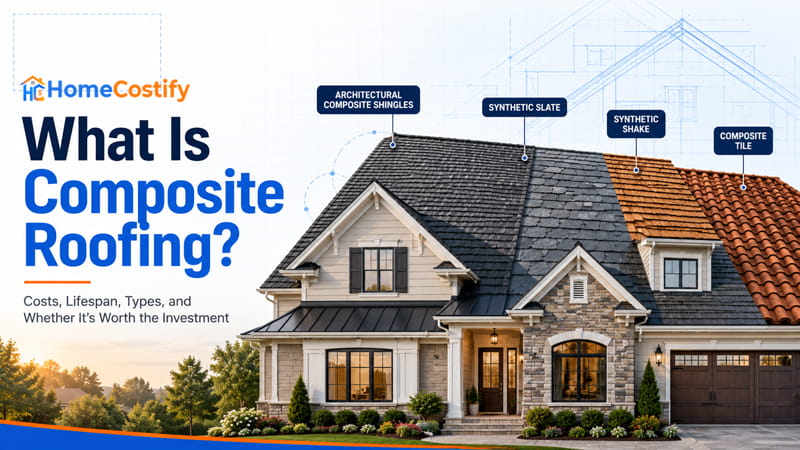
Composite roofing is a broad roofing category that includes products manufactured from multiple materials rather than a single natural material. Depending on the product, those materials may include asphalt, fiberglass, polymers, recycled plastics, rubber compounds, or engineered blends designed to replicate the appearance of slate, cedar shake, clay tile, or traditional shingles.
Part of the confusion comes from the way the industry uses the term. In some cases, a contractor discussing composite roof products may be referring to standard composition shingles. In other situations, the same term may describe premium synthetic systems engineered to resemble natural roofing materials.
Composition shingles represent the most common example found across the United States. These products combine a fiberglass base mat with asphalt coatings and protective granules. They dominate the residential roofing market because they balance cost, appearance, and availability.
A different category exists at the premium end of the market. Synthetic composite roofing products rely on polymers, recycled materials, rubber compounds, or proprietary blends. Manufacturers use these materials to recreate the texture and profile of natural slate, cedar shake, or clay tile without carrying the same weight.
The broad definition often leads to misunderstandings during roof replacement research. A person comparing prices may assume two products belong to the same category because both are labeled as composite. The actual construction can be completely different.
Appearance is only part of the equation. Material composition influences weight, weather resistance, impact ratings, maintenance requirements, and expected service life. Those differences become easier to understand once the individual materials are examined more closely.
Composite Roofing at a Glance
| Feature | Overview |
|---|---|
| Materials | Asphalt, fiberglass, polymers, recycled plastics, rubber |
| Lifespan | Varies by roofing type |
| Cost | Depends on material and installation |
| Maintenance | Generally low |
| Best For | Homes seeking durability and design flexibility |
The term covers a wide range of products rather than a single roofing material. Some systems closely resemble conventional asphalt roofing, while others are engineered to imitate natural slate or cedar shake.
Composite roofing materials can differ substantially from one manufacturer to another. Material selection influences appearance, weight, weather resistance, and maintenance expectations.
The same principle applies to composite roofing cost and composite roof lifespan. Premium synthetic products occupy a different price range and service-life category than entry-level composition shingles.
What Is Composite Roofing Made Of?
Roofing products grouped under the composite label do not all share the same ingredient list. Manufacturing methods vary across product categories, and material blends often differ from one brand to another.
Some products rely on components that have been used in residential roofing for decades, while others incorporate engineered materials developed to replicate the appearance of slate, wood, or tile.
Looking at the materials behind each product reveals why two roofs with a similar appearance can have very different costs, weights, and lifespan expectations.
Traditional Composition Shingle Components
Most composition shingles contain three primary components:
- Fiberglass Mat: Forms the structural foundation of the shingle and provides dimensional stability.
- Asphalt Coating: Surrounds the fiberglass layer and creates a water-resistant barrier across the roof surface.
- Ceramic Granules: Cover the exposed face of the shingle and add color, UV resistance, and surface roof protection.
These materials have been used in residential roofing for decades. Small formulation changes occur over time, but the basic construction remains familiar across much of the industry.
Modern Synthetic Composite Materials
Premium products often rely on a different material mix.
- Recycled Plastics: Used in some roofing systems that replicate slate, shake, or tile profiles.
- Rubber Compounds: Added to increase flexibility and impact resistance in certain products.
- Polymer Resins: Create molded roofing profiles with consistent dimensions and textures.
- UV Stabilizers: Mixed into the material during manufacturing to slow surface degradation caused by prolonged sun exposure.
Material blends vary by manufacturer. Two synthetic roofing products may share a similar appearance while using completely different formulations behind the surface.
The Two Main Categories of Composite Roofing
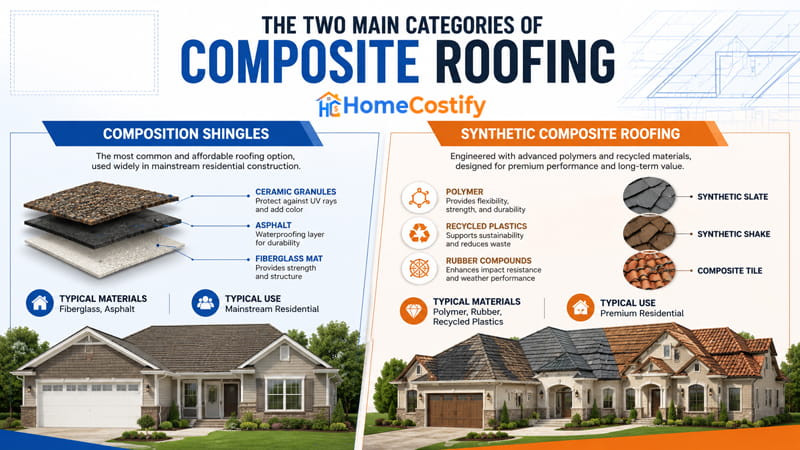
The composite roofing market includes everything from basic asphalt-based shingles to premium systems designed to replicate slate, cedar shake, or clay tile. Material composition varies widely across these options. That variation affects weight, appearance, expected service life, and installation cost.
Composition Asphalt Shingles
Composition asphalt shingles account for the largest share of residential roofing installations in America. Drive through almost any suburban neighborhood and they are likely to appear on most roofs. Their popularity comes from a combination of availability, familiar installation practices, and lower upfront costs compared to many premium roofing materials.
Most composition roof shingles use a fiberglass mat as the structural core. Manufacturers coat that mat with asphalt and finish the surface with ceramic granules. The finished product remains relatively lightweight while delivering decades of weather exposure resistance under normal conditions.
Price plays a major role in market share. A roof covered with composition shingles generally costs less than one finished with synthetic slate, cedar shake alternatives, or molded tile products. That price difference often becomes noticeable on larger roofs where material quantities increase quickly.
Appearance has evolved over time as well. Early products were fairly uniform in shape and color. Current composite roof shingles are available in a much broader range of styles, textures, and dimensional profiles.
Synthetic Composite Roofing
A different category sits at the premium end of the market. Synthetic composite roofing products are manufactured from engineered materials rather than relying primarily on asphalt construction. Product formulations vary by manufacturer, though polymers, recycled plastics, and rubber compounds appear frequently.
Many of these systems are designed to replicate high-end roofing materials. Some mimic natural slate. Others resemble cedar shake or clay tile. From street level, distinguishing between natural and synthetic versions can be difficult.
Material engineering creates opportunities that traditional roofing products cannot always match. Impact resistance, lower weight, and specialized weather ratings often appear within this category. Pricing reflects those characteristics. Premium synthetic systems frequently cost more than standard composition products but occupy a different segment of the market altogether.
| Category | Typical Materials | Typical Use |
|---|---|---|
| Composition Shingles | Fiberglass, asphalt | Mainstream residential |
| Synthetic Composite Roofing | Polymer, rubber, recycled plastics | Premium residential |
Types of Composite Roofing
Roofing products within this category vary far more than many people expect. Shape, thickness, material composition, and intended market all influence the final product.
Looking at the major options side by side makes the differences easier to identify.
| Type | Appearance | Durability | Maintenance |
|---|---|---|---|
| 3-Tab Shingles | Flat, uniform | Moderate | Low |
| Architectural Shingles | Dimensional | Good | Low |
| Designer Shingles | Premium dimensional | Very good | Low |
| Synthetic Slate | Natural slate appearance | High | Low |
| Synthetic Cedar Shake | Cedar shake appearance | High | Low |
| Composite Tile Roofing | Clay or concrete tile appearance | High | Low |
3-Tab Composite Shingles
Among all composite roof shingles types, 3-tab products represent the most traditional design. Each shingle contains evenly spaced cutouts that create a uniform appearance once installed. The visual effect is clean and consistent, though less dimensional than higher-end alternatives.
This category often occupies the entry-level portion of the market. Budget-conscious projects frequently start here because material costs remain lower than many competing options. A straightforward roof design paired with 3-tab shingles can produce one of the most affordable roofing systems available.
Service life tends to be shorter than thicker architectural products. Wind resistance ratings may also differ depending on manufacturer specifications. Even so, 3-tab shingles continue to appear across many residential neighborhoods due to their familiar appearance and lower cost structure.
Architectural Composite Shingles
Architectural shingles introduced a more dimensional appearance to the roofing market. Layers of material create shadow lines and depth across the roof surface. From the ground, the roof appears richer and more textured than a standard 3-tab installation.
This category occupies the middle of the residential roofing market. Pricing remains accessible for many projects while delivering a noticeable visual upgrade. Builders, contractors, and property owners often view architectural products as a balance between appearance and budget.
Thickness contributes to the appeal. Heavier construction frequently translates into stronger wind ratings and longer lifespan expectations compared to basic 3-tab products. For that reason, architectural styles now dominate many residential roof replacement projects across the country.
Designer Composite Shingles
Designer shingles move into a higher price bracket. Manufacturers create specialized profiles intended to resemble slate, wood shake, or other premium roofing materials. Distinctive shapes, deeper shadow lines, and custom color blends separate them from standard architectural products.
Curb appeal becomes a major selling point in this category. Homes with historic influences, luxury finishes, or custom architectural details often pair well with designer shingles. The visual effect can be dramatic without requiring the weight associated with natural slate or concrete tile.
Material thickness usually increases as well. Many products in this segment carry stronger weather ratings and longer warranty periods than lower-priced alternatives. Cost rises accordingly, placing designer shingles above standard architectural offerings.
Synthetic Slate Roofing
Natural slate remains one of the most recognizable roofing materials in the world. Its appearance has inspired numerous synthetic alternatives that attempt to capture the same visual character without the structural demands associated with real stone.
Synthetic slate products are manufactured from engineered materials rather than quarried rock. Weight drops significantly, which expands installation opportunities on homes that may not be suitable for traditional slate.
Appearance receives considerable attention within this category. Manufacturers replicate texture, edge detail, and color variation with surprising accuracy. Viewed from a distance, many roofs closely resemble natural slate installations.
Pricing places synthetic slate among the premium roofing categories. Initial costs exceed standard shingles, though they often remain below the cost of authentic slate.
Synthetic Cedar Shake Roofing
Wood shake roofs create a distinctive look that many products attempt to imitate. Synthetic cedar shake roofing focuses on that rustic appearance while eliminating some of the concerns associated with natural wood.
The surface texture typically includes deep grain patterns, irregular edges, and shadow lines similar to hand-split cedar. Visual character plays a major role in buyer interest.
Material composition separates these products from traditional wood roofing. Moisture exposure, insect activity, and long-term weathering affect synthetic materials differently than natural cedar. That distinction often influences purchasing decisions in regions where wood roofs face challenging environmental conditions.
Cost generally places synthetic shake products within the premium segment. Buyers attracted to the appearance of cedar often view the added expense as part of achieving a specific architectural style.
Composite Tile Roofing
Tile-inspired products occupy another corner of the market. Rather than imitating slate or cedar, these systems replicate the appearance of clay and concrete roofing.
A composite tile roof can deliver curved profiles, bold shadow lines, and Mediterranean-inspired aesthetics without the substantial weight associated with traditional tile materials. Structural requirements often differ considerably between the two categories.
Many composite tile roofs target regions where clay and concrete tile remain popular architectural choices. Homes in the Southwest, parts of Florida, and other warm-weather markets frequently use these visual styles.
Pricing varies by manufacturer and product line. Premium models can reach the upper end of the residential roofing market, particularly when custom profiles and specialty colors enter the specification process. Appearance remains the primary attraction, though lower weight and material engineering continue to influence demand.
Composite Roofing Cost by Material Type
No single price can accurately represent the entire composite roofing market. A roof covered with basic composition shingles sits in a very different pricing tier than a roof finished with synthetic slate or molded tile products. Material selection creates the largest gap, but it is not the only variable affecting the final budget.
The range becomes easier to understand when roofing materials are separated by category. Entry-level options focus on affordability and broad availability. Premium materials place greater emphasis on appearance, impact resistance, manufacturing complexity, or specialty profiles. Those differences show up quickly once installation estimates start arriving.
| Composite Roofing Type | Installed Cost Per Sq. Ft. |
|---|---|
| 3-Tab Composition Shingles | $4–$7 |
| Architectural Shingles | $5–$10 |
| Designer Shingles | $8–$15 |
| Synthetic Slate Roofing | $9–$20 |
| Synthetic Cedar Shake Roofing | $10–$20 |
| Composite Tile Roofing | $10–$20+ |
At the lower end of the market, 3-tab shingles remain the most affordable option. Material costs stay relatively low, and installation methods are familiar to roofing crews across the country. Architectural shingles move into the next price bracket. The added thickness and dimensional appearance often justify the higher material cost for many projects.
Designer shingles occupy a different segment. Custom profiles, deeper shadow lines, and specialty color blends contribute to higher pricing. Synthetic slate and synthetic cedar shake products move further up the scale. Manufacturing processes are more complex, and the finished materials are intended to replicate roofing materials that traditionally belong to the luxury market.
A similar pattern appears with composite roofing systems designed to mimic clay or concrete tile. Curved profiles and molded shapes require additional manufacturing steps. Some premium lines also include specialized fastening requirements, which can influence labor costs during installation.
The numbers in the table should be viewed as broad market ranges rather than fixed prices. A quote collected in Texas may differ from one gathered in Colorado, New Jersey, or California. Local labor conditions, material availability, and roof design all influence the final figure.
Cost Disclaimer: The price ranges shown in this guide are national averages based on installed costs. Actual project costs can vary depending on roof size, roof complexity, material selection, local labor rates, and regional market conditions.
Composite Roofing Lifespan by Roofing Type
Cost attracts attention early in the buying process. Service life often becomes more important after installation. Two roofing systems with similar appearances may age at very different rates, particularly when material composition, climate exposure, and manufacturing quality are taken into account.
Questions about composite roof lifespan rarely have a single answer. Material categories vary considerably. Construction methods vary as well. A roofing system built around asphalt and fiberglass follows a different aging pattern than one manufactured from engineered polymers.
| Roofing Type | Expected Lifespan |
|---|---|
| 3-Tab Shingles | 15–25 years |
| Architectural Shingles | 25–35 years |
| Designer Shingles | 30–40 years |
| Synthetic Slate Roofing | 40–50 years |
| Synthetic Cedar Shake Roofing | 40–50 years |
| Premium Polymer Composite Roofing | 50+ years |
Three-tab shingles generally occupy the shortest lifespan range within the composite roofing market. Their thinner construction and lower material volume expose them to weathering at a faster pace than heavier alternatives.
Architectural shingles often remain in service longer due to thicker construction and enhanced wind resistance characteristics. Designer shingles push that range further, particularly when premium materials and upgraded manufacturing methods are involved.
Synthetic slate products occupy a different category altogether. These systems are designed to reproduce the appearance of natural slate without the weight associated with stone. Many remain serviceable for several decades when installed correctly and exposed to normal weather conditions.
Synthetic cedar shake materials follow a similar pattern. The appearance resembles natural wood, but the aging process differs significantly. Moisture absorption, splitting, and insect activity affect engineered materials differently than natural cedar.
Questions such as how long does composite roofing last often lead to broad estimates of 30 to 50 years. The table paints a more accurate picture. Some systems fall below that range. Others exceed it.
Composite tile roof lifespan estimates vary according to the material formulation and manufacturer specifications. Premium tile-inspired products frequently compete with high-end synthetic roofing materials rather than standard asphalt-based systems.
Benefits of Composite Roofing
Many roofing materials focus on one strength. Some emphasize appearance. Others prioritize affordability or longevity. Composite roofing sits in a broader space, bringing several characteristics together within a single roofing system. The exact experience varies by manufacturer and material composition, but several advantages appear across much of the market.
- Lightweight Construction: Most composite roofing products weigh less than natural slate or concrete tile, reducing structural load requirements.
- Strong Weather Resistance: Many systems are engineered to tolerate hail, high winds, moisture exposure, and prolonged sunlight.
- Design Versatility: Available styles can resemble slate, cedar shake, clay tile, or traditional roofing shingles.
- Low Maintenance: Most materials do not require routine sealing, staining, or insect treatments associated with natural wood roofing.
- Long Service Life: Premium composite roofing systems often remain in service for several decades when installed correctly.
Sustainability and Environmental Benefits
Environmental considerations have become part of the roofing conversation as building owners look beyond upfront cost and appearance. Material sourcing, manufacturing practices, and replacement frequency all influence the long-term environmental footprint of a roof.
According to industry data highlighted by Construction Specifier, asphalt roofing waste contributes millions of tons of material to U.S. landfills each year. Because many composite roofing products incorporate recycled plastics, rubber, or other reclaimed materials while offering a longer service life, they can help reduce the frequency of roof replacements and lower overall construction waste over time.
Recycled content appears in a growing number of roofing products. Some manufacturers incorporate post-consumer plastics, while others use reclaimed industrial materials that would otherwise enter the waste stream. Material formulas vary from one brand to another. The common goal remains the same: extending the useful life of existing resources.
Replacement frequency matters as well. A roof replaced twice during the same period that another roof remains in service generates more manufacturing demand, transportation activity, packaging waste, and disposal material. Longer replacement cycles reduce that burden.
Waste reduction extends beyond recycling programs. Durable roofing materials often remain on homes longer before major replacement work becomes necessary. Fewer tear-offs mean less debris leaving the job site and fewer discarded roofing materials entering landfills.
For property owners interested in sustainability, material composition may carry as much importance as appearance or cost. A roof built with recycled content and a longer expected lifespan can support broader environmental goals without sacrificing curb appeal or weather protection.
Potential Drawbacks to Consider
Every roofing material involves tradeoffs. Strengths in one area are often balanced by limitations in another. Composite roofing is no exception.
- Higher Upfront Costs: Premium composite roofing systems typically cost more than standard asphalt shingles.
- Product Quality Differences: Material composition, manufacturing standards, and performance characteristics can vary substantially between brands.
- Specialized Installation Requirements: Certain roofing products require crews familiar with manufacturer-specific fastening methods and installation details.
Price represents the most common concern. A homeowner comparing estimates may notice a significant gap between standard asphalt roofing and premium synthetic alternatives. The difference becomes more noticeable on larger roofs.
Quality variation creates another challenge. Two products may appear similar from the ground while using different materials beneath the surface. Manufacturer reputation, testing standards, and warranty coverage deserve close attention during the selection process.
Composite Roofing Ratings Explained
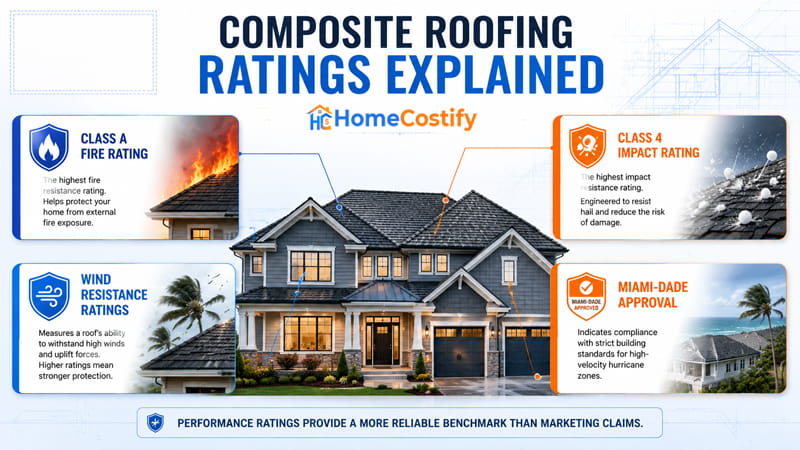
Product brochures often emphasize appearance, color options, and warranty coverage. Technical ratings provide a clearer picture of how a roof performs under specific testing conditions. Those ratings carry far more weight than marketing language.
Class A Fire Rating
Class A represents the highest fire-resistance classification used for roofing materials. Products that achieve this rating have undergone testing intended to evaluate flame exposure and fire spread characteristics.
For homes located in wildfire-prone regions, this rating often receives close attention during material selection.
Class 4 Impact Rating
Class 4 is the highest impact rating commonly used for residential roofing. Testing evaluates how roofing materials respond to simulated hail impacts.
Many impact resistant roofing products promoted for hail-prone regions carry this designation. Not all materials with a Class 4 rating perform identically in real-world conditions, but the rating provides a useful benchmark.
Wind Resistance Ratings
Wind ratings indicate how well a roofing material withstands uplift forces generated by strong storms and hurricanes.
Wind resistant roofing systems are especially relevant in coastal regions and hurricane-prone states. Manufacturer specifications usually identify the wind speeds associated with testing and certification.
Miami-Dade Approval
Miami-Dade standards are among the most recognized roofing performance benchmarks in the United States. Products receiving approval must satisfy strict testing requirements related to wind-driven rain, uplift resistance, and severe weather exposure.
Specifications often reveal more than marketing claims. Looking at fire ratings, impact classifications, wind ratings, and independent approvals gives a clearer picture of roofing performance than advertising language alone. Homeowners comparing hail resistant shingles or premium roofing systems should spend as much time reviewing technical documentation as they do reviewing product brochures.
How Composite Roofing Performs Across Different U.S. Climates
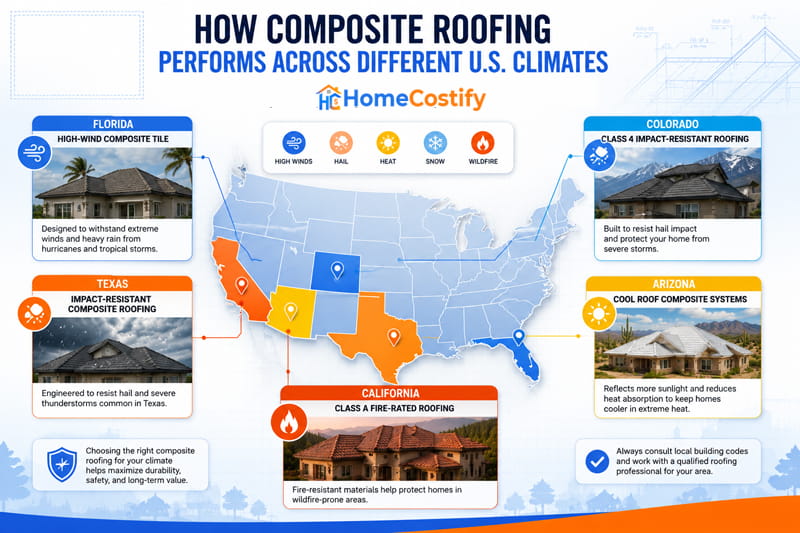
Climate influences roofing performance throughout the country. Materials exposed to intense sunlight in Arizona face different conditions than roofs covered by snow in Minnesota or subjected to coastal winds in Florida. Performance expectations should always be evaluated against local weather patterns rather than national averages.
| Climate | Recommended Composite Roofing Type |
|---|---|
| Florida | High-wind composite tile |
| Texas | Impact-resistant composite roofing |
| Arizona | Cool roof composite systems |
| Colorado | Class 4 impact-resistant roofing |
| California | Class A fire-rated roofing |
Hot and Sunny Climates
High temperatures place constant stress on roofing materials. Extended UV exposure can accelerate surface aging, fade colors, and contribute to thermal expansion over time.
Many synthetic composite roofing products are engineered to withstand prolonged sun exposure. Some systems also incorporate reflective technologies that reduce heat absorption. Homes located in Arizona, Nevada, and parts of Southern California often benefit from materials developed specifically for high-temperature environments.
Cold and Snowy Regions
Snow accumulation creates a different set of challenges. Roofing materials may experience repeated freeze-thaw cycles throughout the winter season. Ice dams can form near roof edges when attic temperatures and outdoor temperatures differ significantly.
Material flexibility becomes important in colder climates. Certain roofing systems maintain their structural integrity during temperature fluctuations more effectively than others. Weight can also play a role where heavy snow loads are common.
Coastal Areas
Coastal environments combine wind, moisture, and salt exposure. Those conditions place unique demands on roofing materials.
Corrosion resistance matters in these regions. Salt-laden air can accelerate deterioration in some building components. Composite roofing materials manufactured from polymers and engineered compounds avoid many of the corrosion concerns associated with metal components exposed to coastal conditions.
A composite tile roof is often selected in coastal markets because it combines a traditional appearance with lower weight than many natural alternatives.
Hail-Prone Regions
Hailstorms cause billions of dollars in property damage across the United States each year. States such as Colorado, Texas, Nebraska, and Kansas experience some of the highest levels of hail activity.
Impact resistance becomes a priority in these locations. Roofing systems carrying higher impact ratings often show less visible damage after severe storms. Premium composite roofing products frequently target this market segment due to their ability to absorb and disperse impact forces.
Wildfire-Prone Areas
Wildfire exposure has become an increasingly important concern across portions of the western United States. Roofing materials represent one of the most vulnerable parts of a structure during ember-driven fire events.
Fire-rated roofing systems are commonly recommended in these regions. Material composition, surface characteristics, and fire-testing performance all influence suitability. Synthetic composite roofing products that achieve high fire-resistance ratings are often considered alongside tile, metal, and other fire-rated roofing materials.
Can Composite Roofing Improve Long-Term Value?
The price of a new roof receives most of the attention during the buying process. Long-term value often becomes clearer years later. Repair frequency, energy performance, weather resistance, and replacement timing all influence the total cost of ownership.
Energy Efficiency Considerations
Energy performance varies across roofing materials. Color selection, surface composition, and manufacturing technology all affect how much solar energy a roof absorbs throughout the day.
Some composite roofing products incorporate reflective granules or specialized surface treatments that increase solar reflectance. More sunlight is reflected away from the roof rather than absorbed into the structure below. The difference becomes more noticeable during long periods of summer heat.
Cool roof performance can also influence attic temperatures. A roof surface that absorbs less heat places less thermal stress on the building envelope. In warmer regions, that reduction may contribute to lower cooling demands during peak summer months.
Heat gain affects more than indoor comfort. Prolonged exposure to elevated temperatures can place additional strain on insulation, roof ventilation systems, and roofing materials themselves. Products engineered to manage heat more effectively may provide benefits that extend beyond monthly utility costs.
Performance varies by manufacturer and product line. Roofing specifications often provide a clearer picture than color samples or marketing brochures. Solar reflectance values, thermal performance data, and product certifications offer useful points of comparison when evaluating different composite roofing systems.
Insurance and Roof Resilience
Severe weather creates some of the most expensive roof-related losses in the United States. Hailstorms, wind events, hurricanes, and flying debris generate billions of dollars in property damage every year.
Based on research from the Insurance Institute for Business & Home Safety (IBHS), homes built or upgraded to meet FORTIFIED standards experienced substantially fewer storm-related insurance losses. For homeowners considering impact-resistant composite roofing systems, this highlights the long-term value of selecting roofing materials designed to perform in severe weather conditions.
Roof resilience often becomes most visible after a major storm. Two neighboring homes may experience the same weather event yet show very different levels of damage. Material selection plays a role. Installation quality matters as well.
Many impact resistant roofing products are engineered to absorb energy that might crack, split, or damage less resilient materials. Reduced storm damage can translate into fewer repairs, lower maintenance expenses, and less disruption following severe weather.
Composite roofing is not immune to damage, but products built for demanding weather conditions often provide advantages that become more apparent over decades of ownership rather than during the first year after installation.
How to Choose the Right Composite Roofing System
A roofing project rarely comes down to appearance alone. Budget, climate conditions, architectural style, and ownership plans all influence which material makes the most sense for a particular property. Composite roofing includes a broad range of options, making it important to evaluate each decision from multiple angles.
Consider Your Budget
Price ranges vary considerably across the market.
Entry-level options typically include traditional composition shingles. These products remain popular because they provide reliable weather protection without pushing project costs into premium territory.
Mid-range materials often include architectural shingles and enhanced dimensional products. Additional thickness and improved visual depth place them above basic roofing materials without reaching the cost of specialty systems.
Premium composite roofing products occupy the highest pricing tier. Synthetic slate, synthetic shake, and tile-inspired materials fall into this group. The investment is larger, but appearance, weather resistance, and lifespan expectations often increase as well.
Evaluate Your Local Climate
Weather patterns influence roofing performance throughout the life of the roof.
Homes located in hail-prone regions often benefit from impact resistant roofing materials with higher impact ratings. Wind exposure becomes a priority in coastal areas and hurricane-prone states. Heat resistance matters in desert climates where roof surfaces face intense solar exposure for much of the year.
Snow creates different demands. Material flexibility, moisture management, and structural performance become more important during extended winter conditions.
Wildfire exposure also deserves attention in parts of the western United States. Fire ratings may carry greater importance than appearance in these locations.
Match the Roofing Style to Your Home
Visual compatibility plays a major role in curb appeal.
Slate-inspired products complement homes with traditional, historic, or upscale architectural styles. Shake-style materials work well on cottages, craftsman homes, and rustic designs. Tile-inspired profiles often appear on Mediterranean, Spanish, and Southwestern architecture.
Traditional shingles remain a versatile option that fits a wide variety of residential styles. Their familiarity continues to make them one of the most widely used roofing choices in the country.
Think About Long-Term Ownership Goals
Ownership plans can influence roofing decisions as much as material specifications.
A homeowner planning to sell within a few years may evaluate roofing priorities differently than someone intending to stay for decades. Entry-level or mid-range materials may provide sufficient value when long-term ownership is not part of the equation.
Properties expected to remain in the family for many years often justify greater attention to durability and lifecycle costs. A longer-lasting roofing system may reduce future replacement expenses and limit disruption over time.
For a forever home, lifespan and resilience often move higher on the priority list. The initial investment may be larger, but the roof becomes part of a long-term ownership strategy rather than a short-term improvement project.
How Composite Roofing Fits Among Today’s Roofing Materials
The comparisons below provide a quick overview of how composite roofing fits within the broader roofing market.
- Asphalt Shingles: Usually cost less upfront, though premium composite roofing materials often provide longer lifespan expectations.
- Architectural Shingles: Deliver enhanced dimensional appearance compared with basic asphalt roofing products.
- Luxury Shingles: Focus heavily on appearance and premium design features.
- Metal Roofing: Known for longevity and fire resistance, though appearance differs significantly from shingle-based systems.
- Clay Tile Roofing: Provides distinctive architectural character but carries substantially more weight.
- Concrete Tile Roofing: Offers durability and strength while increasing structural load requirements.
- Slate Roofing: Delivers natural stone beauty but often costs considerably more than synthetic alternatives.
- Synthetic Slate Roofing: Shares many characteristics with premium composite roofing products.
- Wood Shingles: Create a natural appearance but require more maintenance over time.
- Wood Shakes: Feature a rustic texture that many synthetic products attempt to replicate.
- Solar Shingles: Combine roofing and electricity generation within a single roofing assembly.
Conclusion
Composite roofing covers far more than a single roofing material. The market includes everything from traditional composition shingles to premium synthetic slate, shake, and tile-inspired products. Cost, lifespan, appearance, and weather performance vary significantly across these options.
A lower-priced roof may satisfy short-term goals, while a premium system may deliver greater value across several decades. Material composition plays a major role in those outcomes. Climate conditions, installation quality, and maintenance practices influence results as well.
Comparing products based solely on appearance rarely tells the full story. Lifespan expectations, impact ratings, fire classifications, and long-term ownership costs deserve equal attention. Composite roofing remains one of the most diverse segments of the residential roofing market.
Evaluating materials carefully before making a final decision often leads to a roofing system that aligns more closely with both the property and the owner’s long-term plans.
FAQs About Composite Roofing
What does composite roofing mean?
Composite roofing refers to roofing materials manufactured from multiple components such as asphalt, fiberglass, polymers, recycled plastics, or rubber rather than a single natural material.
What is another name for composite roofing?
Depending on the material, it may also be described as composition roofing, synthetic roofing, polymer roofing, or engineered roofing products.
Is composite roofing good?
Many systems offer a combination of durability, design flexibility, weather resistance, and relatively low maintenance requirements.
Are composite roofs better than shingles?
Some composite roofing products outperform standard shingles in lifespan and weather resistance, while basic composition shingles remain part of the composite roofing category themselves.
What is the best composite roofing material?
The answer depends on budget, climate, appearance preferences, and ownership goals. Synthetic slate and premium polymer products are often considered among the highest-performing options.