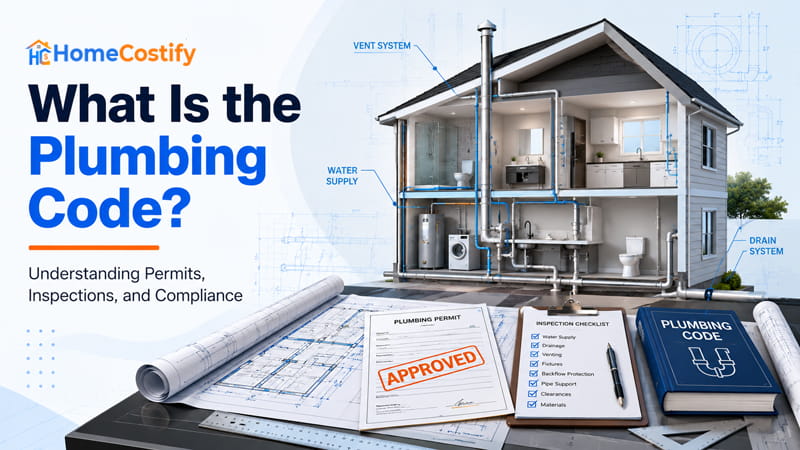
Bathroom renovations, aging pipes, and fixture replacements can introduce questions that never surfaced during daily use. Plumbing code establish minimum legal requirements for residential plumbing systems, setting expectations for sanitary conditions, safe drinking water, and work that satisfies recognized construction requirements without relying on personal judgment alone.
Plenty of people first encounter those requirements after planning a remodel or replacing worn plumbing components. Decisions involving pipe materials, fixture locations, drainage layouts, or water supply lines rarely depend on preference alone.
Construction quality continues to matter well beyond the day new fixtures begin operating, making regulatory requirements part of everyday residential projects instead of something reserved for large commercial buildings.
A bathroom remodel or kitchen renovation can place routine project decisions under regulatory oversight. Material choices, the position of plumbing fixtures, drainage layouts, and plumbing vent arrangements must satisfy applicable provisions before walls are closed again.
What Is the Plumbing Code?
Residential plumbing work follows a plumbing code that sets legal standards for construction, remodeling, and alterations. Those standards cover safe drinking water, sanitary drainage, and wastewater removal.
Definition of a Plumbing Code
Construction work follows legal requirements long before pipes disappear behind drywall or concrete. A plumbing code sets minimum requirements covering new installations, alterations, replacements, and major remodeling projects.
Codes carry legal authority after adoption by local governments. Standards focus on technical specifications, testing methods, product quality, or manufacturing criteria. Both contribute to safe construction, though each serves a different purpose during residential renovation projects.
Bathroom remodeling, fixture replacement, kitchen renovations, water heater upgrades, and similar projects can fall under local plumbing regulations once planned changes affect drainage, venting, fixture placement, or sanitary operation.
What Is the Purpose of Plumbing Codes?
Drainage systems require dependable separation. Cross-connections, contaminated supplies, and unsanitary conditions create risks reaching well beyond a single residence.
Construction quality carries equal importance. Incorrect pipe sizing, poor venting practices, unsuitable materials, or improper fixture placement create problems months or even years after the project is completed..
Compliance begins long before a project reaches completion. Correct planning and careful installation reduce unsafe conditions throughout the life of the plumbing system.
| Plumbing Code at a Glance | Explanation |
|---|---|
| Purpose | Protect public health and safety |
| Applies To | Residential and commercial plumbing systems |
| Covers | Design, installation, alteration, and replacement |
| Enforced By | Local jurisdictions |
| Compliance Method | Permits and inspections |
Why Plumbing Codes Exist
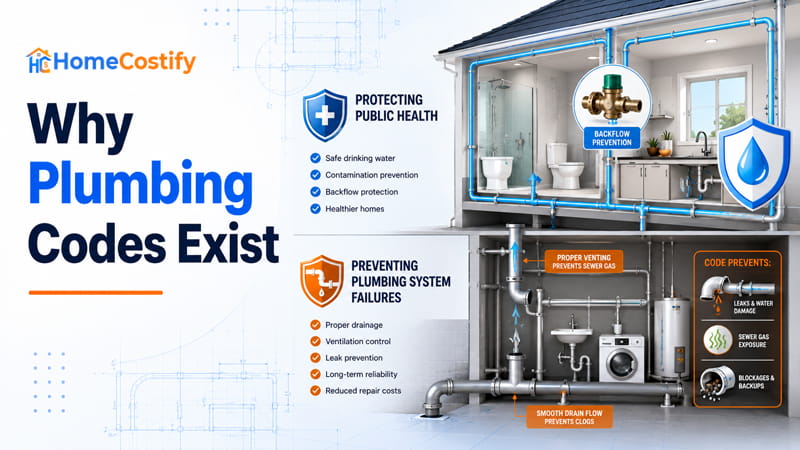
Every occupied home depends on two separate paths operating without interference. One delivers clean drinking water. The other carries wastewater away for safe disposal. Public health concerns led to plumbing code requirements intended to reduce contamination instead of regulating construction for its own sake.
Protecting Public Health
Clean drinking water depends on separation from wastewater at every stage of a plumbing system. Cross-connections create one of the largest concerns because contaminated water can enter potable supplies under unfavorable pressure conditions. Sanitary protection begins with construction practices that reduce opportunities for contamination.
According to the U.S. Environmental Protection Agency (EPA), cross-connections can introduce contaminants into potable water through backflow after pressure changes occur. For that reason, plumbing codes include backflow prevention provisions intended to protect drinking water quality and limit public health risks.
Sanitary drainage prevents waste from reaching occupied spaces. Wastewater requires controlled collection and disposal without reaching fixtures, water supplies, or occupied living spaces. Every barrier separating clean water from waste contributes to healthier residential conditions.
Preventing Plumbing System Failures
Health protection represents only part of the objective. Long-term reliability receives equal attention because small installation defects can develop into expensive plumbing failures during everyday use.
Drainage systems depend on proper slope, suitable pipe sizing, and dependable flow. Venting protects plumbing trap seals, balances air pressure, and supports steady wastewater movement. Approved materials reduce compatibility problems between fittings, piping, and water distribution components.
Stable pressure supports normal fixture operation. Excessive pressure places unnecessary stress on valves, fittings, and household fixtures. Insufficient pressure interferes with everyday water use and can expose installation defects that would otherwise go unnoticed.
What Plumbing Codes Regulate
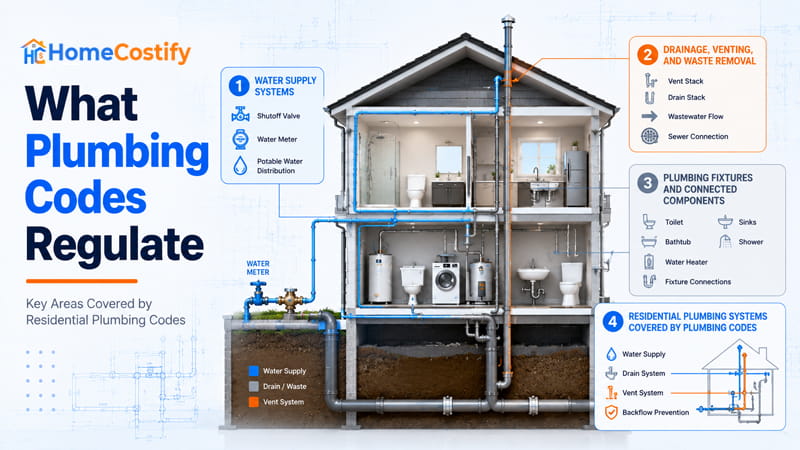
Renovation projects rarely involve visible fixtures alone. A plumbing code reaches concealed piping, drainage routes, vent layouts, water distribution, and fixture placement. That broader scope explains why approved materials, layout decisions, and construction details follow regulated criteria instead of personal preference.
Water Supply Systems
Turning on a kitchen faucet reveals only the final step of water delivery. Behind finished walls, supply lines, valves, and fittings distribute potable water across a home plumbing system under conditions intended to protect water quality.
Plumbing codes govern approved materials, pressure limits, and water supply piping because each decision influences water entering sinks, showers, and household appliances. Material compatibility carries equal importance. Excessive water pressure shortens fixture life, increases wear on valves, and places unnecessary stress on piping.
Contamination risks extend beyond visible equipment. Cross-connections, unsuitable materials, or incorrect installation can compromise drinking water quality without producing immediate warning signs.
Drainage, Venting, and Waste Removal
Every sink, shower, and toilet generates wastewater that must leave the house safely. Gravity drainage moves waste toward a sewer or approved disposal point. A drain, waste, and vent (DWV) system network supports that movement through properly sized piping and vent connections.
Vent stacks balance air pressure inside drain lines. Protected trap seals block sewer gases from returning through household fixtures. Pipe slope, venting, and wastewater routing work together to support dependable drainage performance.
Plumbing Fixtures and Connected Components
A bathroom remodel or kitchen upgrade places fixtures at the center of numerous layout decisions. Sinks, toilets, bathtubs, showers, and even water heaters require proper placement. Fixture spacing, accessibility, and connection dimensions follow established requirements for safe operation.
Reliable performance depends on far more than fixture selection. Valves, supply connections, drains, and other plumbing components operate as one coordinated network. Every connection contributes to water delivery and wastewater removal across the house.
Residential Plumbing Systems Covered by Plumbing Codes
Residential construction includes different types of plumbing systems, each serving a distinct purpose. Drinking water systems distribute potable water. Sanitary drainage systems carry wastewater away from occupied spaces. Vent systems maintain balanced airflow inside drain piping. Specialty systems follow additional criteria when unique equipment becomes part of a project.
Each category supports a different function within one residential plumbing network. Material selection, operating conditions, equipment type, and intended application determine which sections of the plumbing code apply.
Understanding the Scope of a Residential Plumbing System
Visible fixtures represent only a small portion of residential plumbing. Parts of a plumbing system continue behind walls, beneath floors, inside ceilings, and below foundations. Supply piping, drainage lines, vent stacks, valves, concealed fittings, and service connections all fall within the scope regulated by plumbing codes.
| Plumbing Area | Typical Code Focus |
|---|---|
| Water supply | Pipe materials, pressure, contamination prevention |
| Drainage | Pipe slope and wastewater removal |
| Venting | Airflow and sewer gas control |
| Fixtures | Installation, spacing, accessibility |
| Backflow prevention | Drinking water protection |
How Plumbing Codes Work in the United States
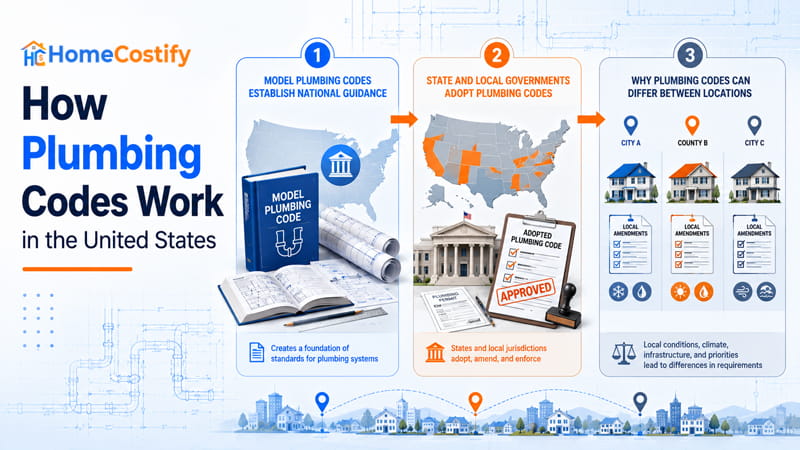
A plumbing code does not take effect across the United States at one time. National guidance begins with model documents, then passes through state and local legal processes. That framework creates shared safety goals, yet each jurisdiction determines which rules carry legal authority.
Model Plumbing Codes Establish National Guidance
Two organizations publish the model documents used across the country. The International Code Council (ICC) develops the International Plumbing Code (IPC). The International Association of Plumbing and Mechanical Officials (IAPMO) publishes the Uniform Plumbing Code (UPC). Neither organization functions as a national lawmaking authority.
Each model code establishes minimum technical requirements for plumbing construction and installation. Engineers, contractors, manufacturers, and public agencies use these publications as technical references during code development. New editions incorporate updated research, construction practices, and industry experience without creating legally enforceable requirements on their own.
Publication marks the beginning of the process, not the final step. Legal authority appears only after a government adopts one of these documents through its legislative or regulatory procedures.
State and Local Governments Adopt Plumbing Codes
State governments determine which plumbing standards apply within their borders. One state can adopt the IPC, another can select the UPC, and another can publish amendments alongside a chosen document. Local governments sometimes introduce additional revisions that reflect regional construction practices or public infrastructure.
A local jurisdiction assigns enforcement authority to a building department or another public agency. Within that structure, the Authority Having Jurisdiction (AHJ) interprets adopted regulations and determines which technical provisions govern the project.
According to the International Code Council, the International Plumbing Code is published as a model code rather than nationwide law. Legal authority begins only after a state or local jurisdiction completes code adoption. Building departments then administer those adopted requirements through permits, inspections, and local code officials.
Each adopted plumbing code reflects the legal decisions of the governing authority instead of the publishing organization.
Why Plumbing Codes Can Differ Between Locations
Communities across the United States do not update construction regulations on identical schedules. One state can adopt the newest edition, another can continue using an earlier publication, and neighboring cities can apply different local amendments under state authority.
Regional conditions influence those decisions. Cold climates demand greater attention to freezing temperatures. Coastal areas address corrosion and storm exposure. Dry regions face different water management priorities. Established building practices can shape amendment language as local governments refine technical requirements for their communities.
Homeowners planning plumbing work should verify current plumbing codes with the appropriate local authority before purchasing materials or preparing construction plans. A neighboring city or county can follow different requirements even within the same state.
| Stage | Purpose |
|---|---|
| Model code development | Establish minimum technical requirements |
| State adoption | Select or modify a model code |
| Local amendments | Address regional needs |
| Permit process | Authorize regulated work |
| Inspection | Verify code compliance |
When Plumbing Permits and Inspections Are Required
A plumbing code applies to a wide range of regulated construction activities, yet government approval does not accompany every plumbing job. New installations, major alterations, and substantial replacements frequently require a permit and official review before work begins.
Plumbing Projects That Commonly Require a Permit
Building a new bathroom, adding water supply piping, or extending drainage lines typically falls within regulated plumbing works. Large remodeling projects also receive close attention because new piping, relocated fixtures, and utility connections can alter an existing plumbing layout.
Replacing a water heater serves as another common example. Relocating sinks, toilets, bathtubs, or showers can affect supply piping, drainage, venting, and fixture clearances. Significant plumbing alterations fall under similar requirements because construction changes extend beyond simple repairs.
Technical standards found in the applicable plumbing code govern regulated construction work. Local authorities determine when official authorization applies. Approval generally takes place before materials enter walls, floors, or other concealed spaces.
What Happens During a Plumbing Inspection
Inspection activities begin once covered construction has reached designated milestones. A code official visits the job site to compare completed work with applicable plumbing codes and approved construction documents.
A rough inspection is scheduled once piping, drains, vents, and related components have been installed but before finished surfaces cover them. Exposed connections give the inspector a clear view of routing, support, materials, and workmanship.
Completed projects move to a final inspection once fixtures, valves, trim, and equipment have been installed. The inspector verifies that confirms that completed plumbing work matches approved requirements and functions as intended.
Any deficiencies identified during either visit can result in a correction notice. Contractors correct the listed items before another review takes place. Once outstanding issues have been resolved, the project receives approval, marking completion of the required plumbing inspection process.
| Situation | Permit Usually Required | Inspection Typically Required |
|---|---|---|
| New plumbing installation | Yes | Yes |
| Major remodel | Yes | Yes |
| Fixture relocation | Usually | Usually |
| Minor repairs | Often No (depends locally) | Usually No |
How to Stay Compliant With Plumbing Codes
Following plumbing codes starts with informed planning instead of last-minute corrections. Early decisions can reduce scheduling problems, repeated inspections, and unexpected project expenses. A little preparation supports smoother progress from the first planning conversation to project completion.
Understand Local Code Requirements Before Starting Work
Every local jurisdiction has authority over the regulations enforced within its boundaries. One community can adopt different provisions from another, even across neighboring cities. Reviewing the applicable plumbing code at the planning stage reduces confusion after work begins.
Online articles and videos offer useful background, yet they do not always reflect current local requirements. Building practices, adopted regulations, and administrative updates vary from one jurisdiction to another. A quick confirmation with the local building department establishes which standards apply to a planned renovation.
Work With Qualified Professionals When Required
Certain projects call for a licensed plumber under local regulations. Professional oversight supports approved plans, coordinates required inspection schedules, and addresses technical questions raised during construction.
Project records deserve equal attention. Approved drawings, inspection reports, and related documentation create a clear record of completed work. Those documents support future remodeling projects, property sales, or insurance questions without turning routine verification into a difficult search.
Keep Safety and Compliance as the Primary Goal
Strong code compliance provides lasting protection well beyond project completion. Consistent attention to adopted standards reduces the chance of corrective work during future renovations or property transactions. That practical value extends beyond regulatory requirements.
Safe construction and responsible planning support the purpose behind plumbing codes. Every informed decision contributes to a safer home, smoother remodeling experience, and greater confidence whenever official records or project history receive future review.
Conclusion
A plumbing project does not end when the walls are closed or the fixtures are in place. The decisions made during planning can stay with a home for decades, influencing future renovations, property sales, and official records.
Following the applicable plumbing code from the beginning reduces the chance of unexpected corrections later and supports work that fits local requirements from start to finish.
FAQs About Plumbing Code
What is the plumbing code?
A plumbing code is a set of minimum requirements for the safe design, installation, alteration, and maintenance of plumbing systems. Its purpose is to protect public health, water quality, and property safety.
What is IPC in plumbing?
The International Plumbing Code (IPC) is a model plumbing code published by the International Code Council (ICC). States and local jurisdictions adopt the IPC through their own legal processes, sometimes with amendments.
What is UPC in plumbing?
The Uniform Plumbing Code (UPC) is a model plumbing code published by the International Association of Plumbing and Mechanical Officials (IAPMO). Various jurisdictions adopt the UPC as the basis for local plumbing regulations.
What is the 135 rule in plumbing?
The 135-degree rule refers to drainage fittings that create smoother directional changes than sharp turns. This fitting arrangement supports wastewater flow and reduces the chance of drain blockages.
What are the most common plumbing code violations?
Common violations include improper venting, inadequate pipe support, missing backflow protection, incorrect drain slope, and plumbing work completed without required permits where local regulations require approval.