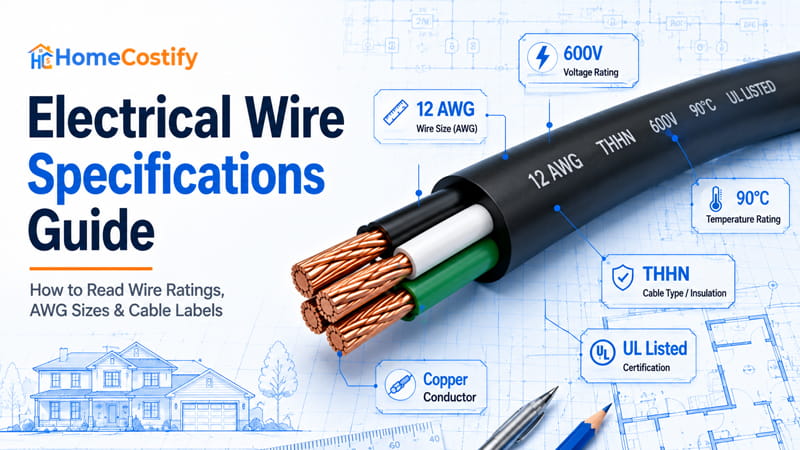
Electrical cables carry far more than a brand name or catalog number. Letters, numbers, abbreviations, and certification symbols appear across the cable jacket, each representing a specific part of the cable. Electrical wire specifications refer to the complete set of technical data used to classify a cable according to its material, construction, ratings, and intended application.
A cable label, conductor size, voltage rating, insulation designation, and certification mark appear separately because they record different parts of the same cable. None identifies the cable on its own.
Taken together, those markings form electrical wire specifications. They establish a single technical description that identifies the cable, summarizes its construction, and defines its intended use.
What Are Electrical Wire Specifications?
Electrical wire specifications are the complete technical description assigned to an electrical cable. Every designation records a specific property, including dimensions, conductor material, operating ratings, insulation, or manufacturer identification. The full specification presents the cable through its construction, ratings, and listed information.
What Information Is Included in Electrical Wire Specifications?
An electrical wire specification contains multiple categories of technical data printed on the cable. Information commonly included covers wire size, wire ratings, voltage rating, temperature rating, insulation, conductor material, and cable label data.
| Specification | Purpose |
|---|---|
| Wire Size | Identifies conductor dimensions |
| Wire Ratings | Defines electrical limits |
| Voltage Rating | Maximum operating voltage |
| Temperature Rating | Insulation heat limit |
| Insulation | Environmental protection |
| Cable Labels | Product identification |
The complete cable description comes from the entire specification, not from an isolated measurement, rating, or designation.
Why Specifications Should Be Read Together
Electrical wire specifications consist of measurements, ratings, material designations, certification marks, and product identifiers that describe different parts of the same cable. None replaces another because every item records separate technical data.
Only their combined meaning forms the complete cable description. Separating dimensions from ratings, materials, or identification leaves part of the specification unfinished.
According to UL Solutions, standard cable markings identify cable type, ratings, and intended scope of use, whereas the UL Mark confirms certification through UL’s product evaluation program. Those markings work together as a technical reference instead of functioning as simple product labels.
Viewed as a complete technical reference, electrical wire specifications identify a cable far more accurately than any single marking, rating, or designation.
Why Electrical Wire Specifications Matter
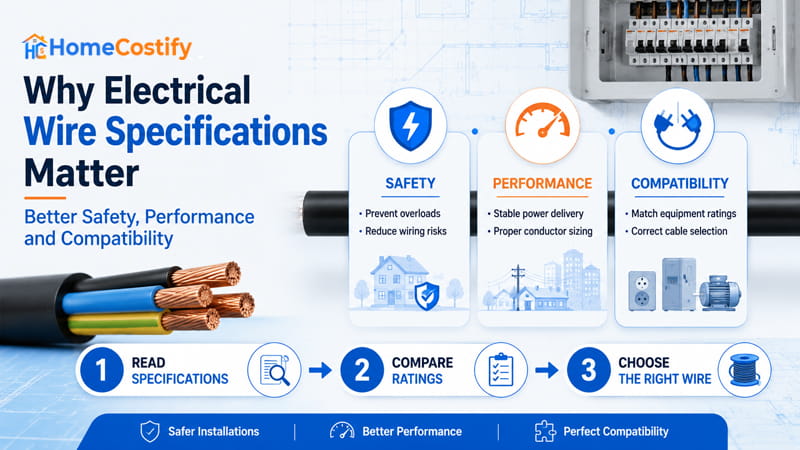
Electrical cables can share the same conductor size yet differ in voltage rating, insulation, temperature rating, or certification. Matching one specification does not guarantee two cables are built for the same application. Electrical wire specifications exist because a cable cannot be described through a single value.
Why a Single Specification Is Never Enough
Voltage rating, insulation, material designation, certification marks, and other published values describe additional characteristics that do not appear in conductor dimensions alone. Comparing cables through one specification leaves part of the product unaccounted for.
Manufacturers publish multiple specifications so every cable can be identified from several technical perspectives. The complete specification creates a far clearer basis for comparison than any isolated rating or designation.
How Specifications Reduce Selection Errors
Selecting a cable begins with comparing available products. Two cables carrying the same size marking can differ in construction, operating limits, or intended application because other specifications are not identical.
Replacement cable evaluation requires attention to multiple specifications, especially when products come from different manufacturers. Consistent specifications indicate comparable technical characteristics, whereas visible differences signal that additional evaluation is necessary before considering the products interchangeable.
Why Manufacturers Publish Complete Specifications
Manufacturers print multiple specifications because each published value documents a different part of the cable. Identification marks distinguish the product, ratings define technical limits, and certification marks verify compliance with recognized standards. Removing any of those values leaves part of the product description incomplete.
Electrical wire specifications give manufacturers, distributors, electricians, inspectors, and buyers a common technical reference. The shared reference makes cable identification and product comparison consistent long before individual specifications are examined in detail.
How to Read Electrical Wire Specifications
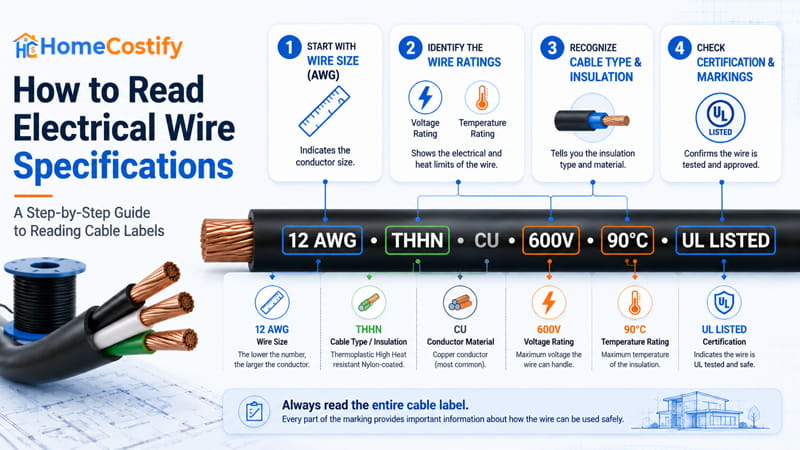
Electrical cables carry a sequence of technical markings along their outer jacket. Reading those markings in order creates a clearer view of the cable before interpreting each value separately. The process starts with basic identification and moves toward product details.
Start with the Wire Size (AWG)
The first visible detail on many cable labels is the conductor size marking. This value identifies the physical size of the conductor inside the cable. AWG appears as a standard reference for wire size, and the marking is commonly paired with other details on the cable jacket.
Conductor size acts as an initial reference when reviewing a cable. It does not represent the complete specification because other markings describe additional limits and construction details. A wire gauge marking provides one part of the cable description.
Identify the Wire Ratings
After the size marking, the next step is finding the wire ratings printed on the cable. These values appear as numbers, letters, or abbreviations that define specific limits assigned to the cable.
Common rating information includes:
| Printed Rating | What It Tells You |
|---|---|
| 600 V | Maximum operating voltage |
| 90°C | Maximum insulation temperature |
| Ampacity | Allowable current capacity |
The wire ratings section on a cable label presents operating information without requiring interpretation of every technical detail during the initial review. The listed values create a reference point for understanding how the cable is classified.
Recognize Cable Type and Insulation
Cable identification continues with the cable type and insulation designation. These markings show how the cable was constructed and what materials surround the conductor.
Common designations include:
- THHN
- THWN
- NM-B
- UF-B
The cable codes appear directly on cable labels and form part of the cable’s identification. The designation itself is only one part of the specification set and should be read alongside other markings printed on the cable.
Check Certification and Product Markings
The final step involves reviewing certification and manufacturer information found on the cable surface. Certification and manufacturer markings confirm product identity and show whether the cable carries recognized certification marks.
Common markings include:
| Marking | Purpose |
|---|---|
| UL Listed | Certification status |
| Manufacturer | Product identification |
| Cable Type | Construction type |
| AWG | Conductor size |
| Voltage | Electrical limit |
Conductor markings and manufacturer markings provide additional identification details. A UL Listed mark indicates that the cable has passed evaluation through an approved certification process.
Reading cable labels in sequence reveals how each printed element contributes to the cable description. The order prevents isolated interpretation and creates a clearer understanding of the information shown on the cable.
Understanding the Most Important Wire Ratings
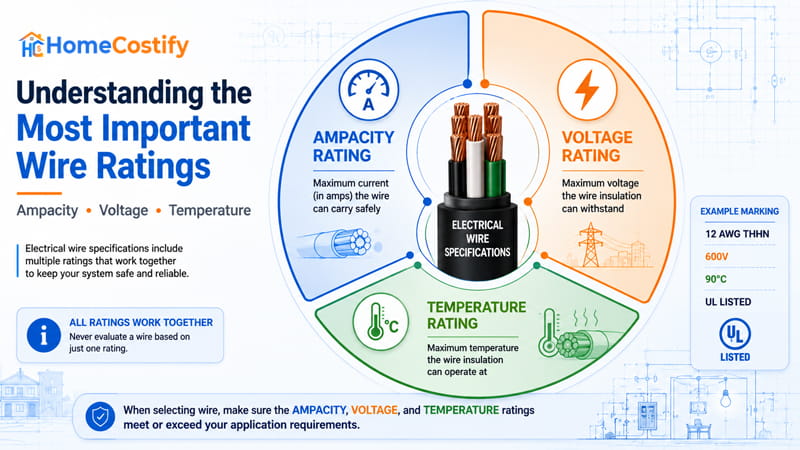
Wire ratings define the limits assigned to an electrical cable during operation. Each rating covers a separate condition, including current capacity, voltage limits, and temperature exposure. Evaluating current, voltage, and temperature ratings within electrical wire specifications shows how a cable is classified.
Ampacity Rating
Ampacity refers to the maximum current a conductor can carry safely under specific conditions. This value represents the current carrying capacity assigned to a cable based on its construction and operating environment.
| Rating | Indicates |
|---|---|
| Ampacity | Maximum allowable current |
Ampacity is not a fixed number that applies to every situation. The permitted current level depends on factors surrounding the cable’s use, not only the conductor size. The wire ratings printed on a cable provide this information as part of its technical description.
Voltage Rating
Voltage rating identifies the maximum electrical pressure a cable is built to withstand during operation. The rating defines the voltage boundary established for the cable’s construction.
A cable with a specific voltage rating has been evaluated for that stated limit. The rating forms one part of the wire ratings shown within the broader specification set and should be considered alongside other listed values.
Temperature Rating
Temperature rating indicates the highest temperature level supported by the cable’s insulation system. Heat exposure can affect insulation materials, making this rating a key part of cable evaluation.
The temperature rating is linked to the insulation rating shown on cable specifications. A cable’s insulation must maintain its intended properties within the stated temperature range.
Why Ratings Must Be Evaluated Together
Ampacity, voltage, and temperature describe different operating conditions within a cable’s specification. Separating one rating from the others can create an incomplete view of the cable’s capabilities.Electrical wire specifications rely on ampacity, voltage, and temperature ratings being evaluated together.
According to the National Electrical Code (NFPA 70), conductor selection cannot be based only on conductor size. Permitted ampacity, temperature rating, and equipment termination limits must be considered together to match the conductor with its planned conditions of use.
The relationship between these ratings becomes clearer when considering an actual electrical load and the surrounding operating temperature. A cable must meet the combined requirements created by its electrical and environmental conditions.
Understanding Wire Sizes (AWG)
Wire size is one of the first specifications identified on an electrical cable. The American Wire Gauge (AWG) system gives a standardized way to classify conductor dimensions. Within electrical wire specifications, AWG represents physical size and does not describe every aspect of a cable.
What Is American Wire Gauge (AWG)?
American Wire Gauge is a standard measurement system used to identify conductor size. The number assigned to a wire indicates its position within the AWG system, where smaller numbers represent larger conductor diameters.
A cable with a lower AWG number contains a larger conductor than a cable with a higher AWG number. The marking describes physical dimensions, not a safety rating or complete cable capability.
| AWG | Relative Conductor Size |
|---|---|
| 14 AWG | Smaller |
| 12 AWG | Medium |
| 10 AWG | Larger |
| 8 AWG | Larger Again |
The table shows the relationship between AWG numbers and conductor size. It does not represent a direct measurement of cable suitability because other specifications remain separate from the gauge number.
Why Wire Size Alone Is Not Enough
Two cables with the same conductor size can carry different insulation ratings, voltage ratings, and temperature ratings. The outer construction and listed limits create differences between cables that share an AWG number.
A wire ratings label adds information beyond physical dimensions. The conductor size identifies the measurement of the conductor, but the complete cable description requires additional specifications such as insulation and voltage rating.
Common AWG Sizes Found in Residential Wiring
Common AWG sizes appear on cable labels and provide a quick reference for identifying conductor dimensions.
| Common Size | Typical Residential Use* |
|---|---|
| 14 AWG | Lighting circuits |
| 12 AWG | General-purpose circuits |
| 10 AWG | Higher-load circuits |
*Examples represent common residential applications. Actual selection depends on applicable installation requirements.
A wire gauge chart presents common AWG sizes as a reference for comparison. The AWG number identifies conductor dimensions, but the cable must still be reviewed through its complete specification before selection.
Common Wire Types and Their Specifications
Cable construction varies across different categories, creating distinct specifications for each design. A cable name identifies its basic structure, but electrical wire specifications contain additional details about the conductor, covering, and listed limits.
THHN and THWN Wires
THHN and THWN are individual conductor wires with specific insulation systems. Their markings identify the wire designation and the insulation properties assigned to each product.
The cable label displays these designations alongside other printed data. THHN and THWN share similar naming formats, yet their insulation properties are listed separately through their respective markings.
An insulation rating forms part of the information attached to these wire types. The designation identifies the construction category without covering every specification found on the cable.
NM-B, UF-B and MC Cable
NM-B, UF-B, and MC cable use different construction formats. Each cable type has its own identification based on the materials and outer structure used during manufacturing.
| Cable Type | General Characteristic |
|---|---|
| THHN | Individual insulated conductor |
| THWN | Moisture-resistant insulation |
| NM-B | Nonmetallic sheathed cable |
| UF-B | Underground feeder cable |
| MC | Metal-clad cable |
The table presents general construction categories, not a complete selection guide. Cable names identify the product family, but electrical wire specifications contain additional data required for evaluation.
Why Cable Type Does Not Tell the Whole Story
A cable designation identifies the construction category printed on the jacket. It does not replace other specifications listed on the product. Wire ratings, conductor size, insulation details, and cable markings provide additional context for identifying a cable.
The cable label brings conductor markings and certification information into one reference area. Conductor markings and certification information add further identification beyond the cable name.
Electrical wiring installation requires cable selection based on listed specifications, not only the type name. A cable category provides basic identification, but the remaining markings determine the full technical description.
How to Compare Two Electrical Wires
Electrical wire specifications reveal the differences that are not visible from the size marking alone. A proper comparison requires reviewing the listed data across both cables.
Compare the Specifications Step by Step
Cable comparison starts with the conductor size, then moves through the listed ratings, insulation details, cable type, and certification marks. Each area adds another layer of product information.
A comparison between two cables with identical AWG markings shows why the full specification matters.
| Specification | Wire A | Wire B |
|---|---|---|
| AWG | 12 | 12 |
| Voltage Rating | 600 V | 300 V |
| Temperature Rating | 90°C | 75°C |
| Insulation | THHN | THWN |
| UL Listed | Yes | Yes |
The table shows two cables with matching AWG values but different listed specifications. Their wire ratings, voltage rating, temperature rating, and insulation details create separate classifications within the product data.
Focus on Application Instead of One Specification
A cable choice depends on the requirements surrounding its intended use. Looking only at one specification can hide differences found in the cable labels, construction details, and listed limits.
The electrical load placed on a cable must match the information provided by its specifications. Current carrying capacity, insulation details, and certification data form part of the evaluation process.
Correct cable identification can influence electrical wiring cost and electrical work cost because material choices are tied to the scope of the work. The goal is not selecting the largest or most familiar cable, but matching the listed specifications to the actual requirement.
Common Mistakes When Reading Wire Specifications
Cable selection errors rarely come from complex specifications. They happen when one marking receives attention and other data is ignored. A complete specification set gives a clearer view of a cable.
Looking Only at the AWG Number
Some buyers treat AWG number as final answer for cable selection. That number identifies conductor size, but it only describes a physical measurement. Other markings record limits, materials, and construction details printed on a cable jacket. AWG belongs within electrical wire specifications, not as the only deciding value.
Ignoring Wire Ratings
Ignoring wire ratings can create an incomplete view of cable capability. Voltage rating and temperature rating show limits that must be reviewed within cable data. Missing these details can lead to incorrect assumptions about a cable’s listed range.
Assuming Similar Labels Mean Similar Performance
Similar cable labels can hide differences in construction, ratings, and insulation details. Two cables with matching appearances can carry different insulation rating values and conductor markings. Differences in construction, ratings, and insulation details affect material evaluation during cost to rewire a house projects. Material decisions depend on complete cable data, not one visible marking.
Conclusion
Electrical wire specifications represent a complete technical record of a cable, not only an AWG number or a single rating. Each listed detail contributes to understanding the cable before selection.
Reviewing the full specification creates a stronger basis for discussions with contractors. It also gives clearer context when evaluating electrician labour rates and electrical installation cost, since material choices depend on the cable requirements.
A cable should be evaluated through its listed specifications and intended application. The correct choice comes from matching the full set of technical details with the project needs, not from relying on one marking alone.
FAQs About Electrical Wire Specifications
What are electrical wire specifications?
Electrical wire specifications are a collection of technical details that describe a cable’s construction, identification, operating limits, and intended use.
What do wire ratings tell you?
Wire ratings show the operating boundaries assigned to a cable, including limits related to electrical conditions and temperature exposure.
Is AWG the same as wire specifications?
No. AWG identifies conductor size, but electrical wire specifications include additional details beyond the gauge number.
Why do cable labels matter?
Cable labels contain identification, certification, and technical information that distinguishes one cable from another.
Can two wires with the same AWG have different specifications?
Yes. Two wires can share the same conductor size but have different ratings, insulation details, and construction information.