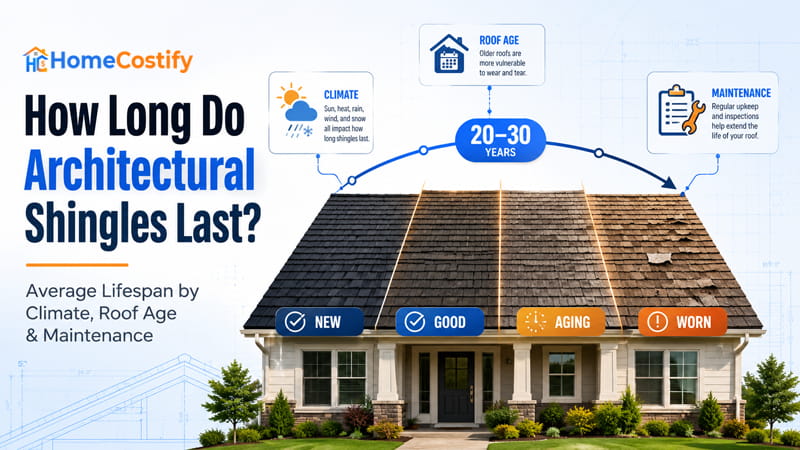
Architectural shingles have earned a reputation for lasting far longer than basic asphalt shingles. Many people ask how long do architectural shingles last, yet no single number fits every roof. Around 20 to 30 years represents a realistic expected lifespan under normal conditions.
Actual service life depends on far more than the product itself. A complete roof system, local weather patterns, roof age, maintenance history, and roof condition all contribute to expected lifespan.
Product lifespan describes what a roofing material can reasonably deliver under typical conditions. Actual roof performance reflects what happens after years of exposure on a specific house. Granule loss, recurring leaks, or widespread wear can appear long before a roof reaches its expected lifespan.
Average Architectural Shingles Lifespan
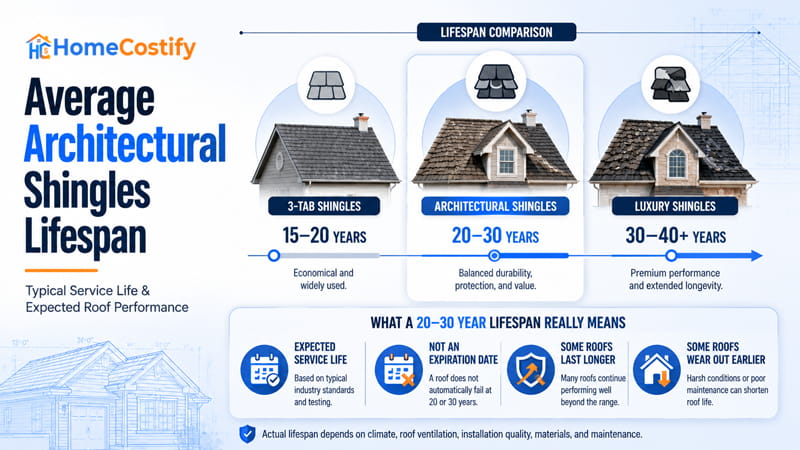
Architectural shingles typically outlast standard 3-tab asphalt shingles. Even so, architectural shingles lifespan figures represent a general range, not an exact outcome for every roof. That range serves as a baseline before evaluating real-world roof performance.
Typical Lifespan Under Normal Conditions
Anyone asking how long do architectural shingles last will usually find one answer first. Around 20 to 30 years reflects a realistic expected lifespan with proper installation and routine maintenance. Material service life applies to shingles, not every component within a roof system.
Shingles cover a roof, yet they do not define how long every roofing component stays in service. A roof system includes layers beneath visible shingles.
Viewed as a material benchmark, architectural shingles lifespan falls between standard 3-tab products and luxury asphalt shingles. Each asphalt shingle category uses different construction and thickness, creating distinct lifespan ranges.
| Roofing Material | Typical Lifespan |
|---|---|
| 3-Tab Shingles | 15–20 Years |
| Architectural Shingles | 20–30 Years |
| Luxury Shingles | 30–40+ Years |
Numbers shown above establish a general reference for common asphalt roofing products. Each range reflects material expectations under normal use and creates a consistent baseline before other lifespan factors enter evaluation.
What a 20–30 Year Lifespan Really Means
A published architectural shingle lifespan should be read as an estimate, not a fixed expiration date. Reaching year twenty does not place every roof at its endpoint. Passing year thirty does not guarantee failure, either.
Material service life describes a range established through long-term product testing. Real roofs rarely follow a calendar with perfect precision. Wear develops at different rates from one house to another, even with matching roofing materials
That perspective changes how architectural shingles life expectancy should be interpreted. Numbers printed in guides describe expected material behavior under a wide range of installation conditions. They do not promise identical results for every roof placed in service.
Why Similar Roofs Can Have Different Lifespans
Architectural shingles cover only one portion of a roofing assembly. Long-term results depend on material quality, installation accuracy, and supporting components working within one roof system.
Roof System Quality Matters
Shingles rest on a roof deck, yet they cannot isolate it from moisture by themselves. An underlayment sits beneath shingle courses and forms another barrier before water reaches wood framing. Flashing seals roof transitions where leaks commonly begin, including valleys, chimneys, and wall intersections.
Failure inside one layer can spread beyond its original location. Water passing damaged flashing, for example, reaches materials hidden beneath finished shingles. That chain of events can shorten architectural shingle roof lifespan, even though visible shingles still appear sound.
Architectural shingle materials vary in construction and thickness. Visible shingles still depend on supporting layers below them.
Installation Quality Has Long-Term Effects
Straight shingle courses do not confirm accurate installation. Fastener placement, fastening depth, shingle alignment, sealing, and overall workmanship continue affecting roof behavior long after installing architectural shingles has finished.
A misplaced nail or poorly sealed joint might stay unnoticed during early inspections. Years later, uneven wear can reveal declining roof condition. Material quality stays unchanged, yet installation defects still shorten architectural shingles lifespan.
Proper Attic Ventilation Supports Long-Term Performance
Air movement inside an attic affects conditions beneath roofing materials. Balanced attic ventilation depends on intake through soffit vent openings and exhaust through a ridge vent. Continuous airflow limits trapped heat and moisture inside roof assemblies without acting directly on shingles.
According to the Asphalt Roofing Manufacturers Association (ARMA), proper roof ventilation forms an essential part of roof system performance because it maximizes roofing material service life. ARMA notes that trapped heat and moisture inside roof assemblies can accelerate roof deterioration.
Ventilation does not strengthen shingles or change material properties. Stable attic conditions create a healthier operating environment for surrounding roofing components, supporting both architectural shingle lifespan and architectural shingle roof life over time.
How Climate Affects Architectural Shingle Lifespan
Climate does not determine roof lifespan by itself. Years of sun, rain, snow, and wind gradually leave their mark on roofing materials.
Hot, Sunny, and High-UV Climates
Daily UV exposure slowly changes asphalt at a chemical level. Long hours of direct sunlight increase surface temperatures, and repeated heating starts a gradual aging process. Oxidation develops over time as asphalt compounds lose flexibility.
Daytime heat followed by cooler nights creates thermal cycling. Roofing materials expand during warm periods and contract after temperatures fall. Thousands of repeated cycles place continuous stress on shingle construction.
Persistent heat buildup usually has a greater effect than a single hot afternoon. Roof orientation, local cloud cover, surrounding shade, and ventilation above outdoor surfaces all influence daily surface temperatures.
Even matching architectural shingles colors can experience different exposure patterns from one property to another. As a result, architectural shingle roof lifespan can differ between locations sharing similar seasonal temperatures.
Cold, Wet, and Freeze-Thaw Climates
Water entering small openings can freeze after temperatures drop. Ice expands inside tiny spaces, then contracts after melting. Repeated movement places roofing materials under continuous pressure.
A recurring freeze-thaw cycle produces gradual weathering on exposed roofing surfaces. Snow accumulation extends moisture contact, and melting water can reach vulnerable areas before freezing again. Small changes repeated across hundreds of seasonal cycles gradually affect long-term material condition.
High humidity slows drying after rain or melting snow. Extended moisture exposure leaves roofing surfaces damp for longer periods. Seasonal temperature swings create repeated expansion and contraction, shaping architectural shingle lifespan through cumulative material stress instead of winter weather alone.
Coastal and Storm-Prone Areas
Coastal exposure introduces salt carried by sea air. Salt particles settle across roofing surfaces and continue accumulating between rainfall events. Long-term exposure gradually increases material weathering, even without visible storm damage.
Frequent high winds place repeated stress on shingle edges and fastening points. Wind-driven rain reaches joints from changing directions, creating different exposure patterns than vertical rainfall. Hail adds another source of physical impact, ranging from minor surface marks to fractured shingles after stronger storms.
One severe storm can leave visible damage, yet repeated weather events usually shape architectural shingle roof life over much longer periods. Regional storm frequency gradually influences the lifespan of architectural shingles through cumulative exposure instead of a single weather event.
| Climate Condition | Primary Roofing Challenge | Potential Long-Term Effect |
|---|---|---|
| Hot & Sunny | UV exposure & heat | Faster surface aging |
| Cold & Snowy | Freeze-thaw cycle | Material stress |
| Humid | Persistent moisture | Accelerated weathering |
| Coastal | Salt exposure | Faster material deterioration |
| Storm-Prone | Wind & hail | Increased physical damage |
Weather exposure builds gradually over time, and cumulative conditions shape long-term roofing performance far better than any single climate label.
What Roof Age Really Tells You About Architectural Shingles Lifespan
Roof age offers a starting point for evaluation. Actual condition still depends on weather exposure, maintenance history, previous repairs, and overall roof system quality.
Roofs Under 10 Years Old
Roofs below ten years still fall within an early stage of their expected lifespan. Stable performance is common, yet age alone cannot confirm a healthy roof condition.
Storm damage or hidden installation defects can appear long before visible wear develops. Routine roof inspection keeps small issues from staying unnoticed during future inspections.
Early evaluations focus on confirming steady performance instead of estimating remaining service years. A well-maintained roof from this age range can continue supporting a normal architectural shingles lifespan without intensive life-expectancy assessments.
Roofs Between 10 and 20 Years Old
Ten to twenty years marks a practical time for closer evaluation. Normal weathering becomes easier to measure during repeated roof inspections visits, making year-to-year changes easier to compare.
Attention gradually moves toward estimating remaining roof life instead of confirming early performance. Plenty of roofs continue performing well during this period, especially when maintenance records stay consistent and previous damage stays limited.
Published architectural shingles life expectancy offers a useful benchmark. Roof condition still requires direct inspection.
Roofs Over 20 Years Old
Roofs passing twenty years deserve closer observation because wear tends to accumulate over longer service periods. Inspection records become increasingly valuable when reviewing long-term performance.
Maintenance history carries greater weight at this stage. Regular care can slow roof deterioration and extend usable years. Roof condition deserves priority over calendar age. Architectural shingle roof life still differs between homes built during the same period.
Why Roof Condition Matters More Than Roof Age
Two roofs built during one year can reach very different conditions after decades of service. Weather history, maintenance quality, repair records, and roof system performance all contribute valuable context during evaluation.
Roof age supplies useful background. Roof condition should confirm whether expected service life still matches actual wear. Lifespan of architectural shingles cannot be estimated from calendar age alone.
| Roof Age | Typical Condition | Evaluation Priority |
|---|---|---|
| Under 10 Years | Generally stable | Routine inspection |
| 10–20 Years | Moderate weathering | Annual evaluation |
| Over 20 Years | Higher wear potential | Detailed roof assessment |
| Any Age | Visible damage | Condition-based inspection |
Roof age works best as a starting point. Weather history, maintenance records, repair history, and roof condition complete the assessment.
Signs Architectural Shingles May Be Reaching the End of Their Lifespan
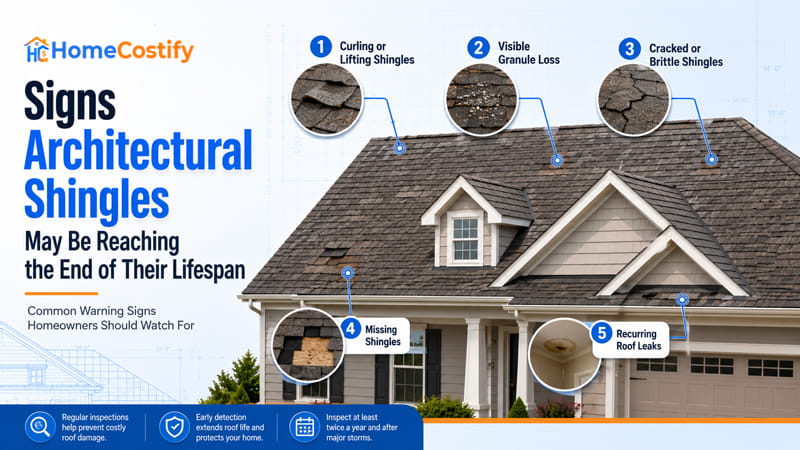
Architectural shingles seldom reach failure without visible clues. Curling edges, missing granules, or cracked surfaces can appear long before widespread roof problems develop.
Direct Answer
Multiple warning signs appearing throughout one roof deserve closer attention than a single isolated issue. One symptom does not automatically indicate failure, yet repeated changes in different areas can point toward declining architectural shingles lifespan.
Curling or Lifting Shingles
Edges that begin curling upward or lifting away from surrounding shingles deserve careful attention. Seal strips can lose adhesion over time, leaving shingles less secure during windy conditions.
Small sections may appear first before curling spreads into larger roof areas. Widespread curling shingles increase wind uplift risk and can signal declining architectural shingle lifespan.
Visible Granule Loss
Loose granules collecting inside gutters or near downspouts indicate surface wear. Exposed asphalt receives less protection once granule loss becomes easier to spot.
Light granule shedding appears during normal aging, especially after new roof installation. Heavy accumulation during repeated inspections points toward progressing roof deterioration instead of routine surface wear.
Cracked or Brittle Shingles
Small cracks can form after roofing materials lose flexibility. Cracked shingles and brittle shingles break far easier than flexible shingles during normal roof movement.
Surface cracking does not always appear in every roof section at once. Larger affected areas deserve closer evaluation because water can enter through damaged shingles.
Missing Shingles
Open sections created by missing shingles leave roof surfaces exposed until surrounding materials receive protection again. Water reaches underlying layers far easier once shingle coverage disappears.
High winds frequently leave scattered gaps instead of uniform damage. One missing shingle deserves attention, yet repeated losses at multiple locations point toward declining architectural shingle roof life.
Recurring Roof Leaks
Repeated leaks deserve careful evaluation, even after successful local repairs. Water entering through changing locations can indicate broader roofing issues than a single isolated leak.
Leak history becomes valuable when reviewed alongside visible surface changes. Combining recurring leaks with curling, cracking, missing shingles, or heavy granule loss creates a clearer picture of the lifespan of architectural shingles than any single symptom viewed by itself.
How to Make Architectural Shingles Last Longer
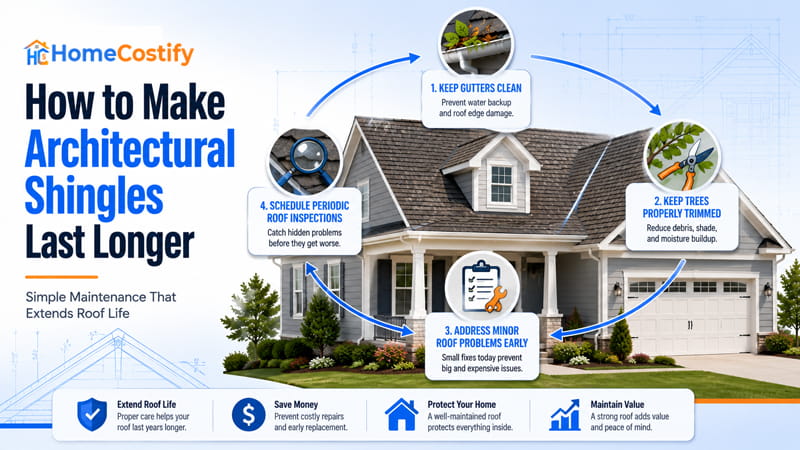
Natural aging continues year after year. Routine maintenance targets moisture, debris, and small problems before they spread.
Keep Gutters Clean
Blocked gutters interrupt normal roof drainage during rainfall. Water backed up along roof edges leaves roofing materials exposed to prolonged roof moisture and standing water.
Leaves, twigs, and dirt gradually create clogged gutters, especially beneath nearby trees. Clean drainage channels move water away from roofing surfaces and reduce moisture exposure around roof edges. Healthy gutter performance supports a longer architectural shingles lifespan, even though gutters sit outside shingle construction.
Keep Trees Properly Trimmed
Branches hanging above a roof create constant contact with roofing materials. Repeated rubbing wears shingle surfaces, and falling limbs carry a greater chance of physical damage.
Accumulated leaves trap roof debris on the a roof surface, leaving damp areas after rainfall. Regular tree maintenance limits contact from overhanging branches and reduces organic buildup before it spreads to larger roof sections. Simple trimming habits support longer architectural shingle roof life through cleaner roof surfaces.
Address Minor Roof Problems Early
Small roofing issues rarely stay isolated forever. Loose materials, minor gaps, or early surface wear deserve attention before damage spreads into surrounding areas.
Routine roof inspection identifies minor roof damage before larger problems develop. Early action reduces unnecessary roof deterioration and supports steady roof maintenance between future inspections. Attention given during early stages contributes to a longer architectural shingle lifespan.
Schedule Periodic Roof Inspections
Periodic roof inspection creates useful comparisons between one visit and the next. A structured roof evaluation documents gradual changes before widespread damage develops.
Inspection history also supports better preventive maintenance planning by tracking changes in overall roof condition across time. Consistent inspections support a longer architectural shingle roof lifespan.
Repair or Replace? Making the Right Decision for Architectural Shingles
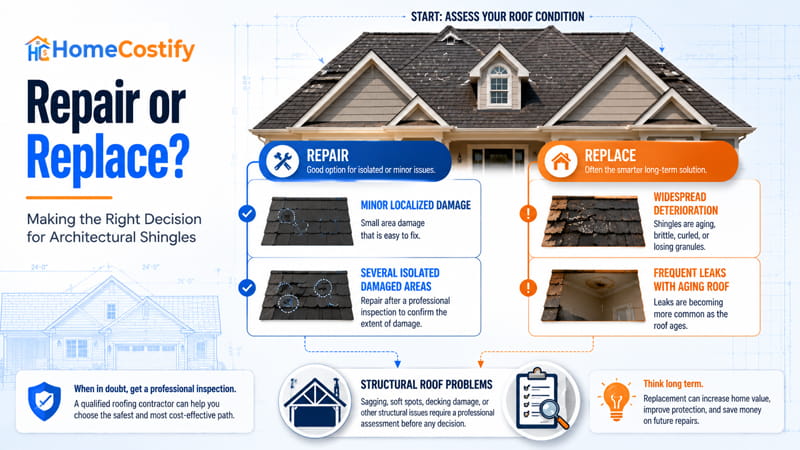
Roof problems do not always lead to replacement. Damage size, roof age, overall roof system condition, and maintenance history deserve equal attention before deciding between repair and replacement.
Direct Answer
Repair usually fits localized damage when surrounding roofing materials still perform well. Replacement becomes a stronger option after deterioration spreads beyond localized damage or practical service life starts running out.
When Architectural Shingles Repair Still Makes Sense
A few damaged shingles do not always justify replacing an entire roof. Localized leaks, limited surface damage, and a solid roof deck leave room for targeted repairs after a thorough roof inspection.
Repair works best when surrounding materials still show stable roof condition. Limited repair history also supports that decision because recurring problems have not started accumulating in multiple roof sections.
Repair preserves usable roofing materials already in place. It does not restore a roof to new condition or reset architectural shingles lifespan. Architectural shingle repair cost carries greater value when damage stays limited and usable remaining roof life supports continued repairs.
When Architectural Shingles Replacement Becomes the Better Investment
Repeated repairs lose value once deterioration spreads into large roof sections. Widespread roof deterioration, recurring leaks, and brittle shingles point toward a roofing system nearing practical limits.
Inspection records become valuable at this stage. A detailed roof inspection identifies usable roofing sections and localized damage. Published architectural shingles life expectancy offers a general reference, but roof condition should guide the final decision.
Long-term spending deserves careful consideration. Repeated repair costs can gradually approach architectural shingle replacement cost without delivering comparable value. Homeowners comparing replacement options also begin reviewing best architectural shingles before selecting new materials.
Limited remaining roof life changes long-term planning, especially after repeated repairs no longer deliver lasting value.
| Roof Condition | Typical Recommendation |
|---|---|
| Minor localized damage | Repair |
| Several isolated damaged areas | Repair after inspection |
| Widespread deterioration | Evaluate replacement |
| Frequent leaks with aging roof | Replacement is generally the practical choice |
| Structural roof problems | Professional assessment before any decision |
Replacement decisions should never rest on roof age alone. Damage extent, repair history, roof condition, and long-term architectural shingles cost trends deserve equal consideration.
Conclusion
Architectural shingles commonly deliver 20 to 30 years of service when installation quality, maintenance, and weather remain favorable. Anyone asking how long do architectural shingles last should view that range as a realistic expectation instead of a guaranteed outcome.
Roof lifespan develops from multiple factors working together over time. Material quality, climate, maintenance history, and roof condition each leave a lasting impact. A roof performing well in one location can age very differently under another set of conditions.
Visible changes deserve attention before widespread damage develops. Regular roof inspection creates a reliable record of changing conditions, making future evaluations easier to support with real observations instead of assumptions. Consistent roof maintenance gives a roofing system its best chance to reach its expected service life.
FAQs About How Long Do Architectural Shingles Last
How long should my architectural shingles last?
Most architectural shingles perform for about 20 to 30 years under normal conditions. Actual architectural shingles lifespan varies with installation quality, weather exposure, roof maintenance, and overall roof condition.
How should architectural shingles look?
Architectural shingles should appear flat, secure, and evenly aligned. Curling edges, missing granules, cracked surfaces, or missing shingles deserve closer evaluation.
Are architectural shingles more energy efficient?
Architectural shingles can reduce heat transfer when paired with proper roof design, ventilation, and suitable roofing materials. Color selection also affects heat absorption.
Are architectural shingles worth the extra cost?
Higher upfront cost can be justified through longer architectural shingle roof lifespan, stronger construction, and improved durability compared with basic three-tab shingles.
Can architectural shingles be repaired?
Localized damage can usually be repaired when surrounding materials stay in good condition. Extensive deterioration across large roof sections can shorten architectural shingle roof life and change long-term repair value.