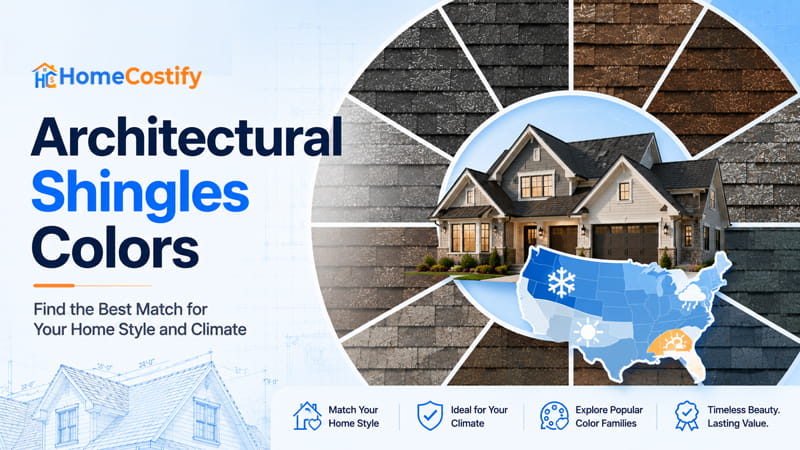
Large exterior surfaces establish a home’s visual character. Roofing covers a substantial portion of that area, placing Architectural Shingles Colors beside brick, stone, siding, and trim from nearly every street view. Warm masonry can soften gray tones. Pale fiber cement can expose cool undertones that barely appear against darker finishes.
Brick, stone veneer, and siding remain fixed for years. Paint offers greater flexibility. Roof color deserves comparison with materials that rarely change, since replacement demands considerable work and expense. Ignoring permanent exterior materials can leave exterior elements competing for attention instead of forming a balanced composition.
Catalog images capture only one lighting condition. Full-size samples reveal richer information outdoors. Position sample panels beside existing finishes. Compare results during morning, midday, and late afternoon. Move to another viewing point. Small undertones emerge gradually as lighting changes.
What Colors Are Available for Architectural Shingles?
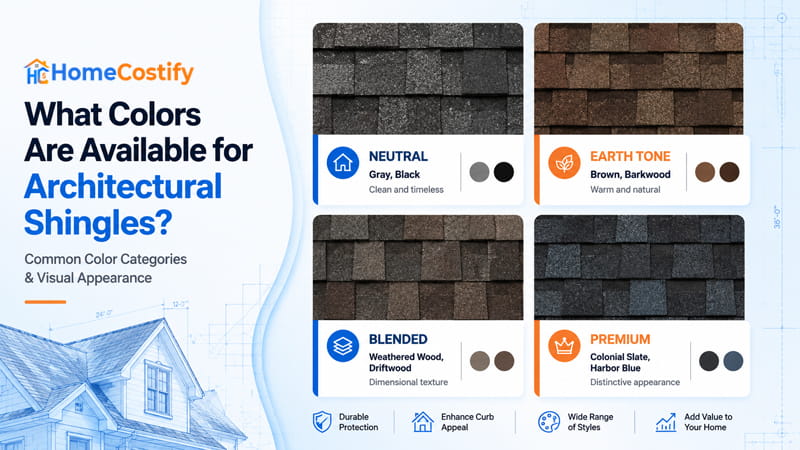
Architectural roofing shingles catalogs now present a broad color range extending well beyond basic black or brown. Architectural Shingles Colors include neutral shades, earth-inspired selections, slate-inspired finishes, and blended surfaces created through carefully distributed mineral granules.
Dimensional color comes from that granule arrangement, leaving roof structure and installation unchanged.
| Color Category | Common Examples | Typical Appearance |
|---|---|---|
| Neutral | Gray, Black | Clean and timeless |
| Earth Tone | Brown, Barkwood | Warm and natural |
| Blended | Weathered Wood, Driftwood | Layered visual texture |
| Premium | Colonial Slate, Harbor Blue | Distinctive finish |
Standard Solid Colors
Major manufacturers continue offering solid-color collections alongside blended products. Black, gray, brown, and tan remain familiar choices, each producing a uniform finish from ridge to eave.
Coated granules still reflect sunlight from slightly different directions, introducing subtle tonal variation. Architectural Shingles Colors within this category emphasize consistent color without pronounced transitions.
Blended and Multi-Tonal Colors
Multiple mineral granule colors are combined during production, giving each shingle greater visual depth than a single-color surface. Architectural roofing shingles colors such as Weathered Wood, Driftwood, Barkwood, Pewter Gray, and Colonial Slate illustrate that manufacturing method.
Ground-level viewing merges fine granule variation into broader tonal patterns. Sunlight striking another roof plane can reveal undertones hidden from an earlier viewpoint.
Product collections often display the same color name with noticeably different visual results after installation. Architectural shingle materials, roof profile, and architectural shingle dimensions all shape the finished appearance seen from the ground.
Popular Architectural Shingles Color Families
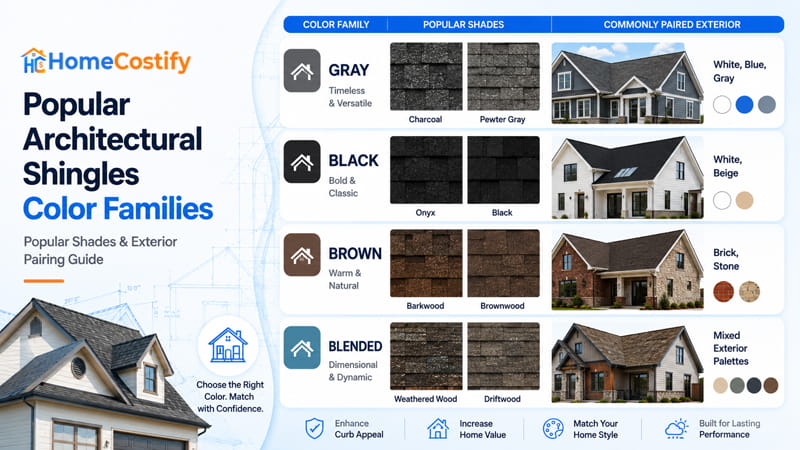
Roof color trends change slowly. Gray, black, brown, and blended finishes have remained familiar across neighborhoods for many years, appearing on everything from compact suburban homes to larger custom builds.
Their continued popularity comes from broad compatibility with brick, stone, painted siding, and other exterior materials rather than short-lived design movements.
Sorting products into color families gives homeowners a practical starting point before comparing manufacturer collections and individual shade names.
| Color Family | Popular Shades | Commonly Paired Exterior |
|---|---|---|
| Gray | Charcoal, Pewter Gray | White, Blue, Gray |
| Black | Onyx, Black | White, Beige |
| Brown | Barkwood, Brownwood | Brick, Stone |
| Blended | Weathered Wood, Driftwood | Mixed exterior palettes |
Gray Architectural Shingles Color Family
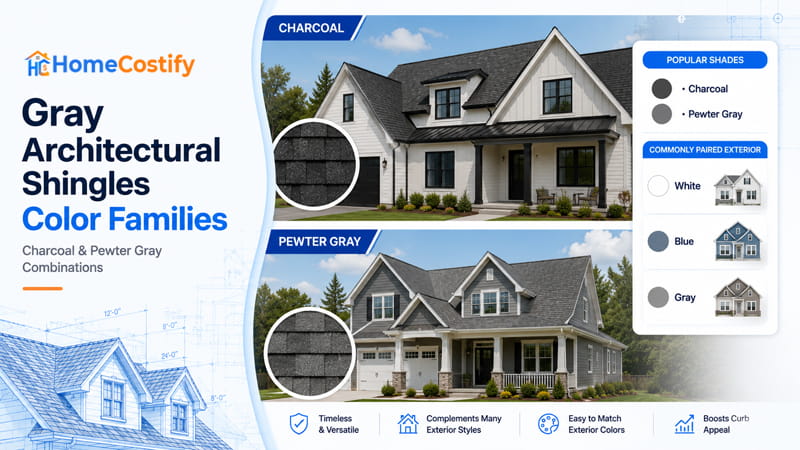
Morning light, cloud cover, and late-afternoon sun reveal noticeably different gray tones across the same roof. Architectural Shingles Colors within this family range from soft silver through charcoal, leaving homeowners with numerous choices that remain understated instead of dominating the exterior.
Charcoal frames roof edges with a sharper outline when viewed from the street. Pewter Gray softens large roof sections through mixed mineral granules, while white siding, blue paint, fiber cement, and painted brick commonly accompany these cooler shades.
Black Architectural Shingles Color Family
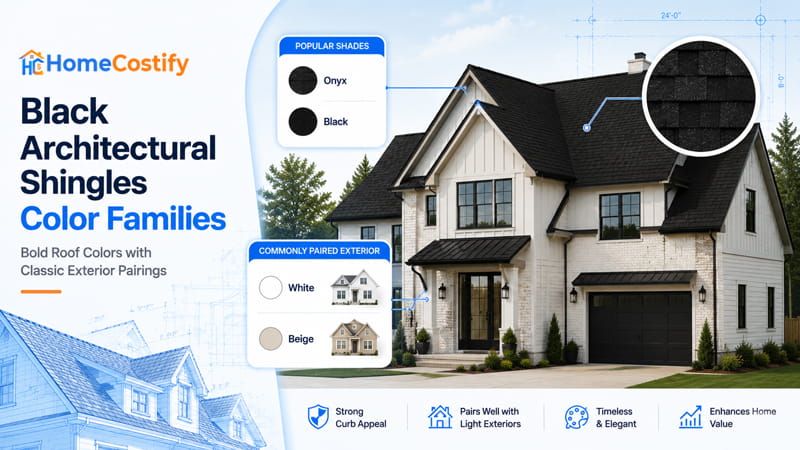
Black roofing has long appeared on Colonial, Craftsman, and contemporary homes. Light walls and trim naturally emphasize darker roof surfaces, making ridges, valleys, and gable lines easier to recognize from ground level.
Roof size deserves careful attention before committing to this color family. Large uninterrupted roof areas often look heavier in black, whereas smaller roof sections usually retain balanced proportions without overpowering the rest of the façade.
Brown and Earth-Tone Architectural Shingles Color Family
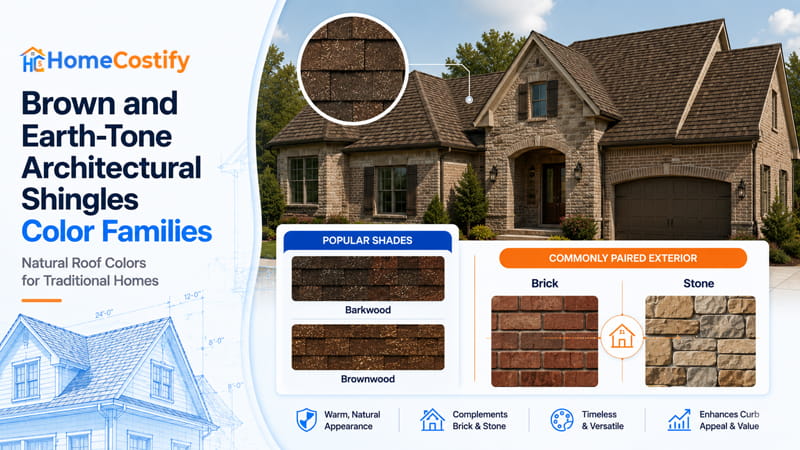
Brown shades echo colors already found outdoors. Tree bark, weathered timber, dry soil, and natural stone all share similar tones, allowing these roofs to settle comfortably into wooded lots and established neighborhoods.
Many architectural roofing shingles colors in this category display layered mineral coatings. Solid-color surfaces appear less often among earth-tone products. Brick walls, cedar siding, stacked stone, and textured stucco frequently accompany these warm palettes, allowing natural textures to remain the visual focus.
Designer and Multi-Blended Colors
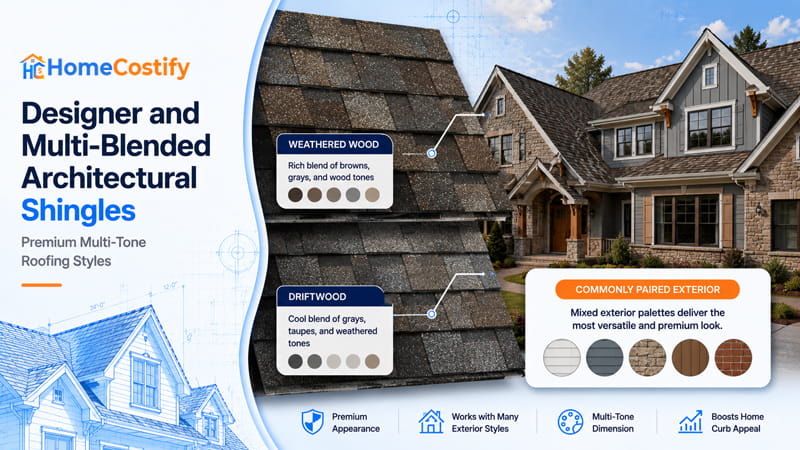
Designer collections arrange several granule colors throughout a single shingle. Driftwood, Colonial Slate, Harbor Blue, and Oyster Gray belong to this group, offering noticeably richer color transitions after installation.
Early sunlight emphasizes cooler notes. Late-afternoon conditions bring warmer undertones into view. Standing a few feet from the roof highlights individual granules, while a sidewalk view blends them into a single color impression.
Appearance should remain separate from product quality during the buying process. A favorite shade may suit the house perfectly, yet the best architectural shingles still depend on durability, warranty coverage, installation quality, and long-term performance.
Factors to Consider When Choosing Architectural Shingles Colors
A roof replacement stays visible every day from the moment architectural shingles installation ends. Architectural Shingles Colors become part of the home’s brickwork, siding, trim, windows, landscaping, and surrounding streetscape for many years. Looking beyond a sample board often leads to better decisions because the finished roof never exists in isolation.
Match Permanent Exterior Materials First
Brick veneer, natural stone, cedar siding, stucco, and fiber cement usually outlast several paint schemes. Their color, texture, and scale already define much of the home’s character before new shingles arrive.
Warm brick can soften cool gray roofing. Pale siding may expose blue undertones that seemed invisible inside a showroom. Deep charcoal above rugged stone produces a different impression than the same product above smooth lap siding.
Long-lasting roof materials deserve priority simply because replacing masonry or cladding requires far more work than applying fresh paint.
Consider Your Home’s Architectural Style
Building shape changes the way identical architectural roofing shingles colors are perceived. A steep roof pitch, tall gables, narrow façades, broad ranch layouts, or multiple dormers all redistribute light and shadow in their own way.
The same charcoal blend may look restrained on a Colonial home, yet carry much greater visual weight across a single-story Ranch. Craftsman houses divide large roof areas into smaller sections, while contemporary designs often present broad uninterrupted planes that emphasize every tonal shift.
Think About Sunlight and Regional Climate
Sky conditions rarely look identical from season to season. Clear summer afternoons, cloudy mornings, nearby trees, neighboring buildings, and roof orientation all leave their own signature on finished shingles. South-facing slopes receive stronger sun exposure for longer periods, while northern sections spend additional time under shade.
Lawrence Berkeley National Laboratory and the U.S. Department of Energy have published findings linking higher solar reflectance to lower heat absorption in many warmer climates. Insulation, attic ventilation, roof geometry, and local weather patterns still play substantial roles, leaving no single architectural shingle colors selection suitable everywhere.
Manufacturer catalogs also follow their own product ranges. Some popular shades appear in one lineup yet never reach another. Architectural shingle cost usually reflects construction, warranty level, installation complexity, and regional labor instead of pigment alone.
Consider Neighborhood and HOA Requirements
Many homeowner associations publish approved roofing palettes before replacement work begins. Verifying HOA requirements early avoids unnecessary delays, rejected submissions, or material changes after delivery.
Walking the neighborhood often provides stronger guidance than printed marketing pieces. Nearby homes reveal which roofing shades sit comfortably alongside local architecture, leaving room for personal preference while respecting established community standards.
Tips for Choosing the Right Architectural Shingles Colors
Manufacturer brochures can narrow the field, but they rarely answer the final question. The last few candidates deserve a closer look under everyday conditions, using the same routine for every comparison.
Compare Large Color Samples Outdoors
Small sample chips reveal only a limited portion of the finished roof. Full-size sample boards placed beside brick, siding, trim, or stone provide a far more realistic impression.
Indoor lighting hides color shifts that become obvious outside. Architectural Shingles Colors often present cooler tones during early daylight, stronger contrast beneath midday sun, and softer shading as evening approaches. Walking several steps away from the sample introduces another perspective that photographs rarely capture.
Narrow Your Choices Before Ordering Materials
A long shortlist quickly turns simple comparisons into guesswork. Limiting the selection to two or three candidates keeps attention focused on meaningful differences instead of minor variations.
Brick, masonry, trim, siding, and overall building form all deserve equal weight during the comparison. Architectural roofing shingles colors should support the character of the home instead of competing against existing materials. A balanced combination usually remains satisfying long after installation.
Prioritize Long-Term Appearance Over Current Trends
Popular styles rarely stay at the top forever. Exterior updates, replacement windows, new entry doors, fresh landscaping, and decorative accents gradually reshape the look of a property over many years.
Neutral palettes usually adapt more comfortably as paint schemes, doors, windows, and landscaping evolve. Architectural shingle colors chosen for lasting compatibility often outlive temporary design fashions, reducing the chance of another major color change during future renovation projects.
Verify Product Availability Early
Manufacturer catalogs do not always offer identical shade selections. Local suppliers sometimes carry only part of a product lineup, particularly in smaller markets or regions with limited inventory.
Checking availability early avoids disappointment after a preferred shade has already been selected. Matching architectural roof colors to the intended product series also prevents unexpected substitutions once material orders have been placed.
Common Mistakes When Choosing Architectural Shingles Colors
What looks balanced inside a showroom can produce an entirely different impression once thousands of shingles cover the house. Many disappointing results trace back to early decisions that overlooked scale, surrounding finishes, or long-term planning.
Judging Colors From Small Samples Alone
Pocket-sized samples show only a small portion of the finished product. A larger display placed against brick, stone, siding, or trim offers a far more reliable reference for Architectural Shingles Colors.
Morning sun, bright afternoon light, cloud cover, and evening shadows all change the way the same sample looks. Perspective shifts matter as well. Standing at the curb reveals proportions that disappear when viewing a sample from only a few feet away.
Giving Too Much Weight to Paint
Exterior paint can change several times during the life of a house. Brick veneer, natural stone, fiber cement, and other structural finishes usually stay much longer, making them the better starting point for color coordination.
Lay architectural roofing shingles colors next to masonry, cladding, trim boards, and similar fixed elements. Side-by-side comparisons with masonry, siding, and trim usually produce a more cohesive exterior than decisions driven primarily by repaintable finishes.
Chasing Popular Styles
Show homes, advertising campaigns, and newly completed neighborhoods often introduce fashionable roofing palettes. Wide exposure does not automatically translate into compatibility with every property.
Roof pitch, façade proportions, window placement, and architectural details all influence the final appearance. Architectural shingle colors should strengthen roof proportions, façade lines, and architectural details instead of borrowing ideas from unrelated homes or short-lived design movements.
Ignoring Future Repairs and Resale
Bold roofing selections can complicate ownership years later. Replacement bundles may disappear from manufacturer inventories, leaving close matches difficult to locate after storm damage or localized repairs.
Neutral architectural roof colors generally appeal to a broader range of buyers while simplifying future maintenance. Limited material availability may also increase architectural shingle repair cost when uncommon shades require special orders or extended sourcing.
How Architectural Shingles Colors Affect Energy Efficiency
Research published by Lawrence Berkeley National Laboratory and guidance from the U.S. Department of Energy show that materials with higher solar reflectance absorb less heat. Higher solar reflectance reduces heat absorption, although indoor comfort also depends on insulation, attic ventilation, roof orientation, and local climate.
Important factors include:
- Attic insulation: which slows heat moving from the roof deck into living spaces.
- Attic ventilation: allowing accumulated heat to escape instead of collecting beneath the roof.
- Roof orientation: changing daily solar exposure as the sun moves across the sky.
- Regional climate: affecting how often high temperatures and intense sunlight occur throughout the year.
The same architectural roofing shingles colors may perform differently on two similar houses when insulation levels, attic airflow, site orientation, or local weather patterns are not the same.
Selecting a roofing shade with realistic expectations leads to better decisions. Heat absorption matters, yet the overall result always reflects the combined influence of the roof assembly, attic conditions, and local climate rather than shingle color alone.
Do Different Architectural Shingles Colors Require Different Maintenance?
Roof maintenance does not change simply because the shingles are lighter or darker. Cleaning schedules, inspection routines, and repair methods remain the same across standard asphalt roofing products. Architectural Shingles Colors mainly affect what the eye notices first, not how the shingles perform.
Common examples include:
- Dust accumulation
- Pollen deposits
- Algae streaks
- Moss growth
- Weather-related fading
Dark shingles tend to conceal dust, pollen, and light staining. Pale shades expose the same buildup much sooner, particularly following dry weather or heavy pollen seasons. A cleaner appearance does not indicate better durability, just as visible residue does not signal premature wear.
ASTM D3018 establishes performance requirements for asphalt shingles without linking durability to granule color. Product construction and long-term performance are evaluated independently from appearance.
Sunlight gradually alters the look of almost any roof. Fading, weathering, and minor discoloration develop over time, yet those cosmetic differences do not automatically indicate structural damage.
Architectural shingle colors have little influence on service life by themselves. Architectural shingles lifespan is determined far more by manufacturing standards, installation workmanship, ventilation, local weather, and routine maintenance than by the shade covering the roof.
Conclusion
Choosing roofing color rarely comes down to one perfect answer. Every home presents a unique combination of materials, surroundings, and design details. Architectural Shingles Colors deserve evaluation beside exterior finishes, neighborhood character, and personal preference.
Strong exterior harmony grows from balanced relationships instead of one popular shade. A suitable color also reinforces architectural style and supports lasting curb appeal. Compare large samples outdoors during different times of day before making a final selection.
Careful planning from day one can reduce architectural shingle replacement cost caused by visual dissatisfaction after installation. A thoughtful decision creates confidence long after roofing work reaches completion.
FAQs About Architectural Shingles Colors
What are the most popular architectural shingles colors?
Neutral shades such as charcoal, weathered wood, gray, brown, and black continue leading residential projects. Architectural roofing shingles colors within those families suit a wide variety of home styles.
Do architectural shingles colors fade over time?
Weather exposure can gradually change appearance. Architectural shingle colors may show subtle visual differences after years outdoors, yet color change alone does not indicate material failure.
Which architectural shingles color is best for resale value?
Neutral architectural roof colors attract broader buyer interest because they coordinate with many exterior finishes and architectural styles without limiting future design choices.
Can I match architectural shingles colors with brick or stone?
Yes. Permanent materials deserve priority because repainting walls stays far easier than replacing brick or stone. Compare roofing samples beside those surfaces during daylight.
Do darker architectural shingles make a house hotter?
Darker roofing absorbs additional surface heat, yet roof color represents only one factor. Insulation, attic ventilation, building orientation, and local climate shape indoor thermal performance as well.