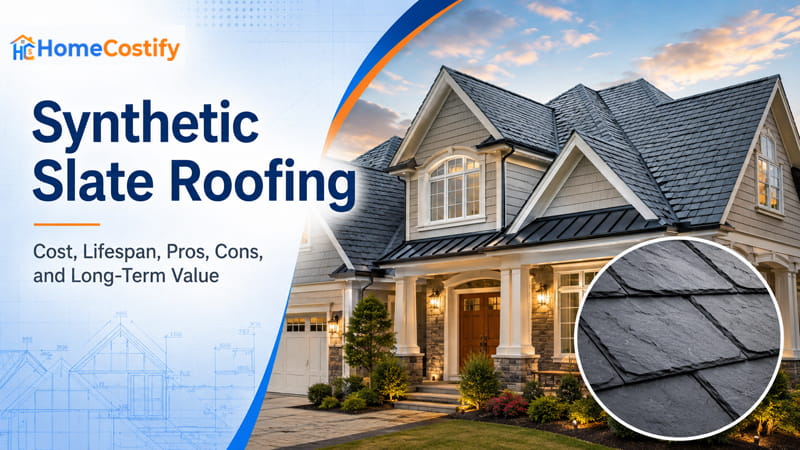
Interest in Synthetic Slate Roofing has grown steadily over the past decade. Part of that growth comes from advances in manufacturing. Modern products can replicate the texture, shadow lines, and dimensional appearance of natural slate surprisingly well.
Many options also weigh far less than stone, which expands their compatibility with existing roof structures.
The category itself includes several product types. Some are molded from polymers. Others combine recycled materials, rubber compounds, or engineered composites. Differences in composition can influence appearance, impact resistance, weather exposure, and long-term aging characteristics.
Choosing a slate-look roof involves more than appearance alone. Material composition, weight, installation requirements, and expected lifespan can vary considerably from one product to another.
What Is Synthetic Slate Roofing?
Synthetic Slate Roofing refers to a category of roofing products manufactured to resemble natural slate while using engineered materials instead of quarried stone. The finished roof often mirrors the layered appearance associated with traditional slate roofs, yet the individual pieces are produced through molding, compression, or composite manufacturing processes.
Natural slate begins as stone extracted from quarries and cut into roofing pieces. Synthetic alternatives take a different path. Manufacturers use polymers, rubber compounds, recycled materials, or blended composites to create shingles and tiles that replicate the visual character of slate. The goal is not to duplicate stone itself but to reproduce its appearance while changing factors such as weight and installation requirements.
Many products in this category are sold as synthetic slate roof shingles or synthetic slate roof tiles, depending on their profile and installation method. The terminology varies among manufacturers, though the end objective remains largely the same.
How Synthetic Slate Roofing Mimics Natural Slate
Manufacturers spend considerable effort recreating the irregular textures found in real slate. Surface molds often contain detailed impressions based on actual stone pieces. Edges may be intentionally varied rather than perfectly uniform. Color blends also play a role.
Viewed from the ground, high-end products can look remarkably similar to natural slate. Light creates shadows across the roof surface in much the same way. Individual pieces overlap to create depth, and many systems avoid the flat appearance associated with basic roofing materials.
The resemblance has led many contractors and manufacturers to describe these products as faux slate roofing. The term reflects appearance rather than composition.
Why Homeowners Choose Synthetic Slate Roofing
Weight frequently enters the conversation. Natural slate can place substantial loads on a roof structure. A lightweight slate roofing alternative creates more flexibility for homes that were never engineered to carry tons of stone overhead.
Appearance also influences buying decisions. Some homeowners appreciate the architectural character associated with slate but prefer materials that are easier to transport, handle, and install. Others focus on weather exposure, impact resistance, or maintenance expectations. Product selection often comes down to balancing visual appeal, budget, and long-term goals.
Types of Synthetic Slate Roofing Materials
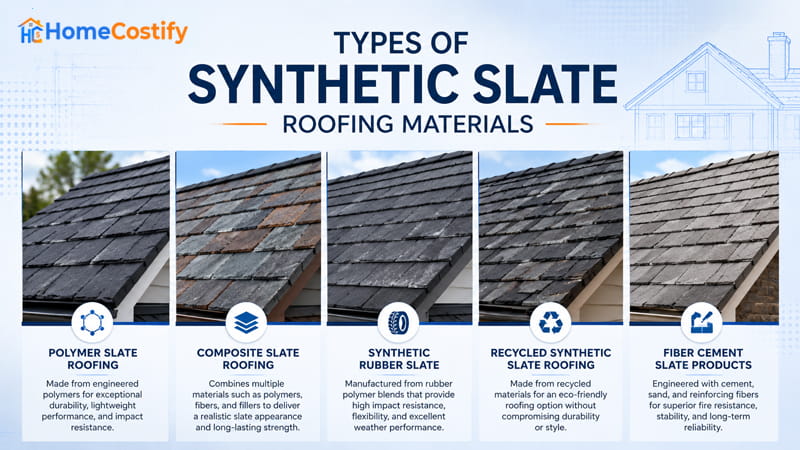
Synthetic slate is not a single roofing product. A roof made from molded polymers differs from one manufactured with rubber compounds or recycled composite materials.
Those differences become more apparent over time, particularly in areas exposed to hail, intense sunlight, heavy snow, or large temperature swings.
Polymer Slate Roofing
Polymer slate roofing products are typically molded from engineered plastic compounds. Manufacturers often use proprietary blends designed to create consistent shapes and detailed surface textures. Many polymer systems are relatively lightweight compared to natural slate, which can simplify transportation and installation.
Composite Slate Roofing
Composite slate roofing combines multiple materials into a single product. Formulations vary widely between manufacturers. Some use plastic components alongside recycled content, while others rely on engineered blends intended to replicate the appearance of quarried stone. Product specifications differ considerably from one brand to another.
Synthetic Rubber Slate
Synthetic rubber slate incorporates rubber-based materials into the manufacturing process. Flexibility often distinguishes these products from more rigid alternatives. That characteristic can influence how individual pieces react to impact and temperature fluctuations.
Recycled Synthetic Slate Roofing
Recycled synthetic slate roofing uses post-consumer or post-industrial materials as part of the finished product. Depending on the manufacturer, recycled plastics, rubber compounds, or blended materials may form a significant portion of the composition. Environmental considerations often attract buyers to this category.
Fiber Cement Slate Products
Fiber cement products occupy a unique position within the slate-look roofing market. Cement-based formulations reinforced with fibers create rigid roofing pieces that differ substantially from polymer and rubber alternatives. Appearance can closely resemble natural slate, though weight and installation characteristics may vary.
| Material Type | Weight | Durability | Typical Cost | Common Use |
|---|---|---|---|---|
| Polymer Slate Roofing | Light | High | Moderate to High | Residential roofing |
| Composite Slate Roofing | Light to Moderate | High | Moderate to High | Residential and specialty projects |
| Synthetic Rubber Slate | Light | Moderate to High | Moderate | Impact-prone regions |
| Recycled Synthetic Slate Roofing | Light to Moderate | Moderate to High | Moderate | Eco-focused projects |
| Fiber Cement Slate Products | Moderate | Moderate to High | Moderate | Slate-look roof systems |
The term synthetic slate roofing material covers all of these categories, yet each product family brings its own characteristics. Material composition matters. A polymer-based system may perform differently from synthetic rubber slate, while a composite product may age differently than a fiber cement alternative. Product specifications deserve close review before any final roofing decision.
Advantages of Synthetic Slate Roofing
Several factors have pushed Synthetic Slate Roofing into conversations that were once dominated by asphalt shingles and natural slate. Weight is often the first thing people notice.
Natural slate can add thousands of pounds to a roof structure, which is why many older homes require engineering reviews before installation. Synthetic products sit in a different category.
Many weigh only a fraction of traditional slate, making them suitable for a wider range of roof structures.
Lightweight Compared to Natural Slate
Roof weight influences more than structural loads. It also affects transportation, handling, staging, and labor requirements during installation. A crew moving bundles of synthetic roofing products across a roof typically deals with far less weight than a crew installing stone slate. The difference becomes even more noticeable on large roof systems with steep pitches or multiple elevations.
Visual appeal remains another selling point. Many modern products recreate the texture, edge detail, and shadow lines associated with natural slate. From street level, distinguishing premium synthetic products from real slate can be difficult without a closer inspection. That appearance attracts buyers who appreciate traditional architecture but prefer alternatives to quarried stone.
Improved Impact Resistance
Weather exposure varies across the United States. Hailstorms that rarely occur in one region may be a regular concern somewhere else. Many manufacturers produce impact resistant synthetic slate roofing systems that achieve high impact ratings during laboratory testing.
Material flexibility often plays a role here. A product capable of absorbing energy without cracking may react differently than natural stone during severe weather events.
Easier Installation
Installation practices vary by manufacturer, yet synthetic products are generally easier to cut, carry, and position than natural slate. Individual pieces often arrive with uniform dimensions, reducing some of the adjustments associated with stone roofing. Labor requirements still matter, but the installation process is usually less specialized than traditional slate work.
Sustainable Material Options
Environmental considerations have also influenced product development. Some manufacturers incorporate recycled plastics, reclaimed rubber, or other post-consumer materials into their roofing systems.
Interest in sustainable roofing materials has grown alongside broader efforts to reduce construction waste. Product formulations differ considerably, though several roofing systems now include recycled content that would otherwise enter landfills.
Disadvantages of Synthetic Slate Roofing
No roofing material excels in every category. Discussions about Synthetic Slate Roofing often focus on appearance and weight, yet several trade-offs deserve attention before making a final decision.
Higher Cost Than Asphalt Shingles
Price remains one of the biggest hurdles. Standard asphalt shingles typically cost less than synthetic slate products, both in material pricing and overall project costs. The gap can become substantial on larger roofs.
A buyer comparing roofing estimates side by side may find that synthetic options occupy a noticeably higher price bracket.
Lifespan Claims Can Vary
Expected service life is another area where numbers can become confusing. Some manufacturers publish projections that extend several decades into the future.
Real-world evidence is more limited because many synthetic roofing products have not been installed long enough to produce century-scale performance records. Climate conditions, installation quality, and maintenance history all influence outcomes.
Product Performance Depends on Manufacturer Quality
Not every product performs the same way. Manufacturing methods, raw materials, testing standards, and warranty programs differ from one brand to another. Two roofs marketed as synthetic slate may share a similar appearance while delivering very different long-term results.
Synthetic Slate Roofing Cost
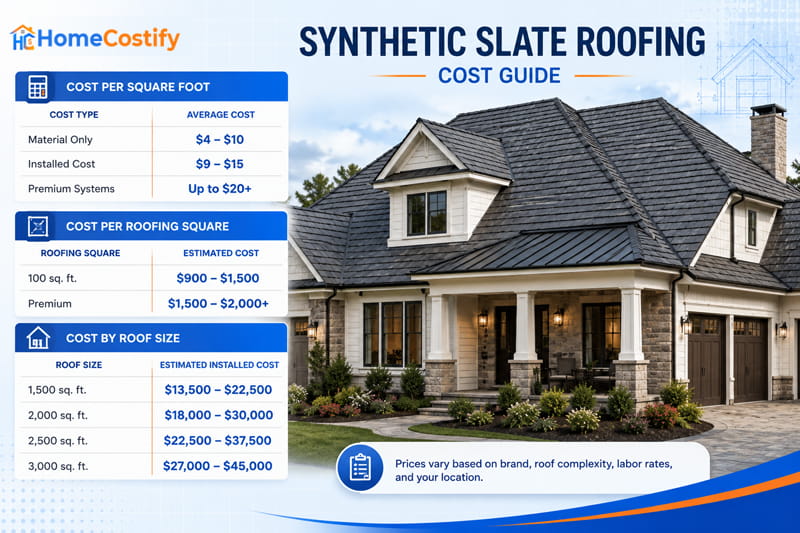
Price is often the deciding factor when comparing roofing materials. Natural slate sits near the top of the market, while asphalt shingles occupy the lower end of the cost spectrum. Synthetic Slate Roofing cost falls somewhere between those two categories. The final number can vary widely depending on product selection, roof design, labor conditions, and regional pricing trends.
A small roof with simple geometry may receive a very different estimate than a large roof filled with valleys, dormers, skylights, and multiple elevations. Material costs matter, but labor often accounts for a significant portion of the project budget.
Average Synthetic Slate Roofing Cost Per Square Foot
Across the United States, the average synthetic slate roof cost per square foot generally falls between $9 and $15 installed. Premium product lines and complex roof designs can push pricing beyond that range.
| Cost Type | Average Cost |
|---|---|
| Material Only | $4–$10 |
| Installed Cost | $9–$15 |
| Premium Systems | Up to $20+ |
Material-only pricing represents just one piece of the equation. Roofing accessories, underlayment, flashing details, tear-off work, and labor charges all contribute to the final contract amount. A product advertised at a competitive material price may still generate a much higher installed cost once the full scope of work is included.
Synthetic Slate Roofing Cost Per Square
Roofing contractors often price projects using roofing squares rather than square feet. One roofing square equals 100 square feet of roof surface.
The average synthetic slate roofing cost per square typically ranges from $900 to $1,500 installed. Premium systems may reach considerably higher figures.
| Roofing Square | Estimated Cost |
|---|---|
| 100 sq. ft. | $900–$1,500 |
| Premium | $1,500–$2,000+ |
Roofing square calculations become particularly useful when comparing contractor proposals. Two estimates may list different material brands, labor scopes, and accessory packages, yet the cost per square can provide a clearer basis for comparison.
Roof pitch can influence these numbers as well. A steep roof usually requires additional safety measures, slower installation speeds, and greater labor effort. Those conditions often appear in the final estimate even when the roof size remains unchanged.
Synthetic Slate Roofing Cost by Roof Size
Larger roofs naturally require more materials and labor. The relationship is not always perfectly linear, though. Roof complexity frequently changes the pricing equation.
| Roof Size | Estimated Installed Cost |
|---|---|
| 1,500 sq. ft. | $13,500–$22,500 |
| 2,000 sq. ft. | $18,000–$30,000 |
| 2,500 sq. ft. | $22,500–$37,500 |
| 3,000 sq. ft. | $27,000–$45,000 |
A 3,000-square-foot ranch with a straightforward roofline may cost less than a smaller home featuring multiple gables, intersecting roof planes, and decorative architectural elements. Roofing estimates rarely depend on square footage alone.
The same principle applies to replacement projects. Existing roof conditions can alter labor requirements before new materials ever reach the roof deck. For that reason, synthetic slate roof replacement cost estimates often vary more than many buyers expect.
Cost Disclaimer: Roofing prices vary by location, roof complexity, product selection, labor rates, and project scope. Estimates should be used as general planning figures rather than fixed quotes.
Factors That Affect Synthetic Slate Roofing Cost
Several project details consistently appear in higher-cost roofing estimates. Some relate directly to materials, while others involve labor and installation complexity.
Material Type
Not all synthetic products occupy the same price category. Premium molded polymer systems often cost more than entry-level products. Material composition, product reputation, warranty coverage, and manufacturing standards can all influence pricing.
A roof installed with high-end Synthetic Slate Roofing products may carry a noticeably different price tag than one using value-oriented alternatives.
Roof Complexity
Roof geometry influences labor requirements from the first day of installation. Straightforward roof layouts generally move faster than roofs packed with valleys, hips, dormers, skylights, and transitions.
Complexity often drives labor costs upward even when the total roof area remains similar.
Labor Rates
Regional labor conditions can create substantial pricing differences across the country. Roofing projects in major metropolitan markets frequently cost more than comparable work in smaller communities.
The impact becomes particularly noticeable when evaluating synthetic slate roofing labor cost estimates from different regions.
Tear-Off Requirements
Existing roofing materials must often be removed before installation begins. Disposal fees, labor demands, and the number of roofing layers already present can affect project pricing.
A replacement project usually costs more than a new-construction installation where the roof deck is already exposed.
Underlayment and Flashing
Roofing systems involve far more than visible shingles or tiles. Underlayment, flashing components, drip edges, roof ventilation details, and waterproofing materials all contribute to the final budget.
The total synthetic slate roof installation cost often reflects these supporting components just as much as the roofing material itself.
For budgeting purposes, Synthetic Slate Roofing typically occupies a middle ground between asphalt shingles and natural slate. Material selection, roof design, and labor conditions ultimately determine where a project falls within that range.
Comparing proposals side by side remains one of the most reliable ways to evaluate pricing differences and identify what is actually included in each estimate.
Synthetic Slate Roof Life Expectancy
The lifespan of a roof often influences purchasing decisions as much as cost. A material that remains in service for several decades may justify a higher upfront expense, particularly when replacement cycles are taken into account.
That calculation becomes more complicated with synthetic slate because the category includes products made from different materials, manufactured by different companies, and installed under very different conditions.
How Long Does Synthetic Slate Roofing Last?
Most estimates place the synthetic slate roof life expectancy somewhere between 40 and 60 years. That range appears frequently across industry publications, roofing consultants, and technical discussions involving composite slate products.
Research referenced by Hoffmann Architects found that laboratory testing projected service lives in the 40- to 60-year range for many synthetic slate systems. Real-world outcomes are rarely determined by laboratory data alone. Flashing details, underlayment quality, installation practices, climate exposure, and maintenance history all influence how long a roof remains functional.
A roof installed in a mild climate may age differently than one exposed to intense UV radiation, hailstorms, coastal salt air, or repeated freeze-thaw cycles. Material quality also plays a role. Some products use premium formulations developed for long-term weather exposure, while others target lower price points.
The question is not whether a synthetic slate roof can last several decades. Many can. The more practical question involves how close a particular roof comes to its projected lifespan under actual field conditions.
Why Lifespan Estimates Vary
Published lifespan estimates often differ from one source to another. That variation has created confusion among buyers trying to compare products.
Material Composition
Synthetic slate is not manufactured from a single formula. Polymer-based products, composite systems, rubber blends, and fiber cement alternatives all age differently. Some materials remain flexible for long periods. Others become more rigid as they weather over time.
Differences in formulation may not be obvious during the first few years after installation. The gap often becomes more noticeable after decades of exposure.
Climate Conditions
Weather patterns place different demands on roofing materials. A roof in Arizona faces extreme heat and prolonged sunlight. A roof in Minnesota may spend months under snow and ice. Coastal environments introduce moisture, wind, and airborne salt.
The same roofing product can produce very different long-term results depending on where it is installed.
UV Exposure
Sunlight gradually affects nearly every roofing material. UV radiation can influence color retention, surface appearance, and material flexibility. Regions with intense sun exposure generally create more demanding conditions than areas with milder climates.
Manufacturers address this challenge through additives, coatings, and engineered formulations. Product quality becomes particularly important in areas with high UV exposure.
Installation Quality
Even premium materials can encounter problems when installation details are overlooked. Flashing transitions, fastening patterns, underlayment selection, and roof deck preparation all contribute to long-term roof performance.
Many roofing failures originate around penetrations, valleys, chimneys, and flashing locations rather than the field tiles themselves.
Synthetic Slate Roofing vs Manufacturer Lifespan Claims
One of the more confusing aspects of Synthetic Slate Roofing involves lifespan marketing. Some manufacturers publish estimates approaching 100 years. Those projections often attract attention because they place synthetic products in the same conversation as natural slate.
A distinction should be made between projected lifespan and verified field history.
Natural slate has documented examples that have remained in service for a century or longer. Modern synthetic slate products do not yet possess that same historical record. The category simply has not existed long enough to produce widespread 100-year field data.
That does not mean the projections are impossible. It means the claims remain forward-looking rather than fully verified by real-world installations.
For practical planning purposes, many roofing professionals view a 40- to 60-year service life as a more realistic benchmark. The exact outcome depends on material quality, climate exposure, installation workmanship, and ongoing maintenance. Buyers researching Synthetic Slate Roofing should treat century-long projections as estimates rather than established historical performance.
Current evidence supports a strong synthetic slate roof lifespan, but century-scale verification remains unavailable. That distinction often gets lost in marketing materials.
Synthetic Roof Slate Durability, Ratings, and Weather Resistance
A roof can look impressive on installation day and still struggle under severe weather. Long-term durability depends on how the material responds to hail, fire exposure, wind events, temperature swings, and years of environmental stress.
Those factors often carry more weight than appearance once the roof enters service.
What Does a Class 4 Impact Rating Mean?
Impact resistance roof receives considerable attention in regions where hailstorms are common. Roofing products are frequently tested under established industry standards to measure their response to impact events.
According to information referenced by the National Slate Association, certain synthetic slate products achieve Class 4 impact ratings, which represent the highest impact classification available for residential roofing materials. Products that reach this level demonstrate resistance to significant impact events during standardized testing.
A class 4 impact resistant roofing system does not guarantee immunity from damage. Hail size, storm intensity, roof age, installation quality, and impact location all influence real-world outcomes. The rating does indicate that the material performed exceptionally well during controlled testing.
Interest in impact resistant synthetic slate roofing continues to grow in parts of the country where hail claims occur frequently. Areas across the Midwest, Great Plains, and portions of the Mountain West often place greater emphasis on impact ratings than regions with limited hail activity.
Understanding Class A Fire Ratings
Fire ratings measure how roofing materials react when exposed to fire under standardized testing conditions. Class A represents the highest fire classification commonly available for residential roofing systems.
Many premium synthetic slate products can achieve Class A ratings when installed as part of an approved roofing assembly. Roofing underlayment, deck construction, and system configuration may influence final fire classification requirements.
A fire resistant synthetic slate roofing system can provide an added layer of confidence in regions where wildfire exposure or fire resistance roof requirements receive greater attention.
Wind Resistance Ratings
Wind performance varies by manufacturer and product line. Some systems are rated for wind speeds around 110 mph. Others carry ratings reaching 130 mph or more.
Certain premium products have published testing data approaching 190 mph under specific conditions. Those numbers often reflect laboratory testing rather than routine weather exposure, but they still provide useful insight into material capability.
Strong wind resistance becomes particularly relevant in hurricane-prone coastal regions and areas that regularly experience severe thunderstorms. Fastening methods, roof geometry, and installation quality all contribute to final wind performance.
For that reason, wind resistant synthetic slate roofing involves more than material selection alone. Installation details remain part of the equation.
How Synthetic Slate Roofing Performs in Different Climates
Not every roofing material reacts the same way across different regions of the country. Climate plays a major role in long-term roof performance.
Hail-Prone Areas
Many synthetic slate products perform well in hail-prone environments due to their impact-resistant construction. Material flexibility often allows them to absorb impacts that might crack more brittle materials.
Snow and Freeze-Thaw Regions
Snow loads and repeated freeze-thaw cycles place stress on roofing systems year after year. Quality installation details around flashing and roof drainage become particularly important in colder climates.
Coastal Environments
Salt exposure, humidity, and high winds create a unique set of challenges near coastlines. Product quality and corrosion-resistant accessories deserve close attention in these regions.
Hot and Sunny Climates
Extended UV exposure can accelerate aging in some roofing materials. Premium synthetic slate products often incorporate stabilizers designed for long-term weather exposure.
| Weather Condition | Performance |
|---|---|
| Hail | Excellent |
| Wind | Excellent |
| Snow | Good |
| Coastal Exposure | Good |
| Extreme Heat | Good |
Strong synthetic slate roof durability begins with the product itself, though installation quality and local weather remain part of the picture.
Synthetic Roof Slate Installation and Structural Requirements
A roof can perform well on paper yet struggle in real-world conditions when installation details are overlooked. Material quality matters, but the way those materials are integrated into the roofing system often determines how the roof ages over the next several decades.
Synthetic Slate Roofing Installation Process
The exact steps vary by manufacturer, though most systems follow a similar sequence. Existing roofing materials are removed when necessary, the roof deck is inspected, underlayment is installed, and individual slate pieces are fastened according to the manufacturer’s specifications.
Anyone researching how to install synthetic slate roofing will quickly notice that installation methods differ from product to product. Some systems rely on exposed fasteners, while others use concealed fastening methods. Tile dimensions, overlap requirements, and flashing details may also vary.
Unlike natural slate, many synthetic products can be cut using common roofing tools. That characteristic often speeds up installation and reduces some of the labor associated with stone slate systems.
Roof Weight and Structural Considerations
Weight remains one of the main reasons buyers consider Synthetic Slate Roofing in the first place. Traditional slate roofs can place substantial loads on rafters and roof framing. Synthetic alternatives typically occupy a much lighter category.
| Roofing Material | Relative Weight |
|---|---|
| Asphalt Shingles | Light |
| Synthetic Slate | Light–Moderate |
| Natural Slate | Heavy |
The weight difference becomes particularly relevant during replacement projects. Some homes were never designed to carry a natural slate roof. Installing synthetic products may eliminate the need for expensive structural modifications while still delivering a slate-inspired appearance.
Roof pitch also deserves attention. Steeper roofs create different installation challenges than low-slope systems. Product specifications should always be reviewed before selecting a material.
Why Proper Installation Matters
Many roofing problems originate around transitions rather than field tiles. Flashing locations, roof penetrations, valleys, skylights, and chimneys often experience the greatest exposure to water movement.
The choice of synthetic slate roofing underlayment can influence moisture management beneath the visible roofing surface. Underlayment acts as a secondary barrier and becomes especially important during severe weather events.
Fastening patterns matter as well. Nails installed too high, too low, or at incorrect angles can create issues that remain hidden for years. Roof deck condition is another factor. A deteriorated deck may not provide a stable foundation for new roofing materials regardless of product quality.
Even the best version of Synthetic Slate Roofing cannot compensate for installation shortcuts. Workmanship frequently separates roofs that reach their projected service life from those that require major repairs much sooner.
Synthetic Roof Slate Maintenance and Common Problems
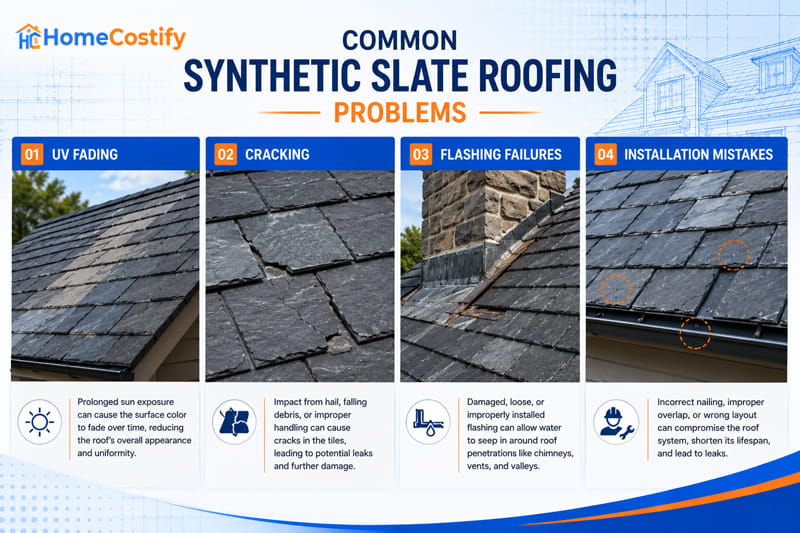
No roof remains completely maintenance-free. Synthetic slate generally requires less attention than many traditional roofing materials, though periodic inspections still make sense.
Routine Maintenance Requirements
A basic synthetic slate roof maintenance routine often includes visual inspections, debris removal, gutter cleaning, and checks around flashing locations. Tree branches that rub against roofing surfaces should also be addressed before they create wear patterns.
Storm inspections deserve special attention. Wind-driven debris, falling branches, and hail impacts can damage isolated sections of a roof without creating obvious leaks immediately.
Common Synthetic Slate Roofing Problems
UV Fading
Color stability varies by manufacturer and product line. Some roofs retain their original appearance for decades, while others may experience gradual fading after prolonged sun exposure.
Cracking
Although many synthetic products are engineered to withstand impact, cracking can still occur under certain conditions. Severe impacts, manufacturing defects, or unusual environmental stresses may contribute to isolated failures.
Flashing Failures
Water intrusion frequently begins around flashing details rather than the slate pieces themselves. Chimneys, skylights, valleys, and wall intersections deserve close inspection during routine maintenance.
Installation Mistakes
Improper fastening, incorrect overlap patterns, and poor flashing integration can create issues that take years to become visible. In many cases, workmanship problems are mistaken for material failures.
When Repairs May Be Needed
Not every roofing issue requires full replacement. Individual tiles can often be replaced when localized damage occurs. The scope of a synthetic slate roof repair project depends on the cause of the problem, the age of the roof, and the availability of matching replacement materials.
Many repairs focus on flashing details, isolated tile damage, or storm-related impacts rather than widespread material failure.
Is Synthetic Roof Slate Worth It for Long-Term Value?
Questions about value rarely revolve around purchase price alone. Roofing materials remain in service for decades, which means the conversation often extends beyond installation costs.
Initial Cost vs Long-Term Ownership Value
The upfront cost of Synthetic Slate Roofing exceeds that of standard asphalt shingles in most situations. That difference is easy to see on a contractor proposal. Long-term ownership costs are less obvious.
Replacement frequency, maintenance demands, repair history, and expected service life all influence total ownership costs over time. A roof that remains in service for several decades may present a different value proposition than one that requires replacement much sooner.
The answer to is synthetic slate roofing worth it depends largely on project goals, budget priorities, and how long the owner expects to keep the home.
Insurance Discounts and FORTIFIED Programs
Roofing performance has become increasingly important in regions exposed to severe weather. Programs developed by IBHS have drawn attention to roofing practices designed to improve resistance against storms, wind events, and hail impacts.
FORTIFIED standards focus on the roofing system as a whole rather than individual materials alone. Attachment methods, deck protection, sealing techniques, and water intrusion resistance all receive attention.
In some markets, impact-resistant roofing products may qualify for insurance incentives or premium reductions. Availability varies by insurer, location, and policy requirements. Eligibility should always be verified directly with the insurance provider.
Who Should Consider Synthetic Slate Roofing?
Best Fit
Synthetic Slate Roofing often appeals to buyers seeking a slate appearance without the structural demands associated with natural stone. Homes located in hail-prone regions may also benefit from products carrying strong impact ratings.
Buyers planning to remain in a home for many years frequently place greater emphasis on long-term value than short-term savings. Those projects often align well with premium roofing materials.
May Not Be Ideal For
Projects driven primarily by the lowest possible upfront cost may find asphalt shingles more attractive. The same applies to situations where a short ownership horizon reduces the importance of long-term roof lifespan.
The search for the best synthetic slate roofing product ultimately comes down to balancing budget, appearance, climate conditions, installation quality, and expected years of ownership. A product that fits one project perfectly may not be the strongest choice for another.
How Synthetic Slate Roofing Compares to Other Roofing Materials
A roof that makes sense for a historic-style home may not be the right fit for a modern build or a budget-focused replacement project. Comparing synthetic slate with other roofing materials can make the trade-offs easier to see before requesting estimates.
- Asphalt Shingles: Lower upfront cost but typically shorter service life.
- Architectural Shingles: Thicker than standard asphalt shingles, though they do not replicate slate as closely.
- Luxury Shingles: Compete more directly with slate-look roofing products in appearance and price.
- Metal Roofing: Known for longevity and weather resistance but creates a very different visual style.
- Clay Tile Roofing: Durable and attractive, though significantly heavier.
- Concrete Tile Roofing: Strong and long-lasting but may require additional structural capacity.
- Slate Roofing: Offers unmatched historical longevity but comes with higher costs and greater weight.
- Wood Shingles: Natural appearance with more maintenance requirements.
- Wood Shakes: Rustic character and thicker profiles than wood shingles.
- Composite Roofing: Shares similarities with many synthetic slate products depending on formulation.
- Solar Shingles: Combine roofing and energy production in a single system.
Conclusion
Roofing decisions often involve balancing cost, appearance, durability, and long-term ownership goals. Synthetic Slate Roofing occupies a unique position within the market because it bridges the gap between asphalt shingles and natural slate. It delivers a slate-inspired appearance without introducing the same structural demands associated with quarried stone.
Current pricing typically falls above asphalt shingles but below natural slate. Lifespan estimates commonly range between 40 and 60 years, though actual performance depends on installation quality, weather exposure, maintenance practices, and product selection.
Impact ratings, fire classifications, and wind resistance roof capabilities have also contributed to growing interest in these roofing systems across many regions of the United States.
No roofing material fits every project. Budget, climate, home design, and ownership plans all influence the decision-making process. For buyers seeking long service life, reduced weight, and architectural character, Synthetic Slate Roofing remains a compelling option worth serious consideration.
A careful review of product specifications, warranty coverage, and contractor qualifications can make a meaningful difference in long-term roof performance.
FAQs About Synthetic Slate Roofing
Are synthetic slate roofs good?
Many premium products combine attractive slate-like aesthetics with lower weight and strong weather resistance. Product quality varies by manufacturer, which makes research important before selecting a system.
How long does a synthetic slate roof last?
The typical synthetic slate roof lifespan is often estimated at 40 to 60 years. Actual performance depends on installation quality, climate conditions, maintenance history, and material composition.
Is synthetic slate expensive?
Compared with asphalt shingles, Synthetic Slate Roofing usually carries a higher upfront cost. Natural slate remains the more expensive option in most cases.
Is synthetic slate heavy?
Most products weigh substantially less than natural slate. That lower weight allows installation on many homes that may not be suitable for traditional stone roofing.
Can you walk on a synthetic slate roof?
Some products tolerate foot traffic better than natural slate. Roof access should still be limited whenever possible, and manufacturer recommendations should always be followed.