Few roofing upgrades attract as much attention as a roof that can generate electricity. Solar shingles combine roofing materials and solar technology into a single system, turning part of the roof into a source of power rather than simply a weather barrier. The concept sounds straightforward, yet the decision often involves far more than energy production alone.
Costs can reach well beyond a standard reroofing project. A typical installation often falls between $42,000 and $50,000 before incentives, while many systems are designed to remain in service for 25 to 30 years. Those numbers place this technology in a very different category than conventional asphalt roofing.
The conversation usually starts with the roof itself. An aging roof, a planned replacement project, or strict neighborhood design standards often push the topic onto the table long before electricity production becomes the main focus. In many cases, a solar roof is as much a roofing decision as it is an energy decision.
What Are Solar Shingles?
A standard roof has one job. It keeps water, wind, and sunlight outside the building envelope. A solar-powered roofing system performs that task while generating electricity at the same time.
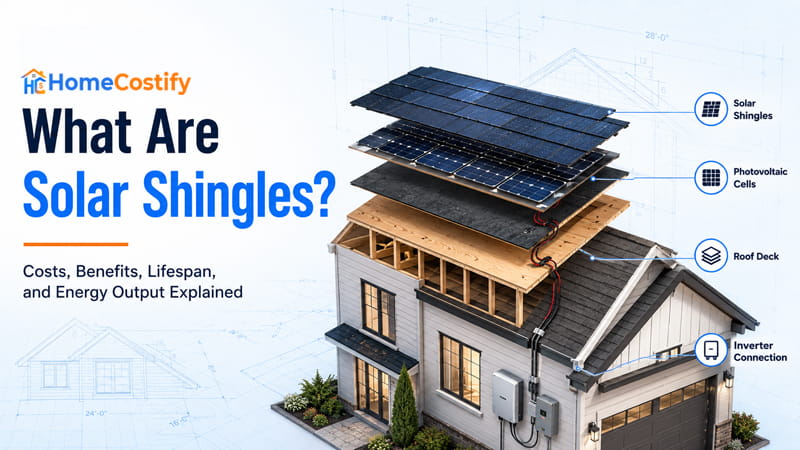
Solar shingles are individual roofing components that contain photovoltaic cells capable of converting sunlight into electrical energy. Rather than attaching panels above existing shingles, the energy-producing components become part of the roof assembly itself. The finished appearance is usually flatter and less visible than a conventional rack-mounted solar array.
This design emerged as a response to a common objection associated with rooftop solar. Some people appreciate the energy savings but dislike the look of large panels mounted above the roofline. Others face architectural guidelines that restrict visible solar equipment. Roofing products with integrated energy generation attempt to bridge that gap.
According to the U.S. Department of Energy, solar shingles belong to a category known as building-integrated photovoltaics (BIPV), where roofing materials serve two functions at once: protecting the home from the elements and generating electricity from sunlight. Unlike conventional solar panels that are mounted above an existing roof, BIPV products are built directly into the roof itself.
The distinction may seem minor, yet it changes how the entire project is viewed. A conventional solar installation is primarily an energy project. A roof with integrated generation often starts as a roofing project that happens to produce electricity.
Building-Integrated Photovoltaics (BIPV) Explained
The term BIPV appears frequently in discussions about next-generation roofing systems. It refers to construction materials that generate electricity while serving as part of the building itself.
Traditional solar panels sit on top of a completed roof. BIPV products become part of the structure. In roofing applications, that means the material exposed to weather also functions as a power-generating surface.
Several forms of photovoltaic roofing exist today, including shingles, tiles, and specialized roofing products designed for residential construction. The broader goal remains the same: merge building materials and solar technology into a single assembly.
That approach differs from conventional solar installations and explains why integrated solar roofing is often evaluated differently from standard rooftop systems.
How Solar Shingles Work
A solar shingle roof generates electricity through a series of connected components rather than a single piece of equipment. Sunlight starts the process, but several steps take place before that energy can power lights, appliances, or other electrical devices inside the house.
Sunlight Activates the Photovoltaic Cells
Each active roofing unit contains photovoltaic cells positioned beneath a protective surface. As sunlight strikes those cells, electrons begin moving through the semiconductor material. That movement creates electrical current.
The process occurs continuously during daylight hours. Bright sunny conditions generally produce more electricity than cloudy weather, although generation does not stop completely when skies are overcast. Every active section of the roof contributes to the system’s total output.
An Inverter Converts DC Power Into AC Electricity
The electricity produced by photovoltaic cells starts as direct current, commonly called DC power. Household appliances operate on alternating current, or AC power. The two are not interchangeable.
An inverter sits between the roof system and the home’s electrical equipment. Its job is to transform the electricity produced on the roof into a form that televisions, refrigerators, lighting systems, and other devices can use. Without that conversion step, the electricity generated above the house would have limited practical value.
Electricity Flows Through Your Home and the Utility Grid
Once converted into AC power, electricity travels to the home’s electrical panel. From there, it is distributed throughout the house just like electricity supplied by the utility company.
Production levels change throughout the day. During periods when the roof generates more electricity than the house consumes, excess power may flow back to the utility grid through net metering arrangements available in some areas.
Active and Inactive Shingles Work Together
Not every section of the roof receives the same amount of sunlight. South-facing roof planes often generate more electricity than shaded areas located beneath trees or neighboring structures.
For that reason, many systems combine active power-producing units with inactive roofing components that match the same appearance.
The result is a consistent roof design without placing photovoltaic cells in locations where energy production would be limited. Some of the roof generates electricity. Other sections function strictly as roofing material.
Solar Shingles Cost
Price is often the first obstacle people encounter when researching solar roofing systems. The technology combines a new roof and an electricity-generating system into a single project, which places it in a very different price category than conventional asphalt shingles. A standard reroof may cost a fraction of what an integrated solar installation requires.
Material costs account for a large share of the budget. Specialized roofing components, photovoltaic cells, electrical equipment, and installation labor all become part of the same project. The final number can vary widely from one house to another. Roof size plays a role, but roof design often matters just as much.
Average Solar Shingles Cost by Roof Size
Larger roofs generally require more materials, more labor hours, and more electrical components. Yet square footage alone does not tell the whole story. A simple roof with clean lines may be easier to install than a smaller roof packed with dormers, valleys, skylights, and intersecting sections.
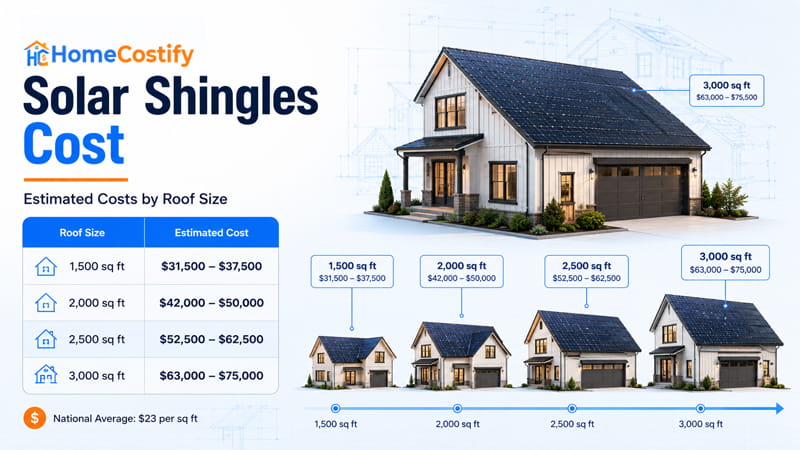
The table below provides a general pricing framework for a complete system before tax incentives or local rebates are applied.
| Roof Size | Estimated Cost |
|---|---|
| 1,500 sq ft | $31,500–$37,500 |
| 2,000 sq ft | $42,000–$50,000 |
| 2,500 sq ft | $52,500–$62,500 |
| 3,000 sq ft | $63,000–$75,000 |
A 2,000-square-foot roof frequently serves as the benchmark used in industry cost discussions. At that size, solar shingles often fall between $42,000 and $50,000 before incentives. Larger homes can push the project well beyond that range, particularly when architectural details increase labor requirements.
Cost Per Square Foot
Square-foot pricing creates a more useful comparison because roof sizes vary so widely. Current industry estimates place the national average near $23 per square foot, although regional labor costs and roof complexity can move the number in either direction.
| Metric | Cost |
|---|---|
| National Average | $23/sq ft |
| Typical Range | $21–$25/sq ft |
A roof measuring 2,500 square feet and a roof measuring 1,500 square feet rarely produce the same estimate, even when both use the same roofing system. Material quantities increase with size, but installation time often increases as well. That relationship explains why solar shingles cost substantially more than conventional roofing materials.
Cost Disclaimer: All figures published on HomeCostify are provided for informational purposes only. Actual costs vary depending on location, labor rates, materials, project complexity, and contractor pricing. Always obtain quotes from licensed professionals before making decisions.
What Increases Solar Shingle Costs?
Some projects stay close to the national average. Others move far beyond it. Several conditions tend to push pricing higher:
- Complex roof designs with multiple valleys, dormers, and intersecting rooflines
- Steep roof pitches that require additional safety equipment and labor time
- Electrical upgrades involving panels, wiring, or service equipment
- Regional labor markets where roofing and electrical contractors charge higher rates
Roof geometry often surprises people the most. Two houses can share nearly identical square footage while generating very different estimates. A straightforward roof is usually faster to install. Extra angles, elevation changes, and hard-to-reach sections create more labor hours, which can have a noticeable impact on solar shingles pricing.
Benefits of Solar Shingles
Cost tends to dominate the conversation, but price alone rarely explains why someone chooses this type of roof. Appearance, roof replacement timing, and long-term energy production often carry equal weight.
In many cases, the decision revolves around combining multiple goals into a single project rather than pursuing electricity generation alone.
Cleaner Roof Appearance
Traditional solar panels sit above the roofing surface on visible mounting hardware. The equipment is easy to recognize from the street. Some people do not mind that look. Others prefer a roof that blends more naturally with the architecture of the house.
A completed solar roof typically presents a lower-profile appearance because the energy-producing components are built directly into the roofing system. The technology remains visible up close, yet the overall look is often more integrated than a conventional rooftop array. Houses with prominent front-facing roof slopes tend to highlight that difference.
Dual-Purpose Roofing Material
A standard roof protects the house from weather. A solar energy system generates electricity. Most projects treat those functions as separate purchases.
A roof built with solar shingles combines both into one assembly. The same surface that sheds rain and withstands wind also produces electricity during daylight hours. That approach changes how the project is evaluated. Rather than adding equipment above an existing roof, the energy-producing layer becomes part of the roof itself.
The concept is especially relevant during major reroofing projects. Installing a new roof and a separate solar array at different times can create additional labor and scheduling costs. Combining those goals into a single project appeals to some households despite the larger upfront expense.
Potential Utility Bill Savings
Electricity generated on-site can offset a portion of household energy consumption. The exact amount depends on roof orientation, local weather conditions, system size, and electricity usage patterns. Results vary widely from one location to another.
A house in Arizona may generate substantially different output than a similar house in the Pacific Northwest. Sun exposure matters. Roof orientation matters. Utility rates matter too.
Over time, electricity produced by solar shingles may reduce the amount of power purchased from the local utility company. The financial impact often becomes more noticeable in areas with higher electricity costs.
HOA-Friendly Design
Neighborhood appearance standards can complicate rooftop solar projects. Some communities place restrictions on visible exterior modifications, while others place strong emphasis on architectural consistency.
Integrated systems create a different visual profile than conventional panels mounted above the roof surface. The roof remains the dominant visual element. Equipment racks and raised panel arrays are largely absent.
That characteristic explains why solar roof tiles and other integrated roofing products often attract attention in neighborhoods where aesthetics carry significant weight. The focus shifts from what sits above the roof to what the roof itself becomes.
Drawbacks of Solar Shingles
A roof that generates electricity sounds appealing on paper. The reality is more nuanced. Cost, energy production, installation logistics, and future repair considerations all deserve attention before committing to a project that can cost tens of thousands of dollars.
None of these limitations automatically make the technology a poor choice. They do explain why adoption remains relatively limited compared to conventional rooftop solar systems.
Higher Upfront Costs
Price remains the biggest obstacle for many households. A traditional reroof already represents a major expense, and integrating power-generating roofing materials pushes the budget significantly higher.
The numbers can be difficult to ignore. A standard asphalt roof replacement may cost a fraction of a complete solar shingles installation. That difference becomes even more noticeable on larger homes where roof area increases material requirements and installation time. Projects often combine roofing work, electrical work, and solar equipment into a single contract.
Timing plays a major role in the financial equation. A roof nearing the end of its service life creates a different scenario than a roof installed five years ago. In the first case, the roofing expense already exists. In the second, replacing a relatively new roof simply to add integrated solar technology may be difficult to justify.
Lower Energy Output Than Traditional Solar Panels
Appearance comes with tradeoffs. A low-profile roof system generally produces less electricity per square foot than conventional rack-mounted panels.
Part of the challenge involves energy density. Traditional solar panels are designed almost entirely around electricity production. Roofing materials must balance energy generation with weather protection, structural requirements, and visual appearance.
Available roof area matters as well. Not every section of the roof receives ideal sunlight. Trees, neighboring structures, chimneys, and roof geometry can reduce the number of productive locations. A larger roof does not automatically translate into higher output if significant portions remain shaded throughout the day.
This topic receives surprisingly little attention, yet it can have a substantial impact on long-term expectations.
Limited Installer Availability
Finding qualified installers is not always straightforward. Some regions have well-developed solar markets with multiple contractors offering integrated roofing systems. Other areas have far fewer options.
Installation requires knowledge from two different trades. Roofing expertise alone is not enough. Electrical work, solar equipment integration, permitting requirements, and utility coordination often become part of the project.
That combination narrows the pool of available contractors. Fewer installation companies can translate into longer scheduling timelines and fewer opportunities to compare competing bids.
Repairs Can Be More Complex
A conventional roof repair often focuses on roofing materials alone. Integrated systems introduce additional considerations.
A damaged section may involve weatherproofing components, electrical connections, and energy-producing elements within the same area. Repair planning becomes more detailed. Material availability can also influence timelines, particularly when matching existing products years after installation.
The integrated nature of solar shingles is one of their most attractive features. It also creates a repair process that differs from many traditional roofing systems.
Solar Shingles Lifespan and Durability
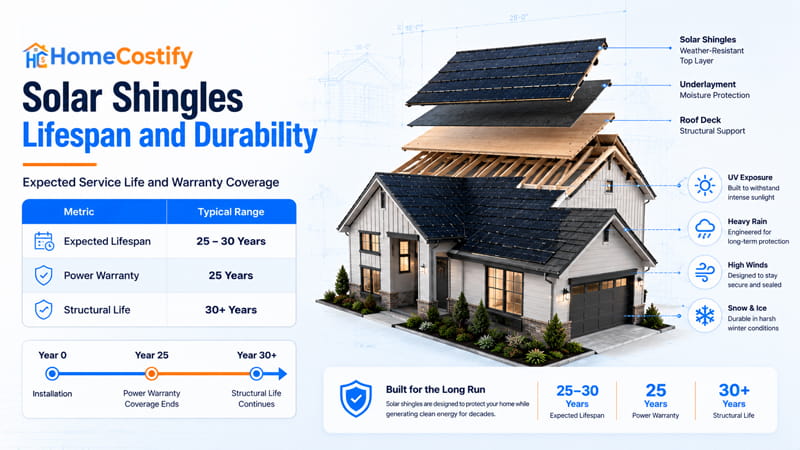
A roof replacement often stays in place for decades. Service life matters. Few people want to invest heavily in a roofing system only to face another major replacement project ten years later.
The good news is that modern solar roofing products are designed with long-term use in mind. Manufacturers expect these systems to remain exposed to sunlight, rain, wind, snow, and seasonal temperature swings year after year. Durability is not an optional feature. It is part of the product’s purpose.
Most solar shingle systems are designed to last 25 to 30 years, which aligns with the 25-year power warranties commonly offered by major manufacturers. While energy production gradually declines over time, many systems continue generating electricity beyond the warranty period.
Like traditional roofing materials, aging occurs gradually. Performance does not suddenly disappear after a specific date on the calendar. Electricity production typically declines in small increments over many years, while the roof itself continues functioning as a weather barrier.
How Long Do Solar Shingles Last?
The lifespan of solar shingles is generally comparable to many premium roofing products currently installed on residential homes. Warranty coverage often focuses on power production, while structural protection may continue beyond the warranty period.
| Metric | Typical Range |
|---|---|
| Expected Lifespan | 25–30 Years |
| Power Warranty | 25 Years |
| Structural Life | 30+ Years |
A roof installed today may still generate electricity decades from now, although annual production levels will likely be lower than they were during the first few years of operation. That gradual decline occurs across nearly all photovoltaic technologies.
The expected service life of a solar roof often aligns closely with the timeline many households already associate with major roof replacement projects.
Weather Resistance and Roof Protection
Electricity generation tends to receive most of the attention. The roofing function deserves equal consideration.
These systems remain exposed to hail, heavy rain, strong winds, ice, and prolonged UV exposure throughout their service life. Manufacturers design products around those conditions because a roof must perform its protective role every day, not only when sunlight is available.
Regional climate can influence long-term wear patterns. Coastal environments introduce salt exposure. Northern climates experience freeze-thaw cycles. Southern states often deal with intense UV radiation and prolonged summer heat.
A properly installed solar shingles system must handle those conditions while continuing to produce electricity. Weather resistance and power generation operate side by side rather than as separate functions.
How Much Energy Can Solar Shingles Produce?
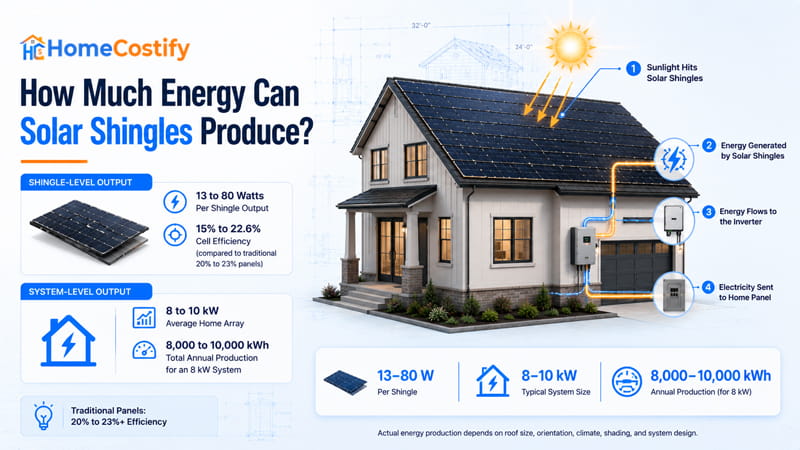
Most solar shingles produce between 13 and 80 watts per individual shingle, depending on the manufacturer, cell design, and product size. At the system level, a residential installation typically generates between 800 and 1,000 kilowatt-hours (kWh) annually for every kilowatt (kW) of installed capacity. An 8 kW system, for example, may produce roughly 8,000 to 10,000 kWh of electricity per year under favorable conditions.
For many households, that amount of generation can offset approximately 40% to 70% of annual electricity consumption. Actual results vary from one property to another. Roof design, available sunlight, climate, and energy usage patterns all influence the final outcome.
Factors That Affect Energy Production
Electricity generation is tied to more than equipment specifications alone. The roof itself often becomes part of the equation.
- Local climate and annual sunlight levels
- Roof size and active solar coverage
- Tree coverage and seasonal shading
- Roof angle and directional exposure
- System design and equipment configuration
A house in Phoenix and a house in Seattle may use identical roofing products yet produce very different amounts of electricity over the course of a year. Sun exposure remains one of the strongest predictors of long-term output.
Why Roof Orientation Matters
Traditional solar panels are often mounted at angles designed to maximize sunlight exposure. Integrated roofing systems follow the existing slope of the roof instead.
That limitation can affect production. A south-facing roof generally receives more sunlight than a north-facing roof in most parts of the United States. Roof orientation does not determine whether a project succeeds or fails, but it can influence how much electricity the system generates over time.
Energy Output vs Traditional Solar Panels
Energy density remains one of the biggest differences between integrated roofing products and conventional solar arrays. Most solar shingles operate within an efficiency range of roughly 15% to 22.6%, while many modern solar panels fall between 20% and 23% or higher.
The difference becomes more noticeable when roof space is limited. Traditional panels usually generate more electricity per square foot, while a solar roof prioritizes integration and appearance alongside energy production. That tradeoff helps explain why many systems require active solar coverage across 40% to 60% of the roof surface to meet household energy goals.
Why Some Homeowners Choose Solar Shingles Despite the Higher Cost
For some households, appearance matters. Others are already preparing for a major roof replacement. Neighborhood rules, architectural goals, and long-term planning often shape the conversation just as much as projected energy savings.
A Roof Replacement Is Already Part of the Plan
Many installations begin with an aging roof rather than a search for solar technology. Shingles curl, granules disappear, and repair bills start showing up more frequently. At some point, replacement becomes unavoidable.
That timing changes the economics. A homeowner facing a reroof project is already preparing for a significant expense. Adding a solar energy system to a roof scheduled for replacement can feel more practical than installing traditional panels today and paying to remove and reinstall them years later.
This scenario represents one of the strongest arguments for solar shingles. Instead of treating roofing and solar as separate projects, both goals are addressed at the same time. The roof receives a complete replacement, and electricity production becomes part of the finished assembly.
Appearance Matters More Than Maximum Energy Production
Not every roofing decision revolves around output numbers. Some people place greater value on appearance, particularly when the roof is highly visible from the street.
Large solar panels mounted above a front-facing roof can dramatically change the appearance of a house. Some owners like that look. Others prefer a roofline that remains visually consistent with the original architecture.
Luxury homes often illustrate this point. Design details receive considerable attention, and exterior modifications are evaluated as part of the overall aesthetic. In those situations, a solar roof may appeal to buyers who place curb appeal ahead of maximum energy production.
HOA Rules Can Influence Roofing Choices
Neighborhood requirements vary widely across the country. Some communities have relaxed standards, while others maintain detailed architectural guidelines covering exterior modifications.
A visible solar array can become a point of discussion during the approval process. Design committees often focus on visual consistency across the neighborhood, especially in communities built around specific architectural styles.
Integrated roofing systems present a different visual profile. From the street, the roof often appears more uniform than a traditional installation supported by racks and elevated panels. That characteristic can carry weight in neighborhoods where appearance remains a priority.
Some Homeowners Prefer an Integrated Roofing System
Traditional solar installations place equipment above the roofing surface. Integrated systems take a different approach.
There are no rack-mounted panels sitting above the roofline. The energy-producing components become part of the roof itself. Many people simply prefer that arrangement.
A lower-profile appearance is part of the appeal. So is what might be called a roof-first mindset. These buyers view the project primarily as a roofing investment that also happens to generate electricity. For that group, solar shingles represent a different category of product rather than a direct substitute for conventional solar panels.
When Traditional Solar Panels May Be a Better Investment
Not every house is an ideal candidate for integrated solar roofing. In some situations, traditional panels deliver stronger financial value and higher energy production at a lower upfront cost.
A newer roof often changes the equation immediately. Replacing a roof that still has years of useful life remaining can add significant expense without creating proportional benefits. The economics become harder to justify when the existing roofing system remains in good condition.
Budget limitations can create another hurdle. Integrated systems typically require a larger initial investment, while conventional rooftop arrays often achieve similar energy goals for less money.
Situations Where Solar Panels Often Cost Less
Several circumstances tend to favor conventional solar installations:
- The existing roof is relatively new and does not require replacement.
- Maximum electricity production is the primary goal.
- Available budget is limited.
- Local contractors have extensive experience with panel installations.
- Roof design allows for large, unobstructed solar arrays.
Energy density plays a role as well. Traditional panels generally produce more electricity per square foot than solar shingles, which can be an advantage on homes with limited usable roof space. A property focused heavily on return-on-investment calculations may arrive at a different conclusion than a property focused on aesthetics or architectural integration.
Solar Incentives and Potential Savings
Sticker price tells only part of the financial story. Federal incentives can reduce project costs significantly, and long-term electricity production may offset a portion of future utility expenses.
The exact savings vary by location, electricity rates, system size, and household energy consumption. No two properties produce identical results. Even neighboring homes can experience different outcomes depending on roof orientation and annual energy use.
Federal Tax Credits
Federal incentives remain one of the most important financial tools available to buyers.
Based on guidance from the Internal Revenue Service (IRS), homeowners who install qualified residential solar energy systems may be eligible for a federal tax credit equal to 30% of eligible project costs. For solar roofing systems, that incentive can significantly reduce the effective upfront investment when compared with the sticker price alone.
A project priced at tens of thousands of dollars can look very different after available tax credits are applied. Eligibility requirements can change over time, so current IRS guidance should always be reviewed before making financial decisions involving solar shingles or other residential solar technologies.
Long-Term Energy Savings
Electricity generated on-site reduces the amount of power purchased from the utility company. The effect may be modest in some households and substantial in others.
Energy consumption patterns matter. Local utility rates matter too. Areas with higher electricity costs often create larger savings opportunities than regions with relatively inexpensive power.
Over a service life that may span decades, a properly positioned solar roofing system can offset thousands of dollars in electricity purchases. The results rarely appear overnight. Savings accumulate gradually as the roof continues generating power year after year.
Solar Shingles Compared to Common Roofing Options
The roofing materials below serve different purposes, which is why direct comparisons are rarely based on price alone.
- Asphalt Shingles: The most common roofing material in the United States. Lower upfront costs remain the primary advantage, though asphalt roofs do not generate electricity.
- Architectural Shingles: Thicker and more durable than standard asphalt shingles, with improved curb appeal and longer service life.
- Luxury Shingles: Designed to replicate premium roofing materials while delivering a more upscale appearance than conventional asphalt products.
- Metal Roofing: Known for durability and long service life. Some metal roofs can last decades longer than traditional shingles.
- Clay Tile Roofing: Popular in warm climates and recognized for distinctive appearance and longevity.
- Concrete Tile Roofing: Similar in appearance to clay tile but typically heavier and often less expensive.
- Slate Roofing: One of the longest-lasting roofing materials available, though installation costs can be substantial.
- Synthetic Slate Roofing: Mimics natural slate while reducing weight and installation complexity.
- Wood Shingles: Deliver a natural appearance but require ongoing maintenance in many climates.
- Wood Shakes: Thicker and more textured than wood shingles, creating a rustic look.
- Composite Roofing: Manufactured from blended materials designed to imitate premium roofing products with lower maintenance requirements.
Conclusion
A roof that generates electricity represents a different type of home improvement project. Solar shingles combine roofing materials and solar technology into a single system, creating a solution that protects the home while producing power from sunlight. That dual-purpose design remains one of the technology’s strongest selling points.
Costs are significantly higher than traditional roofing materials. Most projects fall between $21 and $25 per square foot, with complete installations often reaching tens of thousands of dollars before incentives. Service life is generally measured in decades, and many solar shingles systems are designed to remain in operation for 25 to 30 years.
Energy production varies from one property to another. Roof orientation, climate, available sunlight, and shading conditions all influence long-term output. A well-positioned solar roof can offset a meaningful portion of household electricity use, although traditional solar panels typically generate more electricity per square foot.
For some households, appearance, roof replacement timing, and neighborhood design requirements justify the additional investment. Others may find conventional solar panels to be the stronger financial choice.
Before committing to any project, compare multiple estimates, review warranty details, and evaluate long-term costs alongside projected energy savings. Solar shingles represent a major investment. Gathering several quotes can provide a clearer picture of what makes sense for your roof, budget, and energy goals.
FAQs About Solar Shingles
What ever happened to solar shingles?
The technology never disappeared. Product availability expanded slowly because manufacturing costs, installation requirements, and market adoption developed more gradually than conventional solar panel systems.
What is better, solar shingles or solar panels?
The answer depends on project goals. Traditional panels typically produce more electricity per square foot, while solar shingles place greater emphasis on roof integration and appearance.
What is the biggest drawback of solar panels?
Visibility and aesthetics are common concerns. Some homeowners also face roof replacement challenges if panels are installed on an aging roof nearing the end of its service life.
What happens after 20 years of solar panels?
Most systems continue producing electricity after two decades. Annual output gradually declines over time, but many installations remain operational well beyond the 20-year mark.
Is Tesla the only company that makes solar shingles?
No. Several manufacturers have entered the market over the years. Product availability varies by region, contractor network, and roofing system design.