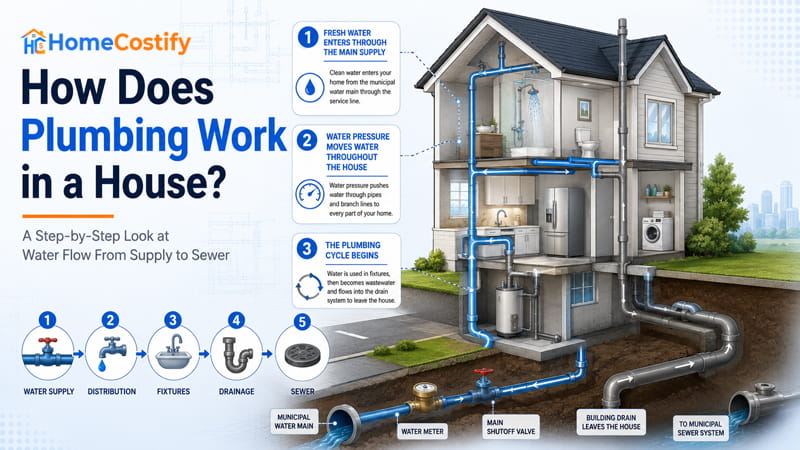
Clean water enters a house before anyone turns on a faucet or flushes a toilet. How does plumbing work in a house begins with one pipe network carrying fresh water into living spaces. A different pipe network removes used water after daily activities. Normal operation never places both inside the same pipe.
Separate piping protects drinking water from contamination during everyday use. Distinct layouts give clean water and household wastewater different destinations from the moment they enter their respective networks. This arrangement forms a home plumbing system where both sides function as one continuous cycle without crossing paths.
Turning on a shower draws water from one branch of the supply network. Sink faucets, toilets, dishwashers, and other fixtures activate only the piping serving their location. Stable water flow relies on coordinated plumbing components, starting at the incoming supply and ending after water leaves the house.
How Does Plumbing Work in a House?
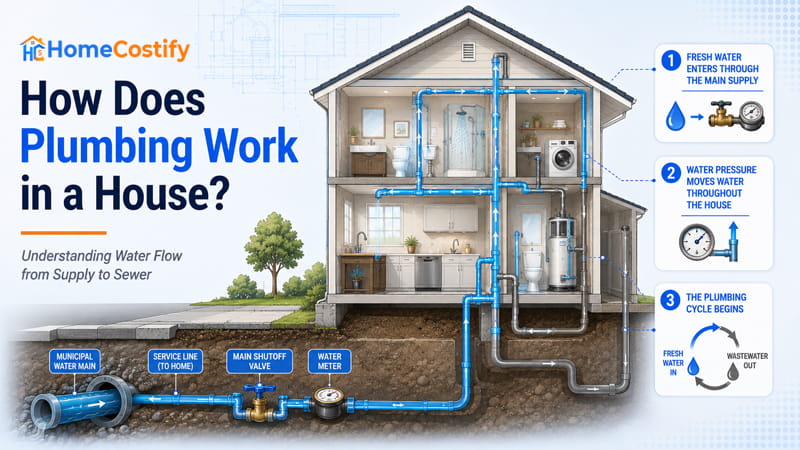
How does plumbing work in a house? Pressurized delivery supplies fixtures for everyday use, followed by drainage that carries wastewater away after use. Supply and waste removal form a continuous cycle, with parts of a plumbing system carrying water from entry to discharge without functioning as isolated networks.
Fresh Water Enters Through the Main Supply
Homes receive drinking water from a municipal water supply or a private well. Delivery begins at the water service line, which brings incoming supply from an outside source to the building. Near that entry point sits a main shutoff valve. Closing it stops incoming supply before indoor distribution starts.
Pressure already exists before any faucet opens. Faucets, toilets, showers, and appliances draw from that stored force whenever demand appears. Weak pressure limits distribution, especially at distant fixtures or upper floors, even though incoming supply remains available.
Water Pressure Moves Water Throughout the House
Fresh supply does not travel because gravity pulls it forward. Force created by the public utility or well equipment pushes it toward every fixture requesting water. Opening a faucet creates demand at a single location, sending supply along nearby piping without affecting its basic direction.
Kitchens, bathrooms, laundry rooms, and outdoor hose bibs all receive service from that pressurized distribution. Stable pressure produces steady water flow, allowing fixtures on separate floors to operate under normal household conditions without waiting for gravity to move incoming supply.
The Plumbing Cycle Continues Until Wastewater Leaves
Water changes purpose once a fixture is used. Washing dishes, taking a shower, flushing a toilet, or running a washing machine converts clean supply into wastewater. Incoming distribution ends at that moment, and another stage begins.
Drain piping receives wastewater from nearby fixtures before discharge continues toward the building’s main drain line. From there, discharge leaves the house for a municipal sewer system. Opening another fixture starts a new delivery cycle, linking fresh supply with wastewater removal during everyday use
How Water Reaches Every Plumbing Fixture
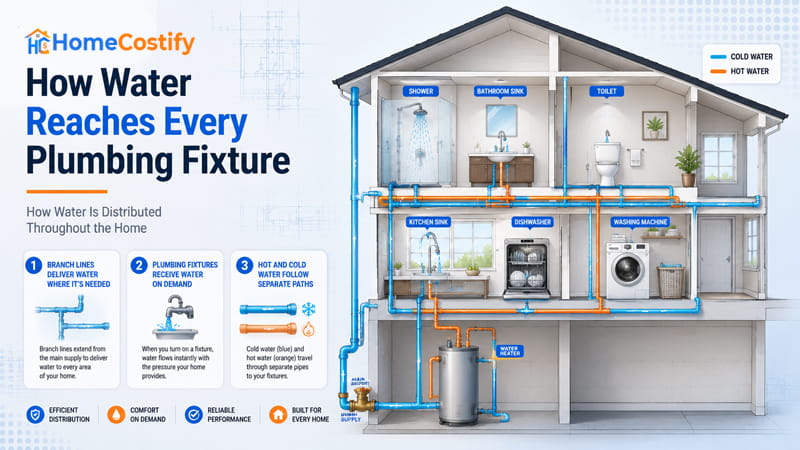
Distribution begins once water passes the home’s entry point. A branching layout directs supply toward separate destinations, so water reaches plumbing fixtures without following a single route. Each branch serves a specific area, yet every outlet draws from one distribution network.
Branch Lines Deliver Water Throughout the House
A main supply line feeds multiple branch line connections inside the home. Each branch serves a particular destination, including a kitchen, bathroom, laundry room, or outdoor faucet. That layout limits travel distance before supply reaches a fixture.
Pressure stays available across every branch. Without steady force, distant fixtures would deliver weaker flow than nearby outlets. Long pipe runs and upper floors place greater demand on distribution, making stable pressure essential from one end of the network to another.
Plumbing Fixtures Receive Water When Needed
Each plumbing fixture stays inactive until someone opens a control or starts an appliance. A faucet releases water by turning a handle. A shower valve opens another path. A toilet fills after flushing, and a sink supplies water only during use. Household appliance connections operate under that identical principle.
Cold supply reaches every fixture requiring water. Hot supply appears only where warm water serves a purpose, such as bathing, washing dishes, or laundry. That distinction depends on fixture function, not room location.
Hot and Cold Water Follow Separate Paths
Cold supply follows one route directly from distribution piping. Another branch feeds a water heater, which sends heated water through a separate hot-water line. Both lines remain available inside the distribution network without sharing identical destinations.
Bathroom sinks, kitchen sinks, and showers receive both hot and cold connections, giving users temperature control at a single fixture. Toilets and outdoor faucets normally receive only a cold water line. Separate distribution paths let multiple fixtures operate independently, even when demand starts in different parts of the home.
How Wastewater Leaves the House
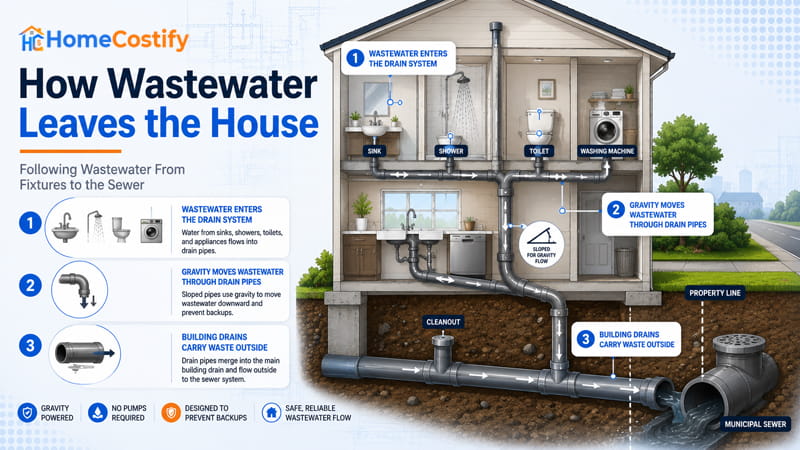
Water serves a different purpose after daily use. At that point, wastewater leaves the supply side and enters a drainage network built for continuous removal. From each fixture, used water follows a collection path that leads toward a common outlet beyond the home.
| Stage | What Happens |
|---|---|
| Fixture | Water becomes wastewater |
| Drain Pipe | Wastewater flows away from the fixture |
| Building Drain | Multiple drains combine |
| Sewer Line | Wastewater exits the house |
Wastewater Enters the Drain System
A kitchen sink, shower, bathtub, toilet, and household appliance each produce used water during normal operation. Every fixture has its own outlet, directing discharge into a nearby drain pipe instead of returning it to supply piping. Separate fixture drains begin independently before joining larger sections farther downstream.
Collection starts at fixture level, not outside the building. Short drain runs receive discharge first, limiting travel before reaching larger piping. That layout gathers flow from multiple locations without requiring a shared outlet beneath every room.
Gravity Moves Wastewater Through Drain Pipes
Drainage follows a principle different from pressurized supply. Gravity pulls liquid downhill, making pipe slope far more important than pressure. Even a slight downward pitch supports steady movement when installation follows plumbing standards.
Horizontal runs receive careful alignment during installation. Too little slope slows movement. Too much pitch lets liquid outrun solid material. Proper grading keeps both moving along a similar path until reaching larger drain sections. Pumps rarely serve ordinary residential drainage because elevation already supplies driving force.
Building Drains Carry Waste Outside
Small drain branches merge into a building drain, creating one primary collection route before leaving the structure. Near that route, a cleanout gives plumbers direct access for inspection equipment when internal piping requires examination. It serves maintenance access rather than carrying normal flow.
From the building drain, discharge continues toward a sewer line or a septic system, depending on local infrastructure. Details of either destination fall outside normal household drainage. What matters here is how smaller branches combine before wastewater leaves the house, creating a continuous collection path from every fixture to an external disposal point.
Why Plumbing Vent Pipes Are Essential
Plumbing vent pipes keep air pressure stable inside the drain network, allowing wastewater to move without creating pressure imbalances that interfere with flow. That same air movement also keeps water seals inside fixture traps intact, creating a barrier between occupied spaces and the drainage system.
Vent Pipes Balance Air Pressure
Water flowing through a drain line never travels alone. Every discharge pushes, pulls, and displaces the air already inside the piping. Without an open path for that air to move, pressure changes develop within the system. Negative pressure can pull against flowing wastewater, while positive pressure compresses air ahead of it. Both conditions interrupt the natural movement created by gravity.
A vent pipe keeps the air inside the drainage network close to atmospheric pressure. Instead of trapping compressed air or creating a vacuum behind moving wastewater, the vent gives air another path through the system. Wastewater continues moving with fewer interruptions, and connected fixtures experience fewer pressure fluctuations. That balance extends across the entire plumbing vent network rather than a single drain line.
P-Traps Block Sewer Gases
Every sink, shower, and floor drain normally includes a P-trap beneath the fixture. Its curved shape always retains a small amount of water after each use. That standing water forms the trap seal, separating indoor air from the drainage system.
As long as the trap seal remains at the correct level, sewer gases stay inside the piping instead of moving through fixture openings. Stable air pressure throughout the drainage network keeps that water seal from being pulled away or forced out of the plumbing trap. This operating principle appears in plumbing codes because the water barrier and balanced pressure work as a single system rather than two unrelated parts.
What Happens When Venting Fails
Pressure problems usually appear long before anyone notices a blocked roof vent. A sink may drain more slowly than usual. A toilet or bathtub drain may produce a gurgling sound after water passes through the pipe. Those changes point to unstable pressure inside the drainage network rather than a clog at every fixture.
As pressure swings from negative to positive, water inside the trap can shift from its normal level. Part of the trap seal may disappear, leaving a direct pathway between the drainage system and indoor spaces. Since every branch connects to the same network, a single venting fault can influence multiple fixtures instead of remaining isolated to one drain.
Where Wastewater Goes After Leaving the House
A building drain marks only one stage in disposal. Beyond that point, routing depends on local infrastructure. In most areas, wastewater continues toward a public sewer system or a private disposal system serving a single property, representing two common types of plumbing systems found in the United States.
Homes Connected to Municipal Sewer Systems
Properties served by public utilities send discharge into a sewer lateral leaving private property. That buried line joins a larger municipal sewer, where flow from surrounding neighborhoods enters a shared collection network. From there, material continues toward a regional treatment facility without returning to residential piping.
A nearby sewer line carries combined flow over much longer distances than household drainage. Public infrastructure takes responsibility once discharge enters that network. Residential plumbing ends at the property connection, leaving collection and treatment to local utility operators.
Homes That Use Septic Systems
Rural properties and locations lacking public sewer access depend on a septic system. Discharge first reaches a septic tank, where solids and liquids separate naturally under normal operating conditions. Liquid then continues into a drain field for gradual dispersal into surrounding soil.
Public sewer service and onsite disposal follow different routes after leaving private property, yet both share a common objective. Each receives household wastewater after indoor drainage ends, carrying it beyond residential plumbing through infrastructure selected for that location.
| Disposal System | Typical Use |
|---|---|
| Municipal Sewer System | Homes connected to a public sewer network |
| Septic System | Homes without access to a municipal sewer |
Choice of disposal infrastructure does not change plumbing inside a residence. Differences appear only beyond the property boundary, where local utility service or an onsite septic system receives wastewater after it exits household drainage.
What Can Interrupt Normal Plumbing Operation
Normal operation depends on every stage working without interruption. A small change at one point can reduce flow strength, slow drainage, or interrupt movement before normal conditions return. Most common plumbing problems develop because one part no longer performs as expected.
Low Water Pressure Affects Water Delivery
A weak stream from a faucet or shower usually appears first where demand feels highest. Upper floors and distant fixtures tend to show reduced performance sooner than nearby outlets. Low water pressure limits delivery, leaving fixtures with weaker flow during normal use.
Pressure loss has different origins. Mineral buildup, aging pipes, partially closed valves, or utility conditions all can contribute. Identifying an exact cause requires inspection, so visible symptoms matter far more than early assumptions.
Drain Blockages Slow Wastewater Flow
A partial blockage restricts movement long before a pipe stops completely. Sinks empty slowly. Showers hold standing water longer than expected. Continued use under those conditions increases resistance inside drainage piping.
A small clog may stay unnoticed at first. As obstruction grows, discharge takes longer to clear each fixture. Extra volume eventually raises the chance of a backup, turning a slow drainage problem into a system-wide interruption.
Leaks and Backups Disrupt the Entire System
Even a minor leak changes normal operation by reducing available flow where fixtures expect steady delivery. Pressure gradually falls, although outward signs differ from one location to another. Hidden leaks sometimes remain unnoticed until water use or visible damage draws attention.
A backup signals trouble on the waste side instead of the supply side. New discharge has nowhere to continue once downstream capacity is restricted. Distribution and drainage perform separate functions, yet both belong to one continuous network. Trouble affecting either side interrupts the sequence described throughout this guide.
Common signs that a plumbing system isn’t operating normally:
- Water pressure suddenly drops.
- Drains empty more slowly than usual.
- Gurgling sounds come from drains or toilets.
- Water backs up into sinks, tubs, or floor drains.
- Persistent sewer odors appear indoors.
Conclusion
A clear answer to how does plumbing work in a house comes from viewing every stage as one continuous process instead of separate components. The process begins at the service connection, continues through household fixtures, then finishes beyond the property after drainage carries wastewater away. Air movement inside vent piping supports that sequence without carrying water itself.
A reliable home plumbing system depends on each section performing its own task without interrupting another. Steady water flow results from those parts working as one network, giving sinks, showers, toilets, and appliances dependable service during everyday use. Once that relationship is understood, the full plumbing cycle becomes much easier to visualize.
FAQs About How Does Plumbing Work in a House
What are the two main parts of a home plumbing system?
A residential plumbing system consists of two primary sections. One delivers fresh water to fixtures and appliances. The other removes wastewater through drainage piping before sending it toward a municipal sewer or septic system.
Does plumbing work without electricity?
Most household plumbing operates without electricity because water distribution and drainage depend on pressure and gravity. Certain properties include well pumps, booster pumps, or specialized equipment that require electrical power to function.
Why doesn’t wastewater flow back into the house?
Drainage piping follows a downward slope that guides wastewater away from fixtures. Proper grading, gravity, and correctly installed piping reduce reverse movement during normal operation and support continuous discharge toward its intended destination.
What is the purpose of plumbing vent pipes?
Vent pipes admit air into drainage piping, balancing internal pressure during discharge. That airflow supports smooth drainage and protects water seals inside fixture traps without carrying wastewater.
Do all houses connect to a public sewer?
No. Urban neighborhoods commonly connect to a municipal sewer network. Rural properties and locations without public sewer infrastructure typically use a septic system for onsite wastewater disposal.