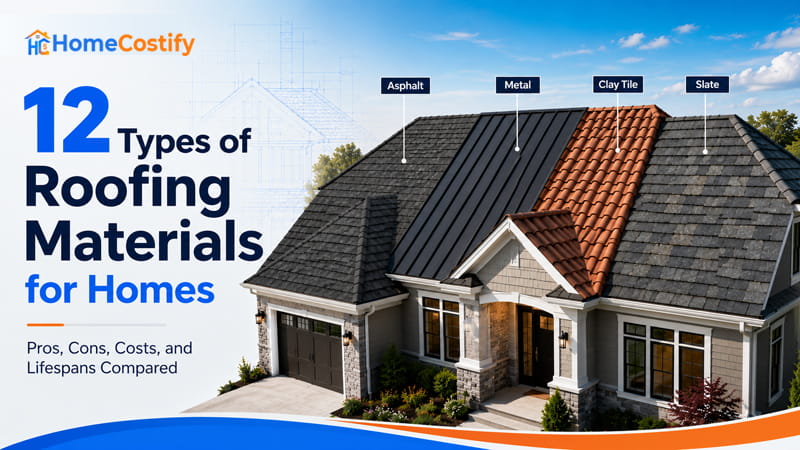
A roof replacement can cost anywhere from a few thousand dollars to well over $50,000, largely because not all roofing systems are built to the same standard. Among the many types of roofing materials used across the United States, some deliver the lowest upfront cost, while others are designed to last 50 years, 75 years, or even longer.
Material selection affects far more than appearance—it influences repair expenses, energy efficiency, weather resistance, insurance risk, and the total cost of ownership over the life of the home.
The difference becomes even more noticeable when climate enters the equation. A roof that performs exceptionally well in Arizona’s intense heat may not be the best choice for a snow-heavy region in the Northeast.
Homes along the Gulf Coast often face hurricanes and wind-driven rain, while properties in the Midwest may encounter frequent hailstorms. These conditions place different demands on modern roofing materials, making durability and weather performance just as important as aesthetics.
Budget remains a major consideration, but lifespan and maintenance requirements deserve equal attention. Some roof materials cost less to install but require replacement sooner, while premium options can offer decades of additional service with fewer repairs.
Quick Comparison of Roofing Materials
The table below provides a snapshot of the most common roofing material types used on American homes.
| Roofing Material | Average Installed Cost (per sq. ft.) | Lifespan | Maintenance | Best For |
|---|---|---|---|---|
| Asphalt Shingles | $4–$7 | 20–30 yrs | Low | Budget-friendly homes |
| Architectural Shingles | $5–$8 | 25–35 yrs | Low | Balanced value |
| Luxury Shingles | $7–$12 | 30–40 yrs | Low | Premium appearance |
| Metal Roofing | $8–$14 | 40–70 yrs | Low | Long-term durability |
| Clay Tile Roofing | $10–$18 | 50–100+ yrs | Low | Hot climates |
| Concrete Tile Roofing | $7–$12 | 50+ yrs | Low | Tile look on a budget |
| Slate Roofing | $15–$30+ | 75–150+ yrs | Low | Luxury homes |
| Synthetic Slate Roofing | $9–$15 | 40–50 yrs | Low | Lightweight slate alternative |
| Wood Shingles | $4.50–$9 | 20–25 yrs | Medium | Traditional aesthetics |
| Wood Shakes | $6.50–$14 | 30–40 yrs | High | Rustic architecture |
| Composite Roofing | $8–$14 | 30–50 yrs | Low | Versatile performance |
| Solar Shingles | $12–$25+ | 25–30 yrs | Low | Energy-conscious homeowners |
Want to learn more about each roofing material? Click any roofing type in the table above for a detailed breakdown of costs, lifespan, pros, and cons.
Why Roofing Material Matters
The performance of a roof extends far beyond curb appeal. Different roofing materials respond differently to heat, moisture, high winds, hail impacts, and temperature fluctuations. Some require little attention after installation, while others demand periodic maintenance to preserve appearance and service life.
Energy costs are another consideration. According to the U.S. Department of Energy, cool roofing materials are designed to reflect more sunlight and absorb less heat than conventional roofs, helping reduce roof temperatures and cooling-energy demand in hot climates.
Research cited by the agency shows that reflective roofing systems may reduce cooling-energy use by roughly 10% to 15% when properly installed.
Durability affects resale value as well. A newer metal roof, slate roof, or high-quality architectural shingle system can be attractive to prospective buyers because replacement expenses may be years away.
Comparing multiple types of roof materials before committing to a project helps identify the option that best matches local weather conditions, expected ownership length, maintenance preferences, and budget priorities.
12 Types of Roofing Materials Used in American Homes
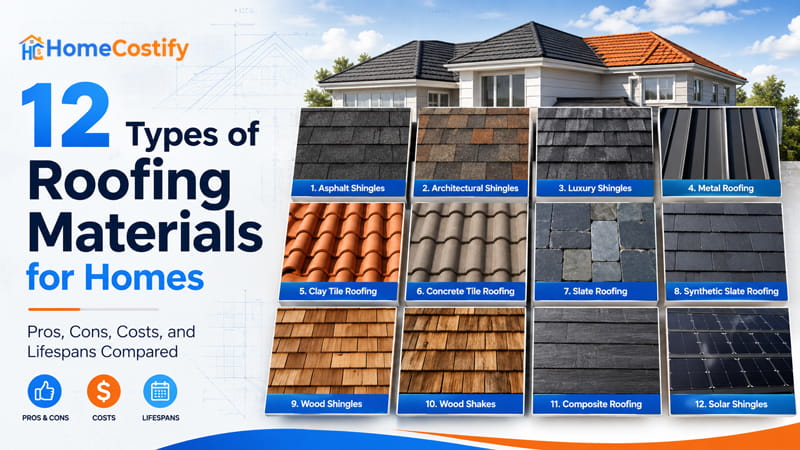
Material selection has a direct impact on replacement costs, maintenance requirements, energy efficiency, and long-term durability. Some roofing systems are designed to keep upfront expenses low, while others prioritize decades of service life or superior resistance to heat, hail, wind, and fire.
The materials below represent the most widely used residential roofing options across the United States.
1. Asphalt Shingles
Asphalt shingles are the most widely used residential roofing product in the United States. They consist of a fiberglass mat coated with asphalt and topped with mineral granules that provide weather protection and color. Available in a wide range of styles and colors, they fit everything from starter homes to large suburban properties.
Asphalt shingles cost about $4–$7 per square foot installed for most residential projects, although final pricing depends on roof size, tear-off requirements, labor rates, and regional market conditions. A properly installed roof typically lasts 20–30 years, depending on product quality, climate, and maintenance.
Pros and Cons
According to the National Roofing Contractors Association (NRCA), asphalt shingles continue to dominate the U.S. residential steep-slope roofing market, making them the most commonly installed roofing material in America.
Their popularity comes from affordability, broad contractor availability, and relatively simple repairs when damage occurs. The primary drawback is a shorter service life compared with metal, tile, or slate systems. Extreme heat, strong UV exposure, and severe storms may also accelerate wear over time.
For homeowners focused on keeping replacement costs manageable without sacrificing appearance, asphalt shingles remain one of the strongest value-driven options available.
2. Architectural Shingles
Architectural shingles, sometimes called dimensional shingles, are a premium version of traditional asphalt roofing. Multiple laminated layers create greater thickness and a more textured appearance than standard 3-tab products.
Installed prices generally range from $5–$8 per square foot, meaning architectural shingles cost more than standard 3-tab products but remain considerably more affordable than many premium roofing materials. Most systems provide an expected lifespan of 25–35 years.
Pros and Cons
The additional thickness improves durability and generally provides better wind resistance than basic asphalt shingles. Many manufacturers also offer longer warranties and expanded color selections. Enhanced curb appeal makes them a popular choice for homeowners planning future resale.
The trade-off is a higher upfront cost and additional weight. Even so, many contractors consider architectural shingles the sweet spot between affordability, appearance, and long-term performance, particularly for homeowners seeking an upgrade without moving into premium roofing categories.
3. Luxury Shingles
Luxury shingles represent the highest tier of asphalt-based roofing products. They are engineered to replicate the appearance of natural slate or hand-split cedar while avoiding some of the structural demands associated with those materials.
Most installations range from $7–$12 per square foot and typically last 30–40 years under normal conditions. These luxury shingles cost more than architectural products because of their thicker construction and premium appearance.
Pros and Cons
Their greatest advantage is appearance. Deep shadow lines, dimensional profiles, and premium finishes create a high-end look often found in upscale neighborhoods. Many products also deliver stronger impact resistance and improved weather performance compared with standard shingles.
Higher material costs remain the biggest disadvantage. Although less expensive than genuine slate, luxury shingles still require a larger investment than architectural options. For homeowners seeking premium aesthetics without committing to natural stone roofing, they provide an attractive middle ground.
4. Metal Roofing
Metal roofing includes several systems manufactured from steel, aluminum, zinc, or copper. Among residential applications, standing seam panels are especially popular because concealed fasteners create a clean appearance and reduce potential leak points.
Metal roofing costs generally range from $8–$14 per square foot installed, with standing seam systems often falling toward the higher end of the price range. Most metal roofs remain in service for 40–70 years or longer.
Energy Efficiency and Weather Resistance
Reflective coatings help reduce solar heat absorption, making metal roofing particularly attractive in warmer climates. Smooth panel surfaces also encourage snow shedding, limiting accumulation during winter storms. Many systems perform exceptionally well in high-wind environments and offer strong fire resistance roof.
Pros and Cons
Outstanding durability, low maintenance requirements, and long-term value are major advantages. Metal roofs can outlast several generations of asphalt shingles, reducing replacement frequency over decades of ownership. Initial installation costs, however, are significantly higher, and specialized installation expertise is often required.
For homeowners planning to stay in their homes for many years, metal roofing frequently delivers one of the strongest long-term returns among modern roofing systems.
5. Clay Tile Roofing
Clay tile roofing has been used for centuries and remains a common sight on Spanish, Mediterranean, and Southwestern-style homes. Made from natural clay that is molded and kiln-fired, these tiles create a distinctive appearance while offering exceptional resistance to heat and weather exposure.
Installation generally ranges from $10–$18 per square foot, and clay tile roof costs are often justified by a lifespan of 50–100 years or more with proper maintenance.
Clay tiles perform especially well in hot, sunny regions such as Arizona, Nevada, New Mexico, and parts of Southern California. Their natural thermal properties help reduce heat transfer into the home, making them a practical option for warm climates.
Pros and Cons
Exceptional longevity, fire resistance, and timeless curb appeal are major strengths. The biggest drawback is weight. Many homes require structural evaluation or reinforcement before installation. Individual tiles can also crack if struck by heavy impacts or walked on improperly.
Homeowners in hot climates often view clay tile roofing as a long-term investment rather than a short-term roofing expense.
6. Concrete Tile Roofing
Concrete tile roofing offers a similar appearance to clay tile but uses a mixture of cement, sand, and water instead of fired clay. Manufacturers produce these tiles in a variety of profiles, colors, and textures that complement many architectural styles.
Typical installation ranges from $7–$12 per square foot, while most systems provide a service life exceeding 50 years. Compared with clay products, concrete tile roof costs are generally lower.Typical installation costs range from $7–$12 per square foot, while lifespan commonly exceeds 50 years.
Pros and Cons
One of the biggest advantages is value. Concrete tiles generally cost less than clay while still delivering impressive durability and strong fire resistance. They also withstand harsh weather conditions and require relatively little routine maintenance.
Weight remains the primary concern. Like clay products, concrete tile systems place substantial loads on the roof structure. Some color fading may occur after decades of sun exposure, though performance is rarely affected.
For homeowners who want the appearance of tile roofing without paying premium clay prices, concrete often provides a practical alternative.
7. Slate Roofing
Slate roofing is manufactured from natural stone that is split into thin tiles and installed individually. It has long been associated with historic estates, luxury residences, and architecturally significant buildings throughout the United States.
Slate roof costs typically begin around $15 per square foot installed and can exceed $30 per square foot for premium materials or complex roof designs. In return, homeowners may receive a roof that lasts 75–150 years or longer.
Natural slate is extremely heavy. Before installation, the roof framing must be capable of supporting the additional load. Specialized installation techniques are also required, limiting the number of qualified contractors in some markets.
Pros and Cons
Few materials can match slate’s durability, fire resistance, and visual appeal. Many slate roofs outlast several generations of homeowners. The disadvantages are cost, weight, and more complex repairs if individual tiles become damaged.
For homeowners building a forever home or restoring a historic property, slate remains the benchmark for longevity among residential roofing materials.
8. Synthetic Slate Roofing
Synthetic slate roofing is designed to replicate the appearance of natural stone using engineered materials such as polymers, rubber compounds, or composite blends. Modern products have become increasingly realistic, making them difficult to distinguish from genuine slate at street level.
Most systems are installed for $9–$15 per square foot, and synthetic slate roof costs remain significantly lower than natural slate while still offering an expected lifespan of 40–50 years.
Pros and Cons
The reduced weight is one of the material’s greatest advantages. Unlike natural slate, synthetic products rarely require structural reinforcement and are often easier to transport and install. Many options also provide strong impact resistance against hail and falling debris.
Product quality varies between manufacturers, and some homeowners still prefer the authenticity of natural stone. Even so, synthetic slate delivers much of the appearance associated with traditional slate while avoiding many of its installation challenges and structural limitations.
9. Wood Shingles
Wood shingles are machine-cut roofing pieces commonly manufactured from cedar, redwood, or other naturally durable wood species. Their uniform shape creates a cleaner, more refined appearance than wood shakes while preserving the natural character that many homeowners find appealing.
Most installations range from $4.50–$9 per square foot and typically last 20–25 years, depending on maintenance and climate. Overall wood shingles cost less than many premium natural roofing materials.
Pros and Cons
Natural beauty remains the primary selling point. Cedar roofing develops a distinctive weathered appearance over time and complements coastal cottages, cabins, and traditional homes. Wood also provides natural insulating properties that can contribute to indoor comfort.
The drawbacks center on maintenance and fire exposure. Moisture, moss growth, insects, and UV damage can shorten service life if routine upkeep is neglected. In wildfire-prone regions, local building codes may restrict untreated wood roofing products or require additional fire-resistant treatments.
For homeowners who prioritize appearance over minimum maintenance, wood shingles offer a timeless architectural look that few modern materials can fully replicate.
10. Wood Shakes
Wood shakes are similar to wood shingles but are typically hand-split or specially manufactured to create a thicker, more textured profile. The result is a rugged, rustic appearance that works particularly well on mountain homes, lodges, and traditional craftsman-style properties.
Wood shake roof costs generally range from $6.50–$14 per square foot installed, reflecting both the thicker material and the more labor-intensive installation process. Most systems last 30–40 years under favorable conditions.
Pros and Cons
The thicker construction gives wood shakes a bold appearance and greater dimensional character than standard shingles. Many homeowners choose them primarily for aesthetics rather than cost efficiency.
Maintenance requirements are higher than with most modern roofing systems. Moisture retention can encourage mold, mildew, and moss growth, while periodic cleaning and treatment may be necessary to preserve performance. Fire concerns may also limit their use in certain regions.
Wood shakes appeal most to homeowners seeking architectural character and natural materials rather than a low-maintenance roofing solution.
11. Composite Roofing
Composite roofing refers to products manufactured from engineered blends of recycled plastics, polymers, rubber, and other synthetic materials. Many are designed to imitate slate, cedar shakes, or traditional shingles while offering improved durability and lower weight.
Most systems are installed for $8–$14 per square foot, while composite roof costs vary according to the manufacturer, profile, and material composition. Expected service life is approximately 30–50 year
Pros and Cons
Lightweight construction makes installation easier than many premium roofing materials. Many products resist cracking, moisture damage, insects, and impact-related wear better than natural alternatives. Manufacturers also offer a wide variety of styles and colors.
Costs are typically higher than standard asphalt shingles, and long-term performance can vary depending on product quality and manufacturer reputation. Even so, composite roofing has become a popular alternative for homeowners seeking durability, visual flexibility, and reduced structural demands.
12. Solar Shingles
Solar shingles combine roofing material and photovoltaic technology into a single product. Instead of mounting traditional solar panels above an existing roof, these systems generate electricity while functioning as the roof surface itself.
Solar shingle installations often range from $12–$25+ per square foot, making them one of the most expensive residential roofing options. Much of that investment is reflected in overall solar shingles cost, since the roof functions as both weather protection and an electricity-generating system with a lifespan of 25–30 years.
Integrated solar technology allows homeowners to produce a portion of their household electricity directly from the roof. Federal tax incentives and certain state-level programs may help offset installation costs, depending on location and eligibility requirements.
Pros and Cons
The clean appearance is a major advantage, particularly for homeowners who dislike the look of conventional solar panels. Electricity generation can reduce long-term utility expenses and improve overall energy efficiency.
High upfront costs remain the biggest obstacle. Installation options are also more limited than traditional roofing systems because fewer contractors specialize in solar-integrated products. For homeowners pursuing energy independence and modern home technology, solar shingles offer a unique combination of roofing protection and power generation.
Best Roofing Materials for Different U.S. Climates
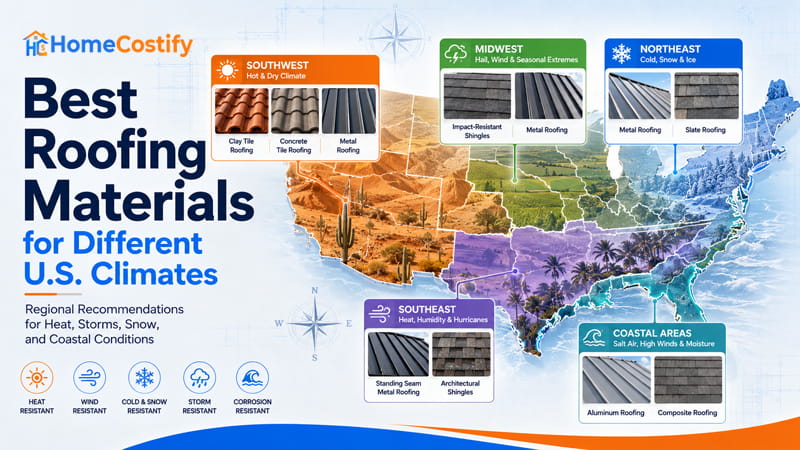
Climate often determines whether a roof reaches its expected lifespan or requires premature repairs. The same product that performs exceptionally well in a dry desert environment may struggle under constant humidity, heavy snowfall, salt exposure, or repeated hail impacts.
For that reason, evaluating roofing materials through a regional lens often produces a more practical answer than simply comparing installation costs.
| Region | Recommended Roofing Materials |
|---|---|
| Southwest | Clay Tile, Concrete Tile, Metal |
| Southeast | Standing Seam Metal, Architectural Shingles |
| Midwest | Impact-Resistant Shingles, Metal Roofing |
| Northeast | Metal Roofing, Slate Roofing |
| Coastal Areas | Aluminum Roofing, Composite Roofing |
Southwest States
Arizona, Nevada, and New Mexico experience some of the country’s highest levels of solar exposure. Roof surfaces can remain under intense sunlight for much of the year, accelerating wear on products that are sensitive to UV degradation.
Clay tile roofing performs particularly well in these conditions because it resists heat, maintains structural integrity under prolonged sun exposure, and offers excellent longevity. Concrete tile roofing provides similar benefits at a lower price point. Metal roofing with reflective coatings is another strong choice because it can reduce heat absorption and improve energy efficiency during long summers.
Among the many types of roof materials available today, tile and metal systems generally provide the best balance of durability and heat resistance for desert climates.
Southeast and Hurricane Zones
Florida and much of the Gulf Coast face a very different challenge. Wind-driven rain, tropical storms, hurricanes, and year-round humidity place constant stress on residential roofing systems.
Standing seam metal roofing remains one of the strongest performers in hurricane-prone areas because concealed fasteners and interlocking panels help improve wind resistance. Architectural shingles rated for high-wind applications also remain popular due to their affordability and strong weather performance.
When comparing roofing materials for southeastern states, wind ratings should receive as much attention as lifespan estimates. A roof capable of withstanding severe storms may prevent costly repairs long before replacement becomes necessary.
Midwest Hail Regions
Large portions of the Midwest experience frequent hailstorms and severe weather outbreaks. States such as Kansas, Nebraska, Oklahoma, Iowa, and South Dakota regularly report hail-related roof damage.
Impact-resistant shingles have become increasingly popular because they are specifically engineered to withstand impacts from hail and flying debris. Metal roofing also performs well in many hail-prone regions, particularly products manufactured with thicker gauge panels.
Homeowners evaluating different types of roof materials in hail-heavy areas should prioritize impact ratings rather than focusing exclusively on appearance or initial cost.
Northeast Snow Regions
Heavy snowfall, ice accumulation, and repeated freeze-thaw cycles create unique roofing challenges across the Northeast.
Metal roofing is often recommended because smooth surfaces encourage snow shedding, reducing excess weight on the structure. Slate roofing also performs exceptionally well in cold climates and has been used successfully on Northeastern homes for generations.
Certain asphalt-based systems can perform adequately in snowy conditions, but premium products generally provide better durability when exposed to repeated winter weather cycles.
Coastal Communities
Salt air can accelerate corrosion and shorten the lifespan of unsuitable roofing products. Coastal communities along the Atlantic, Pacific, and Gulf coasts often benefit from materials specifically selected for marine environments.
Aluminum roofing stands out because it naturally resists corrosion and does not rust like conventional steel. Composite roofing also performs well in coastal regions due to its moisture resistance and relatively low maintenance requirements.
Many homeowners automatically assume all metal roofs perform the same near the ocean. In reality, material selection matters significantly. Aluminum often outperforms standard steel systems when exposed to decades of salt-laden air.
Which Roofing Materials Perform Best in High Winds and Wildfires?
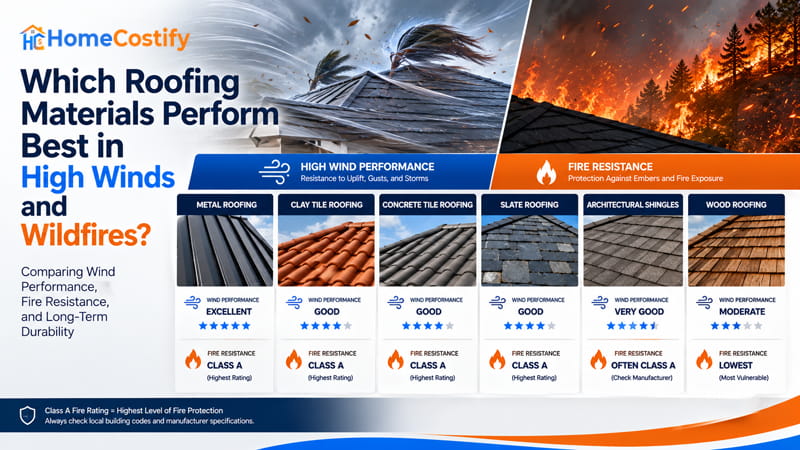
Severe weather has become an increasingly important factor in roof selection across many parts of the United States. Homes located in hurricane corridors, tornado-prone regions, or wildfire zones benefit from products engineered for extreme conditions.
| Material | Wind Performance | Fire Resistance |
|---|---|---|
| Metal Roofing | Excellent | Class A |
| Clay Tile Roofing | Good | Class A |
| Concrete Tile Roofing | Good | Class A |
| Slate Roofing | Good | Class A |
| Architectural Shingles | Very Good | Often Class A |
| Wood Roofing | Moderate | Lowest |
Metal roofing consistently ranks among the strongest performers for both wind resistance and fire protection. Architectural shingles designed for high-wind applications may also carry ratings up to 130 mph when installed according to manufacturer specifications.
Wildfire-prone states such as California, Colorado, Oregon, and Washington often favor noncombustible roof materials. Metal, slate, clay tile, and concrete tile roofing systems typically achieve Class A fire ratings, the highest classification available for roof coverings.
Impact resistance roof also deserves attention. Hailstorms frequently accompany severe wind events, making reinforced shingles and durable metal systems attractive choices for homeowners seeking broader storm protection.
Can Roofing Materials Affect Home Insurance Costs?
Insurance companies evaluate risk, and roof performance plays a major role in that calculation. Certain roofing materials may help reduce claim frequency, particularly in regions vulnerable to hail, hurricanes, and severe storms.
Impact-Resistant Roofing
Impact-resistant shingles are designed to withstand hail strikes more effectively than standard products. Fewer hail-related repairs can translate into lower claim activity over time.
FORTIFIED Roof Standards
The FORTIFIED program promotes construction methods that improve wind resistance and storm resilience. Upgrades may include enhanced roof deck attachment, stronger edge protection, and improved sealing systems.
Potential Insurance Discounts
Some insurers offer incentives for qualifying roofing upgrades, particularly in high-risk regions. Eligibility varies by state and carrier, but stronger roofing material types may contribute to reduced risk exposure and lower premiums.
How to Choose the Right Roofing Material for Your Home
No single option dominates every category. The best choice depends on budget, climate, maintenance preferences, and ownership plans.
Best for Tight Budgets
Asphalt shingles remain the most economical solution for many homeowners. Installation costs are relatively low, repairs are straightforward, and contractor availability is widespread.
Best Long-Term Investment
Metal roofing and slate roofing provide exceptional longevity. Although upfront costs are higher, replacement intervals may be significantly longer than competing systems.
Best for Hot Climates
Clay tile roofing and reflective metal roofing perform particularly well in warm environments where heat management is a priority.
Best for Coastal Areas
Aluminum roofing and composite roofing resist moisture and corrosion more effectively than many alternatives.
Best for Low Maintenance
Metal roofing, synthetic slate, and composite systems generally require less ongoing attention than wood-based products or aging asphalt roofs.
Final Thoughts
No roofing system is ideal for every property. Budget, climate conditions, maintenance expectations, and ownership timeline all influence which material delivers the greatest value.
Among today’s types of roofing materials, architectural shingles often provide the best balance of cost and performance, slate roofing offers unmatched longevity, and metal roofing remains one of the most durable choices available. Homeowners focused on energy production may find solar shingles appealing despite higher upfront costs.
FAQs About Types of Roofing Materials
What are the top 5 roofing materials?
The five most common residential options are asphalt shingles, metal roofing, clay tile roofing, concrete tile roofing, and slate roofing. Each differs in cost, lifespan, maintenance requirements, and weather performance.
What are the different types of roofing materials?
Common types of roofing materials include asphalt shingles, architectural shingles, metal roofing, clay tile, concrete tile, slate, synthetic slate, wood shingles, wood shakes, composite roofing, and solar shingles.
What is better, TPO or EPDM?
TPO generally offers better energy efficiency due to its reflective surface, while EPDM is valued for durability and cold-weather flexibility. Both are commonly used on low-slope and commercial roofs.
What are modern roofing materials?
Modern products include standing seam metal roofing, composite roofing, synthetic slate, solar shingles, and advanced impact-resistant shingles engineered for improved durability and energy performance.
What is a Class A or B roof covering?
Class A represents the highest fire-resistance rating for roof coverings. Class B provides moderate fire protection. Metal, slate, clay tile, concrete tile, and many premium shingles achieve Class A ratings.